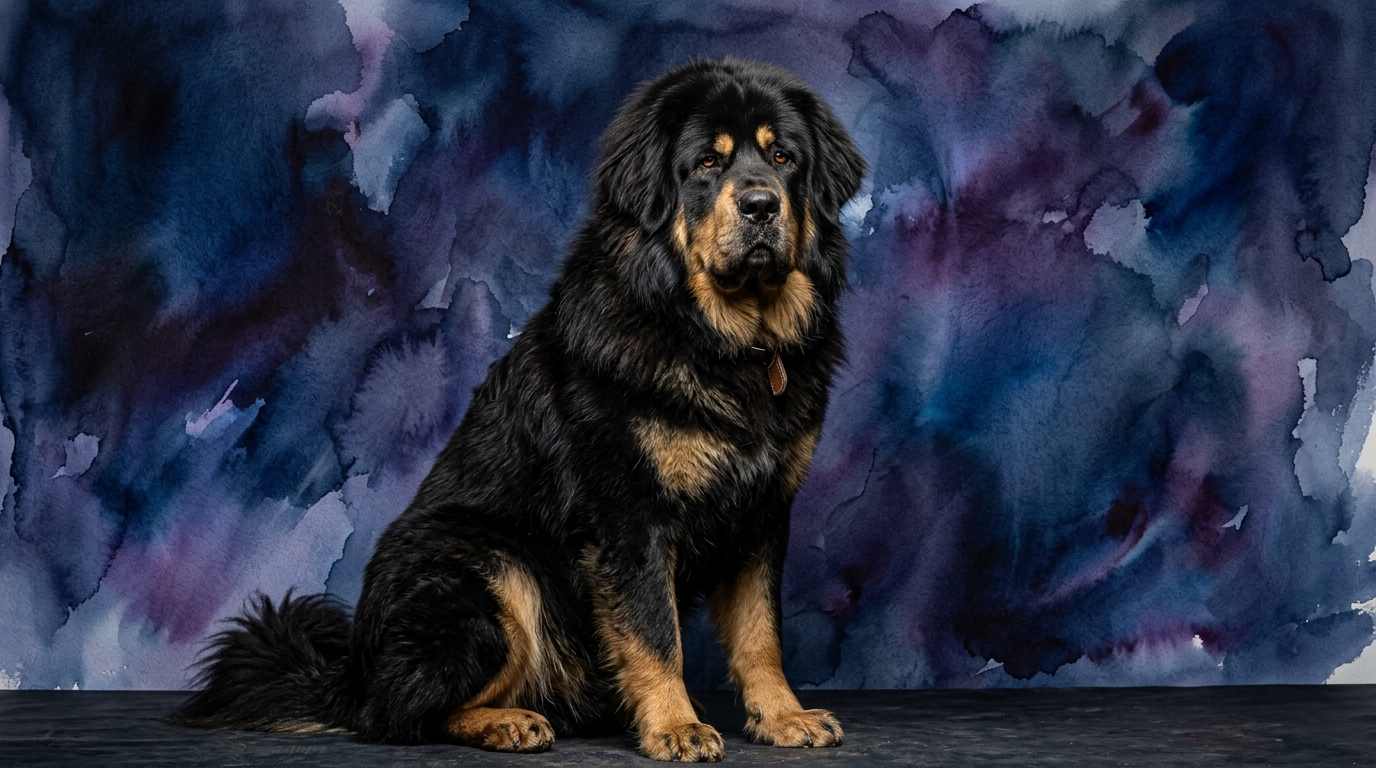
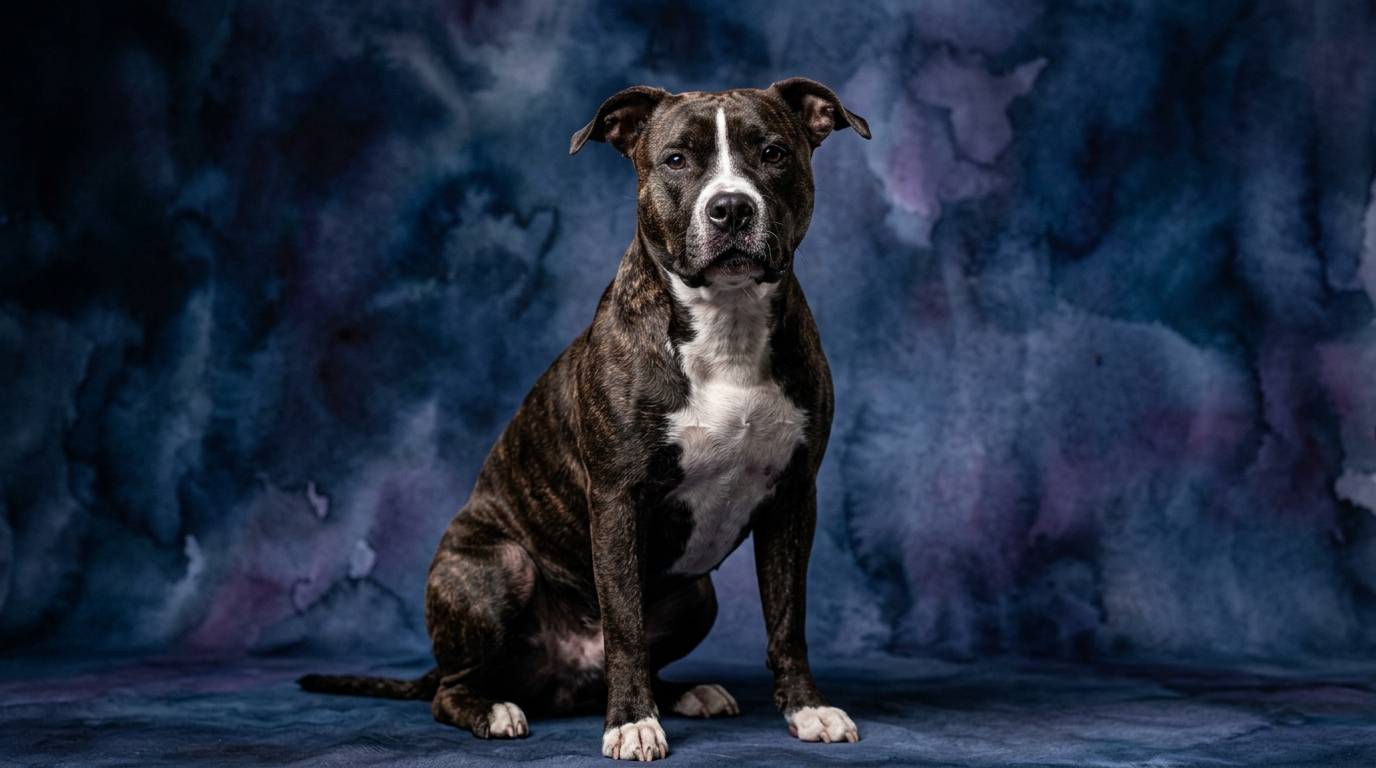
Side-by-Side IQ Profile: Tibetan Mastiff vs. American Staffordshire Terrier
**Tibetan Mastiff (Working Group, Not Coren-ranked):** This ancient guardian breed exhibits a unique cognitive makeup. Their **Problem Solving (3/5)** score indicates a capacity for independent thought, particularly in assessing and managing their territory. This isn't about solving complex puzzles, but rather making practical, self-directed decisions in their primary role. Their **Training Speed (3/5)** is moderate, meaning they can learn commands, but their independent nature often requires consistent, patient instruction and a clear understanding of their motivations. **Social Intelligence (3/5)** for a TM typically translates to a reserved demeanor with strangers, forming deep, protective bonds within their immediate family while being less inclined towards broad social interaction. Their **Instinctive Drive (3/5)** is strongly channeled into territorial guarding and watchful behavior. Finally, their **Memory (3/5)** suggests they retain learned information and experiences reasonably well, remembering routines and boundaries, but perhaps not with the same precision for infrequently practiced commands as breeds with higher scores.
**American Staffordshire Terrier (Terrier Group, Coren Rank #48):** The AmStaff brings a different set of cognitive strengths to the table. Their **Problem Solving (3/5)** aligns with a practical intelligence, often involving tenacity and physical engagement to figure out how to access desired objects or navigate obstacles. With a **Training Speed (3/5)**, they are capable learners, often eager to please their handlers, which can make training engaging despite requiring consistent repetition. Their **Social Intelligence (3/5)** typically manifests as an outgoing and friendly disposition, keen to interact with people and familiar dogs, though proper socialization is key to managing their exuberance. An **Instinctive Drive (3/5)** often translates to a strong prey drive, a desire for vigorous play, and tenacious engagement with tasks or objects, reflecting its terrier heritage. Critically, their **Memory (4/5)** is a stand-out feature, indicating an excellent capacity for retaining commands, routines, and past experiences, allowing them to master a wider repertoire of skills over time.
Where the Tibetan Mastiff Wins Cognitively
The Tibetan Mastiff's cognitive strengths are deeply rooted in its ancient role as a self-reliant guardian. While its problem-solving score is 3/5, this intelligence is specifically geared towards autonomous situational awareness and nuanced environmental assessment. They excel at independently evaluating potential threats and making decisions concerning territory and family safety, often without direct human instruction. This self-sufficiency, combined with their moderate instinctive drive for protection, allows them to operate as effective, watchful sentinels, processing information subtly before reacting. Their social intelligence, though reserved, fosters a deep attunement to their family's needs, enabling them to offer comfort or protection based on subtle emotional cues rather than overt commands.
Where the American Staffordshire Terrier Wins Cognitively
The American Staffordshire Terrier's cognitive advantage is most evident in its superior memory, scoring 4/5. This enhanced recall significantly benefits training and the retention of complex behaviors, allowing them to build a robust mental catalog of commands and experiences. Paired with a 3/5 problem-solving ability, this means AmStaffs can quickly learn to apply solutions to new situations based on past successes and remembered patterns. Their moderate instinctive drive often translates into a tenacious engagement with tasks and puzzles, fueled by a desire to interact and please their humans. This eagerness further amplifies their learning capacity compared to a more independent breed. The Coren rank of #48 further supports their consistent ability to understand and execute commands reliably.
Which is Easier to Train, and Why?
When evaluating ease of training, the American Staffordshire Terrier generally presents a more straightforward path for most owners, despite both breeds sharing a 3/5 rating for training speed. The key differentiator lies in the AmStaff's 4/5 memory score and its inherent temperament. AmStaffs tend to be eager to please and thrive on interaction with their handlers, making them highly motivated by positive reinforcement and engagement. Their superior memory means they retain commands and routines more effectively, often requiring fewer repetitions over time to solidify a behavior. In contrast, the Tibetan Mastiff, with its 3/5 memory and independent, often stubborn, nature, demands immense patience and consistency. TMs are bred to think for themselves; while they can learn, they will often weigh a command against their own perceived priorities, making training more of a negotiation than a direct instruction. Their independent streak means they are less motivated by constant human approval and more by what makes sense to them, demanding a trainer who understands their unique guardian mindset.
Which Suits Active Owners vs. Relaxed Owners?
The choice between these breeds heavily depends on an owner's lifestyle. The American Staffordshire Terrier is a natural fit for active owners. Their moderate instinctive drive translates into a need for consistent physical exercise and mental stimulation, thriving in environments where they can engage in activities like agility, hiking, or extended play sessions. They are often "velcro dogs" who desire to be involved in family activities and appreciate owners who can dedicate significant time to training, games, and companionship. Conversely, the Tibetan Mastiff is better suited for more relaxed owners, but this comes with a caveat. While they are not high-energy dogs in the sense of needing constant running, they require a specific type of "relaxed" ownership: one that provides ample secure space, respects their independent nature, and understands their deep-seated guardian instincts. They are content to observe their domain, requiring less direct interactive play but demanding consistent, firm, and early socialization and boundary setting. Their 3/5 social intelligence means they are not generally seeking broad social interaction, preferring quiet companionship with their trusted few. Owners must be prepared for a dog that is self-possessed and requires a calm, confident leader, rather than one who needs constant entertainment.
The Verdict
Choose the Tibetan Mastiff if you are a calm, experienced owner with a secure, spacious property, seeking an independent, watchful guardian who forms deep, protective bonds and appreciates a dog that thinks for itself.
Choose the American Staffordshire Terrier if you are an active, engaged owner looking for a devoted, trainable companion eager to participate in family activities and thrive on consistent interaction and mental challenges.
🧠 Find Your Pet's IQ Score
Our Pet IQ Lab assessment covers 25+ tests across 5 cognitive dimensions — personalized to your breed.
Take the Full IQ Test →Frequently Asked Questions
Does the Coren rank for the American Staffordshire Terrier mean it's cognitively superior to the Tibetan Mastiff?
David Coren's ranking primarily measures "working and obedience intelligence," focusing on how quickly a dog learns and obeys commands. The AmStaff's rank of #48 indicates a good capacity for this type of learning, whereas the Tibetan Mastiff was not included, reflecting its more independent nature rather than a deficit in cognitive ability for its specific role.
How does the 'instinctive drive' score differ in practical terms for these two breeds?
For the Tibetan Mastiff, a 3/5 instinctive drive is largely channeled into territorial guarding, manifesting as vigilance and protective behaviors within its domain. For the American Staffordshire Terrier, its 3/5 instinctive drive often translates into a strong prey drive, a desire for vigorous play, and tenacious engagement with tasks or objects, reflecting its terrier heritage.
Can a Tibetan Mastiff be trained for complex tasks despite its 3/5 memory?
Yes, a Tibetan Mastiff can learn complex tasks, but it will likely require more consistent reinforcement and patience than a breed with a 4/5 memory score. Their independent nature means they might evaluate the utility of a command before complying, making the training process a partnership built on trust and clear communication rather than rote memorization.