Side-by-Side Cognitive Profile: Unpacking the 3/5 Scores
While both the majestic Tibetan Mastiff and the spirited Bull Terrier register a consistent 3 out of 5 across all five cognitive dimensions in The Cosmic Pet Pet IQ Lab, understanding these scores requires a deeper dive into their breed-specific manifestations. These identical numerical ratings belie fundamentally different approaches to problem-solving, social interaction, and learning.
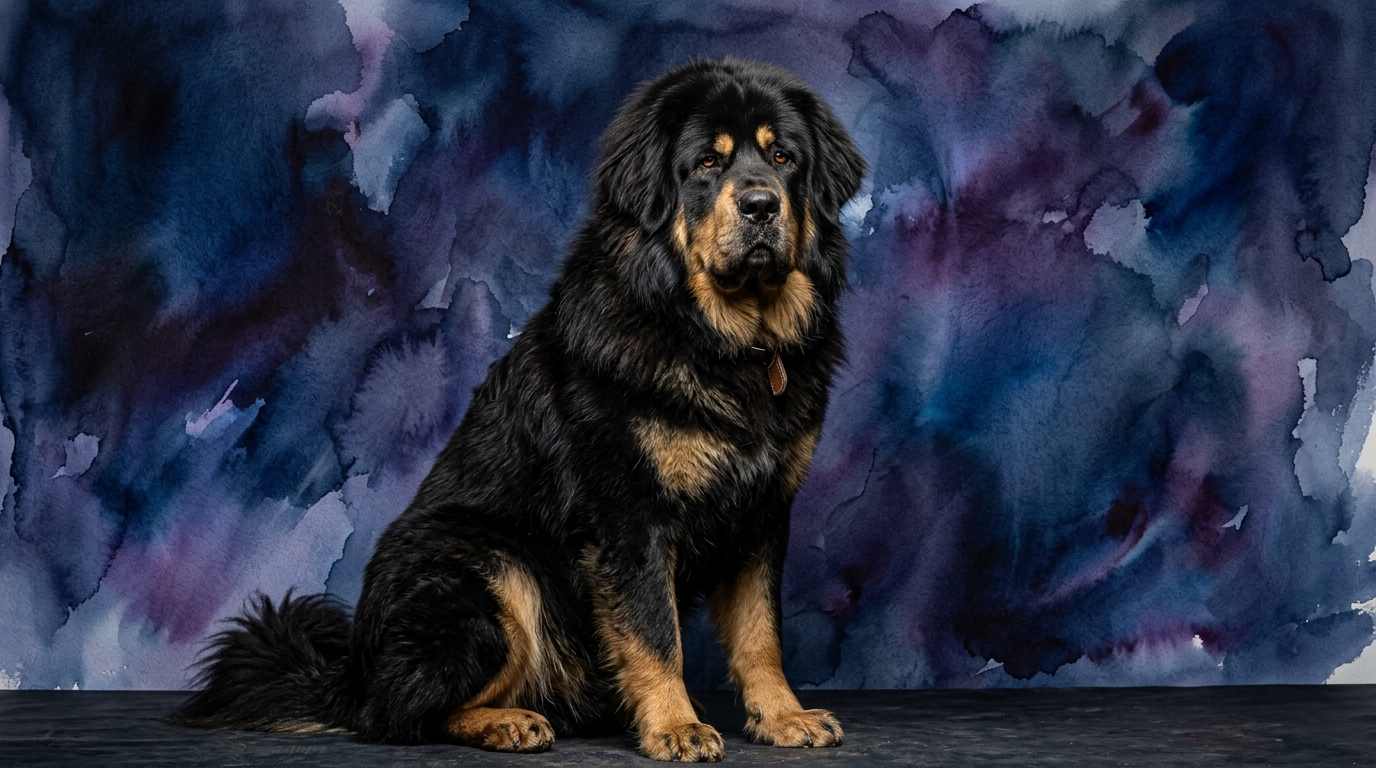
For the **Tibetan Mastiff (Working group)**:
**Problem Solving (3/5):** Their problem-solving isn't about puzzles but practical, territorial assessments. They're adept at identifying potential threats, evaluating new situations, and making independent decisions regarding their domain's security. This translates to a thoughtful, often cautious approach to novelty, rather than quick, experimental solutions. Their decisions are often rooted in a deep-seated instinct for protection, requiring minimal human intervention once a threat is identified.
**Training Speed (3/5):** While capable of learning, their compliance is often contingent on their perceived value of the command. They are not dogs that rush to please; rather, they consider requests. This means training requires immense patience, consistency, and a clear demonstration of purpose, rather than rote repetition. They learn best when a command aligns with their independent nature or protective duties.
**Social Intelligence (3/5):** Their social acumen is deeply rooted in loyalty and protection. They form profound bonds with their immediate family, understanding their moods and needs, but maintain a reserved, often wary demeanor with strangers. This sophisticated discernment is crucial for their role as a guardian, allowing them to differentiate between welcome guests and potential intruders.
**Instinctive Drive (3/5):** This score primarily reflects their powerful, ingrained guarding and territorial instincts. Their drive to protect their family and property is fundamental to their being, fueling their vigilance, watchful nature, and readiness to act when a threat is perceived. This instinct is a cornerstone of their cognitive makeup, guiding much of their behavior.
**Memory (3/5):** Tibetan Mastiffs possess a robust memory, retaining knowledge of individuals, routines, and boundaries over extended periods. This long-term recall is vital for their consistent application of protective duties, remembering who belongs and who does not, even after long absences, contributing significantly to their reliability as guardians.
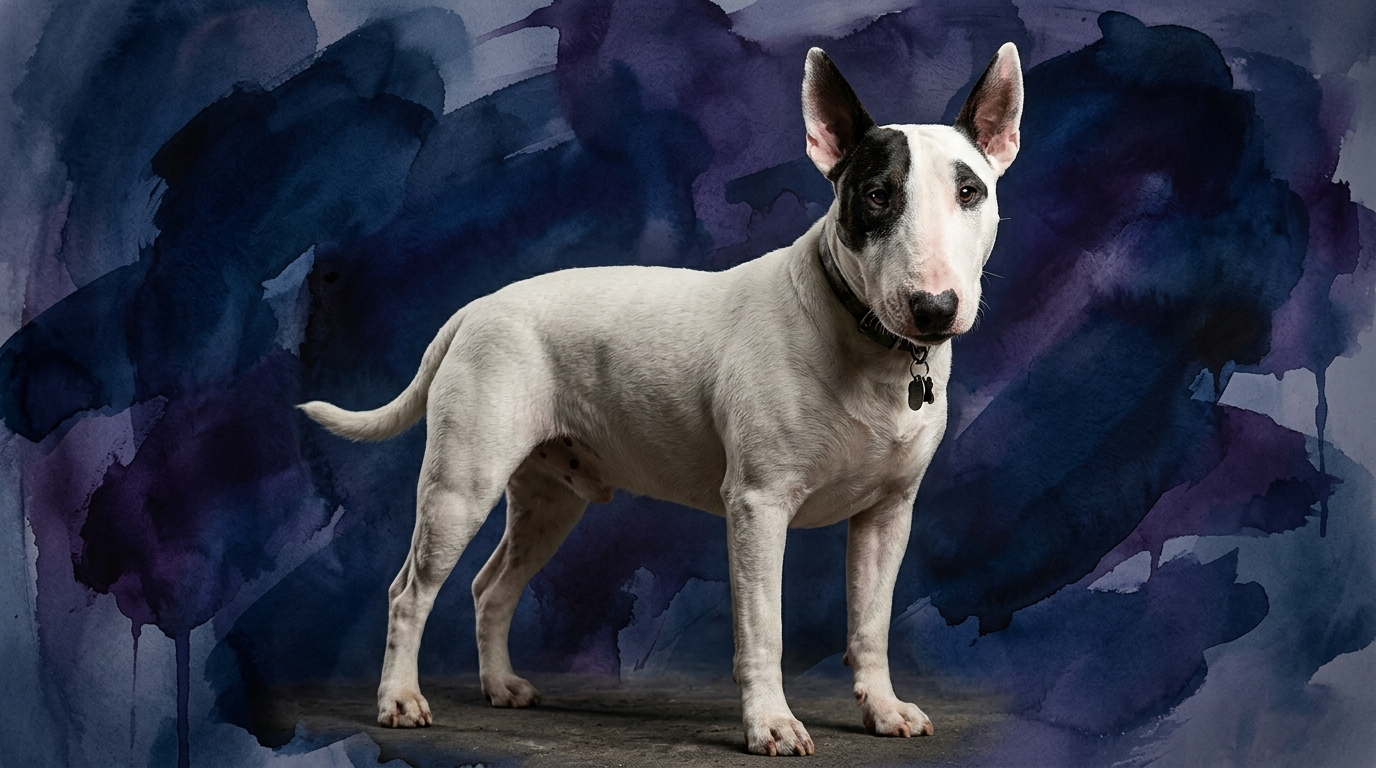
For the **Bull Terrier (Terrier group, Coren rank #66)**:
**Problem Solving (3/5):** Bull Terriers apply their problem-solving skills with a blend of determination and ingenuity. They are adept at finding creative, sometimes mischievous, ways to achieve their objectives, whether it's outsmarting a gate latch or figuring out how to get to a favorite toy. Their approach is often hands-on, persistent, and driven by curiosity.
**Training Speed (3/5):** These dogs are intelligent learners, but their progress in training can be influenced by their strong will and independent streak. They respond well to engaging, positive reinforcement methods and consistent boundaries, though an owner must be prepared for their tenacious spirit to occasionally make training a test of wills, requiring creative motivation.
**Social Intelligence (3/5):** Bull Terriers are typically very people-oriented within their chosen family, often displaying a charming, clownish personality and a good understanding of human emotions and social cues. They thrive on interaction and being an active part of the household, though their social interactions with other dogs may require careful management due to their assertive nature.
**Instinctive Drive (3/5):** Characteristic of the terrier group, their instinctive drive encompasses a strong prey drive, a love for digging, and an unwavering persistence. This drive fuels their enthusiasm for play, their determined approach to tasks, and their general zest for life, requiring outlets for constructive expression and careful channeling.
**Memory (3/5):** Bull Terriers exhibit solid memory capabilities, remembering commands, past experiences, and routines effectively. This means they learn from both positive and negative encounters, reinforcing desired behaviors when consistent and potentially solidifying unwanted habits if not addressed promptly, making consistent training crucial.
Where the Tibetan Mastiff Excels Cognitively
The Tibetan Mastiff's cognitive strengths shine particularly in scenarios demanding independent judgment and unwavering territorial awareness. Their 3/5 Problem Solving score reflects an ability to assess and react to perceived threats to their domain without constant human direction, a legacy of their livestock guardian heritage. This isn't about solving abstract puzzles, but rather about making critical, real-time decisions regarding safety and boundaries, often involving nuanced observation of their surroundings. Their Social Intelligence, also 3/5, manifests as a profound understanding of their immediate family unit and a sophisticated ability to discern friend from potential foe, prioritizing the protection of their inner circle above all else. This nuanced social processing, combined with a robust 3/5 Instinctive Drive for guardianship, means they excel at discerning subtle changes in their environment that might indicate a breach, acting as a vigilant, self-governing sentinel. Their Memory (3/5) is crucial here, allowing them to recall past interactions and established boundaries with remarkable consistency, reinforcing their role as a reliable, long-term protector.
Where the Bull Terrier Demonstrates Its Cognitive Edge
The Bull Terrier, while matching the Mastiff in raw scores, demonstrates its cognitive edge in different arenas, largely centered around tenacious engagement and playful ingenuity. Their 3/5 Problem Solving isn't about guarding a flock, but about ingeniously navigating their immediate environment, often with a playful and determined spirit. They can be remarkably resourceful in figuring out how to access forbidden treats or escape a secure yard, driven by curiosity and their strong will. Their 3/5 Training Speed, though sometimes challenged by their spirited independence, is backed by a desire for engagement and a quick grasp of novel commands when the motivation is right. The Bull Terrier's 3/5 Social Intelligence leans towards active participation within their human family, often displaying a charming, clownish personality and a keen awareness of their owner's mood, making them adept at reciprocal interaction in a domestic setting. Their 3/5 Instinctive Drive, while rooted in terrier tenacity, translates into a persistent focus on tasks, whether it's playing fetch, figuring out a new toy, or persistently working towards a desired outcome, embodying a spirited, 'can-do' attitude.
Training Dynamics: Independence vs. Tenacity
Despite identical 3/5 Training Speed scores, the practical experience of training these two breeds differs significantly due to their underlying motivations and behavioral tendencies. The Tibetan Mastiff, with its independent Problem Solving and strong Instinctive Drive for self-reliant guarding, is not inherently eager to please in the conventional sense. Training them requires immense patience, consistency, and a deep understanding of their self-sufficient nature. They learn best when they perceive a command as logical or beneficial to their role, rather than simply obeying for obedience's sake. Their training often feels like a negotiation, requiring the owner to earn their respect and demonstrate the utility of the requested action. Compliance can be slower, but once a Mastiff understands and accepts a command, their Memory (3/5) ensures it's deeply ingrained.
Conversely, the Bull Terrier, while possessing a stubborn streak inherent to terriers, often exhibits a more direct desire for human interaction and engagement. Their 3/5 Social Intelligence means they generally thrive on being part of family activities and respond well to positive reinforcement and clear, consistent direction. While their tenacity can make them persistent in testing boundaries, it also means that once they grasp a concept and are motivated, they can learn and retain commands effectively. Their Problem Solving (3/5) lends itself to figuring out training games and challenges. For many owners, the Bull Terrier's more direct engagement and responsiveness to reward-based training can make the process feel more straightforward, even with their strong will, compared to the Mastiff's more philosophical approach to compliance.
Lifestyle Match: Vigilant Guardian vs. Energetic Companion
The lifestyle compatibility of these breeds diverges sharply, reflecting their distinct cognitive applications. The Tibetan Mastiff, despite its imposing size, isn't typically suited for owners seeking a constant exercise companion for long runs or agility courses. Their activity is more about vigilant patrolling, observing their domain, and periodic bursts of protective energy. They need ample space and a secure environment where they can fulfill their Instinctive Drive for guardianship, making them suitable for owners who are 'active' in terms of providing mental stimulation, consistent boundary enforcement, and a stable, predictable routine, rather than intense physical exertion. A relaxed owner in terms of high-octane physical activity might find a suitable companion, provided they are 'active' in their commitment to patient, independent training and diligent management of a powerful, self-possessed animal.
The Bull Terrier, on the other hand, demands a truly active owner. Their robust physique, combined with their 3/5 Instinctive Drive and playful Problem Solving, means they require consistent, vigorous exercise to channel their energy constructively. They thrive on structured play, challenging walks, and activities that engage both their body and their determined mind. An owner who enjoys daily physical engagement, consistent training, and can provide ample opportunities for mental enrichment will find the Bull Terrier a rewarding, spirited companion. Their 3/5 Social Intelligence means they prefer to be an integral part of family life, actively participating. A relaxed owner, in the sense of minimal daily engagement, would likely find a Bull Terrier's needs overwhelming, potentially leading to boredom-induced behaviors and a difficult living situation.
The Verdict
Choose the Tibetan Mastiff if you possess a large, secure property, value an independent and vigilant guardian, and are prepared for a long-term commitment to patient, trust-based training with a self-sufficient companion.
Opt for the Bull Terrier if you lead an active lifestyle, enjoy consistent physical and mental engagement with your dog, and are ready to embrace a tenacious, playful, and often comical companion with structured training.
🧠 Find Your Pet's IQ Score
Our Pet IQ Lab assessment covers 25+ tests across 5 cognitive dimensions — personalized to your breed.
Take the Full IQ Test →Frequently Asked Questions
Do identical IQ scores mean these breeds are equally easy to train?
Not necessarily. While both score 3/5 in Training Speed, the Tibetan Mastiff's independence means training often requires understanding their self-sufficient nature, while the Bull Terrier, though stubborn, typically responds more directly to positive reinforcement and human engagement.
How does their 'Social Intelligence' 3/5 manifest differently?
For the Tibetan Mastiff, it's about deep loyalty to family and discerning strangers for protection, often leading to reservation. The Bull Terrier's 3/5 Social Intelligence often translates to active, sometimes boisterous, engagement with its immediate human family and an awareness of their moods.
What specific challenges might an owner face with a 3/5 Problem Solving score in each breed?
A Tibetan Mastiff's problem-solving might involve independently deciding a new person is a threat, requiring careful management and socialization. A Bull Terrier's could involve resourcefully escaping a yard or opening cabinets, necessitating secure environments and consistent supervision to prevent unwanted behaviors.