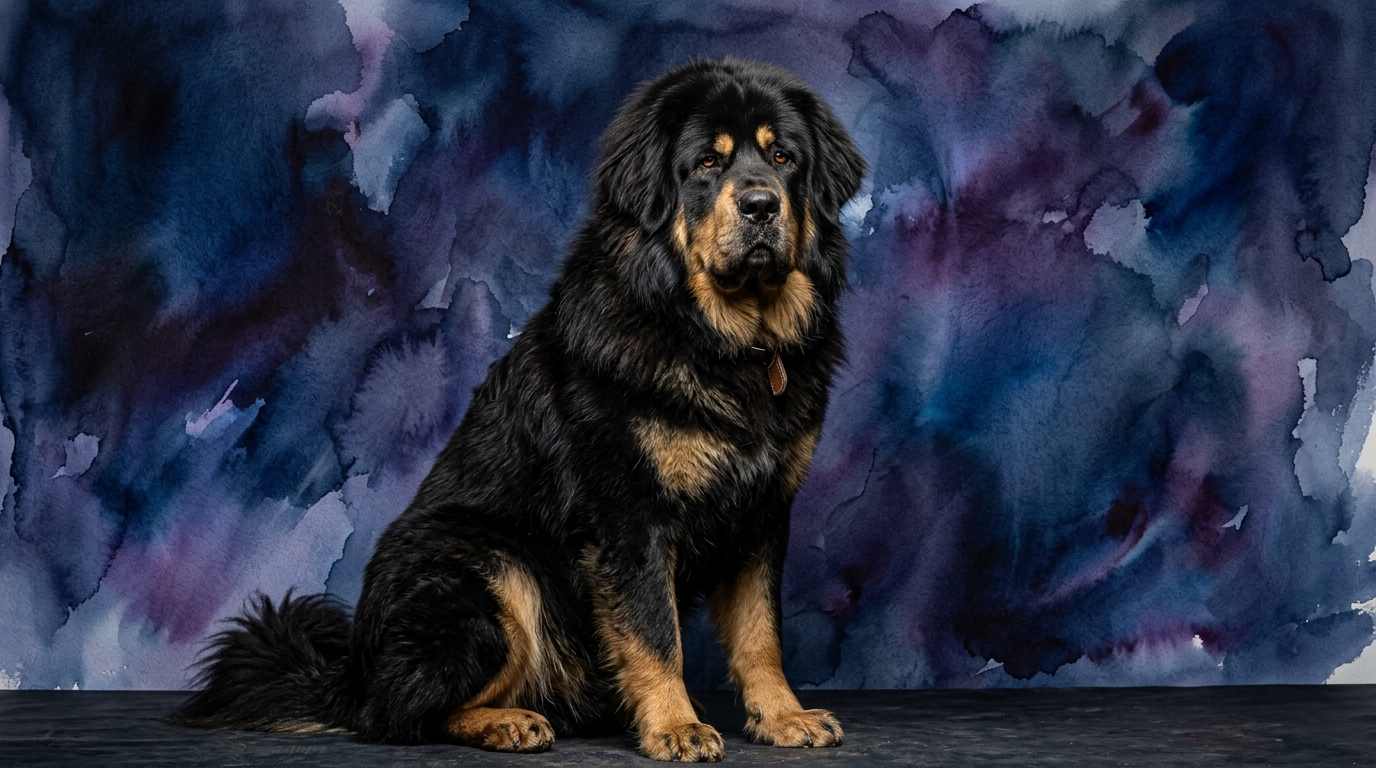
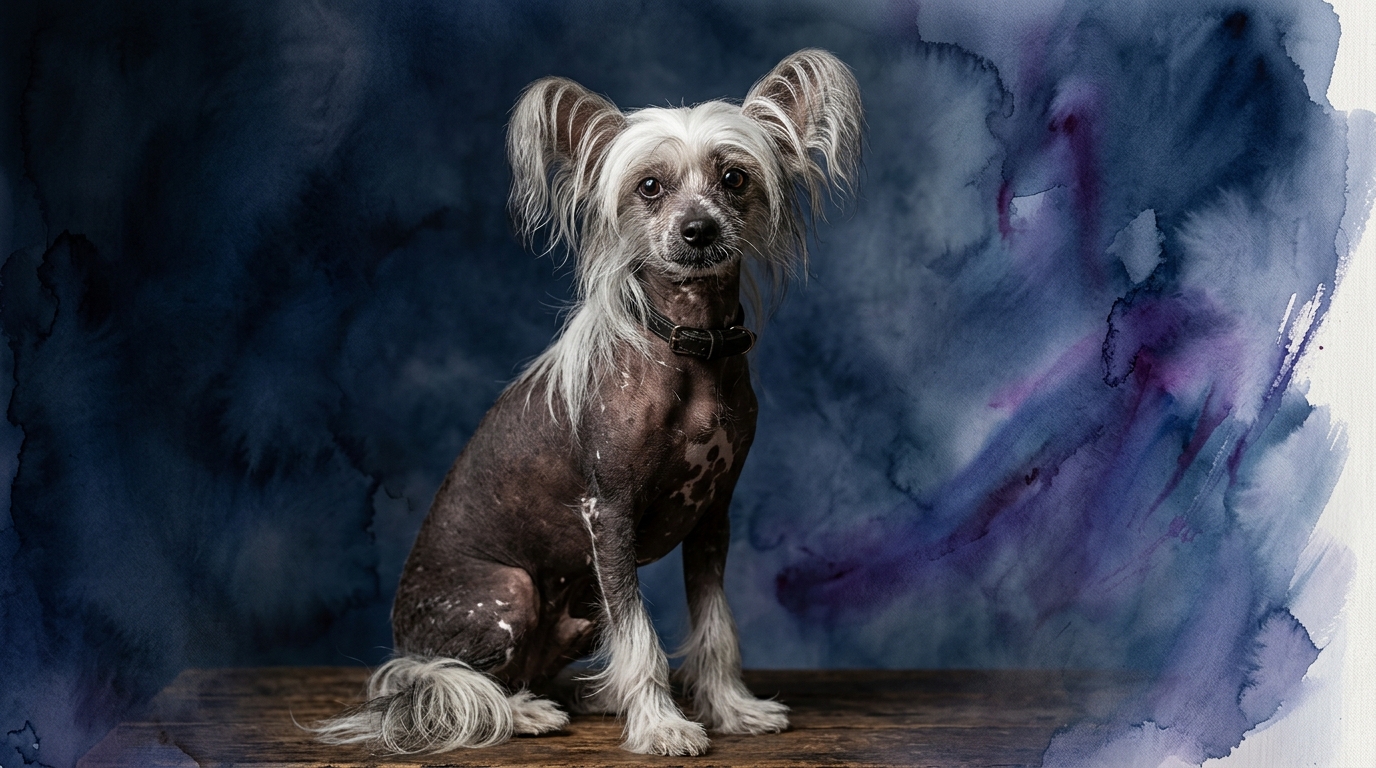
Side-by-Side IQ Profile: Tibetan Mastiff vs. Chinese Crested
Delving into the Pet IQ Lab scores reveals an intriguing parity: both the Tibetan Mastiff and the Chinese Crested score 3 out of 5 across Problem Solving, Training Speed, Social Intelligence, Instinctive Drive, and Memory. However, these identical scores belie profound differences in how these cognitive traits manifest in breeds shaped by such divergent histories.
For the **Tibetan Mastiff (Working Breed)**, a 3/5 in **Problem Solving** often centers on its guardian duties, requiring an independent assessment of environmental cues. This isn't about complex puzzles but rather evaluating potential threats and determining the most effective, often self-directed, course of action to protect its territory or family. It might involve figuring out how to bypass an obstacle to reach a perceived intruder or making a nuanced judgment call on a new visitor's intentions based on their behavior. Their solutions are typically deliberate, pragmatic, and deeply rooted in their protective instincts, not impulsive reactions. A 3/5 in **Training Speed** means that while undoubtedly capable of learning, the Tibetan Mastiff's training speed is often tempered by its inherent independence and often formidable will. They understand commands but possess a strong inclination to evaluate their necessity or relevance before compliance. Learning new tasks requires consistent, patient, and exceptionally firm guidance, often needing to be convinced that the command serves a purpose they deem valuable or aligns with their profound protective role. Their **Social Intelligence** at 3/5 primarily revolves around understanding hierarchy and discerning perceived threats within its “pack”—both human and canine. They are remarkably adept at reading intentions, especially from strangers, and can be highly discerning about who they accept into their inner circle. Their social cues are often subtle but clear, communicating boundaries, alertness, and a deep sense of loyalty to their chosen family. The 3/5 for **Instinctive Drive** predominantly reflects their powerful, deeply ingrained guardian instincts. Their drive to protect is profound, manifesting as unwavering vigilance, intense territoriality, and a deep, innate sense of responsibility for their family and property. This isn't an aggressive drive in the malicious sense, but a protective one, always active and ready to respond to perceived infringements. Finally, a 3/5 in **Memory** indicates Tibetan Mastiffs possess a robust memory for routines, specific individuals (categorizing them as friends, family, or potential threats), and past experiences, especially those related to territory or security breaches. They remember training commands well once learned and consistently reinforced, but their recall can appear selective if they decide a command is irrelevant to their current objectives or conflicts with their primary guardian role.
The **Chinese Crested (Toy Breed)**, with a 3/5 in **Problem Solving**, tends to engage in more domestic, human-centric challenges, often involving navigating their immediate environment for comfort or reward. This might involve strategizing how to get onto a favorite lap, figuring out how to manipulate a puzzle toy for a treat, or subtly influencing their owner for attention or a desired outcome. Their solutions are often creative, involving keen observation of human behavior and adapting quickly to household dynamics to achieve their goals. Their 3/5 **Training Speed** means Chinese Cresteds can learn new commands and tricks at a respectable pace, often highly motivated by praise, small treats, and a strong desire for interaction with their human. Their training speed can be significantly influenced by their sensitive nature; harsh or inconsistent methods can easily shut them down, but positive reinforcement and a gentle approach consistently yield impressive progress. They are generally eager to please their chosen human, which significantly aids in quicker acquisition of new skills compared to more independent breeds. A 3/5 in **Social Intelligence** means this breed excels in reading human emotions and subtle social cues, often appearing to mirror their owner's mood or anticipate their needs. They are highly attuned to nuanced changes in tone of voice or body language, using this information to navigate social interactions, seek comfort, or offer quiet companionship. Their social understanding extends to other animals, often adapting well to multi-pet households, demonstrating a sophisticated awareness of social dynamics. The 3/5 for **Instinctive Drive** highlights that the Chinese Crested's primary instinctive drive is an intense need for companionship and comfort. They possess a strong, almost magnetic, desire to be physically close to their humans, seeking warmth, affection, and inclusion in all daily activities. This drive also includes a certain level of “pack awareness” within the household, ensuring their place within the family unit and often leading them to seek out the most comfortable spot in the house. Lastly, a 3/5 in **Memory** indicates Chinese Cresteds have a good memory for people, specific places, established routines, and learned behaviors. They remember where treats are kept, who provides the best cuddles, and which commands lead to their favorite rewards or activities. Their memory is highly practical, serving their fundamental need for comfort, security, and social connection within their familiar environment.
Where the Tibetan Mastiff Wins Cognitively
The Tibetan Mastiff's cognitive strengths truly emerge in scenarios demanding independent judgment and unwavering resolve in protecting its domain. Its 3/5 problem-solving shines when assessing unfamiliar situations, like a strange vehicle approaching or an unusual sound at night, and determining the appropriate level of deterrent without direct human instruction. Their social intelligence, while not overtly effusive, allows them to discern subtle shifts in a stranger's demeanor or intent, recognizing potential threats that might escape a less perceptive guardian. This combination of self-directed decision-making, profound situational awareness, and keen observational skills for security purposes gives them a distinct edge in roles requiring steadfast, autonomous vigilance and territorial protection.
Where the Chinese Crested Wins Cognitively
The Chinese Crested's cognitive advantages are particularly apparent in their nuanced understanding of human-animal interaction and their remarkable adaptability to complex social settings. Their 3/5 social intelligence allows them to interpret subtle human cues, emotional states, and communication patterns, making them exceptional companions who often anticipate their owner's needs or moods with uncanny accuracy. This sensitivity translates into a capacity for intricate, non-verbal communication within a family unit. Furthermore, their problem-solving, while on a smaller scale, allows them to quickly adapt to new household rules, social dynamics, or even learn complex tricks and routines, often finding clever ways to achieve comfort or attention, demonstrating a flexible and context-aware intellect that thrives in a companion role.
Which is Easier to Train and Why?
Despite both breeds scoring a 3/5 in training speed, the Chinese Crested generally presents as “easier” to train for the average owner due to its inherent desire for human companionship and approval. Their sensitivity means they respond well to positive reinforcement, eager to engage in activities that strengthen their bond with their person. Consistency and clear, gentle communication yield effective results, often making them responsive to learning new tricks and commands. In contrast, the Tibetan Mastiff's independent nature and deep-seated guardian instincts mean training requires immense patience, unwavering consistency, and a strong, confident leader. They learn, but often question the “why” behind a command, and may prioritize their own judgment, especially if they perceive it as critical to their guardian role. Training a Mastiff is more about building mutual respect and trust through consistent boundaries than simply eliciting obedience.
Which Suits Active Owners vs. Relaxed Owners?
For owners with a clear purpose and a structured environment, the Tibetan Mastiff fits well. While not requiring constant, intense physical activity, they need significant mental engagement rooted in their historical role, coupled with consistent boundaries and leadership. Their “activity” is often mental vigilance and patrolling their perceived territory, making them suitable for owners who appreciate an independent, watchful presence rather than a dog seeking constant structured play or vigorous exercise. The Chinese Crested, conversely, thrives with owners who prioritize close companionship and interactive, perhaps less physically demanding, engagement. Their strong need for social interaction and emotional connection means they are better suited for owners who are consistently present and willing to include them in daily life, whether it's quiet cuddling on the couch, engaging in short, fun training sessions, or gentle walks. Their activity is often centered around their human, making them excellent companions for a more relaxed, but highly interactive, lifestyle.
The Verdict
Choose the Tibetan Mastiff if you seek a formidable, independent guardian with a profound sense of duty and are prepared for a long-term commitment to consistent, respectful leadership and a purpose-driven life.
Opt for the Chinese Crested if you desire a sensitive, highly social companion who thrives on close human interaction and adapts readily to a more intimate, family-centric lifestyle where they are an integral part of daily activities.
🧠 Find Your Pet's IQ Score
Our Pet IQ Lab assessment covers 25+ tests across 5 cognitive dimensions — personalized to your breed.
Take the Full IQ Test →Frequently Asked Questions
Do similar IQ scores mean both breeds perform identically in cognitive tests?
No, similar scores indicate a comparable capacity for cognitive functions, but their expression differs greatly based on breed purpose and physical attributes. A Tibetan Mastiff's problem-solving manifests in guarding, while a Chinese Crested's might be in social navigation within a home.
Can a Chinese Crested be a good guard dog, given its problem-solving and social intelligence?
While a Chinese Crested might alert to strangers with barking, its size and primary instinct for companionship mean it lacks the inherent protective drive and physical presence of a true guardian breed like the Tibetan Mastiff. Their “guarding” is typically limited to alarm barking and seeking comfort from their owner.
How important is early socialization for these breeds, considering their social intelligence scores?
Early socialization is crucial for both, though for different reasons. For the Tibetan Mastiff, it helps channel their protective instincts appropriately and ensures they accept acceptable visitors. For the Chinese Crested, it fosters confidence and adaptability in various social situations, preventing undue shyness or anxiety towards new people or environments.