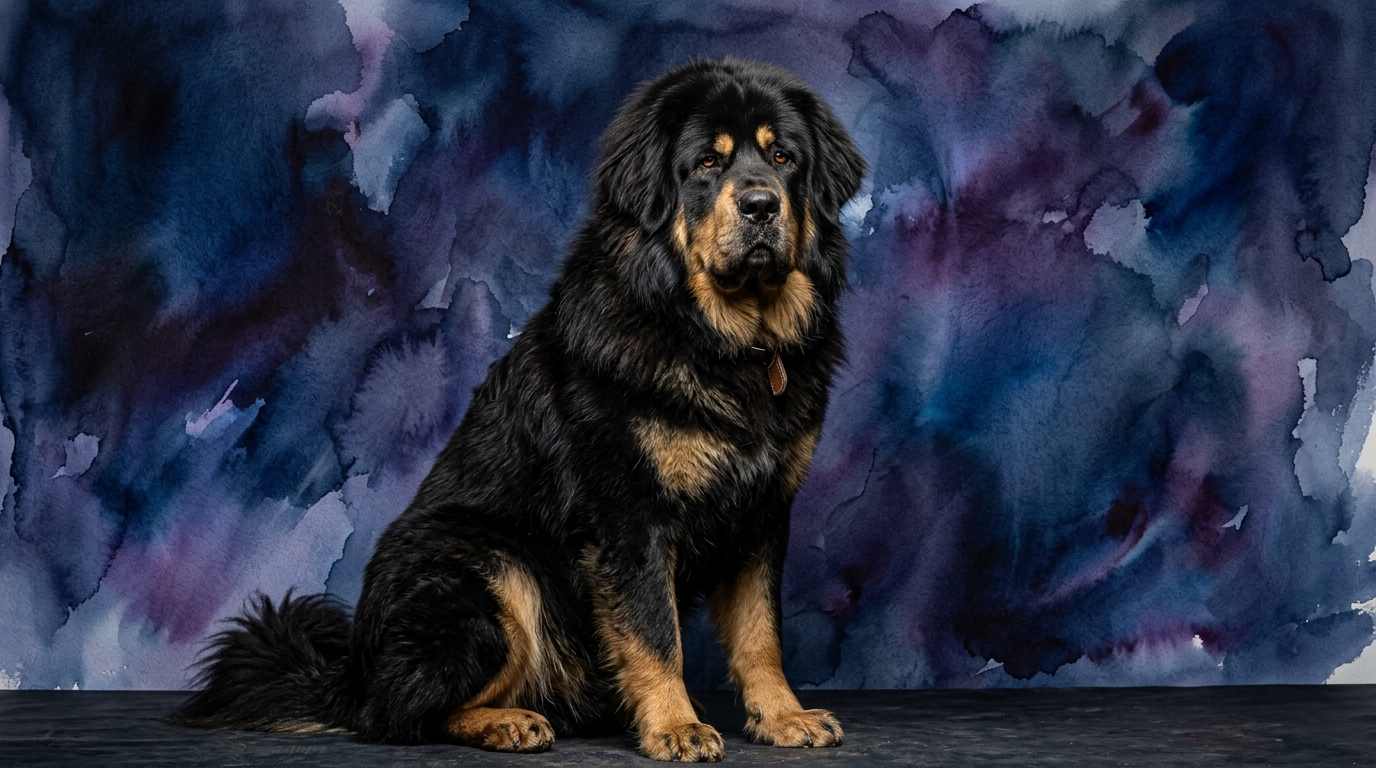
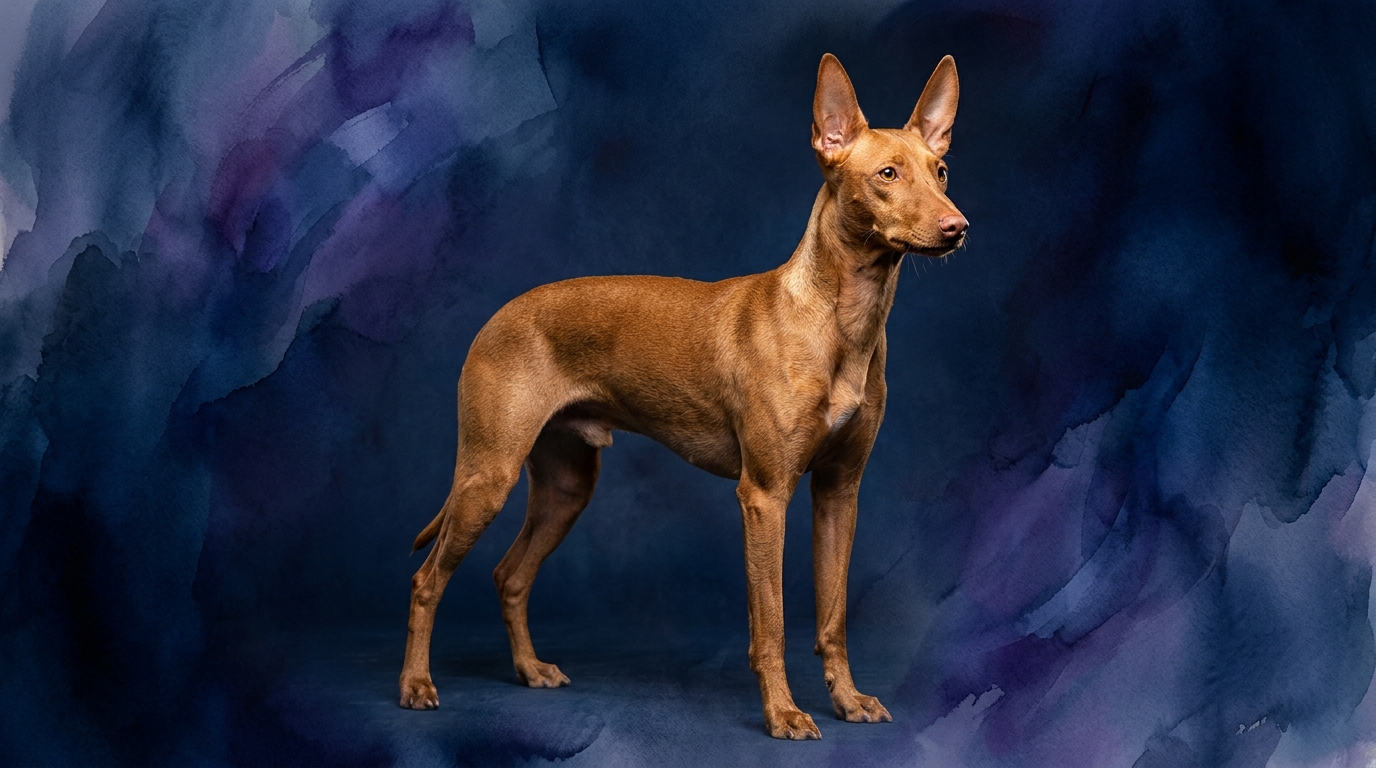
Side-by-Side IQ Profile: Tibetan Mastiff vs. Cirneco dell'Etna
At first glance, the identical 3/5 scores across all five cognitive dimensions for both the Tibetan Mastiff and the Cirneco dell'Etna might suggest similar minds. However, a closer look reveals how these capacities manifest distinctly in each breed, shaped by their unique evolutionary pressures and purposes.
For the **Tibetan Mastiff (Working Group)**:
**Problem Solving (3/5):** This score reflects a practical, independent problem-solving ability rooted in territory and threat assessment. A Tibetan Mastiff isn't typically one to solve intricate puzzle toys with enthusiasm, but rather excels at evaluating complex environmental situations, identifying intruders, and determining effective patrol strategies, often making self-directed decisions based on protective instincts rather than solving abstract human puzzles.
**Training Speed (3/5):** A 3/5 in training speed signifies a capacity to learn new commands and behaviors, but often at a pace dictated by their independent nature and the perceived relevance of the task. They are not quick to respond to rote obedience if it doesn't align with their strong will or if they don't understand the underlying purpose. Consistency, patience, and positive reinforcement that respects their independent spirit are crucial for successful training, as they will learn, but on their own terms.
**Social Intelligence (3/5):** This dimension in a Tibetan Mastiff points to a nuanced understanding of social hierarchies and intentions, primarily within their established family unit. They are adept at reading their trusted humans' moods and subtle cues, forming profound bonds. However, their social intelligence often manifests as reservedness or suspicion towards strangers, requiring careful introductions. They excel at discerning friend from foe, a critical aspect of their guardian role, but are not overtly gregarious.
**Instinctive Drive (3/5):** The Tibetan Mastiff's 3/5 instinctive drive is overwhelmingly centered on guardianship and territorial protection. This manifests as a deep-seated need to survey and defend their home and family, often expressed through watchful patrolling, alert barking, and an imposing presence. While they may possess some prey drive, it is typically secondary to their primary guarding instincts, dictating their responses to perceived threats rather than an urge to chase small animals indiscriminately.
**Memory (3/5):** A 3/5 memory score for the Tibetan Mastiff indicates a robust ability to retain information over time, especially concerning their environment, routines, and experiences with individuals. They remember who belongs and who doesn't, the layout of their territory, and past interactions, both positive and negative. This strong memory contributes significantly to their effectiveness as guardians, allowing them to learn from past encounters and anticipate future events.
For the **Cirneco dell'Etna (Hound Group)**:
**Problem Solving (3/5):** For the Cirneco dell'Etna, a 3/5 in problem-solving is finely tuned to their hunting heritage. They are adept at figuring out how to navigate complex terrain, locate hidden prey, or overcome obstacles in pursuit. This isn't about solving abstract human puzzles, but rather about practical, agile, and often independent decision-making in the field. Their problem-solving is swift and focused when it involves their primary drives, demonstrating a keen intelligence for their intended purpose.
**Training Speed (3/5):** A Cirneco's 3/5 training speed suggests they are capable learners, but their progress is heavily influenced by their strong prey drive and independent hound nature. They can pick up commands, but their attention might be easily diverted by a scent or movement, making consistent focus a challenge. Training requires high-value rewards, engaging methods, and immense patience to capture and maintain their interest, as they are not inherently inclined towards strict obedience when their instincts call.
**Social Intelligence (3/5):** The Cirneco dell'Etna's 3/5 social intelligence typically means they form close, affectionate bonds with their immediate family, reading their moods and responding with sensitivity. They can be reserved or cautious around strangers, preferring to observe before engaging. While they understand social cues within their trusted circle, their independent nature means they might not always seek constant human validation or interaction, often content to observe or pursue their own interests.
**Instinctive Drive (3/5):** The Cirneco dell'Etna exhibits a pronounced 3/5 instinctive drive centered on hunting and chasing. This translates into a powerful urge to pursue anything that moves, whether it's a rabbit, a squirrel, or even a blowing leaf. Their senses are acutely tuned to detecting prey, and they possess a high drive to run, giving chase with remarkable speed and agility. This instinct is fundamental to their being and requires appropriate outlets.
**Memory (3/5):** A 3/5 memory for the Cirneco dell'Etna is particularly strong regarding locations, routines, and successful hunting strategies. They remember where they found prey previously, the best paths to take, and the associations between commands and rewards. This memory aids their efficiency in hunting and allows them to learn household routines, though their independent streak might sometimes override perfect recall if a more interesting sensory input arises.
Where the Tibetan Mastiff Wins Cognitively
The Tibetan Mastiff's cognitive strengths are deeply intertwined with its ancient role as a formidable guardian. Their problem-solving (3/5) and social intelligence (3/5) are uniquely geared towards **complex threat assessment and strategic guarding**. They excel at independently evaluating situations, discerning genuine threats from benign visitors, and making strategic decisions about when and how to intervene, often without direct human command. This strength lies in their ability to process multiple social and environmental cues simultaneously to protect their domain.
Furthermore, their 3/5 memory is particularly robust when it comes to **long-term territorial memory**. They retain an intricate map of their territory, including potential weak points, regular visitors, and unusual occurrences. This allows them to maintain a consistent and reliable watch over long periods, remembering past incidents and adapting their patrol patterns accordingly.
Where the Cirneco dell'Etna Wins Cognitively
The Cirneco dell'Etna, a breed honed for the chase, demonstrates cognitive advantages in dynamic, high-speed scenarios. Their 3/5 problem-solving shines in **agile problem-solving during pursuit**. They exhibit exceptional cognitive agility in navigating challenging terrain, calculating trajectories, and adapting pursuit strategies instantly while chasing prey. This involves quick, on-the-spot decision-making that leverages their physical prowess and inherent athleticism.
Their instinctive drive (3/5) combined with their memory (3/5) and problem-solving (3/5) also grants them superior **sensory focus and discrimination**. They can effectively identify and track specific scents or movements amidst environmental distractions, maintaining singular focus on a target and filtering out irrelevant stimuli. This cognitive advantage is critical for successful hunting.
Which Is Easier to Train and Why?
With both breeds scoring 3/5 in training speed, neither is inherently 'easy' in the conventional sense of a highly biddable companion. The *nature* of their training challenges, however, differs significantly.
Training a **Tibetan Mastiff** demands immense patience, consistency, and a deep understanding of their independent, guardian mindset. Their 3/5 training speed means they *can* learn, but they often question the necessity of a command or choose to comply only if it aligns with their internal logic or perceived duty. They are not dogs that thrive on endless repetitions for the sake of it. Success comes from building a trusting partnership, using positive reinforcement, and demonstrating why a command is beneficial or logical, rather than enforcing strict obedience. Their strong-willed nature means 'easier' is subjective; they are easier to train *if* you respect their independence and work with their protective instincts.
Training a **Cirneco dell'Etna** also requires consistency and high-value motivation due to their 3/5 training speed. Their primary challenge stems from their powerful 3/5 instinctive drive, particularly their prey drive. They are easily distracted by sights, sounds, or scents, making it difficult to maintain focus in stimulating environments. While they can learn quickly when engaged, their independence and drive to chase can override commands, especially recall, if a perceived 'prey' appears. Training needs to be exceptionally fun, varied, and incorporate their natural desire to run and chase in a controlled manner. It's easier to train them if you can make training a game that appeals to their hound nature, but managing their distractibility is a constant effort.
Suitability for Active vs. Relaxed Owners
Despite their imposing size, a mature **Tibetan Mastiff** can be a surprisingly relaxed presence indoors, provided their moderate exercise needs and territorial instincts are met. They are not typically high-energy dogs requiring constant activity. They suit owners who appreciate a watchful, calm companion, have ample space (a securely fenced yard is non-negotiable for their guarding instincts), and can provide consistent, moderate walks and mental engagement focused on patrolling or observing. They are not for owners seeking a jogging partner but rather one who respects their preference for a dignified, observant pace.
The **Cirneco dell'Etna** is unequivocally for active owners. Their 3/5 instinctive drive for chasing and their agility demand significant daily exercise, including opportunities to run freely and safely in a secure area. They thrive on activities like lure coursing, long hikes, or vigorous play sessions. A relaxed owner will quickly find themselves with a bored and potentially destructive Cirneco. They need an owner who is committed to providing consistent outlets for their energy and prey drive, ensuring they remain physically and mentally stimulated.
The Verdict
Choose the Tibetan Mastiff when seeking a formidable, independent guardian with a calm, watchful presence indoors, provided you are prepared for consistent, respectful training that acknowledges their strong will and territorial instincts.
Choose the Cirneco dell'Etna when seeking an agile, energetic companion for active pursuits, provided you appreciate their independent hound nature and are prepared to manage a strong prey drive with consistent exercise and engaging training.
🧠 Find Your Pet's IQ Score
Our Pet IQ Lab assessment covers 25+ tests across 5 cognitive dimensions — personalized to your breed.
Take the Full IQ Test →Frequently Asked Questions
Do identical IQ scores mean these breeds behave identically?
No, identical scores across the five dimensions indicate similar capacities, but their expression differs vastly. Each breed applies these cognitive abilities through the lens of its unique evolutionary history and purpose, resulting in distinct behavioral patterns and problem-solving approaches.
Which breed is better for a first-time dog owner?
Neither breed is typically recommended for a first-time dog owner due to their independent natures, strong drives, and specific training requirements. Both demand an owner with experience, patience, and a deep understanding of breed-specific needs and motivations.
How do their social intelligence scores (3/5) manifest differently?
The Tibetan Mastiff's social intelligence often manifests as discerning loyalty and protective suspicion towards strangers, while the Cirneco dell'Etna's leans towards affectionate bonds within its family but reserved independence outside that circle. Both understand social cues but react to them based on their primary drives – guarding versus hunting.