Side-by-Side IQ Profile: Understanding Nuance
While both the Tibetan Mastiff and the Pharaoh Hound register a consistent 3/5 across all five cognitive dimensions in The Cosmic Pet Pet IQ Lab, the *manifestation* of these scores is profoundly shaped by their breed's historical roles and inherent temperaments. It's crucial to look beyond the numbers and understand the specific ways each breed applies its mental faculties.
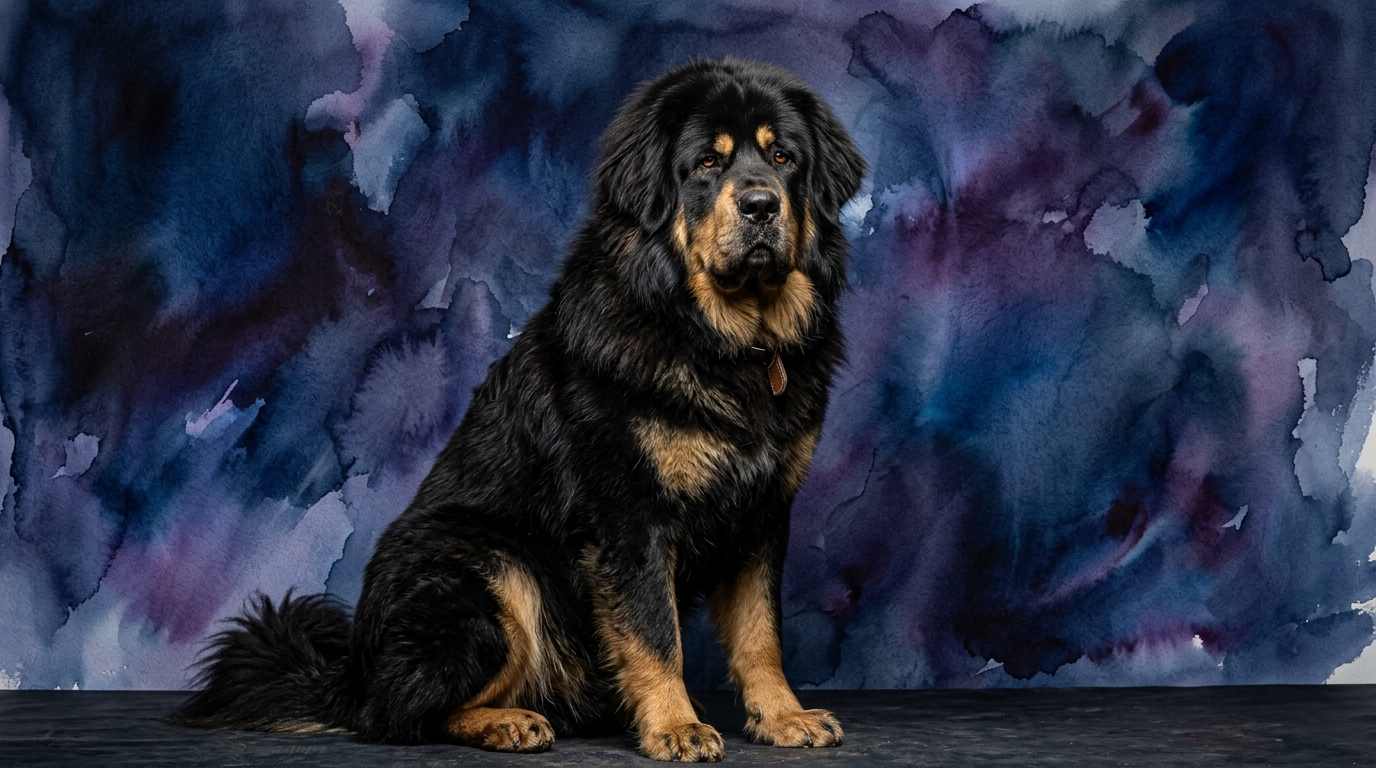
For the Tibetan Mastiff (Working group), a **Problem Solving** score of 3/5 reflects a capacity for independent, situation-specific judgment rather than eager obedience. Their intellect is geared towards autonomously assessing potential threats to their territory or family, deciding when and how to intervene, and deterring intruders without direct human command. Their thought process is one of self-reliant guardianship, requiring them to evaluate dynamic scenarios and act decisively. Their **Training Speed** at 3/5 indicates they are capable of learning, but their progress is often deliberate, as they might 'think through' a command, weighing its necessity or relevance to their protective role. Consistency and clear purpose are paramount for effective learning with this independent breed. Their **Social Intelligence** at 3/5 is highly discerning; they form deep, protective bonds with their immediate family, reading their moods with precision, but shift to wariness and careful evaluation towards strangers. Their **Instinctive Drive** (3/5) is profoundly rooted in guarding and territoriality, manifesting as a strong desire to patrol and monitor their surroundings. Finally, their **Memory** (3/5) is robust for places, people, and experiences related to their perceived territory and social dynamics, recalling boundaries and routines vital for their role.
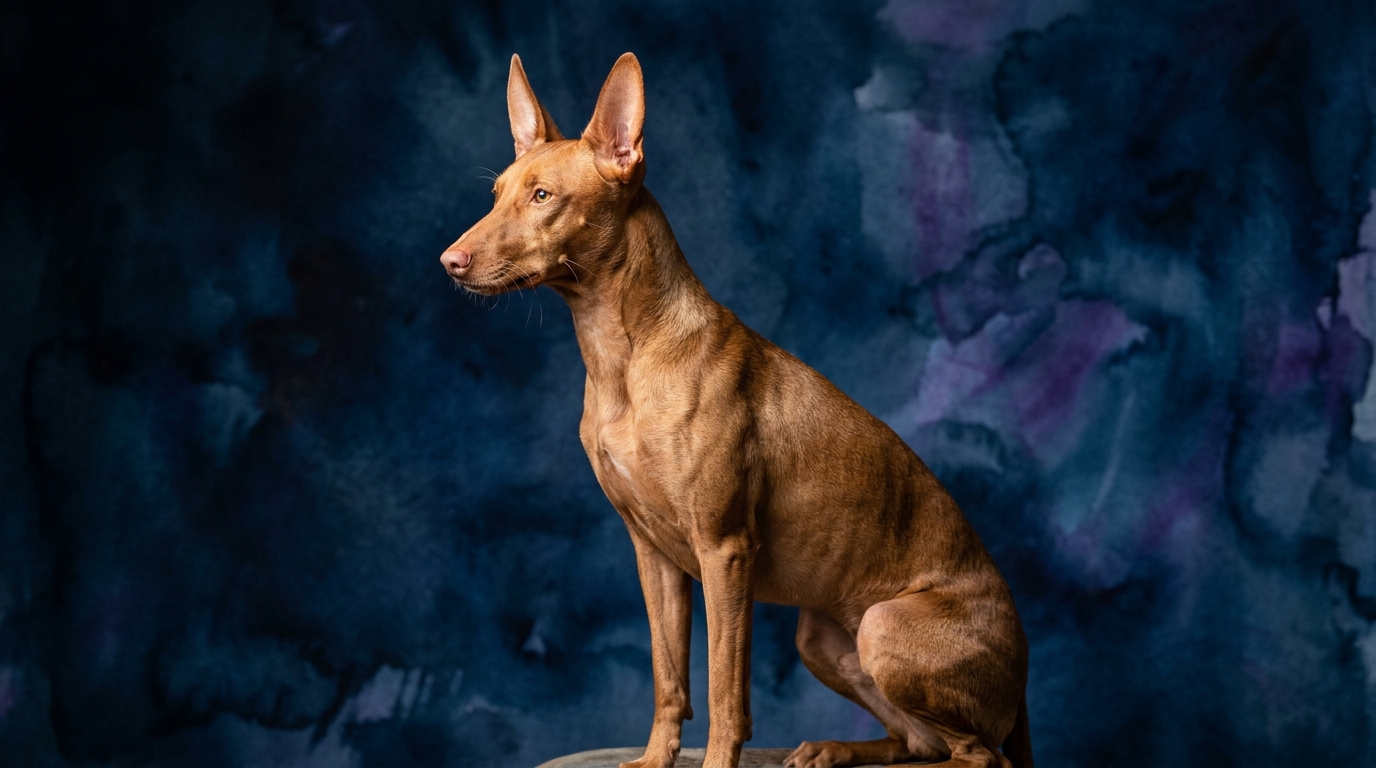
The Pharaoh Hound (Hound group), also scoring 3/5 across the board, expresses these cognitive traits differently. Their **Problem Solving** (3/5) is honed for the chase, meaning efficient navigation of complex terrain, outsmarting prey, and finding advantageous paths during a hunt. Their intellect is applied to spatial reasoning and quick, agile decision-making in pursuit, often involving creative maneuvers. Their **Training Speed** (3/5) is influenced by their strong prey drive and independent hound nature; while intelligent and capable of learning, their focus can be easily diverted by compelling scents or movements, making proofed obedience a longer process. Engaging their natural curiosity makes training effective. Their **Social Intelligence** (3/5) reveals a sensitive and empathetic nature; they read human emotions well and thrive on close family interaction, forming strong, affectionate bonds, often displaying their feelings openly. Their **Instinctive Drive** (3/5) is primarily the powerful urge to spot, chase, and pursue, deeply ingrained from their sighthound heritage and manifesting as a keen interest in movement. Their **Memory** (3/5) is good for learned commands and routines, especially with positive reinforcement, and strong for specific scents and visual cues related to their environment and potential prey, crucial for their hunting heritage.
Where Tibetan Mastiff Wins Cognitively
Even with identical scores, the Tibetan Mastiff demonstrates specific cognitive strengths that set it apart, particularly in its capacity for independent judgment and strategic defense. Their problem-solving, while rated 3/5, manifests as an unparalleled ability to assess threats autonomously, making complex decisions about when to escalate or de-escalate a situation without direct human intervention. This isn't about rote learning, but about proactive, self-directed guardianship, a mental process refined over centuries for solitary watchfulness. They excel at evaluating nuanced social cues from strangers and determining appropriate responses, a cognitive task requiring significant discernment and self-control. This strategic thinking for protection is a hallmark of their intellect.
Furthermore, their memory and instinctive drive, both 3/5, converge to grant them a profound cognitive advantage in territorial awareness and spatial mapping. A Tibetan Mastiff develops an incredibly detailed mental map of their domain, remembering every ingress point, potential hiding spot, and routine movement within their territory. This isn't just passive recall; it's about constant monitoring and updating of their environment, anticipating changes, and recognizing anomalies. This acute spatial awareness and memory for security purposes is a specific cognitive strength that few breeds match, allowing them to operate as highly effective, self-sufficient guardians.
Where Pharaoh Hound Wins Cognitively
The Pharaoh Hound, despite parallel scores, showcases distinct cognitive advantages, particularly in agile problem-solving during pursuit. Their intellect, rated 3/5 for problem-solving, is finely tuned for dynamic, high-speed situations, excelling at rapid assessment of visual and environmental cues to efficiently track and outmaneuver prey. This involves exceptional spatial reasoning, the ability to predict prey movement, and quickly adapt their own trajectory over varied terrain. It’s a form of fluid intelligence where quick, instinctive decisions are paramount, demonstrating a cognitive processing speed and adaptability tailored for the chase, rather than static assessment.
Moreover, their instinctive drive (3/5) and memory (3/5) are highly specialized for immediate environmental responsiveness and sensory acuity. The Pharaoh Hound's cognitive system is acutely tuned to detect subtle movements and changes in their surroundings, processing visual information with remarkable speed and accuracy. This translates into a superior ability to react instantly to stimuli, remembering specific visual patterns or scents over time and associating them with past experiences. Their memory is less about static territorial recall and more about dynamic recognition of fleeting sensory data, making them incredibly perceptive to environmental shifts relevant to their hunting heritage. Their social intelligence (3/5) also leans towards a more overt emotional sensitivity, often reflecting human moods, indicating a sophisticated level of empathic understanding that fosters a deeply connected, responsive relationship.
Which is Easier to Train and Why
While both breeds are rated 3/5 for training speed, the practical experience of training a Tibetan Mastiff versus a Pharaoh Hound often presents distinct challenges, rooted in their fundamental behavioral differences. A Tibetan Mastiff's independent nature and strong territorial instincts mean that training requires immense patience, consistency, and a clear demonstration of purpose. They are not inherently eager to please and will often weigh commands against their own judgment or perceived necessity. Their problem-solving and social intelligence are geared towards making their own decisions about who and what to trust, rather than blindly following instructions. This means that while they *can* learn, their training progress may appear slower or more deliberate, as they are processing information through a lens of self-sufficiency and guarding.
In contrast, the Pharaoh Hound, despite its independent hound spirit and strong prey drive, often presents a different kind of training dynamic. Their social intelligence and emotional sensitivity mean they are often more motivated by positive reinforcement and the desire for close interaction with their human. They are responsive to their owner's moods and tone, and while they can be easily distracted by scent or sight, they often enjoy the engagement of training sessions when structured positively. Their problem-solving is agile and dynamic, meaning they can grasp new concepts quickly, but their focus can waver if not consistently engaged. Therefore, while both require dedicated effort, the Pharaoh Hound's inherent desire for connection and responsiveness, coupled with a training approach that leverages their playfulness and prey drive, can make the *process* feel more collaborative and less like a constant negotiation compared to the Tibetan Mastiff's more self-directed learning style.
Which Suits Active Owners vs. Relaxed Owners
The cognitive profiles of both breeds suggest they thrive with engaged, rather than entirely relaxed, owners, but the *nature* of that engagement differs significantly. A Tibetan Mastiff, with its profound instinctive drive for guarding and its independent problem-solving, suits an owner who understands and respects their need for purpose and a clearly defined role. While not requiring constant physical exertion, they need mental stimulation related to their guarding instincts, such as observing their territory, rather than being confined without mental tasks. A truly relaxed owner who expects a passive companion would find the Mastiff's self-directed nature challenging; they need an owner who is mentally active in managing their independent spirit and providing consistent, firm, yet fair leadership. An owner who can provide a secure, expansive environment and understands the nuances of a low-energy but high-purpose breed would be a good fit.
The Pharaoh Hound, conversely, with its strong instinctive drive for pursuit and agile problem-solving, is better suited for truly active owners. They possess a remarkable capacity for bursts of speed and endurance, requiring regular opportunities to run freely in a secure area or participate in dog sports like lure coursing. Their memory and environmental responsiveness mean they benefit from varied experiences and mental challenges that tap into their natural curiosity and athleticism. A relaxed owner who cannot commit to significant daily exercise will likely encounter a bored and potentially destructive Pharaoh Hound. They need an owner who can match their physical energy and provide consistent mental engagement through activity and training that appeals to their sighthound nature.
The Verdict
Choose a Tibetan Mastiff if you seek an independent, discerning guardian who excels at autonomous territorial protection and you are prepared to manage a strong-willed companion with consistent, respectful leadership.
Opt for a Pharaoh Hound if you are an active individual or family seeking an elegant, sensitive, and physically dynamic companion, prepared to meet their significant exercise needs and engage their quick, curious mind.
🧠 Find Your Pet's IQ Score
Our Pet IQ Lab assessment covers 25+ tests across 5 cognitive dimensions — personalized to your breed.
Take the Full IQ Test →Frequently Asked Questions
Are Tibetan Mastiffs good family dogs despite their guarding instincts?
Tibetan Mastiffs form deep, protective bonds with their immediate family, showing discerning social intelligence. They can be excellent family companions, particularly with older children who understand boundaries, but require extensive socialization from a young age to navigate interactions outside their core family unit. Their loyalty is profound, making them dedicated protectors.
How much exercise does a Pharaoh Hound need daily?
Pharaoh Hounds require a substantial amount of exercise, ideally at least an hour of vigorous activity daily, often in the form of running. Their strong instinctive drive for pursuit means they thrive when given opportunities to stretch their legs in a securely fenced area or participate in activities like lure coursing, which satisfies their natural athleticism and problem-solving skills.
Can a Pharaoh Hound live with cats or other small pets?
Due to their strong instinctive drive and prey drive, Pharaoh Hounds typically require careful and early socialization to coexist peacefully with cats or other small pets. While some individuals can learn to live with them, their natural instinct to chase means constant supervision and a well-managed environment are essential to ensure the safety of smaller animals in the household.