Side-by-Side Cognitive Profiles: Guardians vs. Hunters
In The Cosmic Pet Pet IQ Lab, both the Tibetan Mastiff and the Rhodesian Ridgeback register a consistent 3/5 across all five cognitive dimensions. However, these identical scores belie profound differences in how these breeds manifest their problem-solving, training speed, social intelligence, instinctive drive, and memory.
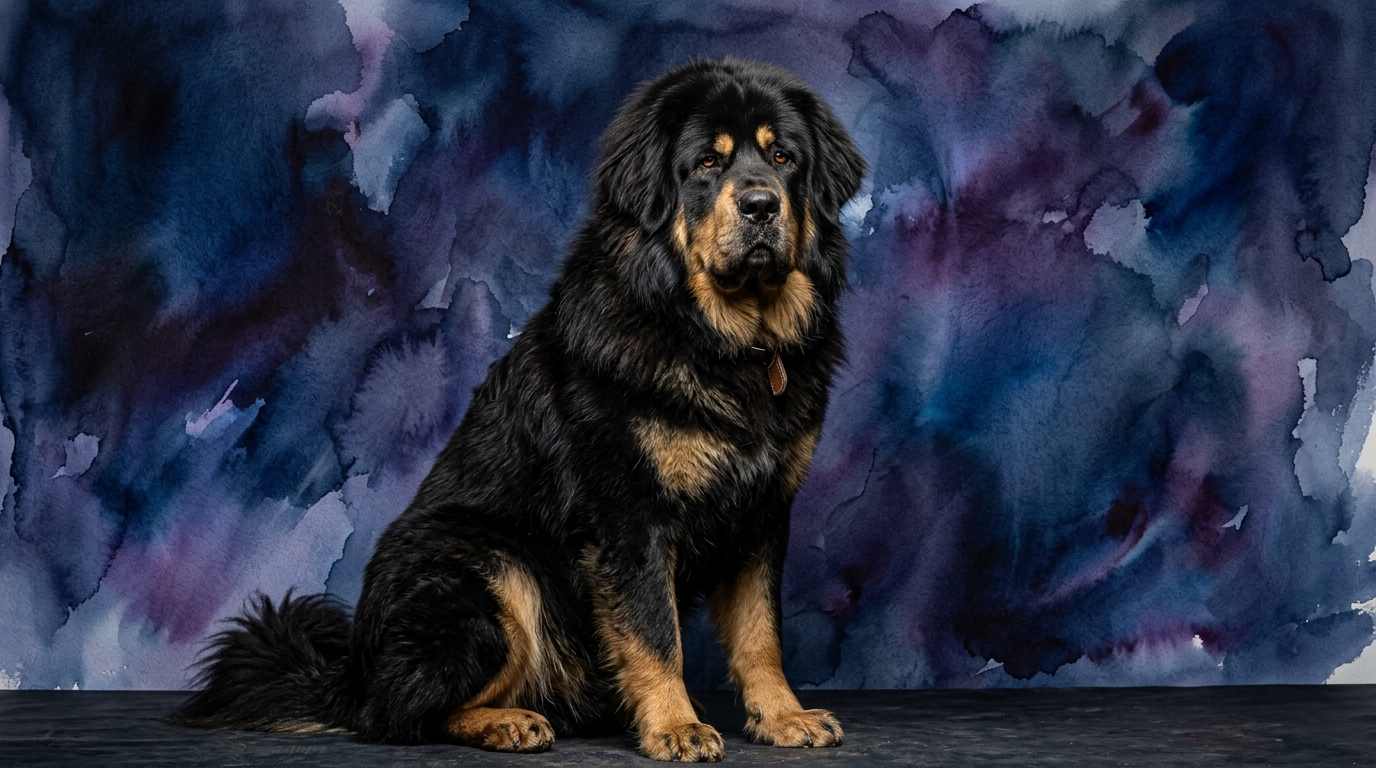
For the **Tibetan Mastiff**, a Working breed, their 3/5 in **Problem Solving** primarily reflects their capacity for independent judgment in guarding. This often means assessing threats and making decisions without direct human command, a critical skill for a solitary livestock guardian. Their **Training Speed** at 3/5 indicates they can learn, but often on their own terms, requiring immense patience and a consistent approach to overcome their inherent independence. Their **Social Intelligence** (3/5) is geared towards discerning friend from foe, forming deep bonds with their immediate family while maintaining a reserved, often suspicious, demeanor towards strangers. The **Instinctive Drive** (3/5) is overwhelmingly focused on territorial protection and guarding, a deep-seated impulse to secure their domain. Finally, their **Memory** (3/5) is robust for remembering routines, perceived threats, and the social hierarchy within their trusted circle.
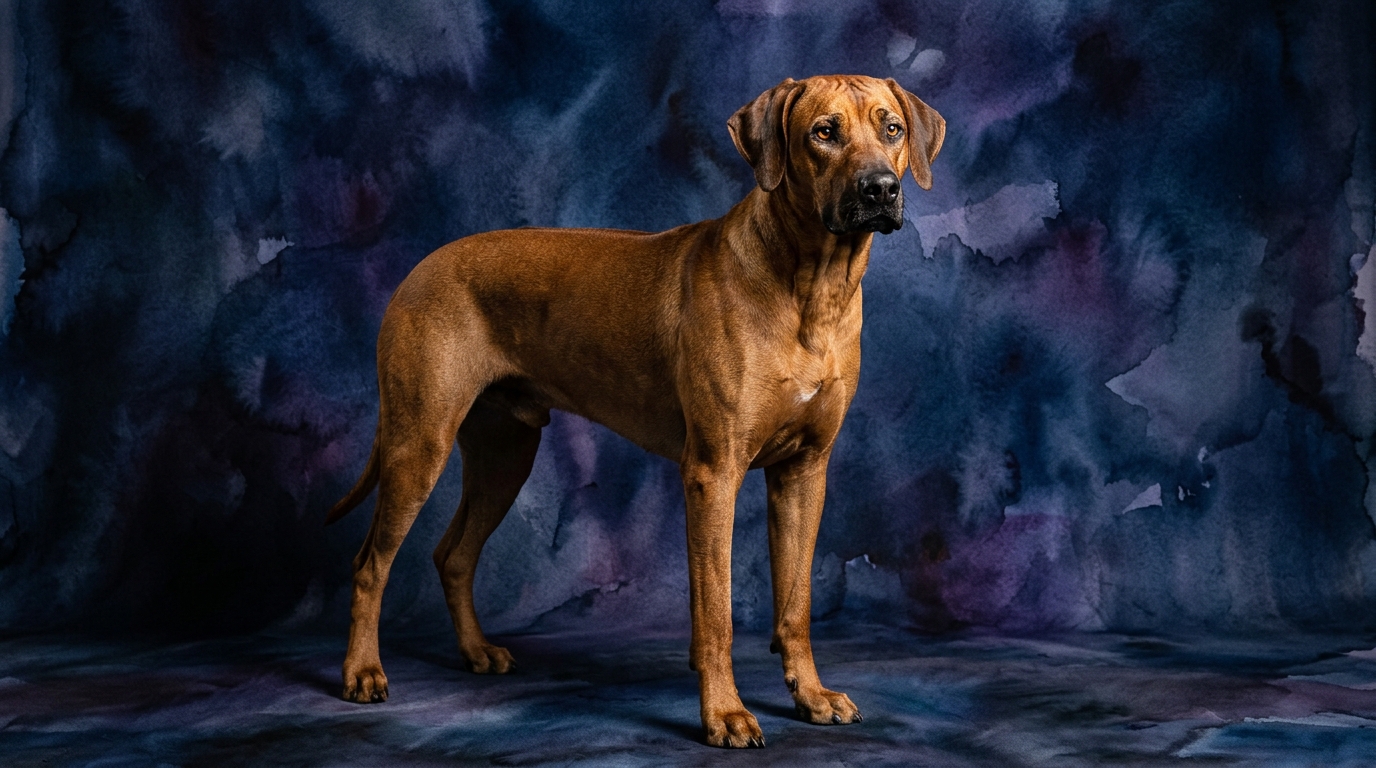
The **Rhodesian Ridgeback**, a Hound breed with a Coren ranking of #52, interprets its 3/5 scores through a different lens. Their **Problem Solving** (3/5) is rooted in resourcefulness, traditionally involving tracking and cornering large game. This manifests as a strategic approach to challenges, often coupled with an independent streak when pursuing an interesting scent or objective. Their **Training Speed** at 3/5 reflects a capability to learn and understand commands quickly, yet their independent hound nature means they can be easily distracted or choose to prioritize their own interests over immediate compliance. **Social Intelligence** (3/5) for a Ridgeback involves strong family attachment and sensitivity to human emotions, though they can be aloof with unfamiliar individuals. Their **Instinctive Drive** (3/5) is dominated by a powerful prey drive, an urge to chase, and an enduring fascination with scent, driving much of their exploration. Their **Memory** (3/5) is strong for recalling training cues, established routines, and the locations of intriguing scents or past adventures.
Where the Tibetan Mastiff's Cognition Shines Brightest
The Tibetan Mastiff truly excels in cognitive areas demanding autonomous decision-making and unwavering commitment to a specific role. Their problem-solving, rated 3/5, is a testament to their ability to survey their territory, identify potential threats, and initiate a response without constant human instruction. This isn't about solving complex puzzles for treats, but rather solving the existential puzzle of 'how to keep my flock and family safe' in challenging environments.
Their social intelligence, also a 3/5, is deeply specialized. It allows them to develop an intense, almost singular devotion to their primary family unit, discerning subtle cues within this inner circle. This translates into a profound, albeit selective, understanding of their trusted companions' needs and intentions. This capacity for independent, self-directed guardianship, fueled by a powerful instinctive drive, is a cognitive advantage for specific protection roles.
Where the Rhodesian Ridgeback's Cognitive Strengths Emerge
The Rhodesian Ridgeback's cognitive strengths lean towards adaptability, strategic pursuit, and a more interactive problem-solving approach. Their 3/5 in problem-solving often manifests as cleverness in navigating varied terrain during a hunt or figuring out how to access an interesting item. This breed’s Coren ranking of #52 indicates a general aptitude for obedience-related tasks, suggesting a mental flexibility to adapt to human-defined challenges more readily than an unranked breed.
Their instinctive drive, also 3/5, is geared towards pursuit and exploration, requiring a different kind of mental agility to track and strategize. This drive, combined with their memory, allows them to learn complex tracking patterns and recall specific scents or routes over long distances. Their social intelligence, while selective with strangers, allows for a more engaged and cooperative dynamic within their family, making them responsive to varied social cues and more inclined towards team-based activities, even if their independence can surface.
Training Dynamics: Independence vs. Distraction
When it comes to training, the core behavioral differences between these breeds become pronounced, despite both scoring 3/5 for training speed. The Tibetan Mastiff’s independence is a significant factor. They are not inherently eager to please and may question the necessity of a command, especially if it doesn't align with their perceived duties or innate guarding instincts. Training a Tibetan Mastiff requires unwavering consistency, clear boundaries, and a deep understanding of their self-reliant nature; force is counterproductive, and persuasion through positive reinforcement is key.
The Rhodesian Ridgeback, while also possessing an independent streak, presents a different training challenge. Their hound nature means they are often highly motivated by scent and prey drive. While capable of learning commands quickly, their focus can easily be diverted by an interesting smell or a moving object. Training a Ridgeback involves channeling their energy and drive, making sessions engaging and rewarding, and consistently working to maintain their attention amidst environmental distractions. They are generally more biddable than a Mastiff, but their strong instincts require careful management and early socialization.
Matching Owners: Serene Guardians vs. Active Companions
The cognitive and behavioral profiles of these breeds lend themselves to very different owner lifestyles. The Tibetan Mastiff is best suited for experienced owners who appreciate a formidable, often aloof, guardian. These owners must be prepared for a dog that thrives on independence and requires a calm, consistent environment. They are not a breed for casual obedience work or off-leash adventures in open spaces, as their territorial instincts can be overwhelming.
Conversely, the Rhodesian Ridgeback needs an active owner who can provide ample physical and mental stimulation. Their strong instinctive drive for exploration and pursuit means they thrive with activities like hiking, running, or scent work. These owners should enjoy incorporating their dog into an active lifestyle, understanding that a bored Ridgeback is a resourceful, potentially destructive, Ridgeback. Their capacity for engagement makes them excellent companions for those seeking an adventure partner.
The Verdict: Choosing Your Canine Companion
The choice between a Tibetan Mastiff and a Rhodesian Ridgeback hinges not on a simple measure of 'intelligence,' but on how their distinct cognitive strengths align with an owner's lifestyle and expectations. Both are formidable, dedicated companions, but their mental frameworks lead them to interact with the world in profoundly different ways.
The Verdict
Choose a Tibetan Mastiff if you are an experienced, patient owner seeking an independent, formidable guardian for your home and family, valuing their autonomous decision-making in protection. They thrive in a stable, predictable environment where their natural instincts are understood and respected.
Opt for a Rhodesian Ridgeback if you are an active individual or family looking for a robust, engaging companion who can join you on adventures and thrives with consistent physical and mental challenges. Their adaptable intelligence and strong drive make them excellent partners for those who enjoy outdoor pursuits and dedicated training.
🧠 Find Your Pet's IQ Score
Our Pet IQ Lab assessment covers 25+ tests across 5 cognitive dimensions — personalized to your breed.
Take the Full IQ Test →Frequently Asked Questions
Are Tibetan Mastiffs good family dogs?
Tibetan Mastiffs can be devoted family members, forming deep bonds with their immediate human 'pack.' However, their social intelligence is selective, meaning they are often wary of strangers and require significant socialization from a young age to ensure they are well-adjusted around visitors. They are not typically suited for homes with very young, boisterous children or frequent guests.
How much exercise does a Rhodesian Ridgeback need?
Rhodesian Ridgebacks require a substantial amount of daily exercise to satisfy their instinctive drive and maintain their physical and mental well-being. At least an hour to two hours of vigorous activity, such as running, hiking, or sustained play, is typically recommended. Without adequate exercise, their problem-solving skills might be directed towards undesirable behaviors.
Which breed is better for first-time dog owners?
Neither the Tibetan Mastiff nor the Rhodesian Ridgeback is generally recommended for first-time dog owners due to their strong independent natures, substantial size, and specific behavioral needs. Both breeds require owners with experience, consistency, and a deep understanding of canine behavior to manage their powerful instincts and ensure proper training and socialization.