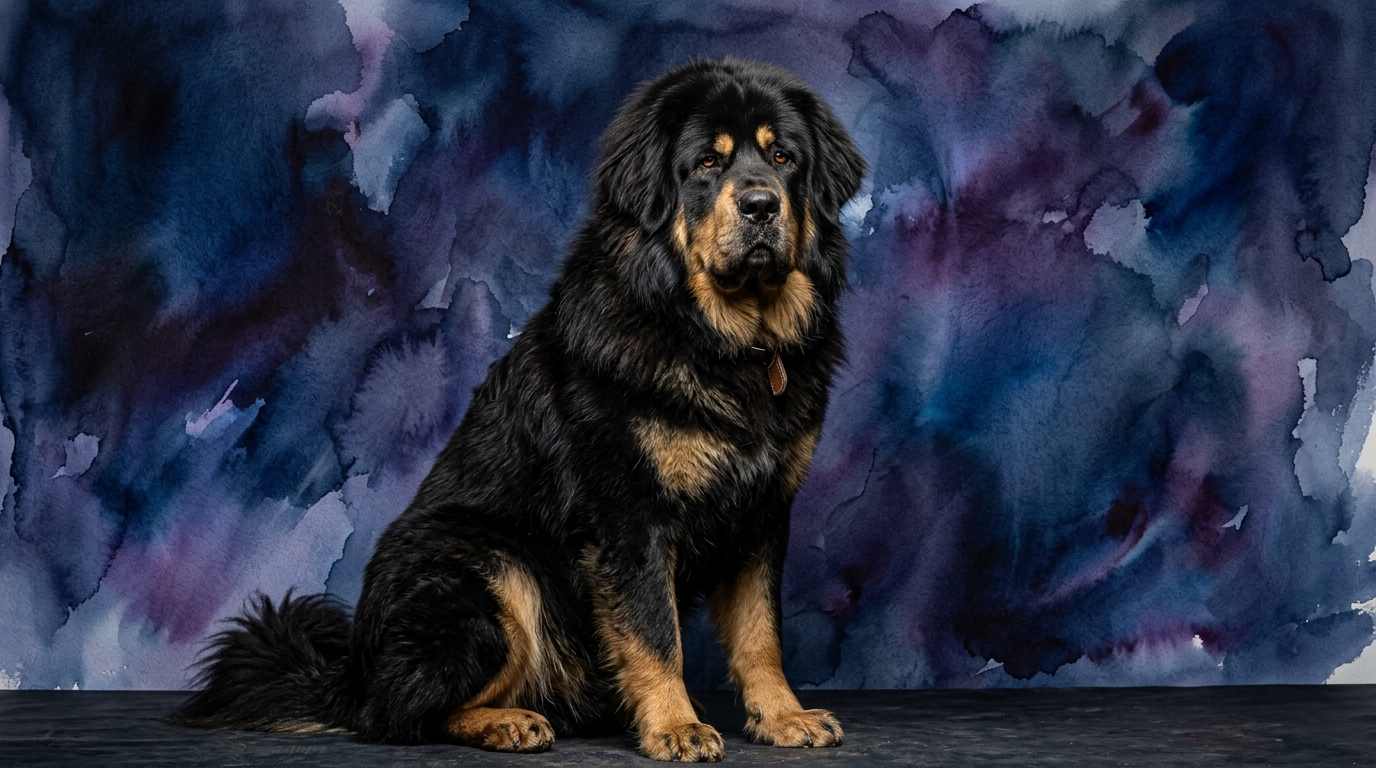

A Side-by-Side Look at Cognitive Profiles
The Pet IQ Lab framework evaluates canine intelligence across five key dimensions: Problem Solving, Training Speed, Social Intelligence, Instinctive Drive, and Memory. Interestingly, both the Tibetan Mastiff and the Russian Toy score an identical 3/5 across all these categories. However, these identical numerical scores don't imply identical cognitive manifestations; instead, they highlight how each breed applies its intelligence within the context of its inherent purpose and physical attributes.
The **Tibetan Mastiff**, a majestic Working breed, applies its 3/5 problem-solving ability to independently assess and manage its territory, often involving strategic patrolling and threat evaluation. Its 3/5 training speed suggests it is capable of learning but requires a compelling reason and a strong, consistent leader due to its independent will. Social intelligence (3/5) manifests as discerning loyalty, a deep understanding of its family unit, and acute awareness of shifts within its known environment. Its instinctive drive (3/5) is profoundly rooted in guardianship and territoriality, while its memory (3/5) allows it to retain complex spatial maps and detailed recollections of past interactions.
The **Russian Toy**, a spirited Toy breed, demonstrates its 3/5 problem-solving skills in navigating complex indoor environments and devising creative ways to gain attention or comfort from its human companions. Its 3/5 training speed indicates a capacity for quick learning of routines and tricks, though its sensitivity can be a factor. Social intelligence (3/5) means it is highly attuned to its owner's moods, actively seeks close interaction, and can be discerning with unfamiliar stimuli. Its instinctive drive (3/5) includes alert barking, a playful pursuit of small moving objects, and a strong desire for companionship. Memory (3/5) allows it to recall learned cues, owner's habits, and the social dynamics within the home environment.
Where the Tibetan Mastiff's Mind Shines
The Tibetan Mastiff's 3/5 in problem-solving shines brightest in its capacity for independent assessment and strategic action within its designated territory. Unlike breeds that might wait for human commands, the Mastiff's cognitive strength lies in its ability to observe, analyze potential threats or changes in its environment, and make autonomous decisions to maintain order and security. This is a profound, self-directed intelligence honed by centuries of solitary guardianship, where the dog was expected to manage its domain without constant human oversight.
Furthermore, its 3/5 in social intelligence and memory are uniquely powerful within its guardian role. The Tibetan Mastiff possesses a nuanced understanding of its established 'pack' and territory, discerning friend from perceived foe with a quiet intensity. It remembers intricate details about individuals and their interactions, contributing to an unwavering loyalty and protective nature towards its family. This isn't about universal friendliness, but rather a deep, protective recognition and a finely tuned ability to read subtle cues from those it considers its own.
The Russian Toy's Unique Cognitive Strengths
The Russian Toy's 3/5 in problem-solving often translates into clever, socially-oriented strategies for navigating human-centric spaces and interactions. These diminutive dogs excel at figuring out how to get onto a favorite lap, retrieve a hidden toy, or subtly communicate their needs and desires to their owners. Their intelligence is practical and focused on engagement, demonstrating an adaptability to domestic life and a knack for manipulating their environment to their advantage, often in charming ways.
Their 3/5 in training speed and memory, combined with their companion-oriented nature, means they can be surprisingly quick to pick up new cues and routines, especially when positive reinforcement is used. The Russian Toy's memory allows them to retain a wide repertoire of learned behaviors and understand complex household dynamics, making them adaptable and engaging companions. Their inherent sensitivity often means they quickly learn what pleases or displeases their human, adjusting their behavior accordingly.
Training Dynamics: Biddability vs. Independence
The identical 3/5 score for training speed for both breeds masks significant differences in their approach to learning and the challenges they present to a trainer. The Tibetan Mastiff's inherent independence and strong will mean that while they are certainly capable of learning, they often require a trainer who understands their motivations and can establish a clear, respectful hierarchy. They learn best when tasks align with their intrinsic drives, such as guarding or problem-solving, or when they perceive a clear benefit, rather than simply obeying out of biddability.
The Russian Toy, with its companion-oriented nature, generally responds well to positive reinforcement and consistency. Their 3/5 training speed means they can learn quickly, but their small size and potential for being easily overwhelmed mean training must be gentle, engaging, and free from harsh corrections. They thrive on interaction and praise, and while they can exhibit stubbornness if not properly motivated, their desire to please their owner often makes them eager students for the right, patient approach.
Ideal Lifestyles: Active Guardians vs. Engaging Companions
While "active" might imply high-energy exercise, for the Tibetan Mastiff, "active" ownership refers more to a lifestyle that accommodates their profound need for territory, purpose, and mental stimulation related to guardianship. Owners must be active in managing their environment, providing consistent leadership, and engaging their problem-solving skills in appropriate ways, rather than just long runs. They suit owners who appreciate an independent, watchful presence and can provide a secure, spacious environment where their cognitive strengths can be utilized in their intended role.
The Russian Toy, conversely, is an ideal fit for more relaxed owners who desire a constant, engaging companion. Their "active" needs are often met through indoor play, short walks, and ample cuddle time. Their cognitive strengths are best utilized in an environment where they are included in daily activities, offering opportunities for social interaction and problem-solving within the home. They thrive on companionship and mental engagement through games and interaction, making them perfect for those seeking a lively, sensitive presence that fits a more intimate, less physically demanding lifestyle.
The Verdict
Choose the Tibetan Mastiff if you seek an imposing, independent guardian with a profound understanding of their territory and family, and you are prepared for a long-term commitment to their unique cognitive and physical needs, valuing a deep, discerning loyalty over eager obedience.
Opt for the Russian Toy if you desire a spirited, highly interactive companion animal whose problem-solving is directed at social engagement and navigating the home, offering joy through their quick wit and devoted presence in a more intimate setting.
🧠 Find Your Pet's IQ Score
Our Pet IQ Lab assessment covers 25+ tests across 5 cognitive dimensions — personalized to your breed.
Take the Full IQ Test →Frequently Asked Questions
Do Tibetan Mastiffs learn tricks easily?
While Tibetan Mastiffs possess a 3/5 training speed, their independent nature means they learn best when tasks have a clear purpose or benefit from their perspective. They are capable of learning tricks, but often require patient, consistent training that respects their strong will and doesn't rely on blind obedience.
Are Russian Toys good with children?
Russian Toys, with their 3/5 social intelligence, can be good with older, respectful children who understand how to interact gently with a small dog. Their delicate structure and potential for sensitivity mean they might not thrive in boisterous environments with very young children, preferring calm, predictable interactions.
How do the guarding instincts differ between these two breeds?
The Tibetan Mastiff's 3/5 instinctive drive manifests as profound, independent territorial guardianship, often involving silent observation and decisive action when threats are perceived. The Russian Toy's 3/5 drive, while also protective of its family, typically expresses itself through alert barking and seeking owner intervention rather than physical confrontation, reflecting their companion role.