
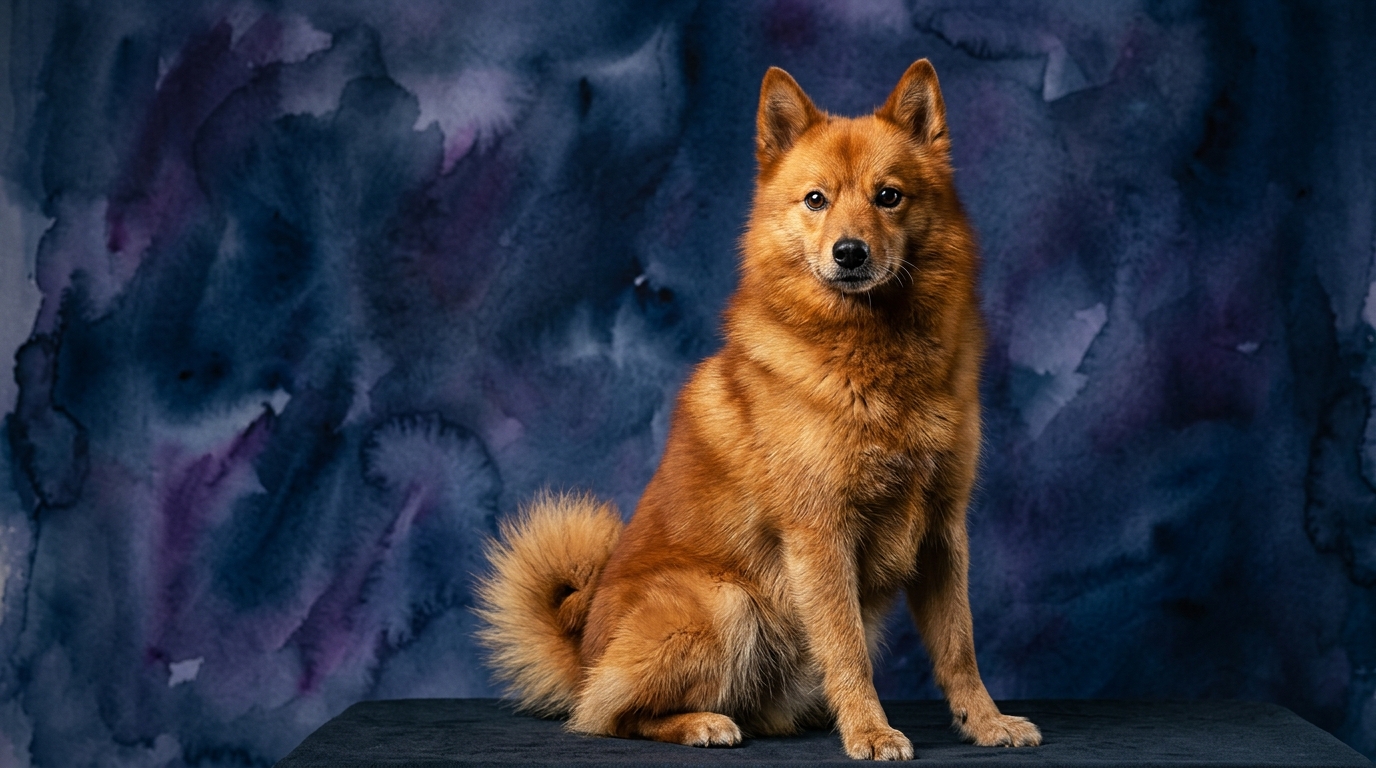
Side-by-Side IQ Profile: Tibetan Terrier vs. Finnish Spitz
The Cosmic Pet Pet IQ Lab assesses canine intelligence across five key dimensions, providing a granular view of a breed's cognitive strengths. Here, we examine how the Tibetan Terrier (Coren rank #63) and the Finnish Spitz (not Coren-ranked) manifest their identical 3/5 scores in each category, colored by their unique histories.
For the Tibetan Terrier:
Problem Solving (3/5): This score reflects their aptitude for navigating domestic complexities, like figuring out household puzzles or orchestrating play. Their historical role as companions and guardians likely honed their ability to adapt to varied social situations within a human environment.
Training Speed (3/5): Tibetan Terriers typically learn new commands at a moderate pace, often requiring consistent, positive reinforcement. Their willingness is often driven by a desire to please human companions, though they retain independence.
Social Intelligence (3/5): Their strong bond with families and keen observation contribute to moderate social intelligence. They are adept at picking up on human moods and social cues, integrating smoothly into family life.
Instinctive Drive (3/5): A moderate instinctive drive manifests in occasional herding tendencies, particularly with children or pets, and alert barking. While not intensely prey-driven, they retain natural curiosity and desire to patrol.
Memory (3/5): Tibetan Terriers exhibit solid memory for routines, learned commands, and people. This aids in retaining training and remembering past interactions, contributing to adaptability.
For the Finnish Spitz:
Problem Solving (3/5): For the Finnish Spitz, this score indicates capacity for independent thinking, particularly in tasks related to their heritage as “barking bird dogs.” They excel at figuring out how to locate game or navigate varied terrain, demonstrating resourceful, self-reliant problem-solving.
Training Speed (3/5): Finnish Spitz learn at a moderate pace, but their independent nature means training often requires creativity and understanding of their motivation. They respond best when tasks align with natural instincts or provide a clear, rewarding outcome.
Social Intelligence (3/5): Their social intelligence is often directed towards immediate family and environment, assessing threats or opportunities. While affectionate with chosen people, interactions can be more reserved with strangers, reflecting discerning social acumen.
Instinctive Drive (3/5): This is defining. Their moderate instinctive drive is heavily weighted towards vocalization (barking to alert hunters) and persistent prey drive. This drive is a sophisticated, purposeful behavior integral to their breed's function.
Memory (3/5): Finnish Spitz possess good memory for places, successful hunting strategies, and specific sounds associated with tasks. This allows them to build a mental map of their environment and recall effective approaches.
Where the Tibetan Terrier Wins Cognitively
The Tibetan Terrier, historically a monastic companion and guardian, often displays a nuanced cognitive advantage in areas requiring social adaptability and a deep understanding of human household dynamics. Their 3/5 social intelligence manifests as a greater sensitivity to subtle shifts in human mood and household routines, adeptly interpreting complex family interactions or anticipating needs without explicit commands. This is an intuitive grasp of social structures. Their problem-solving (3/5) frequently revolves around navigating social puzzles, such as gaining attention or encouraging interaction. They excel at tasks requiring patience and observation within a busy environment, like complex multi-step tricks involving handler cues. The Tibetan Terrier's memory (3/5) is particularly strong for personal relationships and interaction history, enabling robust bonds and appropriate responses to familiar faces. This cognitive style makes them exceptionally well-suited for integrated family life where social cohesion is paramount.
Where the Finnish Spitz Wins Cognitively
The Finnish Spitz, forged by centuries of independent work in Finnish forests, demonstrates a distinct cognitive edge in self-reliance, environmental awareness, and persistent, focused drive. Their 3/5 instinctive drive is powerfully channeled into vocalization and prey detection—a highly specialized communication system where variations in bark convey specific information. Their problem-solving (3/5) truly shines in scent work, tracking games, or accessing perceived 'prey,' utilizing keen senses. They possess remarkable ability to process subtle sensory information, distinguishing changes in scent, sound, and movement. Their memory (3/5) is acutely spatial, recalling successful strategies and navigating familiar territories. While their social intelligence (3/5) is present, it's expressed through an independent lens, assessing situations and making judgments rather than solely relying on human direction. This self-sufficiency, coupled with keen sensory processing, allows them to excel in sustained focus and independent decision-making outdoors.
Which is Easier to Train, and Why?
When considering ease of training, both the Tibetan Terrier and Finnish Spitz register 3/5 for training speed, yet their approaches and motivations differ significantly. The Tibetan Terrier often appears 'easier' for many owners due to their inherent desire to please and strong social intelligence. They are attentive to handler cues and emotional states, making them receptive to traditional, reward-based training focused on companionship. Their moderate instinctive drive (3/5) means fewer distractions from prey urges in controlled environments. While independent, it's expressed through playfulness rather than disengagement. Their Coren ranking of #63 reinforces suitability for structured domestic learning.
In contrast, the Finnish Spitz, while capable, requires a different philosophy. Their independent nature and formidable instinctive drive (3/5)—particularly vocalization and prey drive—mean they are less inclined to comply purely for human approval. Training necessitates understanding their natural motivations, making it a 'game' that taps into hunting instincts or provides clear, tangible rewards. They are self-directed; if a command doesn't align with perceived self-interest, they may ignore it. Their strong vocalization instinct also requires specific management. Therefore, the Tibetan Terrier's social orientation makes training feel more intuitive for a typical owner, whereas the Finnish Spitz demands a more creative, patient, and instinct-aware approach.
Suitability for Active vs. Relaxed Owners
The choice between a Tibetan Terrier and a Finnish Spitz for active versus relaxed owners hinges less on sheer physical energy and more on the type of activity fulfilling their cognitive and behavioral needs. The Tibetan Terrier, despite its moderate instinctive drive (3/5), thrives with owners providing consistent mental stimulation and social engagement. They are adaptable, enjoying brisk walks, agility, or trick training, suiting moderately active owners. However, their need for social interaction and inclusion means they are equally content with 'relaxed' owners prioritizing companionship and gentle mental games. They are not content to be left alone; their moderate social intelligence (3/5) demands a present, interactive human family.
Conversely, the Finnish Spitz suits truly active owners who appreciate and can channel their breed-specific drives. While their problem-solving (3/5) and memory (3/5) are excellent, they are best expressed through activities like hiking, scent work, or specialized bird-flushing games. Their strong instinctive drive (3/5) for vocalization and hunting requires outlets for these natural talents; otherwise, they may find disruptive expressions. A 'relaxed' owner expecting a quiet, sedentary companion without sufficient tailored engagement would find the Finnish Spitz challenging. They require an owner who understands their independent spirit and provides ample purposeful, outdoor-oriented activity.
The Verdict
Choose the Tibetan Terrier if you seek a socially intuitive companion who thrives on family interaction and adapts readily to a domestic lifestyle, offering a moderate but cooperative training experience.
Opt for the Finnish Spitz if you are an active owner eager to engage with a self-reliant dog whose unique vocalization and hunting instincts require dedicated, outdoor-oriented activities and creative training.
🧠 Find Your Pet's IQ Score
Our Pet IQ Lab assessment covers 25+ tests across 5 cognitive dimensions — personalized to your breed.
Take the Full IQ Test →Frequently Asked Questions
Are Tibetan Terriers good apartment dogs?
Yes, with sufficient daily exercise and mental stimulation, Tibetan Terriers can adapt well to apartment living. Their moderate energy levels and strong desire for companionship mean they thrive when included in family activities indoors. They do require regular walks and playtime to prevent boredom.
How much do Finnish Spitz bark?
Finnish Spitz are known for their vocal nature, earning them the nickname "barking bird dog." Their barking is an integral part of their hunting heritage, used to alert hunters to game. While manageable with training, prospective owners should be prepared for a naturally vocal companion, especially if not given proper outlets for their instincts.
Do both breeds get along with children?
Both breeds can be good with children, but their approaches differ. Tibetan Terriers often enjoy being part of family play and are generally tolerant and affectionate with respectful children. Finnish Spitz can be good family dogs but may be more reserved and require careful introductions, especially with very young or boisterous children, due to their independent nature.