Side-by-Side IQ Profile: Beyond the Numbers
At The Cosmic Pet Pet IQ Lab, both the Tibetan Terrier and the Xoloitzcuintli register a consistent 3 out of 5 across all five measured dimensions, suggesting a balanced cognitive profile rather than a deficit. This score indicates a solid, functional intelligence that allows them to navigate their worlds effectively without being overly complex or simplistic.
For **Problem Solving (3/5)**, both breeds demonstrate an ability to learn routines and overcome moderately challenging obstacles, such as figuring out how to access a favorite toy or navigating a familiar environment. They are capable of understanding cause-and-effect in their immediate surroundings, though they might not independently devise multi-step solutions to novel, abstract problems. Their approach is often practical and directly tied to their immediate goals or comfort.
Their **Training Speed (3/5)** suggests they learn new commands and behaviors at a moderate pace. They respond well to consistent, positive reinforcement, picking up cues over a reasonable number of repetitions. Neither breed is typically described as quick to grasp complex sequences after only a few tries, nor are they excessively slow or resistant to learning when motivated appropriately. They require patience and clarity in instruction.
Regarding **Social Intelligence (3/5)**, both breeds exhibit a good understanding of social cues within their established family units, discerning moods and intentions. They form strong bonds with their primary caregivers and can interpret human emotions to a reasonable degree. However, their social circles might be selective; while they understand social dynamics, their engagement with strangers or new social situations can vary, often showing initial reservation.
Their **Instinctive Drive (3/5)** points to a moderate expression of inherent behaviors. For the Tibetan Terrier, this might manifest as a watchful nature, alerting to new sounds or visitors, or a desire for companionship. For the Xoloitzcuintli, it could be a strong inclination towards guarding their territory or a deep attachment to their chosen human. These drives are present and influential but are generally manageable and can be channeled with appropriate guidance.
Finally, their **Memory (3/5)** indicates they retain learned behaviors, routines, and experiences adequately over time. They remember people, places, and commands, allowing for consistent behavior and recall of past interactions. While not possessing photographic recall, their memory is sufficient for daily living and maintaining trained responses.
Where the Tibetan Terrier Wins Cognitively
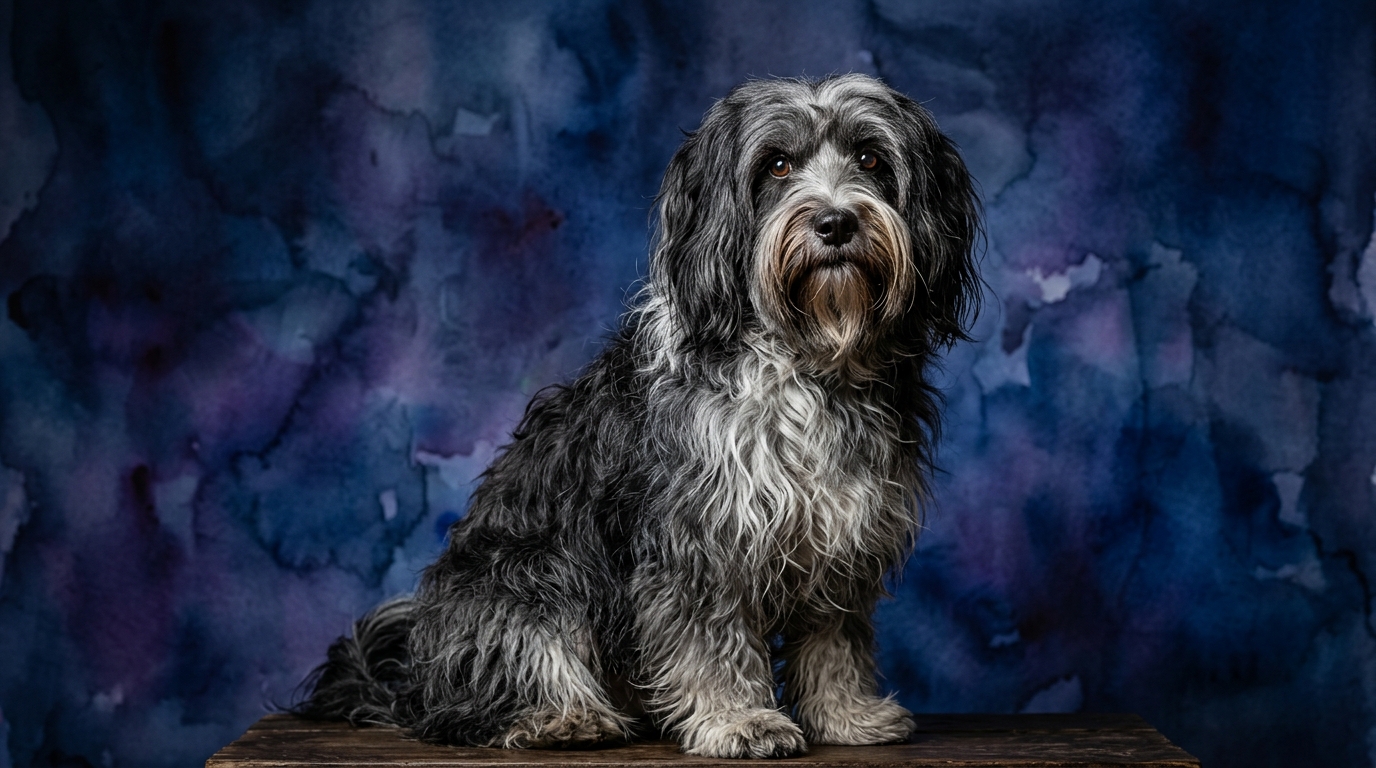
Despite identical scores, the Tibetan Terrier often exhibits a slightly more adaptable and context-aware problem-solving approach within a domestic setting. Originating as 'holy dogs' and companions in Tibetan monasteries, their role demanded a nuanced understanding of human routines and social structures, often without explicit command. This historical context suggests their Problem Solving (3/5) might lean towards discerning subtle environmental changes or anticipating family needs, such as knowing when a family member is about to leave and positioning themselves appropriately for a walk.
Their social intelligence (3/5) is often expressed through a charming, sometimes 'clownish' demeanor that allows them to integrate seamlessly into family life, making them adept at mediating household dynamics or seeking attention in engaging ways. They tend to observe and learn from their environment with a curious, independent streak, which can translate into creative solutions for simple challenges like opening cabinets or finding hidden treats, often with a mischievous flair. Their memory (3/5) may particularly shine in recalling complex social interactions and past experiences with a wide array of individuals, allowing them to adapt their behavior based on previous encounters.
Where the Xoloitzcuintli Wins Cognitively
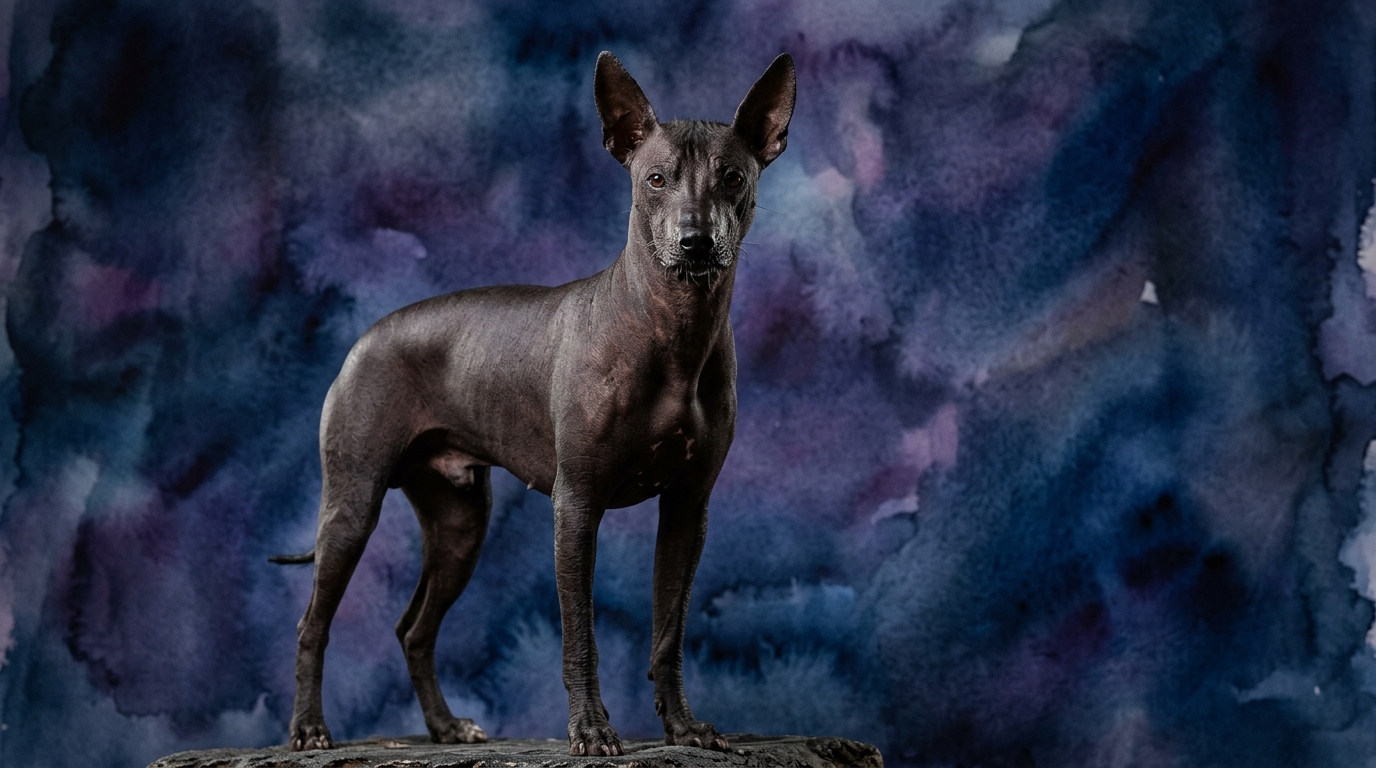
The Xoloitzcuintli, an ancient breed revered by civilizations like the Aztecs, often demonstrates a profound, almost intuitive, social intelligence (3/5) within its chosen human family. This manifests as an exceptionally deep bond and sensitivity to their primary caregiver's emotional state, often becoming attuned to subtle shifts in mood or health. Their historical role as guardians and companions suggests their Problem Solving (3/5) might be more focused on protecting their territory or resources, requiring a quick assessment of potential threats rather than domestic tricks.
Their instinctive drive (3/5) for guardianship is often more pronounced and focused than the Tibetan Terrier's, leading to a highly vigilant nature that is specific to their perceived role in the household. This deep-seated instinct can also influence their memory (3/5), as they may possess a particularly strong recall for perceived intruders or unusual events, reinforcing their protective behaviors. The Xolo's cognitive strengths often lie in their discerning loyalty and ability to act as a silent, watchful sentinel, making them highly effective at their historical role of home and family protection.
Which Is Easier to Train and Why
When comparing ease of training, both breeds score identically in Training Speed (3/5), meaning consistency and positive reinforcement are paramount for both. However, their inherent temperaments influence the *approach* to training. The Tibetan Terrier, with its independent and sometimes 'clownish' nature, thrives on engaging, varied training sessions that prevent boredom. They can be quite sensitive to tone and appreciate a handler who makes learning fun; rote repetition might lead to disengagement. Their social intelligence (3/5) means they respond well to a respected leader but might test boundaries with a less confident one, requiring a firm yet gentle hand to channel their cleverness effectively.
The Xoloitzcuintli, while equally capable of learning at a moderate pace, often forms an intense bond with its primary human, which can be a double-edged sword in training. Their social intelligence (3/5) means they are highly attuned to their owner's emotions and desires, making them eager to please the person they trust deeply. However, their sensitivity and sometimes aloof nature with strangers mean they might not perform as readily for multiple handlers or in distracting environments. Training a Xolo benefits from a calm, consistent, and reward-based approach that leverages their loyalty, avoiding harsh corrections which could damage their trust. Their strong instinctive drive (3/5) for guarding also requires early and extensive socialization to ensure their protective tendencies are well-managed and appropriate.
Which Suits Active Owners vs. Relaxed Owners
For owners seeking an active companion, the Tibetan Terrier generally aligns well with a moderately energetic lifestyle. They possess a robust, agile build and a playful spirit that enjoys regular walks, engaging games, and mental challenges. While they can be content indoors, they truly flourish with daily opportunities to explore and burn off energy, making them suitable for owners who enjoy consistent outdoor activities like hiking or structured play sessions. Their inherent curiosity and problem-solving abilities (3/5) also mean they benefit from puzzle toys and training that keeps their minds stimulated.
The Xoloitzcuintli can be a surprisingly versatile companion, often described as calm and quiet indoors, preferring to lounge alongside their human. However, this indoor tranquility belies an athletic and agile build that requires regular outdoor exercise to maintain physical and mental well-being. They need brisk walks, opportunities to run in a secure area, or engaging play. Therefore, while they might appeal to more relaxed owners who enjoy quiet evenings, those owners must still commit to providing consistent, moderate exercise. The Xolo suits individuals who appreciate a serene home environment but are prepared to meet their dog's need for physical activity and structured outdoor engagement.
The Verdict: When to Choose Each Breed
The Verdict
Choose a Tibetan Terrier if you seek a clever, engaging companion who thrives on variety, enjoys playful interaction, and offers a watchful presence with a good sense of humor, adapting well to a moderately active family life.
Opt for a Xoloitzcuintli if you desire a deeply loyal, sensitive companion who forms an intense bond, provides a vigilant guardianship, and appreciates a calm home environment balanced with structured outdoor activity.
🧠 Find Your Pet's IQ Score
Our Pet IQ Lab assessment covers 25+ tests across 5 cognitive dimensions — personalized to your breed.
Take the Full IQ Test →Frequently Asked Questions
Do Tibetan Terriers and Xoloitzcuintli have similar energy levels?
While both breeds require consistent exercise, the Tibetan Terrier generally has a more overtly playful and curious energy that enjoys varied activities. The Xoloitzcuintli tends to be calmer indoors but possesses a strong athletic drive that needs regular, structured outdoor activity to prevent boredom and maintain physical condition.
Are Xoloitzcuintli difficult to socialize due to their guarding instincts?
Xoloitzcuintli can be naturally reserved with strangers due to their guarding instincts (Instinctive Drive 3/5) and deep loyalty to their family. Early and consistent socialization from puppyhood is crucial to help them develop into well-adjusted adults, ensuring they are confident and comfortable in various situations without being overly reactive.
How do their problem-solving skills differ in practical terms?
With identical Problem Solving (3/5) scores, their application differs by breed history. The Tibetan Terrier might use its skills to cleverly navigate domestic challenges or engage in playful mischief, while the Xoloitzcuintli might focus its problem-solving on assessing and managing perceived threats to its home or family, leveraging its astute observational skills.