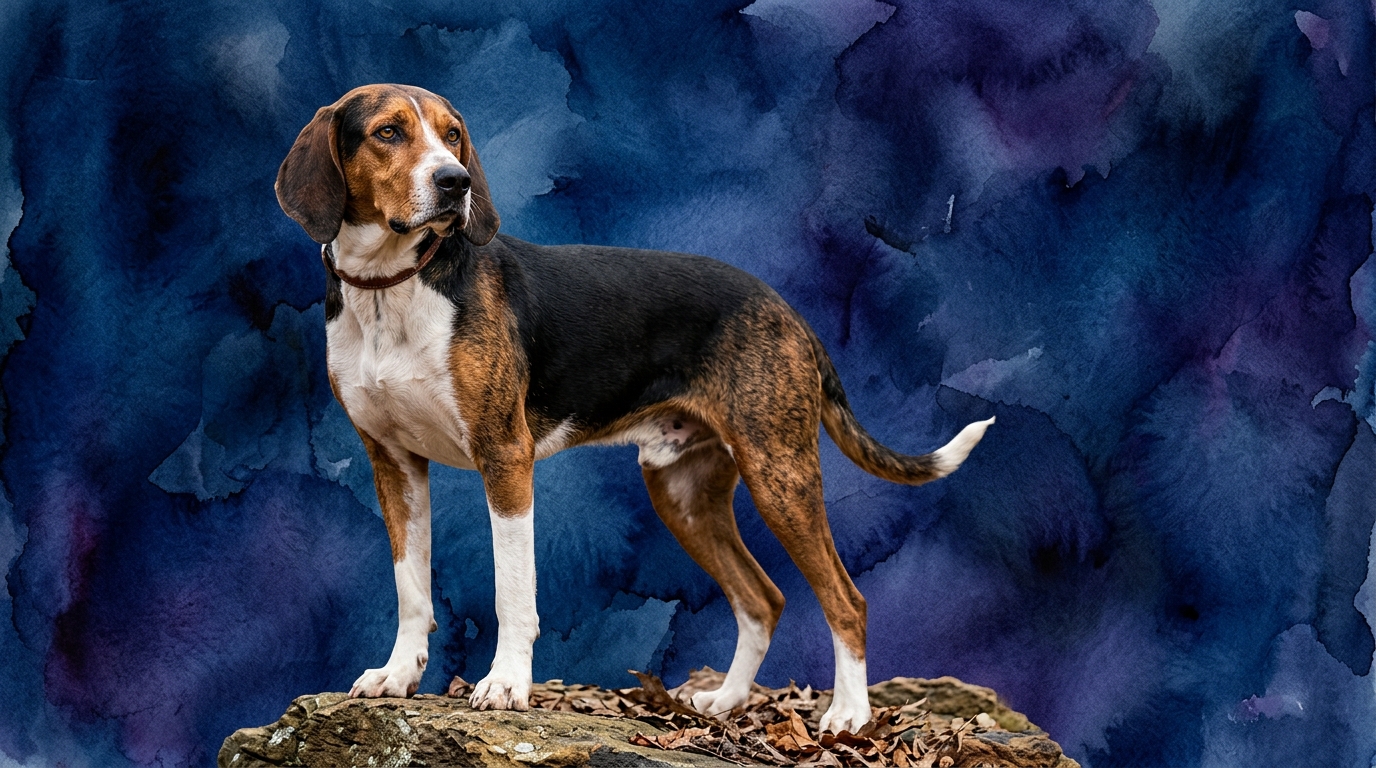

Side-by-Side IQ Profile: Treeing Walker Coonhound vs. Lhasa Apso
Delving into The Cosmic Pet Pet IQ Lab's ratings, both the Treeing Walker Coonhound and the Lhasa Apso share identical scores across all five cognitive dimensions. However, understanding how these 3/5 ratings manifest in their unique breed contexts reveals a nuanced picture of their respective intellectual strengths and operational styles.
For the **Treeing Walker Coonhound**, a member of the Hound group, its cognitive profile is intrinsically linked to its role as a pursuit hunter:
**Problem Solving (3/5):** This breed excels at deciphering complex scent trails, navigating varied terrain, and independently strategizing how to "tree" its quarry. Their cognitive challenges involve persistent focus on a scent, even when faced with environmental obstacles or distractions, requiring them to mentally map out paths.
**Training Speed (3/5):** Treeing Walker Coonhounds grasp new commands with reasonable repetition, but their strong independent streak and overwhelming scent drive can sometimes make them appear less responsive in a typical obedience setting. They learn quickly when tasks align with their natural instincts, such as tracking.
**Social Intelligence (3/5):** Their social intelligence shines within a pack dynamic, whether with fellow hounds or human hunting partners, interpreting cues during a chase and understanding commands in a working context. While generally amiable, their interactions are often task-oriented, though they form strong family bonds.
**Instinctive Drive (3/5):** The Coonhound's instinctive drive is profoundly powerful, centered on scent work, pursuit, and treeing. This score reflects a persistent drive that, when engaged, overrides many other stimuli, compelling them to follow a trail with unwavering determination.
**Memory (3/5):** Treeing Walker Coonhounds exhibit a solid memory, particularly regarding spatial navigation and scent recall, crucial for success in the field. This memory extends to remembering commands and routines, though its application can be influenced by immediate instinctive drives.
For the **Lhasa Apso**, a Non-Sporting breed with a Coren rank of #68, its intelligence is shaped by its historical role as a sentinel and companion:
**Problem Solving (3/5):** The Lhasa Apso's problem-solving abilities are geared towards its role as a sentinel, adept at figuring out how to alert its family to perceived threats. They also display cleverness in domestic settings, understanding how to gain attention or access desired areas.
**Training Speed (3/5):** Lhasa Apsos show a moderate training speed, capable of learning commands efficiently, but their independent and sometimes stubborn nature requires creative and highly motivating methods. They learn what benefits them and might comply only if they deem it worthwhile.
**Social Intelligence (3/5):** This breed's social intelligence is finely tuned to their human family, excellent at reading emotions, understanding household dynamics, and discerning intentions. They communicate needs effectively through various barks and body language, making them deeply integrated companions.
**Instinctive Drive (3/5):** The Lhasa Apso's instinctive drive is primarily focused on vigilance, guarding, and companionship. This score represents a persistent internal motivation to protect their territory and people, combined with a deep desire for close interaction, motivating keen observation.
**Memory (3/5):** Lhasa Apsos possess a good memory for routines, boundaries, and past interactions, especially concerning people they've encountered. Their ability to recall specific events and associated human reactions helps them navigate their social world and anticipate future outcomes.
Where the Treeing Walker Coonhound Wins Cognitively
The Treeing Walker Coonhound's cognitive strengths truly shine in environments demanding sustained focus on a singular sensory input and independent action. Their ability to process and discriminate between countless scent molecules, following a specific trail over miles, across varied terrain, and often for extended periods, represents a remarkable feat of specialized problem-solving and memory recall. This isn't just sniffing; it's a complex cognitive mapping process where they use memory of past scents, understanding of wind patterns, and the ability to project a trail's likely trajectory. They excel at "unsupervised" cognitive tasks in the field, making real-time decisions based on environmental cues, often far from direct human guidance. Their endurance for prolonged cognitive effort, driven by their powerful instinct, allows them to maintain focus on a task that might overwhelm other breeds, demonstrating a unique form of mental stamina in pursuit of their quarry.
Where the Lhasa Apso Wins Cognitively
Conversely, the Lhasa Apso demonstrates cognitive superiority in domains requiring acute observational skills and nuanced social understanding within a domestic setting. Their historical role as temple guardians cultivated a keen awareness of their immediate environment, allowing them to detect the slightest anomaly in sound or sight and assess potential threats with remarkable speed. This involves sophisticated pattern recognition and an ability to differentiate routine from unusual occurrences, a specific form of problem-solving. Furthermore, their social intelligence, while rated the same as the Coonhound's, manifests as a deeper attunement to human emotional states and household dynamics. They are masters at reading subtle cues from their family members, often anticipating needs or desires, and their memory for social interactions and established household rules is particularly robust, allowing them to navigate complex human-dog relationships with finesse.
Which is Easier to Train and Why
Determining which breed is "easier" to train, despite both having a 3/5 training speed, depends heavily on the training goals and the trainer's approach, referencing their real behavioral differences. The Treeing Walker Coonhound, while capable of learning, presents challenges due to its overwhelmingly powerful instinctive drive. When a Coonhound catches a scent, its focus can become singular, making recall or attention to other commands incredibly difficult to establish in certain environments. Training a Coonhound effectively requires understanding and channeling this drive, rather than trying to suppress it entirely. Positive reinforcement that ties into their natural desire to work a scent, or rewards that are exceptionally high value, are often needed to compete with the allure of a fresh trail.
The Lhasa Apso, on the other hand, is not driven by the same external sensory impulses but by a strong internal will and a desire for comfort and control. Their stubbornness and independent streak can make them resistant to commands they perceive as unnecessary or unrewarding. While they are highly capable in understanding what is asked of them, their willingness to comply can be conditional. Training a Lhasa Apso requires patience, consistency, and a deep understanding of their motivations. They respond well to positive reinforcement, especially when treats or praise are used effectively, but they will quickly learn to ignore inconsistent commands. For a novice owner seeking general obedience in a typical home environment, the Lhasa Apso might *feel* more challenging due to their selective listening, whereas the Coonhound's challenges are more about managing environmental triggers.
Which Suits Active Owners vs. Relaxed Owners
The choice between a Treeing Walker Coonhound and a Lhasa Apso significantly hinges on an owner's lifestyle. The Treeing Walker Coonhound is unequivocally suited for active, outdoors-oriented individuals or families. Their deep-seated instinctive drive for scent work and their remarkable physical stamina mean they require substantial daily exercise that engages both their bodies and their minds. This includes long walks, runs, hikes, or ideally, opportunities for scent work and tracking in secure, expansive areas. Owners who appreciate spending hours outdoors, who are patient with a dog that might follow its nose, and who can provide consistent mental stimulation related to their natural abilities will thrive with a Coonhound. A relaxed, sedentary owner would find it incredibly difficult to meet the demanding physical and mental needs of this breed, potentially leading to frustration and behavioral issues.
In contrast, the Lhasa Apso is a better fit for more relaxed owners, though this does not mean they are entirely inactive. While they enjoy walks and playtime, their exercise requirements are significantly lower than a Coonhound's. Their cognitive needs are often met through companionship, interactive play within the home, and opportunities to observe their surroundings from a comfortable vantage point. They are content with a moderate amount of daily activity and thrive on being an integral part of family life, often preferring to be near their people rather than embarking on long, strenuous adventures. Owners who appreciate a companion that is watchful, opinionated, and enjoys a cozy home environment, and who are willing to engage in consistent, positive training to manage their independent streak, will find the Lhasa Apso a rewarding match.
The Verdict
Choose a Treeing Walker Coonhound if you are an active, outdoors-loving individual or family prepared to channel a powerful scent drive into purposeful activity and consistent training.
Choose a Lhasa Apso if you seek a vigilant, affectionate, and opinionated companion for a more relaxed, home-centric lifestyle, ready to engage with a dog that has a strong personality and enjoys being the center of attention.
🧠 Find Your Pet's IQ Score
Our Pet IQ Lab assessment covers 25+ tests across 5 cognitive dimensions — personalized to your breed.
Take the Full IQ Test →Frequently Asked Questions
Do Treeing Walker Coonhounds need a lot of mental stimulation?
Yes, Treeing Walker Coonhounds absolutely require significant mental stimulation, ideally through activities that engage their powerful sense of smell and their natural hunting instincts. Without outlets for their instinctive drive, they can become bored and potentially destructive, so scent work, tracking games, and puzzle toys are highly beneficial.
Are Lhasa Apsos good for first-time dog owners?
Lhasa Apsos can be suitable for first-time dog owners who are prepared for their independent and sometimes stubborn nature. They benefit from consistent, positive reinforcement training from an early age to establish good habits, and owners should be ready to manage their strong guarding instincts and potential for selective hearing.
How do their social needs differ?
Treeing Walker Coonhounds, while friendly, often prioritize task-oriented interactions and enjoy the company of other dogs, especially in a working context. Lhasa Apsos, conversely, are typically more people-oriented, forming deep bonds with their human family and often preferring to be the sole canine focus of attention, though they can coexist with other pets.