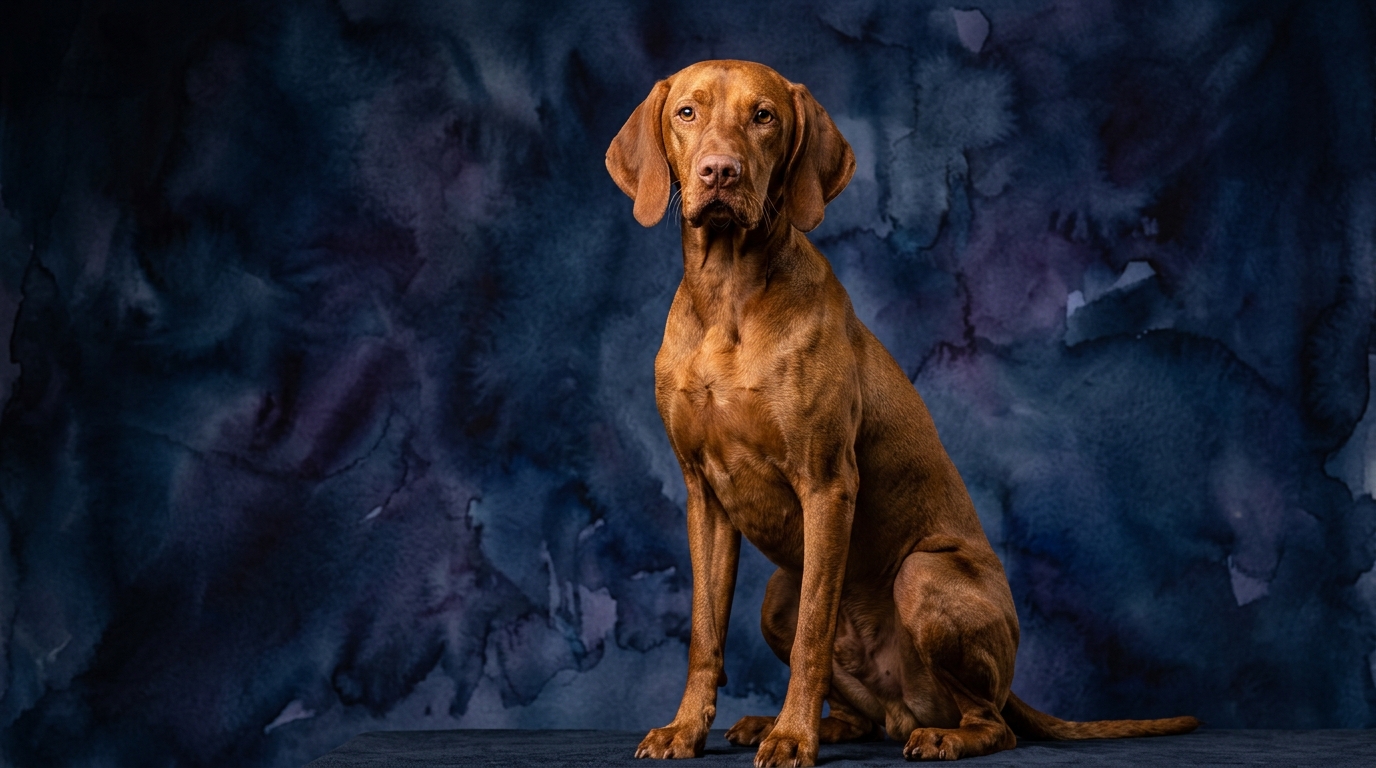
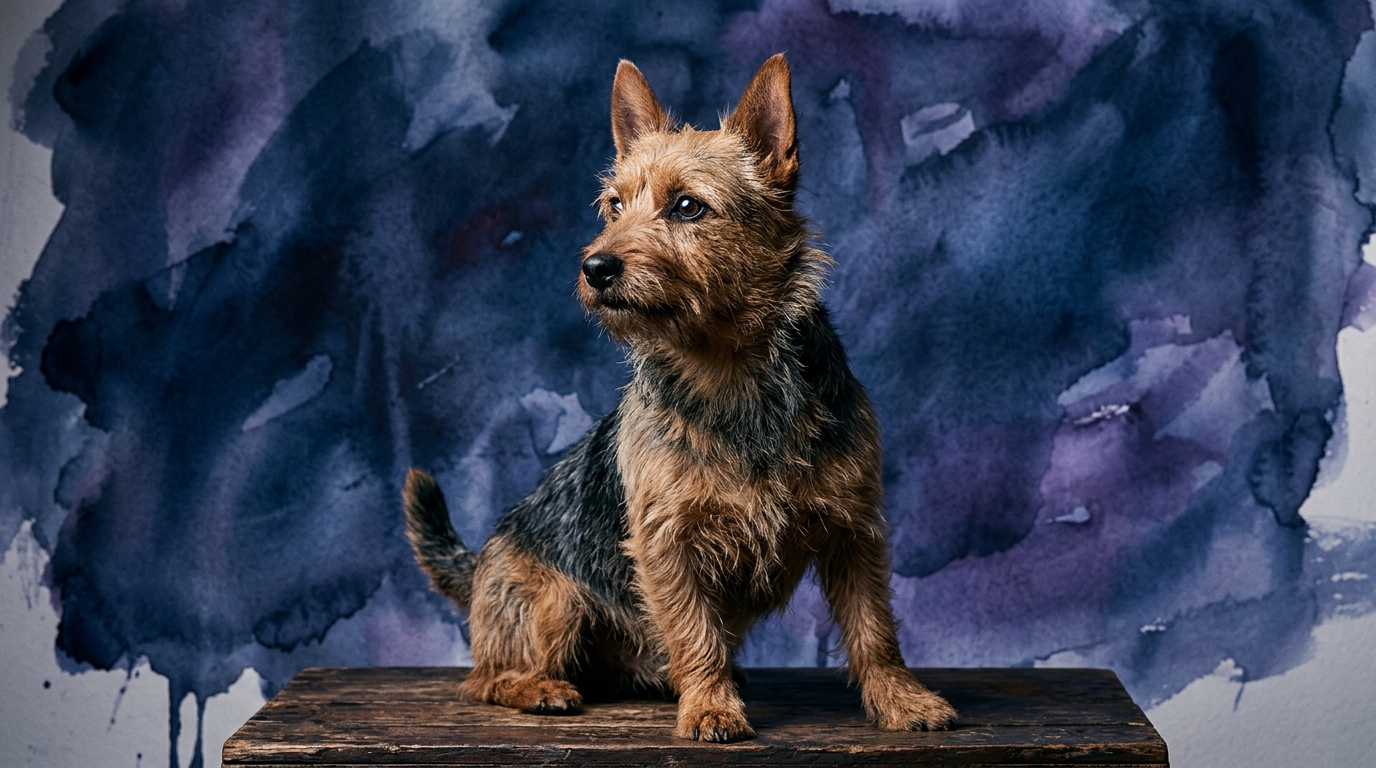
Side-by-Side IQ Profile: Vizsla vs. Australian Terrier
The Cosmic Pet Pet IQ Lab assesses canine cognition across five critical dimensions, providing a granular view of each breed's mental makeup. Understanding these profiles helps prospective owners align with a dog whose cognitive style complements their lifestyle and expectations.
For the **Vizsla**, a Sporting breed with a Coren rank of #31, their cognitive strengths are pronounced: **Problem Solving (4/5)** indicates a keen ability to analyze situations and devise effective strategies, often demonstrating resourcefulness in navigating complex environments or overcoming obstacles to reach a goal; their cognitive flexibility allows them to adapt quickly to new challenges. **Training Speed (4/5)** means these dogs grasp new commands and routines with remarkable alacrity, often requiring fewer repetitions than many other breeds, as their eagerness to engage and comply makes them highly responsive to consistent, positive reinforcement. **Social Intelligence (5/5)** highlights an exceptional capacity for understanding human cues, emotions, and intentions, leading to a deep, reciprocal bond where they are attuned to their human companions, often anticipating desires and reacting sensitively to social interactions. **Instinctive Drive (5/5)** reflects their powerful hunting heritage, manifesting as an intense, focused drive for retrieving, tracking, and scent work, with this innate motivation fueling their energy and engagement. Finally, **Memory (4/5)** demonstrates robust long-term recall, retaining learned behaviors, commands, and even specific routes or scent patterns over extended periods, contributing significantly to their reliability in training and performance.
The **Australian Terrier**, a Terrier breed not Coren-ranked, presents a distinct cognitive blueprint: **Problem Solving (3/5)** shows they approach challenges with characteristic terrier tenacity, often employing persistence and trial-and-error to achieve their aims, particularly when related to digging or pursuing small prey, with solutions often practical and direct, focused on immediate objectives. **Training Speed (3/5)** suggests that while capable of learning, they typically require more patience and consistency in training compared to breeds with higher scores, as their independent nature means they process commands at a moderate pace, often weighing the perceived benefit before complying. **Social Intelligence (3/5)** indicates they form strong bonds with their families, but their social intelligence leans more towards independent observation rather than eager compliance, understanding household dynamics yet often preferring to engage on their own terms and showing affection selectively. **Instinctive Drive (3/5)** is primarily geared towards their traditional terrier role of hunting small vermin, expressed through a strong urge to dig, chase, and explore, a drive that is persistent but often directed independently rather than requiring constant human partnership. Their **Memory (3/5)** exhibits a solid recall for important routines, people, and places, allowing them to navigate their familiar world effectively, remembering learned boundaries and commands, though their independent streak can sometimes influence their decision to act on them.
Where the Vizsla Excels Cognitively
The Vizsla's cognitive profile showcases a breed developed for close partnership and responsive performance in demanding field conditions. Their superior Problem Solving (4/5) means they don't just follow commands; they understand the intent behind them, often anticipating next steps in a complex task like a scent trail or an agility course. This cognitive flexibility allows them to adapt mid-task, a crucial advantage in dynamic environments where situations rapidly change. Coupled with their exceptional Social Intelligence (5/5), Vizslas excel at reading their handler's subtle body language and vocal inflections, fostering an almost telepathic connection that few breeds can match. This high social attunement means they are not only willing but eager to cooperate, making them incredibly responsive to nuanced direction and eager to please their human companions. Their robust Memory (4/5) ensures that intricate sequences of commands or learned hunting strategies are retained with impressive accuracy, allowing for consistent performance even after breaks in training or activity. This composite of cognitive strengths makes the Vizsla an unparalleled partner for activities requiring precision, adaptability, and a deep understanding between dog and human, excelling in roles that demand both physical prowess and mental acuity in collaboration.
Where the Australian Terrier Demonstrates Unique Cognitive Strengths
While the Australian Terrier's cognitive scores might appear lower on a general scale, their unique strengths lie in specific applications of their intellect, shaped by their terrier heritage. Their Problem Solving (3/5) is particularly potent when it involves independent strategizing to achieve a self-directed goal, such as locating a perceived pest or navigating a confined space. This isn't about following human instructions but about autonomous resourcefulness, often involving persistent digging or clever maneuvering to achieve their objective. Their Instinctive Drive (3/5), though not as high-scoring as a Vizsla's partnership-oriented drive, is intensely focused on its original purpose, providing them with a relentless determination to pursue and 'dispatch' small targets, a trait highly valued in their working role. This independent drive means they are often self-motivated explorers and problem-solvers in their own right, requiring less constant human direction for certain types of mental engagement, making them quite self-sufficient in their investigative pursuits. Their Social Intelligence (3/5), while not geared towards eager obedience, fosters a deep, discerning loyalty; they choose their bonds carefully and often display an astute understanding of family dynamics, offering comfort or companionship on their own terms, reflecting a self-assured, observant nature rather than a desperate need to please. This self-reliance makes them uniquely resilient and capable of entertaining themselves, even thriving in environments where constant human interaction isn't feasible, making them a good fit for owners who appreciate a dog with a strong, independent personality.
Trainability: Vizsla vs. Australian Terrier
Without question, the Vizsla is generally easier to train due to its higher scores across crucial cognitive dimensions. Their Training Speed (4/5) indicates they absorb new commands and behaviors rapidly, often requiring fewer repetitions to solidify learning. This efficiency stems from their eagerness to please and their high Social Intelligence (5/5), which makes them exceptionally attuned to human intentions and feedback. A Vizsla actively seeks to understand and comply, thriving on the partnership aspect of training, and quickly learns to associate actions with consequences, making them highly motivated by positive reinforcement and rendering the training process a collaborative and rewarding experience. Their strong memory further enhances their ability to retain complex sequences of commands, leading to reliable performance.
In contrast, the Australian Terrier's Training Speed (3/5) is more moderate, and their Social Intelligence (3/5) is characterized by a greater degree of independence. Australian Terriers are thinkers, but they are also individualists; they process commands, but their decision to comply often involves an internal assessment of 'what's in it for me' or if it aligns with their immediate terrier agenda. This can lead to a more challenging training journey, requiring immense patience, creativity, and a deep understanding of terrier motivation. While they are capable of learning, their independent streak means that consistency and making training fun and highly rewarding are paramount to overcoming their natural inclination to follow their own instincts. Owners must be prepared for a more persistent and varied approach to training, focusing on engagement and positive reinforcement to build a strong working relationship with their clever, albeit sometimes stubborn, companion.
Matching Canine Cognition to Owner Lifestyle
The Vizsla, with its high Instinctive Drive (5/5), Problem Solving (4/5), and Social Intelligence (5/5), is undeniably suited for active, engaged owners who are prepared to integrate their dog into a dynamic lifestyle. These dogs thrive on consistent physical exercise, such as running, hiking, or field work, coupled with significant mental stimulation. Their cognitive abilities demand outlets like advanced obedience, agility, scent work, or even search and rescue, where they can utilize their keen problem-solving skills and strong memory in partnership with their human. A Vizsla's deep social intelligence means they genuinely desire to be involved in all aspects of family life, often becoming 'Velcro dogs' that follow their owners from room to room. Owners who enjoy spending several hours daily in active pursuits and can provide constant companionship will find the Vizsla to be an incredibly rewarding and fulfilling partner, but those seeking a more relaxed companion may find their needs overwhelming.
Conversely, the Australian Terrier, while still requiring regular exercise and mental engagement, is a better fit for owners who appreciate a dog with a more independent spirit and may not have the capacity for the relentless activity a Vizsla demands. Their Instinctive Drive (3/5) is focused but less demanding of constant human partnership; they are content with shorter, vigorous play sessions, daily walks, and opportunities to 'hunt' in a secure yard, such as with puzzle toys or supervised digging. Their Problem Solving (3/5) and Social Intelligence (3/5) mean they can entertain themselves more readily, perhaps by investigating interesting smells or digging, without constantly seeking human direction. This isn't to say they are low-energy, but their energy is often expressed in bursts rather than sustained, intense activity, and their mental engagement can be fulfilled through independent exploration. Owners who enjoy a dog that is affectionate but also self-sufficient at times, and who can provide consistent training and interesting environmental enrichment without needing to be 'on' 24/7 with their canine companion, would find the Australian Terrier a delightful match. They suit individuals or families who appreciate a tenacious, clever, and loyal companion that brings joy without requiring an extreme commitment to high-octane activities.
The Verdict
Choose the Vizsla if you seek an intensely bonded, highly trainable partner for demanding physical activities and intricate cognitive challenges, thriving on constant human interaction and purpose-driven tasks.
Choose the Australian Terrier if you value an independent, tenacious companion that offers clever problem-solving in its own right, suited for owners who appreciate a discerning, loyal friend requiring moderate, focused engagement.
🧠 Find Your Pet's IQ Score
Our Pet IQ Lab assessment covers 25+ tests across 5 cognitive dimensions — personalized to your breed.
Take the Full IQ Test →Frequently Asked Questions
Is a Vizsla prone to separation anxiety due to its high social intelligence?
Yes, a Vizsla's exceptional social intelligence and strong desire for companionship mean they can be prone to separation anxiety if left alone for extended periods without proper training or mental stimulation. They thrive on being an integral part of their family's daily life.
How does the Australian Terrier's instinctive drive manifest in a home environment?
The Australian Terrier's instinctive drive often manifests as a strong urge to dig, chase small moving objects, and explore scents, reflecting their vermin-hunting heritage. Providing appropriate outlets like sandboxes or puzzle toys is crucial to manage these natural behaviors.
Can an Australian Terrier excel in dog sports despite its moderate training speed?
Absolutely, with patient and consistent training, an Australian Terrier can excel in dog sports like agility, earthdog trials, and obedience, especially when training is made fun and rewarding to engage their independent spirit. Their tenacity is a significant asset in these activities.