
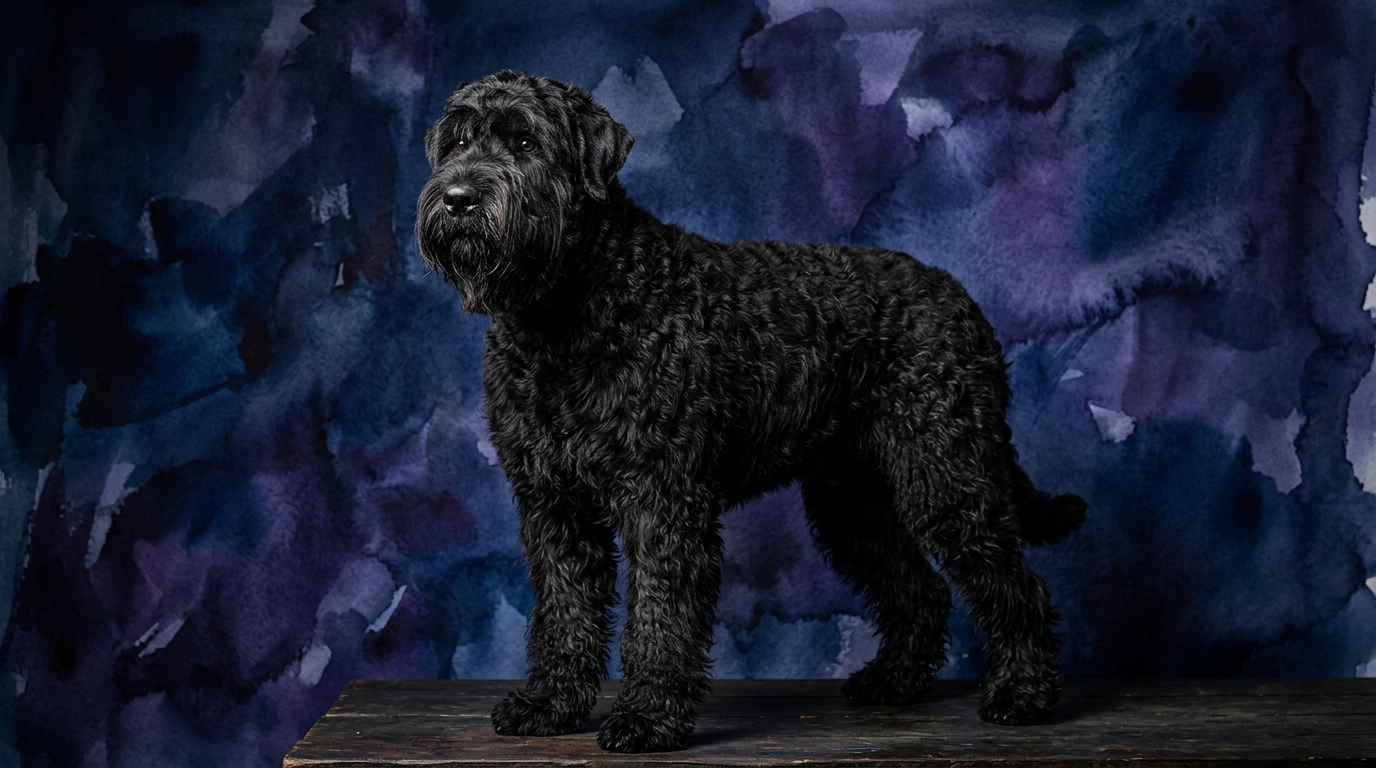
Side-by-Side Cognitive Profile
At The Cosmic Pet Pet IQ Lab, we evaluate canine intelligence across five key dimensions. Let's break down how the Vizsla and Black Russian Terrier measure up.
**Vizsla IQ Profile:**
**Problem Solving (4/5):** The Vizsla demonstrates a keen ability to navigate complex environments, quickly assess situations, and devise creative solutions, often leveraging their agility and physical prowess. They are not easily stumped by obstacles in their path to a perceived reward.
**Training Speed (4/5):** These dogs are remarkably quick to grasp new commands and routines, benefiting from their inherent eagerness to engage with and please their human companions. They possess a strong desire to learn and participate, making training sessions productive.
**Social Intelligence (5/5):** Vizslas are exceptionally attuned to human emotions, body language, and intentions. This profound capacity for empathy allows for deep, intuitive connections, making them highly responsive and sensitive family members.
**Instinctive Drive (5/5):** Possessing a powerful, innate prey drive, the Vizsla exhibits a strong inclination for retrieving, tracking, and pointing, reflecting centuries of selective breeding for their sporting heritage. This drive is a core part of their being.
**Memory (4/5):** They show strong recall for learned behaviors, specific people, and familiar places. While generally excellent, their memory might be slightly more focused on practical applications and less on rote memorization compared to their social acumen.
**Black Russian Terrier IQ Profile:**
**Problem Solving (3/5):** The Black Russian Terrier approaches new challenges with a steady, methodical mindset, preferring to analyze and rely on established routines rather than spontaneous improvisation. They are deliberate in their actions, ensuring thoroughness.
**Training Speed (3/5):** BRTs learn at a moderate pace, requiring consistent, patient repetition and clear structure to solidify new behaviors and commands. They absorb information steadily, but rarely with the lightning speed of some other breeds.
**Social Intelligence (3/5):** Exhibiting a reserved and discerning approach to social interactions, the BRT forms deep, unwavering bonds with their immediate family. However, they remain naturally wary and aloof with strangers, requiring careful, early socialization.
**Instinctive Drive (3/5):** Their primary instinctive drive is rooted in protection and guarding, rather than the prey-driven instincts of a hunting dog. This manifests as a strong territorial sense and a natural inclination to defend their home and loved ones.
**Memory (3/5):** BRTs retain information reliably, particularly regarding territory, routines, and family members. They might take longer to commit complex sequences or a vast array of commands to memory, but once learned, it is often deeply ingrained.
Where the Vizsla Excels Cognitively
The Vizsla's unparalleled social intelligence (5/5) allows them to read human cues with remarkable accuracy, making them extraordinarily responsive companions who often anticipate their owner's needs and emotional states. This translates into a profound emotional connection and a seemingly intuitive understanding during daily interactions and training. Their ability to "tune in" to their humans is a distinct cognitive advantage.
Their exceptional instinctive drive (5/5) for hunting and retrieving means they are born with a robust neural framework for complex tasks involving scent work, tracking, and retrieving game. This inherent motivation makes them exceptionally focused on specific, goal-oriented activities, requiring less learned behavior and more refinement of innate talents, making them natural athletes in their field.
Combined with their rapid training speed (4/5), Vizslas excel in activities that demand quick decision-making, rapid learning, and fluid adaptability, such as advanced obedience, agility, or field trials where instantaneous responses and precise actions are paramount. They absorb new information quickly and are eager to apply it in dynamic situations.
Where the Black Russian Terrier Shines Cognitively
The Black Russian Terrier's deliberate and thorough approach to problem-solving (3/5) and memory (3/5), while not characterized by speed, contributes to a steadfast and highly reliable nature. Once a BRT learns a task, a boundary, or a specific routine, it is typically deeply ingrained and consistently followed, demonstrating remarkable long-term retention and consistency.
Their distinct social intelligence (3/5) manifests as a keen discernment and an unwavering loyalty, allowing them to accurately assess potential threats and provide robust protection for their family and property. This isn't about rapid emotional connection with all, but a deep, protective bond built on careful observation, trust, and a strong sense of duty.
The BRT's instinctive drive (3/5) is profoundly rooted in guarding and protection, translating into an unwavering vigilance and a deep-seated sense of responsibility for their family and home environment. This steady, protective instinct is a core part of their cognitive makeup, making them formidable and dedicated guardians who take their role seriously.
Trainability: Vizsla vs. Black Russian Terrier
The Vizsla, with its 4/5 training speed and 5/5 social intelligence, generally presents an easier and more fluid training experience for most owners. Their eagerness to please, coupled with their ability to quickly understand human intentions and commands, means they pick up new behaviors rapidly and are highly motivated by positive reinforcement. They often view training as an engaging collaborative game rather than a chore, thriving on mental stimulation. Their high instinctive drive also means they are naturally inclined towards activities like retrieving or scent work, making specific task training highly intuitive and rewarding for them.
Conversely, the Black Russian Terrier, with a 3/5 training speed and 3/5 social intelligence, requires a more patient, consistent, and confident approach from their handler. They are not as inherently eager to please and may question commands or require clear justification for actions, necessitating the handler to establish firm yet fair leadership and mutual trust. Their problem-solving style is more methodical, meaning repetitions are crucial for solidifying learning and ensuring reliability. While capable of learning complex tasks, their independent nature and protective instincts mean training often focuses on impulse control, extensive socialization, and channeling their guarding drives appropriately, which can be more challenging for novice trainers seeking quick results.
Matching Canine Cognition to Owner Lifestyles
Vizslas are unequivocally suited for active owners who can match their boundless energy and cognitive needs. Their 5/5 instinctive drive and high energy levels demand significant daily physical exercise and mental engagement. They thrive in environments where they can run freely, hike for miles, swim, and actively participate in dog sports like agility, field work, or advanced obedience. An owner who embraces an outdoorsy, energetic lifestyle and is prepared to fully integrate their dog into these activities will find a Vizsla to be an enthusiastic, tireless, and deeply bonded companion. Without sufficient outlets, their considerable cognitive and physical energy can quickly manifest as destructive or anxious behaviors.
Black Russian Terriers, while requiring substantial physical activity due to their size and working heritage, are generally better suited for owners who can provide consistent, structured activity rather than constant high-intensity output. Their physical needs include regular, brisk walks and opportunities for secure off-leash exercise, but their focus is often more on patrolling, guarding, and purposeful work than endless retrieving or spontaneous play. They appreciate a stable routine, clear boundaries, and a defined role within the family. While they can adapt to active lifestyles, their protective nature means they are often more content with a secure yard to patrol and consistent, deliberate engagement, making them potentially more adaptable to owners with a structured, perhaps less frenetic, pace of life, but still demanding in terms of exercise and training commitment.
The Verdict
Choose the Vizsla if you seek a highly empathetic, quick-learning companion eager for strenuous outdoor activities and deep emotional connection. Their rapid cognitive processing and strong drive make them ideal for active families involved in dog sports or hunting.
Opt for the Black Russian Terrier if you desire a steadfast, protective, and discerning guardian who thrives on routine and clear leadership, valuing reliability and a deep, reserved loyalty over effusive displays. They suit experienced owners committed to consistent training and substantial, structured exercise.
🧠 Find Your Pet's IQ Score
Our Pet IQ Lab assessment covers 25+ tests across 5 cognitive dimensions — personalized to your breed.
Take the Full IQ Test →Frequently Asked Questions
Is a Vizsla easy to train for a first-time dog owner?
A Vizsla's high social intelligence and training speed make them responsive, but their intense energy and need for consistent mental stimulation can be challenging. A first-time owner must be prepared for significant commitment to exercise and training to manage their innate drives.
What kind of home environment is best for a Black Russian Terrier?
A Black Russian Terrier thrives in a home with a secure, fenced yard and a family committed to consistent training and socialization from a young age. They require clear boundaries and a confident, experienced leader to appropriately manage their protective instincts and ensure their well-being.
Do Vizslas and Black Russian Terriers get along with other pets?
Vizslas generally get along well with other pets, especially if socialized early, due to their high social intelligence and desire for companionship. Black Russian Terriers can coexist, but their guarding instincts mean careful, early introduction and ongoing supervision are crucial, particularly with smaller animals, to ensure harmonious living.