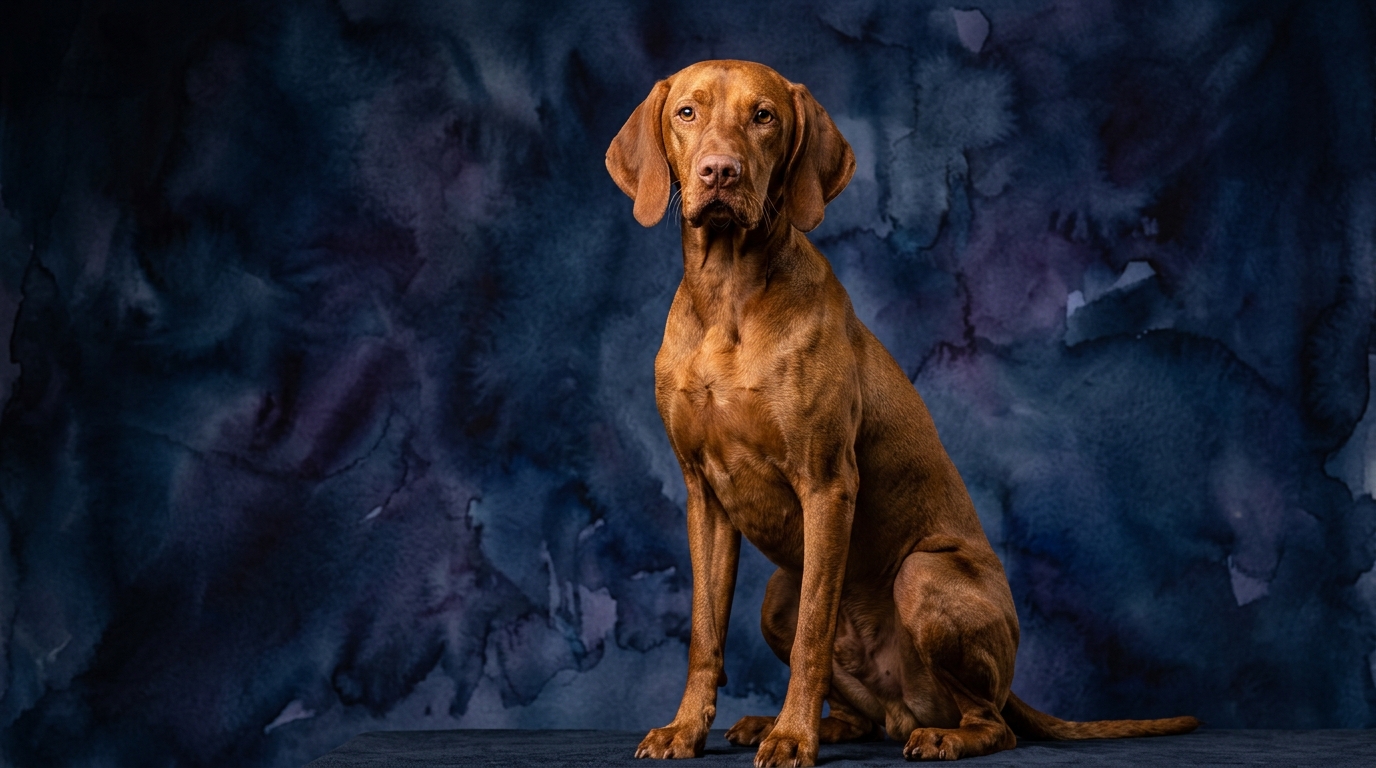
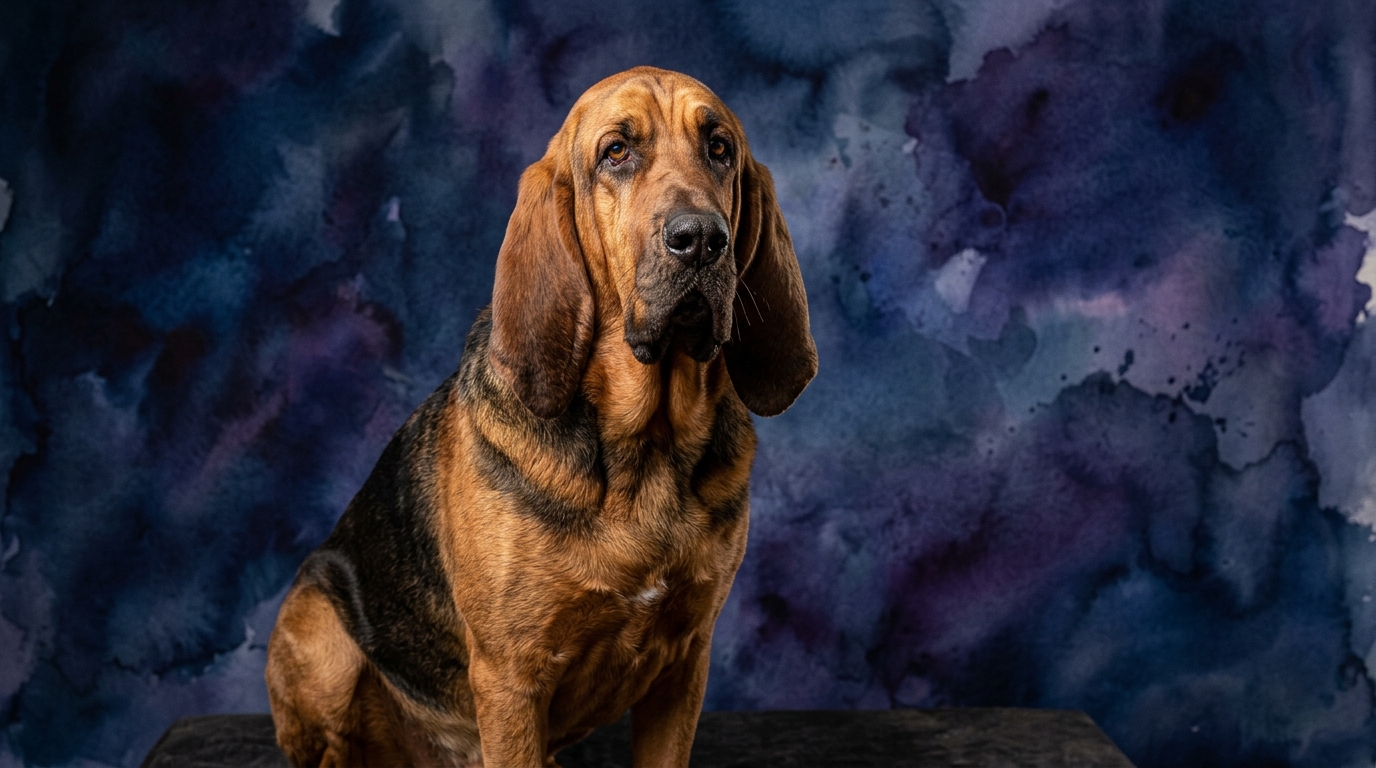
Side-by-Side Cognitive Profiles: Vizsla vs. Bloodhound
The Cosmic Pet Pet IQ Lab assesses canine intelligence across five key dimensions, revealing fascinating contrasts between these two breeds. The Vizsla, a Sporting Group dog, ranks #31 on the Coren scale, while the Bloodhound, from the Hound Group, holds rank #74.
For the Vizsla, Problem Solving is rated 4/5, indicating a capacity to quickly adapt to new situations and figure out how to achieve desired outcomes, like navigating complex environments or understanding household routines. Their Training Speed is 4/5, reflecting a keen eagerness to learn and rapidly grasp new commands, making them highly responsive partners. Social Intelligence shines at 5/5, showcasing an exceptional ability to read human cues, seek interaction, and form deep, collaborative bonds. Instinctive Drive is a powerful 5/5, manifesting as a strong desire to hunt and retrieve, fueled by boundless energy. Memory stands at 4/5, demonstrating good retention of learned behaviors, routines, and familiar faces.
The Bloodhound presents a different cognitive landscape. Their Problem Solving is an exceptional 5/5, but this is profoundly specialized, focused on deciphering intricate scent trails over vast distances and time, a complex form of deduction. Training Speed is a modest 1/5, reflecting their independent nature and a tendency to prioritize olfactory pursuits over conventional obedience. Social Intelligence is 2/5; while generally amiable, their primary focus is often external, on the world of scent, rather than internal, on human emotional states. Instinctive Drive is a commanding 5/5, an all-consuming, persistent urge to follow a trail. Memory is a perfect 5/5, specifically for their ability to store and recall an immense database of scent profiles and trail patterns.
Where the Vizsla's Cognition Excels
The Vizsla's cognitive strengths are particularly evident in their training aptitude and social engagement. Their 4/5 Training Speed means they absorb new commands and desired behaviors with remarkable alacrity, often requiring fewer repetitions than many other breeds. This quick learning curve is a significant advantage for owners wishing to pursue various canine sports or simply enjoy a well-mannered companion.
Furthermore, the Vizsla's perfect 5/5 in Social Intelligence sets them apart. They possess an innate ability to connect with their human companions on a profound level, reading subtle body language and vocal inflections with precision. This cognitive attunement fosters a strong desire to collaborate and please, translating into a dog that actively seeks to understand and participate in shared activities, making them incredibly responsive and intuitive partners.
Where the Bloodhound's Cognition Dominates
The Bloodhound's cognitive superiority lies in its specialized, unparalleled olfactory abilities. Their 5/5 Problem Solving rating is a testament to their extraordinary capacity for scent discrimination and interpretation. They don't merely follow a trail; they analyze its age, direction, and composition, differentiating individual scents within a complex tapestry of odors. This is a highly sophisticated form of cognitive processing, allowing them to reconstruct events from faint, aged olfactory data, a skill unmatched in the canine world.
Complementing this is their 5/5 Memory, which is specifically tuned for scent recall. Bloodhounds can remember specific human or animal scent profiles over extended periods, even re-engaging with a trail after significant breaks. This specialized long-term memory allows them to build a vast mental library of olfactory information, crucial for their tracking prowess. Their 5/5 Instinctive Drive, while shared with the Vizsla, manifests as an unyielding, single-minded focus on scent that overrides almost all other stimuli, a cognitive persistence that few other breeds can rival when on a trail.
Ease of Training: A Tale of Two Cognitive Approaches
When it comes to ease of training, the Vizsla (Coren #31) stands out as the more straightforward student compared to the Bloodhound (Coren #74). The Vizsla's high Social Intelligence (5/5) means they actively seek to engage with and please their human partners, making them naturally receptive to instruction and eager to understand expectations. This, combined with their 4/5 Training Speed, allows them to quickly form associations between commands and desired actions, responding well to positive reinforcement and clear guidance.
The Bloodhound, conversely, presents a unique training challenge. Their 1/5 Training Speed and 2/5 Social Intelligence reflect an independent cognitive focus. While not unwilling, their formidable 5/5 Instinctive Drive is almost exclusively directed towards the world of scent, making it incredibly difficult to redirect their attention to conventional obedience commands when a compelling odor is present. Training a Bloodhound requires immense patience, creativity, and an understanding that their primary cognitive priority is often external, demanding a handler who can leverage their scent drive rather than fight against it. Their independent problem-solving through olfaction often takes precedence over human-directed tasks.
Matching Canine Cognition with Owner Lifestyles
The distinct cognitive profiles of the Vizsla and Bloodhound dictate very different ideal ownership scenarios. The Vizsla, with its 5/5 Instinctive Drive and high Social Intelligence, is perfectly suited for active owners. They thrive on substantial physical and mental engagement, excelling in activities like running, hiking, hunting, agility, or competitive obedience. Their desire to collaborate and their quick learning ability mean owners must be prepared to integrate their Vizsla into an energetic lifestyle, providing consistent outlets for their intelligent and driven nature. A Vizsla will become a shadow, actively participating in family life and needing to be involved.
The Bloodhound demands a different kind of dedicated owner, one who appreciates a dog whose cognitive world revolves around scent. While their activity isn't necessarily 'relaxed' for the dog, as tracking can be physically demanding, the owner must possess immense patience and a methodical approach to training. Owners need to be prepared for a dog whose independent problem-solving through scent often overrides conventional obedience. They are ideal for individuals passionate about scent work, prepared to provide opportunities for specialized tracking or trailing sports, and who understand that their canine partner's mind is often singularly focused on an invisible world of odors.
The Verdict
If you desire a highly collaborative, socially attuned canine partner eager to learn and participate in a wide range of activities, the Vizsla is an excellent choice. Their balanced cognitive profile makes them adaptable and responsive companions for active families.
Opt for the Bloodhound if you are captivated by the extraordinary world of scent, possess immense patience, and are prepared to engage with a dog whose cognitive strengths lie in independent, persistent problem-solving through olfaction. They are ideal for dedicated tracking enthusiasts.
🧠 Find Your Pet's IQ Score
Our Pet IQ Lab assessment covers 25+ tests across 5 cognitive dimensions — personalized to your breed.
Take the Full IQ Test →Frequently Asked Questions
Do Bloodhounds struggle with problem-solving?
No, quite the opposite. Bloodhounds exhibit exceptional problem-solving abilities, particularly when it comes to deciphering complex scent trails, a highly specialized form of cognitive deduction. Their intelligence is focused on analyzing and following intricate olfactory puzzles.
Are Vizslas easy to live with?
Vizslas are generally easy to live with for active owners due to their high social intelligence and eagerness to please, making them adaptable and affectionate family members. They thrive on companionship and structured activity, integrating well into an engaged household.
How does instinctive drive affect training in these breeds?
For Vizslas, their instinctive drive (5/5) for hunting and retrieving is readily channeled into cooperative tasks, enhancing their trainability and responsiveness. For Bloodhounds, their equally strong instinctive drive (5/5) is singularly focused on scent, often making conventional obedience a significant challenge as their attention is externalized and difficult to redirect.