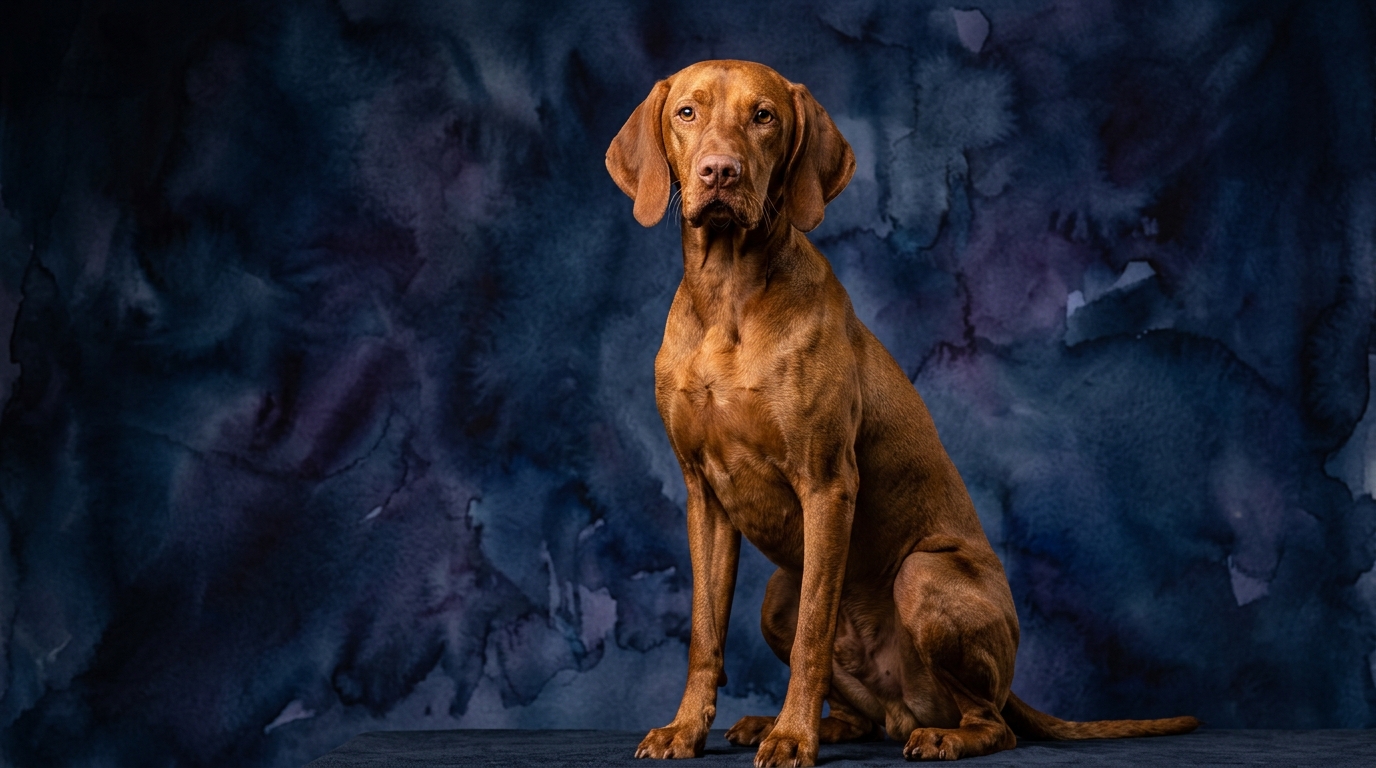
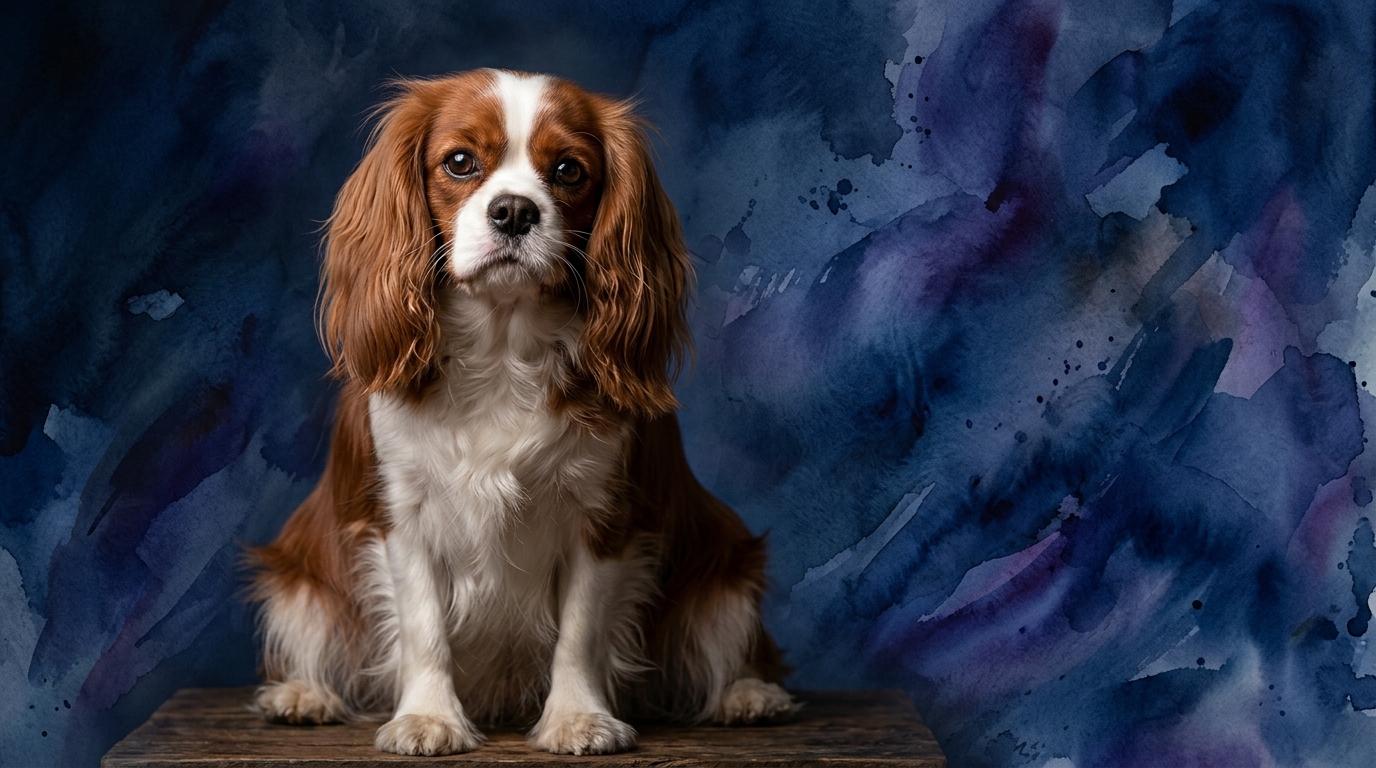
Side-by-Side Cognitive Profiles: Vizsla vs. Cavalier King Charles Spaniel
The Cosmic Pet Pet IQ Lab employs a comprehensive five-dimensional framework to assess canine intelligence, offering a nuanced understanding beyond simple obedience. Let’s delve into how the Vizsla, a Sporting breed ranked #31 by Coren, and the Cavalier King Charles Spaniel, a Toy breed ranked #44, stack up.
For the Vizsla, their Coren rank of #31 is a testament to their cognitive prowess among canine breeds. Their Problem Solving is rated 4/5, reflecting a pronounced aptitude for independent thought and strategic planning. Vizslas often demonstrate ingenuity in navigating complex environments, discerning how to access desired objects, or even outsmarting handlers in a playful way. Their hunting heritage cultivated a need for quick, on-the-spot decisions, making them adept at processing novel information and devising solutions beyond simple trial-and-error. Their Training Speed is 4/5, indicating a remarkable capacity for rapid learning, absorbing new commands and intricate routines with impressive efficiency. Their eagerness to engage, coupled with an inherent desire to work alongside their human partners, translates into fewer repetitions required for mastery. This swift acquisition of skills makes them highly responsive to structured training and suitable for advanced canine activities. Social Intelligence for the Vizsla is a perfect 5/5, meaning they possess an exceptional ability to interpret human emotions, intentions, and subtle cues, forming profound, intuitive bonds. They are acutely attuned to their owners' moods, often anticipating needs and offering comfort without direct prompting. This deep social understanding fosters a highly interactive and empathetic companionship. Their Instinctive Drive is also a perfect 5/5, a defining characteristic that signifies a powerful, innate urge to hunt, retrieve, and explore. Vizslas are driven by a tireless energy and an unwavering focus on their environment, constantly seeking engagement that fulfills their genetic programming. This drive manifests as a need for purposeful activity and contributes significantly to their overall engagement with the world. Finally, their Memory is 4/5, demonstrating robust retention for learned behaviors, complex sequences, and spatial layouts. They reliably recall commands even after long breaks and can navigate familiar territories with precision. This strong memory underpins their consistent performance in training and their ability to adapt to routines.
The Cavalier King Charles Spaniel, with a Coren rank of #44, is positioned comfortably within the average range for canine working intelligence, reflecting their primary role as companions. Their Problem Solving is rated 3/5, indicating a moderate capacity, particularly when challenges relate to social interaction or accessing comfort. They can figure out how to get attention or manipulate situations for a cuddle, but may not exhibit the same depth of strategic thinking for abstract or complex environmental puzzles. Their intelligence is more emotionally and socially oriented. Their Training Speed is 3/5; Cavaliers learn at a steady pace, responding well to positive reinforcement and clear, gentle instruction. While they may require more consistent repetition than breeds with higher work drives, their innate desire to please their owners aids in skill acquisition. Patience and engaging methods are key to successful training, as prolonged, demanding sessions can diminish their focus. Just like the Vizsla, their Social Intelligence is an outstanding 5/5. Cavaliers possess an exceptional ability to read and respond to human emotions and social dynamics. This makes them exceptionally empathetic, adaptable, and intuitive companions who thrive on close interaction. Their entire cognitive framework seems to prioritize understanding and connecting with their human family. Their Instinctive Drive is 3/5; Cavaliers exhibit a moderate drive, primarily focused on companionship, comfort-seeking, and gentle exploration of their immediate surroundings. While they enjoy short walks and playful interactions, their drive for intense physical or hunting tasks is significantly lower, aligning with their historical role as lapdogs rather than working animals. Their Memory is 3/5, demonstrating good retention for routines, familiar faces, and basic commands, contributing to their reliability as household companions. They remember pleasant interactions, preferred comforts, and established boundaries, ensuring a predictable and harmonious home life.
Where the Vizsla Excels Cognitively
The Vizsla’s cognitive profile clearly demonstrates advantages in areas demanding independent thought and sustained effort. Their superior Problem Solving score of 4/5 means they are more adept at navigating novel situations, such as figuring out how to open a gate or retrieve a toy from a challenging spot, showcasing a resourceful approach to obstacles. This contrasts with the Cavalier’s more moderate 3/5, suggesting the Vizsla is better equipped for tasks requiring strategic thinking rather than simple trial-and-error. Furthermore, the Vizsla’s Training Speed, also at 4/5, indicates a quicker grasp of new commands and complex sequences. This is not merely about obedience; it speaks to an attentiveness and eagerness to process and execute instructions with fewer repetitions, a trait invaluable for advanced dog sports or intricate behavioral training. Their impressive 5/5 Instinctive Drive fuels this learning, providing an intrinsic motivation to engage with tasks that mimic their historical purpose, such as tracking or retrieving. This drive, significantly higher than the Cavalier’s 3/5, translates into a sustained focus and energy for goal-oriented activities. Finally, the Vizsla’s 4/5 Memory allows for a more robust retention of complex routines and spatial awareness, making them more reliable in recalling intricate commands or navigating varied environments over time compared to the Cavalier's 3/5.
Where the Cavalier King Charles Spaniel's Cognition Shines
While the Vizsla excels in areas tied to their working heritage, the Cavalier King Charles Spaniel truly shines in cognitive dimensions that prioritize companionship and emotional connection. Both breeds share an outstanding Social Intelligence score of 5/5, indicating an exceptional capacity to understand human emotions and intentions. However, for the Cavalier, this attribute is paramount, forming the cornerstone of their existence. Their cognitive energy, while perhaps less directed towards complex problem-solving or vigorous instinctive pursuits, is intensely focused on forming deep, empathetic bonds. This means their cognitive 'wins' are less about outperforming in traditional measures of canine intellect and more about perfectly fulfilling their role as devoted companions. Their moderate scores in other areas are not deficiencies but rather a reflection of their breed purpose, where an overwhelming drive for independent action or complex physical tasks would detract from their primary role as a loving lapdog. Their cognitive profile is optimized for comfort, connection, and emotional resonance, making them unparalleled in their ability to integrate seamlessly into a family's emotional landscape. They excel at reading subtle cues, offering comfort, and adapting their demeanor to suit the mood of their household, a nuanced form of intelligence often overlooked in favor of task-oriented metrics.
Training Aptitude: Which Breed Offers an Easier Path?
Based on their respective Training Speed scores, the Vizsla, with a 4/5, generally proves easier to train for a broader spectrum of commands and advanced tasks compared to the Cavalier King Charles Spaniel's 3/5. The Vizsla's quicker grasp stems from a combination of factors: their intense focus, a strong desire to please their handler, and a high instinctive drive that makes them naturally inclined towards work and structured activity. They are often eager participants in training sessions, quickly associating actions with consequences and retaining learned behaviors with fewer repetitions. This makes them highly suitable for obedience competitions, agility, or even complex service roles. In contrast, while the Cavalier is certainly trainable and desires to please, their training process might require more patience and consistency. Their cognitive focus is less on mastering complex tasks and more on social interaction and comfort. They might be more easily distracted by their environment or their human's presence, requiring shorter, more engaging training sessions. While they excel at house manners and basic obedience, pushing them into advanced, repetitive tasks might not align with their intrinsic motivations, making the process feel less intuitive for both dog and owner. The Vizsla's inherent drive for purpose gives them an edge in the speed and depth of training.
Matching Canine Cognition to Owner Lifestyles
The distinct cognitive and physical profiles of these two breeds clearly delineate which type of owner they would best suit. The Vizsla, with its 5/5 Instinctive Drive, 4/5 Problem Solving, and boundless energy, is an ideal match for highly active owners. These dogs thrive on consistent physical exercise, mental challenges, and a structured routine that allows them to channel their innate drive for exploration and work. Owners who enjoy long runs, hiking, dog sports like agility or flyball, or even hunting, will find a perfect partner in a Vizsla. Their cognitive strengths mean they enjoy learning new things and solving puzzles, requiring owners to provide ample mental stimulation beyond just physical exertion. Conversely, the Cavalier King Charles Spaniel, with its moderate 3/5 Instinctive Drive and supreme 5/5 Social Intelligence, is perfectly suited for more relaxed owners seeking a devoted, affectionate companion. Cavaliers are content with moderate daily walks, indoor play, and, most importantly, abundant cuddles and close human interaction. Their cognitive focus on social bonding means they flourish in environments where they are integral to family life, preferring to be at their owner's side rather than embarking on strenuous independent adventures. They require an owner who values gentle companionship and can provide consistent emotional connection, making them excellent choices for seniors, families with young children, or individuals seeking a calm, loving presence.
The Verdict
Choose a Vizsla if you are an active individual or family seeking a highly engaged, energetic partner for outdoor adventures, dog sports, and advanced training, valuing a dog with strong problem-solving skills and a deep working drive.
Opt for a Cavalier King Charles Spaniel if you desire a gentle, affectionate companion who thrives on close human interaction, moderate activity, and brings a calming, empathetic presence to a more relaxed household.
🧠 Find Your Pet's IQ Score
Our Pet IQ Lab assessment covers 25+ tests across 5 cognitive dimensions — personalized to your breed.
Take the Full IQ Test →Frequently Asked Questions
Are Vizslas good with children?
Vizslas possess high social intelligence and can be wonderful family dogs, especially with active children who can engage in play. However, their high energy and instinctive drive mean they require proper training and supervision to ensure gentle interactions and prevent accidental knocking over.
Do Cavalier King Charles Spaniels need a lot of grooming?
Cavaliers have a beautiful, silky coat that does require regular grooming to prevent tangles and mats, especially around their ears and legs. While not as demanding as some long-haired breeds, daily brushing and occasional professional grooming will keep them looking their best.
What kind of mental stimulation do Vizslas need?
Vizslas thrive on mental challenges that tap into their problem-solving and instinctive drive, such as puzzle toys, scent work, obedience training, and learning new tricks. Without adequate mental engagement, their energy can manifest as boredom-driven behaviors, so varied activities are key.