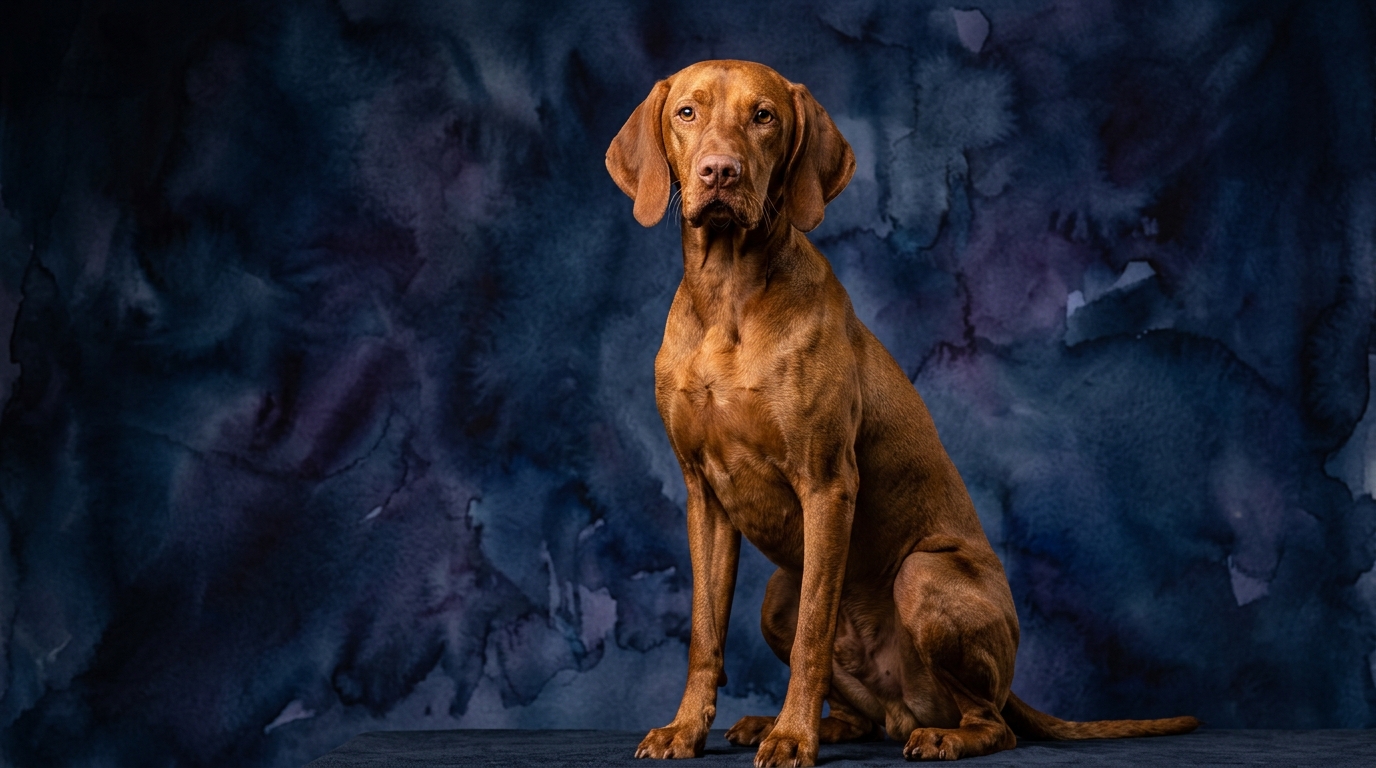
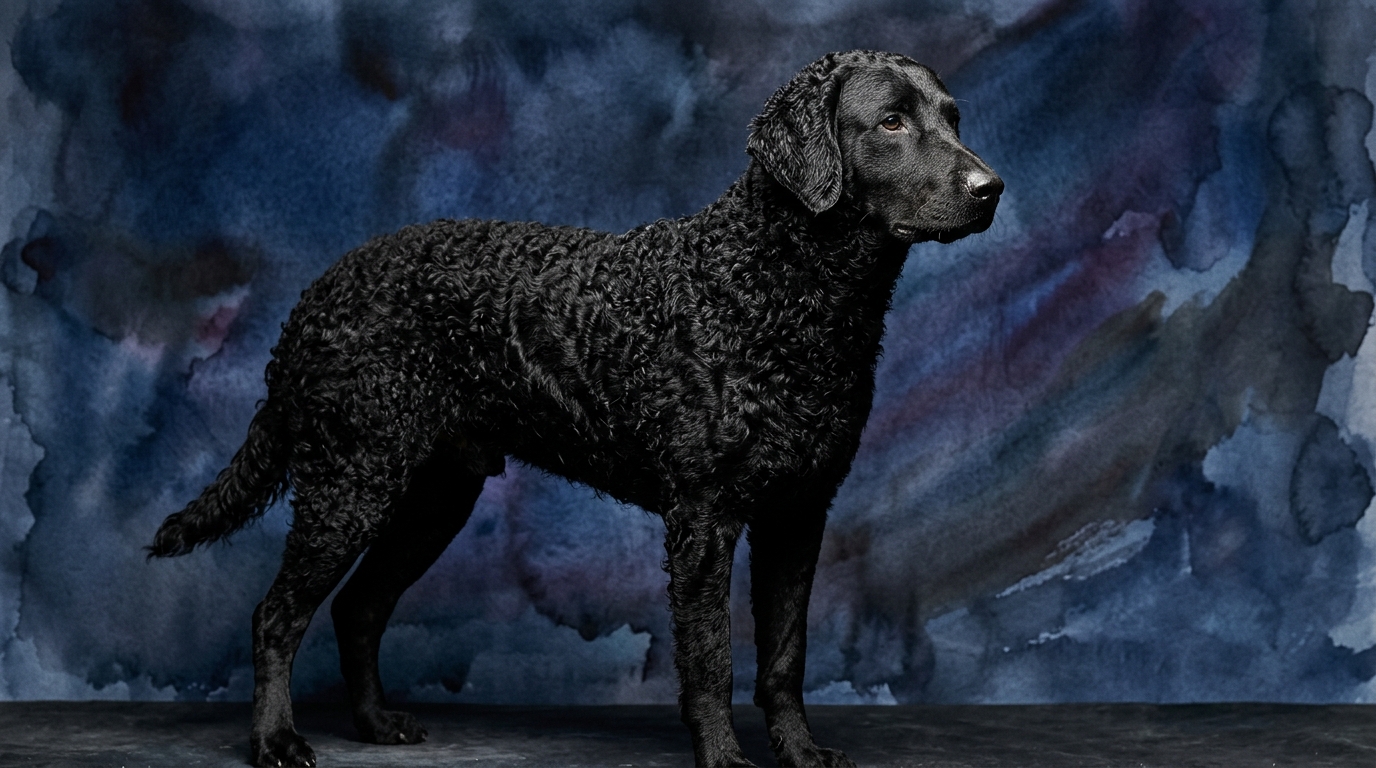
Side-by-Side IQ Profile: Vizsla vs. Curly-Coated Retriever
The Cosmic Pet Pet IQ Lab employs a five-dimensional framework to assess canine intelligence, offering a granular view beyond simple obedience. For the Vizsla, ranked #31 by Coren, its profile shows impressive cognitive agility. This breed scores 4/5 in Problem Solving, indicating a strong capacity for independent thought and navigating novel situations. Its Training Speed is also 4/5, suggesting a quick grasp of new commands and routines. Where the Vizsla truly shines is in Social Intelligence, earning a perfect 5/5, reflecting its profound attunement to human cues and emotional states. An Instinctive Drive of 5/5 highlights its powerful innate motivations for tasks like hunting and retrieving, while its Memory stands at a solid 4/5, ensuring retention of learned behaviors and experiences.
In contrast, the Curly-Coated Retriever, Coren rank #41, presents a more measured cognitive profile. It achieves 3/5 in Problem Solving, indicating a competent but perhaps less spontaneous approach to complex challenges. Its Training Speed is also 3/5, suggesting a steady learning pace that benefits from consistent, patient instruction. Social Intelligence for the 'Curly' is 3/5, meaning it's capable of forming strong bonds and understanding basic human communication, though perhaps less overtly expressive than some breeds. Its Instinctive Drive is likewise 3/5, demonstrating a reliable but not overwhelming urge for working tasks. Interestingly, the Curly-Coated Retriever matches the Vizsla in Memory, scoring 4/5, underscoring its ability to retain information effectively over time.
Where the Vizsla Excels Cognitively
The Vizsla's cognitive strengths manifest across several key dimensions. Its superior Problem Solving score (4/5 vs. 3/5) means a Vizsla is often quicker to devise solutions to environmental puzzles, such as figuring out how to open a gate or retrieve a toy from an inaccessible spot. This breed is less likely to become frustrated by obstacles, instead demonstrating a persistent, creative approach to overcoming them.
The Vizsla's higher Training Speed (4/5 vs. 3/5) translates directly into a more rapid acquisition of new skills and commands. They absorb instructions quickly, often needing fewer repetitions to cement a behavior. This makes them highly adaptable to complex training regimens, from advanced obedience to intricate scent work. Furthermore, the Vizsla's exceptional Social Intelligence (5/5 vs. 3/5) means they are profoundly sensitive to their owner's moods, gestures, and vocal tones. This deep empathy allows them to anticipate desires and respond with remarkable precision, making them incredibly intuitive companions and partners in activities. Their powerful Instinctive Drive (5/5 vs. 3/5) fuels an intense focus and unwavering determination when engaged in tasks, making them relentless and highly effective in roles requiring sustained effort and motivation.
Where the Curly-Coated Retriever's Profile Offers Unique Advantages
While the Curly-Coated Retriever's scores are generally more moderate than the Vizsla's, its cognitive profile offers distinct advantages for certain owners. Notably, the Curly-Coated Retriever matches the Vizsla in Memory, both scoring 4/5. This means that once a Curly learns a command or routine, it retains that knowledge just as effectively as a Vizsla, making for a reliable and consistent companion in the long term, despite potentially taking a little longer to initially grasp the concept.
The Curly's balanced scores of 3/5 in Problem Solving, Training Speed, Social Intelligence, and Instinctive Drive contribute to a temperament that is often described as more independent and self-contained. This moderate drive means they are less prone to intense overstimulation or the relentless need for constant engagement that a higher-drive breed might exhibit. Owners who appreciate a dog that can be content with its own company for periods, and perhaps not constantly seeking to 'solve' every perceived problem in the environment, may find the Curly's cognitive makeup a refreshing fit. Their consistent cognitive profile offers a predictable and steady companion, less likely to push boundaries or demand constant redirection, which can be a significant 'win' for owners seeking a more laid-back yet capable partner.
Training Dynamics: Vizsla vs. Curly-Coated Retriever
When it comes to training, the Vizsla generally presents as a more facile student. Their 4/5 Training Speed means they pick up new cues and behaviors with relative ease, often demonstrating a 'one-and-done' understanding for simpler commands. This is further amplified by their 5/5 Social Intelligence, which makes them highly attuned to their handler's desires. A Vizsla will actively seek to understand and please, often responding to subtle body language or vocal inflections, making positive reinforcement exceptionally effective. However, their high Instinctive Drive (5/5) means that while they learn quickly, they also require consistent mental engagement to prevent boredom and channel that drive productively, otherwise they might invent their own less desirable 'tasks'.
The Curly-Coated Retriever, with a 3/5 Training Speed and 3/5 Social Intelligence, requires a more patient and consistent approach. They are not necessarily slow learners, but they may need more repetitions and a clearer, more direct training style. Their moderate social intelligence means they might not be as overtly eager to please as a Vizsla, sometimes appearing to ponder a command before executing it. This can be misinterpreted as stubbornness, but it often reflects a more independent thought process. Owners training a Curly should focus on building a strong foundation with positive reinforcement, keeping sessions engaging but not overly long, and understanding that progress may be steady rather than instantaneous. Their 4/5 Memory ensures that once a behavior is learned, it tends to stick, rewarding the trainer's initial patience.
Suitability: Active vs. Relaxed Owners
For active owners, particularly those who thrive on outdoor adventures, sports, or demanding training, the Vizsla is an exceptional match. Its 5/5 Instinctive Drive paired with 4/5 Problem Solving and 5/5 Social Intelligence creates a dog that not only has boundless energy but also possesses the mental acuity and desire to be a constant, engaged partner in high-energy activities. They require significant daily exercise and mental stimulation, flourishing in environments where they can run, explore, and work alongside their human. A Vizsla without adequate outlets for its cognitive and physical needs can quickly become restless or develop behavioral issues.
The Curly-Coated Retriever, with its more moderate 3/5 Instinctive Drive and 3/5 Social Intelligence, offers a compelling option for active owners who appreciate a capable outdoor companion but perhaps don't live an extreme, constantly on-the-go lifestyle. They enjoy and need regular exercise—long walks, runs, and retrieving games are cherished—but they are generally more content to relax at home after their physical and mental needs have been met. Their somewhat more independent nature means they can be excellent companions for hikes or water sports, but they might not constantly demand the same level of intense, interactive engagement as a Vizsla. They suit owners who are active but also value a dog that can settle down gracefully and enjoy quieter moments without exhibiting excessive restlessness.
The Verdict: When to Choose Each Breed
The Verdict
Choose the Vizsla if you seek an intensely engaged, highly responsive partner for demanding activities, valuing quick learning and profound social connection. Their high drive and cognitive agility require a dedicated, active owner ready for constant interaction and mental stimulation.
Opt for the Curly-Coated Retriever if you appreciate a capable, independent sporting companion with reliable memory, who thrives on consistent activity but also values calmer home environments. Their steady temperament and moderate drive suit active owners who desire a less intensely demanding, yet equally loyal, presence.
🧠 Find Your Pet's IQ Score
Our Pet IQ Lab assessment covers 25+ tests across 5 cognitive dimensions — personalized to your breed.
Take the Full IQ Test →Frequently Asked Questions
Which breed is better for first-time dog owners?
Neither breed is typically recommended for entirely novice owners due to their sporting dog needs, but the Curly-Coated Retriever's more moderate drive and independence might be slightly more forgiving. The Vizsla's intense social needs and high energy can be overwhelming for those new to dog ownership.
Do Vizslas and Curly-Coated Retrievers get along with children?
Both breeds can be excellent with children when properly socialized and trained, but their interactions differ. Vizslas, with their high social intelligence and energy, often thrive on being part of family activities, while Curly-Coated Retrievers, with their moderate social scores, might be a bit more reserved, preferring respectful interactions.
Which breed requires more mental stimulation?
The Vizsla generally requires more intense and varied mental stimulation due to its higher problem-solving ability and profound instinctive drive. While the Curly-Coated Retriever also benefits from mental challenges, its needs are typically more moderate and can be met with consistent, engaging training and activities.