Side-by-Side Cognitive Profiles
The Cosmic Pet Pet IQ Lab's framework allows us to examine the nuanced cognitive strengths of each breed across five key dimensions. Understanding these profiles reveals how their historical roles have shaped their minds.
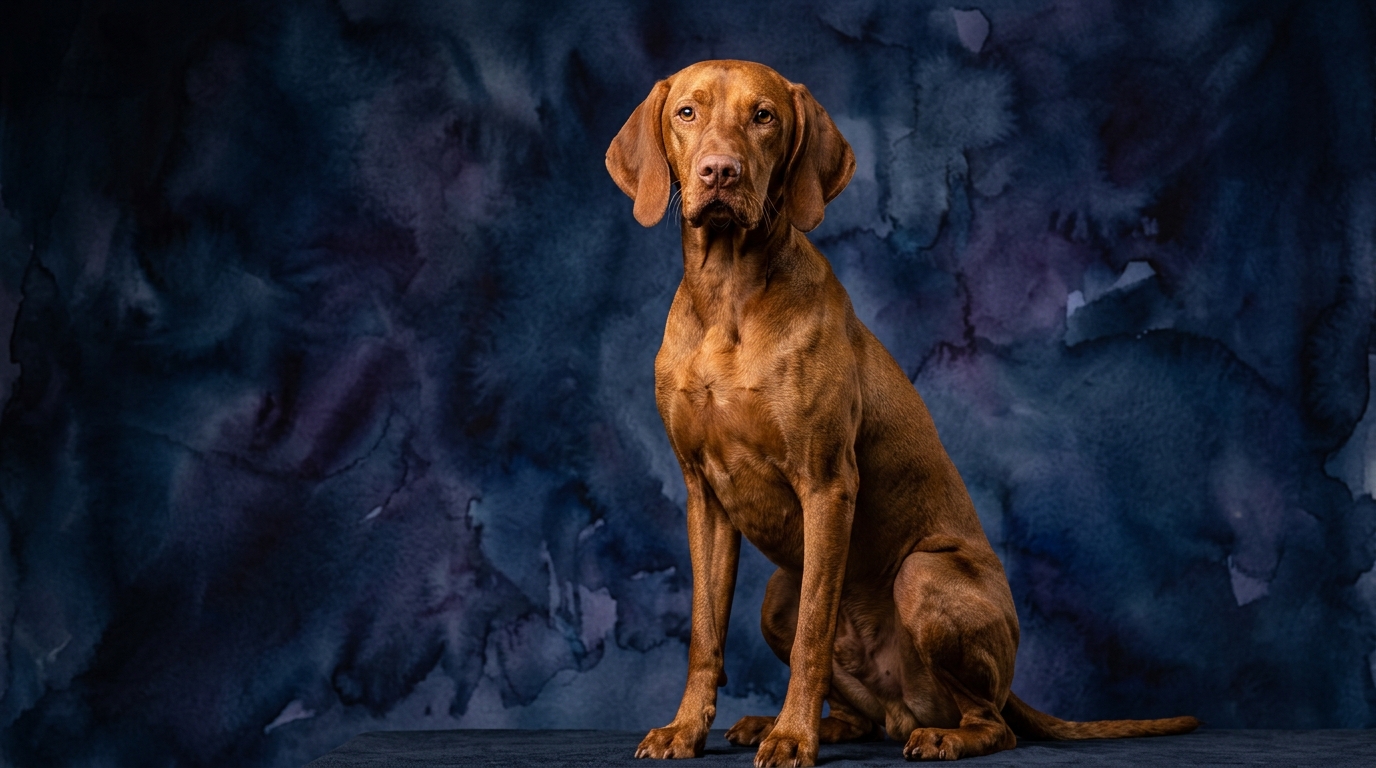
The Vizsla, a Hungarian sporting dog, holds a Coren rank of #31, reflecting a balanced and cooperative cognitive blueprint. Their Problem Solving is rated 4/5, indicating an adaptive mind capable of navigating new situations and learning complex tasks efficiently. Training Speed also scores 4/5, reflecting their eagerness to absorb commands and routines quickly. A standout is their Social Intelligence at 5/5, signifying a deep attunement to human cues, emotional states, and a strong desire for companionship and cooperation. Their Instinctive Drive is a robust 5/5, rooted in their heritage as versatile hunting companions requiring keen tracking and retrieving skills. Finally, their Memory is strong at 4/5, allowing them to recall learned behaviors and associate them with specific contexts over time.
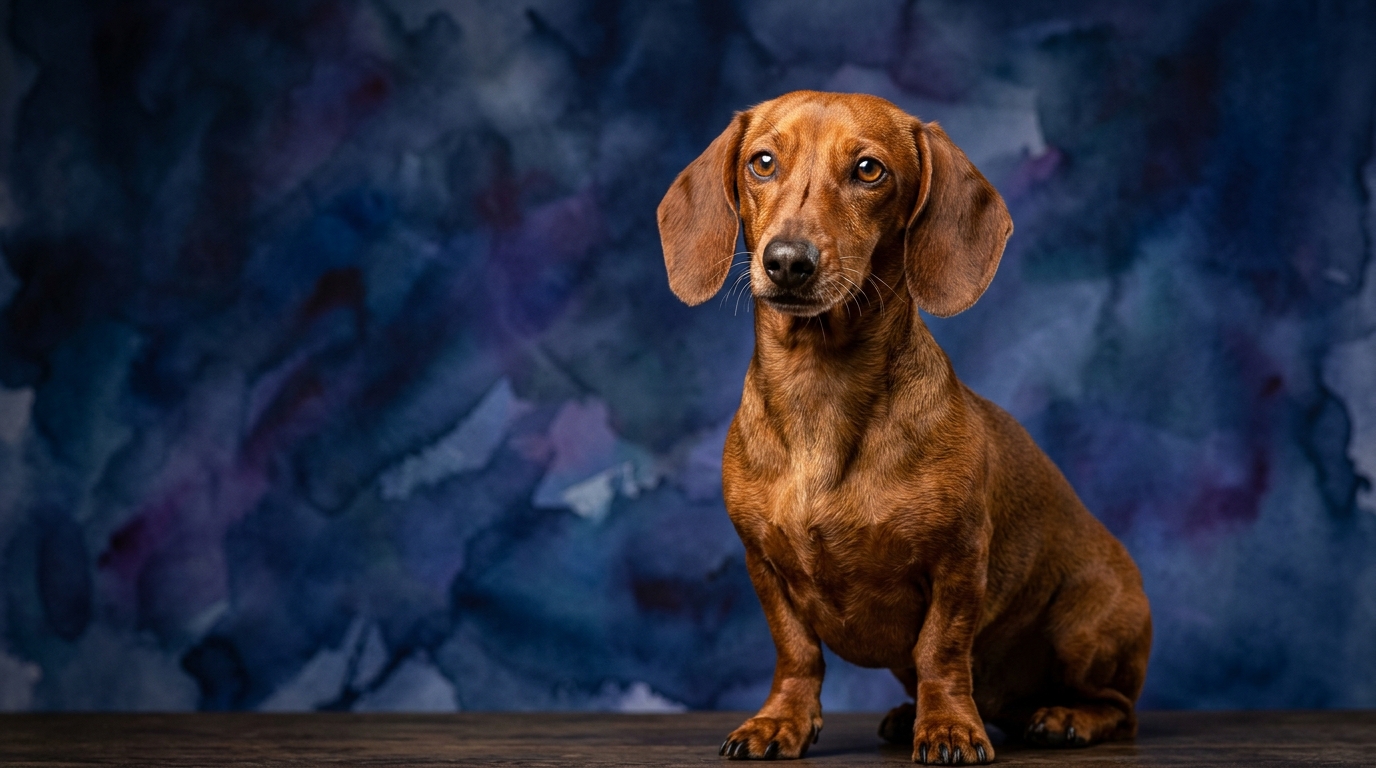
The Dachshund, the German 'badger dog,' comes in with a Coren rank of #49, presenting a cognitive profile shaped by its independent hunting origins. Their Problem Solving matches the Vizsla at 4/5, showcasing a cleverness in overcoming obstacles, particularly when pursuing a goal. However, their Training Speed is a more moderate 2/5, suggesting a less immediate inclination to follow human direction, often preferring their own agenda. Social Intelligence is rated 3/5, indicating they understand human interaction but might not prioritize it over their own investigative pursuits. Their Instinctive Drive is a commanding 5/5, reflecting their intense dedication to tracking scents and tunneling, a legacy of their badger-hunting past. Their Memory comes in at 3/5, sufficient for recalling important locations and routines, but perhaps less comprehensive for intricate, human-directed sequences.
Where the Vizsla Wins Cognitively
The Vizsla's cognitive strengths shine particularly in areas requiring collaboration and rapid assimilation of human instruction. Their superior Social Intelligence (5/5 compared to Dachshund's 3/5) means they are exceptionally attuned to their human companions' body language, vocal tones, and intentions. This deep social connection makes them eager participants in shared activities, striving to understand and comply with requests.
When presented with a novel command or a multi-step task, a Vizsla's 4/5 Training Speed allows them to grasp the concept and execute it proficiently faster than many breeds. This isn't just about repetition; it's about a quick cognitive leap from instruction to action, facilitated by their strong memory (4/5). They recall sequences of commands and specific task requirements with precision, building on previous learning experiences to master new ones. For instance, in an agility course, a Vizsla will not only learn the obstacles quickly but also remember the entire flow and specific handler cues for each element, demonstrating a cohesive understanding of the task. This integrated cognitive approach makes them highly versatile learners in structured environments.
Where the Dachshund Wins Cognitively
While the Vizsla excels in cooperative learning, the Dachshund's cognitive strengths manifest in tenacious, independent problem-solving driven by their powerful instincts. Their Instinctive Drive, a perfect 5/5, isn't just about energy; it's a profound cognitive engine that directs their considerable Problem Solving (4/5) towards specific, self-initiated goals.
A Dachshund wins in scenarios demanding independent thought and unwavering persistence in the face of obstacles, particularly when a scent is involved. Imagine a Dachshund tracking a scent trail through a complex garden: they will methodically navigate barriers, tunnel under bushes, and employ their cleverness to reach the source, unfazed by human redirection unless it aligns with their immediate objective. Their problem-solving isn't always about pleasing a human; it's about achieving their own deeply ingrained, instinctual mission. This specialized cognitive application, where their mind is fully engaged in a singular, self-directed pursuit, makes them exceptional at tasks requiring autonomous investigation and a relentless drive to succeed on their own terms, often outmaneuvering or outlasting other breeds in such niche scenarios.
Which is Easier to Train and Why
Without question, the Vizsla is generally easier to train, a direct consequence of their cognitive profile. Their 4/5 Training Speed and 5/5 Social Intelligence create a highly receptive and cooperative learner. Vizslas possess an inherent desire to work alongside their humans, viewing training as a shared activity rather than a chore. They quickly make associations between commands and actions, and their strong memory (4/5) ensures that once a concept is learned, it's retained. For example, teaching a Vizsla a complex retrieve or a series of obedience commands often involves fewer repetitions and a more enthusiastic response because they are actively seeking to understand and please. Their sensitivity to human feedback means they quickly adjust their behavior based on praise or gentle correction.
In contrast, the Dachshund, with a 2/5 Training Speed and 3/5 Social Intelligence, presents a more significant training challenge. Their powerful 5/5 Instinctive Drive often overrides their inclination to follow human commands, especially if a more compelling scent or independent pursuit captures their attention. They are thinkers, but often self-directed ones, requiring trainers to be exceptionally patient, consistent, and creative in making training rewarding and relevant to their innate drives. While they can learn, their independent streak means they might choose to 'opt-out' of a command if they perceive a more interesting alternative, making training a test of perseverance and understanding their unique motivations.
Matching Cognitive Style to Owner Lifestyle
The cognitive profiles of the Vizsla and Dachshund paint clear pictures for owner lifestyles. The Vizsla, with its 5/5 Instinctive Drive and 5/5 Social Intelligence, is an ideal match for active owners who thrive on companionship and shared endeavors. These dogs require substantial physical exercise, but equally important is mental stimulation through training, dog sports, or engaging outdoor activities like hiking and field work. Their strong social bond means they genuinely want to be involved in their family's life and will actively seek out engagement, making them excellent partners for running, cycling, or advanced obedience. They are not content to be left alone for long periods and will channel their significant cognitive energy into less desirable behaviors if under-stimulated.
Conversely, the Dachshund, while possessing a powerful 5/5 Instinctive Drive, typically suits owners who appreciate a more independent companion and can provide mental engagement without demanding high-intensity, continuous physical output. Their physical structure limits some forms of strenuous activity, but their keen problem-solving mind and scent drive mean they need consistent opportunities for exploration and 'work,' albeit often self-directed. Owners who enjoy leisurely walks where their dog can meticulously sniff and investigate, or who provide puzzle toys and scent games indoors, will find a happy Dachshund. They can adapt to a slightly more relaxed pace than a Vizsla, but still require owners who understand and cater to their profound need for mental engagement and purpose, even if it's primarily focused on their own independent projects.
The Verdict
For owners who desire an eager, highly cooperative partner for strenuous activities, advanced training, and a deep, responsive social bond, where the dog actively seeks to learn and engage with every family member, the Vizsla is an excellent choice.
For owners who appreciate a clever, independent spirit with a tenacious drive for self-directed exploration and scent work, and are prepared to engage a unique personality that prioritizes its own instincts in training, the Dachshund will be a rewarding companion.
🧠 Find Your Pet's IQ Score
Our Pet IQ Lab assessment covers 25+ tests across 5 cognitive dimensions — personalized to your breed.
Take the Full IQ Test →Frequently Asked Questions
Is a Vizsla easily bored if not given enough to do?
Yes, a Vizsla's high instinctive drive and problem-solving ability mean they thrive on mental and physical challenges. Without adequate engagement, they can become bored and channel their energy into less desirable behaviors like chewing or excessive vocalization.
Do Dachshunds really have a stubborn streak in training?
Dachshunds often appear stubborn due to their independent nature and powerful instinctive drive. They are intelligent problem-solvers but tend to prioritize their own internal motivations, especially scent trails, over human commands, requiring consistent and patient training.
How do their social intelligence scores impact family life?
A Vizsla's 5/5 social intelligence means they are deeply attuned to family dynamics, often seeking close physical contact and actively participating in family activities, forming strong, empathetic bonds. A Dachshund's 3/5 social intelligence means they are affectionate but might be more independent, enjoying their own space or pursuits more often, though still valuing family presence.