
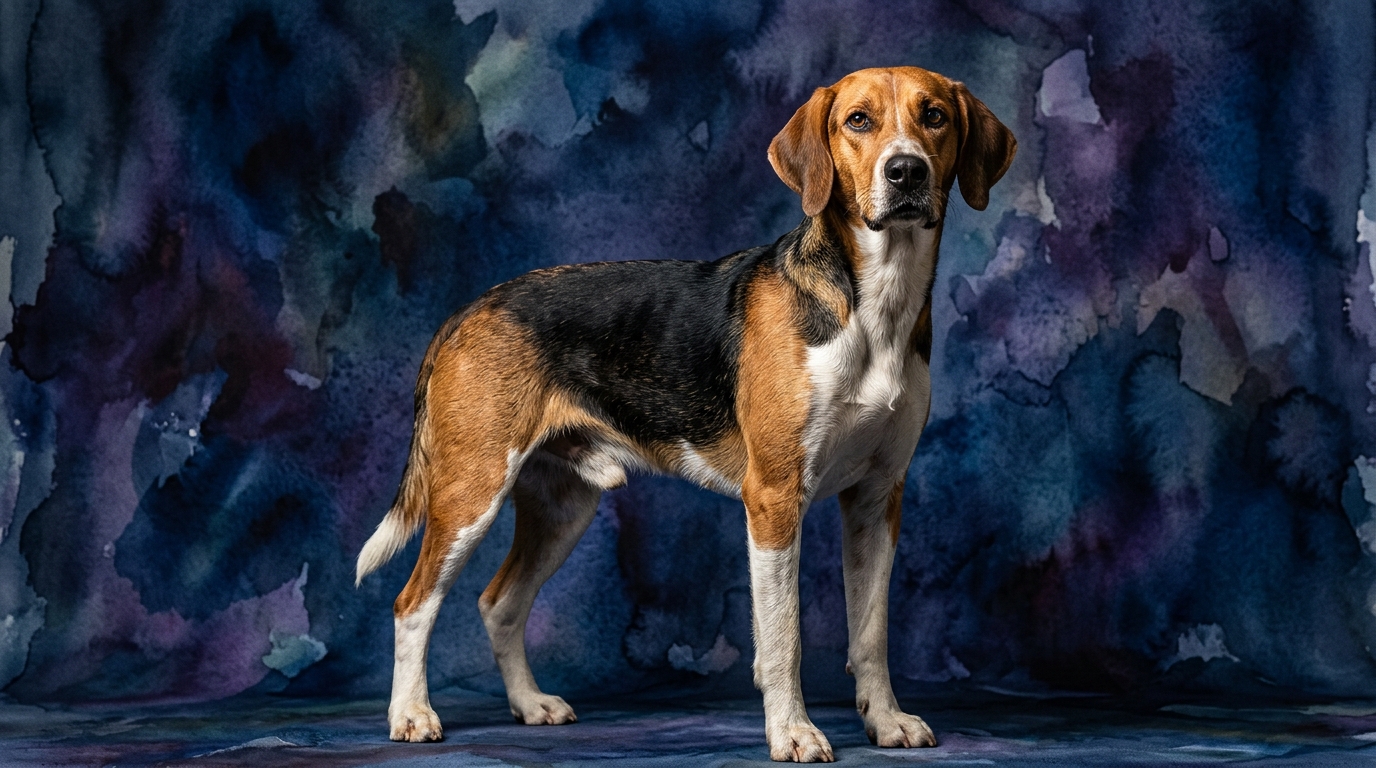
Side-by-Side Pet IQ Profile
The Cosmic Pet Pet IQ Lab employs a five-dimensional framework to assess canine cognition, offering a granular view beyond generic classifications. For the Vizsla, a Sporting breed ranked #31 by Coren, and the English Foxhound, a Hound breed without a Coren ranking, these dimensions reveal their specialized mental strengths.
**Vizsla (Sporting Group, Coren Rank #31)**
Problem Solving (4/5): This breed demonstrates a strong capacity to analyze situations and devise solutions, often independently, especially in task-oriented scenarios.
Training Speed (4/5): Vizslas typically grasp new commands and routines quickly, exhibiting a keen eagerness to learn and cooperate with their handlers.
Social Intelligence (5/5): Their understanding of human cues and social dynamics is exceptional, often leading to deep bonds and intuitive responses to family moods.
Instinctive Drive (5/5): Possessing a potent drive for retrieving and pointing, their natural instincts are highly refined and readily channeled into working roles.
Memory (4/5): They retain learned behaviors, routes, and experiences effectively, contributing to their reliability in repetitive tasks and routines.
**English Foxhound (Hound Group, Not Coren-ranked)**
Problem Solving (3/5): While capable, their approach to novel problems is often more direct, less inclined towards complex, multi-step solutions.
Training Speed (3/5): Learns at a moderate pace, requiring consistent, patient repetition, benefiting from training methods engaging natural hunting instincts.
Social Intelligence (3/5): Interactions are generally straightforward, valuing pack dynamics and clear communication, less nuanced understanding of human emotion.
Instinctive Drive (3/5): Driven primarily by scent, their focus is singularly directed towards tracking and pursuit, potentially overriding other considerations.
Memory (3/5): Reliably recalls scent trails and established routines, but memory might be less encompassing for abstract commands outside their primary drive.
Where the Vizsla Wins Cognitively
The Vizsla's cognitive profile shines in areas demanding adaptability and partnership. Their Problem Solving score of 4/5, combined with a 5/5 in Social Intelligence, indicates a dog that not only figures things out but does so in a way that often anticipates or responds to human intent. This manifests as an ability to read subtle cues from their owner, adjusting their behavior accordingly, whether during a training session or a quiet evening at home.
Their superior memory (4/5) further supports their capacity for complex learning, allowing them to string together multiple commands or navigate intricate environments with precision. This mental agility makes them particularly adept at various canine sports and service roles where quick thinking and responsiveness are paramount. The Vizsla integrates information from their environment, their handler, and their own past experiences to make decisions, reflecting a more holistic processing style.
Where the English Foxhound Wins Cognitively
The English Foxhound possesses a formidable mental architecture optimized for its primary role: scent work. Their Instinctive Drive, while rated 3/5 generally, reflects a specialized, intense focus on scent. When it comes to following a trail, their concentration is unparalleled, demonstrating a cognitive singularity that allows them to filter out distractions and maintain an unwavering pursuit.
This specialized form of “problem-solving” involves interpreting complex scent data, navigating varied terrain, and maintaining stamina over long durations, often without direct human intervention. Their Memory (3/5) is particularly strong for recalling scent patterns and established routes within their hunting territory, a critical cognitive asset for a breed developed to work independently in a pack. This deep-seated, purposeful focus, while sometimes perceived as stubbornness in other contexts, is a profound cognitive strength within their domain.
Which Is Easier to Train and Why
Based on the Pet IQ Lab data, the Vizsla (Training Speed 4/5) is generally easier to train compared to the English Foxhound (Training Speed 3/5). The Vizsla's higher scores in Problem Solving and Social Intelligence are key contributors here. A Vizsla's keenness to engage with its handler, coupled with its ability to quickly grasp new concepts, means fewer repetitions are often needed for a command to be internalized. They are motivated by praise and partnership, readily integrating new behaviors into their repertoire because they are attuned to human direction and enjoy the collaborative process.
In contrast, the English Foxhound's training requires more patience and a different approach. Their strong instinctive drive, particularly for scent, means that external stimuli can easily divert their attention from formal training. While they are capable of learning, their motivation often needs to be channeled through their natural predispositions, such as incorporating scent games into obedience work. Their lower social intelligence score suggests they might not be as invested in pleasing their human companion through quick compliance, preferring to follow their own nose unless a very compelling reason is presented. This doesn't mean they are untrainable, but rather that their training journey demands consistency, a firm understanding of hound motivation, and a willingness to work *with* their instincts rather than against them.
Which Suits Active Owners vs. Relaxed Owners
The Vizsla, with its high instinctive drive (5/5) and need for mental engagement (Problem Solving 4/5, Social Intelligence 5/5), is unequivocally suited for active owners. This breed thrives on consistent physical activity that challenges both their body and mind, such as running, hiking, swimming, or participating in dog sports like agility and field trials. Their strong social intelligence also means they crave close companionship and involvement in family activities, making them poor candidates for owners who prefer a more hands-off approach or extended periods of solitude. A relaxed owner who cannot meet their exercise and mental stimulation needs would likely find a Vizsla becoming restless, potentially developing undesirable behaviors stemming from boredom and excess energy.
The English Foxhound, while also requiring significant exercise due to its background as a hunting dog, presents a different challenge. Their 3/5 instinctive drive, specifically geared towards scent work, means they need outlets for tracking and exploring. A relaxed owner would struggle to manage their urge to roam and follow a trail, making secure containment and dedicated “sniffing” walks crucial. However, once their exercise needs are met, English Foxhounds can be content to relax, often enjoying the company of their “pack” (family) without the same intense demand for constant interaction and partnership that a Vizsla exhibits. Therefore, highly active owners looking for a deeply engaged partner would lean towards the Vizsla, while active owners who appreciate a more independent, scent-driven companion might consider the English Foxhound, provided they can manage its specific exercise and containment needs.
The Verdict
When choosing between these two breeds, consider your lifestyle and what you seek in a canine companion's cognitive engagement. Choose the Vizsla if you desire a deeply interactive, highly trainable partner for active pursuits and canine sports, one who thrives on collaboration and reads your cues intuitively.
Opt for the English Foxhound if you are an active individual or family prepared for a more independent, scent-driven companion, appreciating their robust stamina and singular focus on the trail, understanding that their training requires specific motivation.
🧠 Find Your Pet's IQ Score
Our Pet IQ Lab assessment covers 25+ tests across 5 cognitive dimensions — personalized to your breed.
Take the Full IQ Test →Frequently Asked Questions
Do Vizslas need a lot of mental stimulation?
Yes, Vizslas absolutely require substantial mental stimulation. Their high problem-solving capacity and strong social intelligence mean they thrive on learning new commands, engaging in puzzle toys, and participating in activities that challenge their minds, preventing boredom and potential behavioral issues.
Are English Foxhounds stubborn during training?
English Foxhounds can appear stubborn during training, primarily because their powerful instinctive drive for scent often outweighs other motivations. They respond best to consistent, positive reinforcement methods that cleverly integrate their natural desire to track, making training a collaborative pursuit rather than a battle of wills.
How do their social intelligence scores impact family life?
A Vizsla's 5/5 social intelligence means they are acutely aware of family dynamics and emotions, often forming deep, intuitive bonds and seeking constant interaction. An English Foxhound's 3/5 social intelligence suggests they are generally affectionate but may be less attuned to subtle human cues, valuing clear communication and pack structure over nuanced emotional responses.