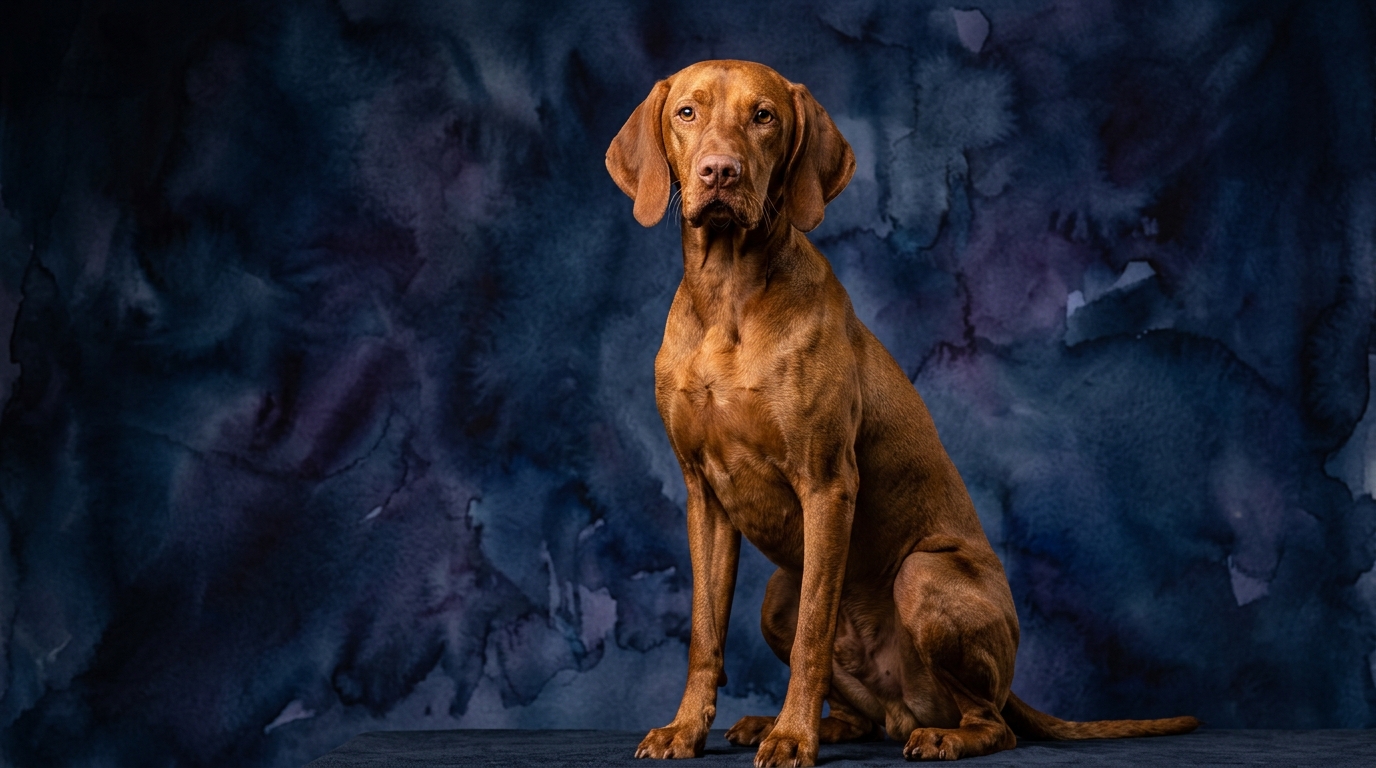
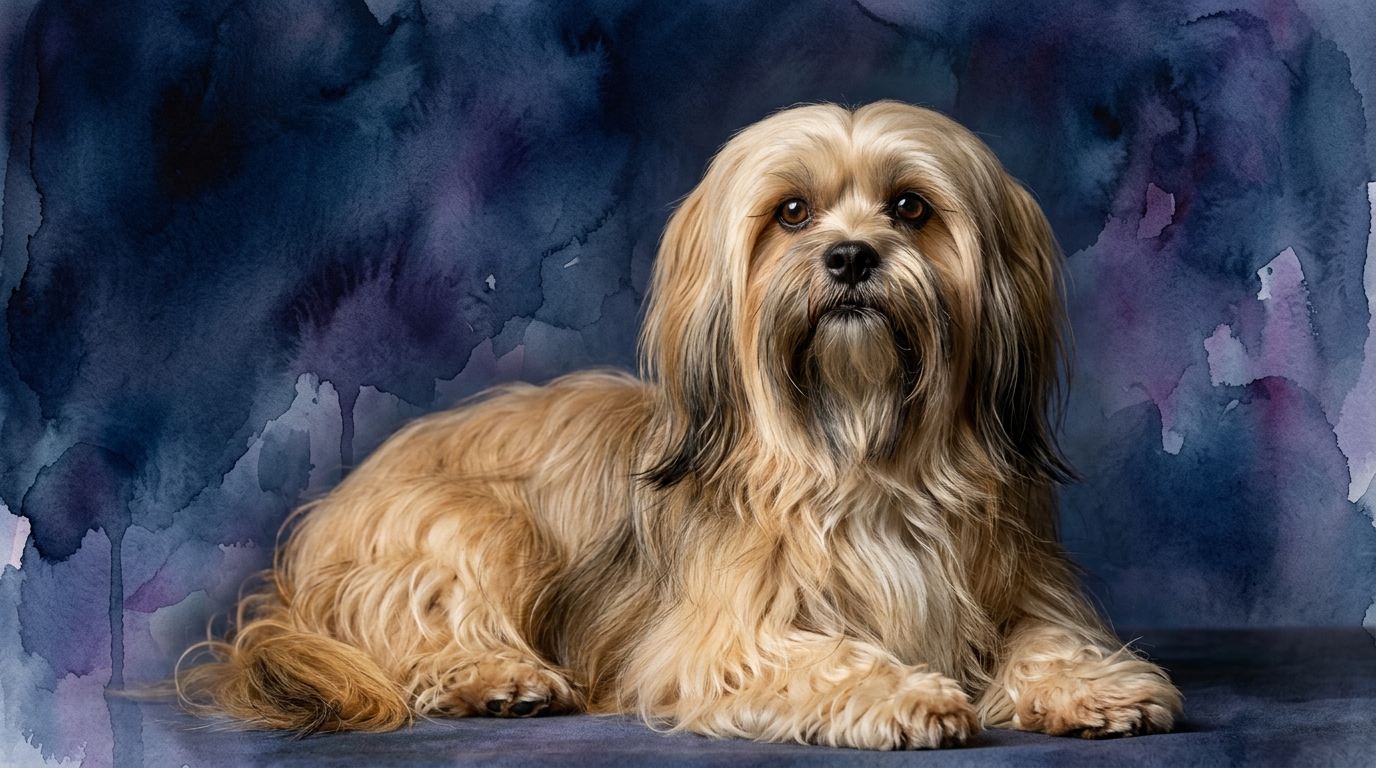
Side-by-Side IQ Profile
Vizsla (Coren rank #31): This Sporting group canine exhibits a cognitive profile optimized for active partnership. Its Problem Solving (4/5) score reflects an ability to navigate complex environments and overcome obstacles in pursuit of a goal, essential for tracking and retrieving. Training Speed (4/5) indicates a rapid grasp of new commands and sequences, driven by a strong desire to engage with its handler. The Vizsla's Social Intelligence (5/5) is exceptionally developed, allowing for nuanced communication, understanding human cues, and forming deep, cooperative bonds. Its Instinctive Drive (5/5) is profound, manifesting as a powerful urge to hunt, retrieve, and engage in physically demanding tasks, often requiring significant mental engagement. Finally, its Memory (4/5) supports retaining intricate instructions and learned behaviors over time, crucial for consistency in field work or competitive sports.
Lhasa Apso (Coren rank #68): Hailing from the Non-Sporting group, the Lhasa Apso possesses a cognitive makeup suited for its historical role as a companion and sentinel. Its Problem Solving (3/5) leans towards practical navigation within its immediate domain and discerning potential threats, rather than complex, external challenges. Training Speed (3/5) suggests a more deliberate learning pace, where repetition and clear motivation are key to establishing new behaviors. The Lhasa Apso's Social Intelligence (3/5), while sufficient for forming close bonds with its family, is less geared towards cooperative work and more towards discerning trusted individuals from strangers. Its Instinctive Drive (3/5) is notably lower than the Vizsla's, manifesting as a protective instinct and a tendency towards alertness rather than a drive for active engagement or pursuit. Memory (3/5) supports remembering routines and familiar faces, though perhaps not extensive sequences of commands as readily as a working breed.
Where Vizsla Wins Cognitively
The Vizsla's cognitive profile consistently outperforms the Lhasa Apso across all five dimensions, particularly in areas demanding active engagement and cooperative problem-solving. Its superior Problem Solving (4/5 vs. 3/5) enables it to quickly assess dynamic situations, such as navigating varied terrains during a hunt or figuring out how to retrieve a toy from a challenging spot. This isn't just about raw processing power, but a practical application of intelligence to environmental manipulation. The Vizsla's Instinctive Drive (5/5 vs. 3/5) provides an unparalleled internal motivation for task completion and sustained effort, channeling intense focus into activities like scent work or agility courses. This drive isn't merely physical; it fuels a cognitive persistence that the Lhasa Apso, with its more moderate drive, typically lacks. Furthermore, the Vizsla's Social Intelligence (5/5 vs. 3/5) grants it an exceptional capacity to read and respond to human intentions, making it an incredibly intuitive partner. This allows for complex, non-verbal communication and a deeper understanding of cooperative tasks, fostering a partnership that goes beyond simple command execution. The combination of high Training Speed (4/5) and Memory (4/5) means a Vizsla can learn and retain a broader repertoire of commands and intricate behaviors much faster, making it adept at advanced obedience, competitive sports, and even service roles requiring extensive training. This cognitive advantage translates to a dog that thrives on intellectual challenges presented in collaboration with its human.
Where Lhasa Apso Wins Cognitively
While the Lhasa Apso's overall scores are lower, its cognitive strengths are uniquely tailored to its historical role and lifestyle, presenting a different kind of "win." Its Problem Solving (3/5), while not as broad as the Vizsla's, is acutely focused on discernment within its immediate environment. A Lhasa Apso excels at identifying subtle changes or potential intruders, demonstrating a cognitive ability to categorize and react to perceived threats, which is a specific form of practical intelligence. This isn't about solving complex external puzzles, but about effectively managing its domestic territory. Its Instinctive Drive (3/5), while less intense for active pursuits, is perfectly calibrated for vigilance and independent decision-making rather than seeking constant direction. This lower drive can be seen as a cognitive advantage for a companion who is self-contained and less prone to separation anxiety or destructive behaviors driven by an unmet need for strenuous activity. The Lhasa Apso's Social Intelligence (3/5), though not geared for cooperative work, allows it to form deep, loyal bonds with its family while maintaining a discerning distance from strangers. This translates to a cognitive strength in social selectivity and a clear understanding of its inner circle, making it a reliable alert system and a devoted, if sometimes reserved, companion. Its Memory (3/5) is sufficient for remembering routines, people, and the layout of its home, contributing to its consistent and dependable nature within its established environment. Essentially, the Lhasa Apso's cognitive profile allows it to be an effective, independent guardian and a steadfast companion without requiring the intense mental and physical engagement characteristic of a working breed. Its strengths lie in acute observation, independent judgment, and unwavering loyalty within its defined world.
Which is Easier to Train and Why
Comparing the training ease of a Vizsla and a Lhasa Apso reveals fundamental behavioral differences stemming from their distinct cognitive profiles. The Vizsla, with its Training Speed of 4/5, Memory of 4/5, and especially its Social Intelligence of 5/5, is generally much easier to train. Vizslas possess an inherent eagerness to please and a strong desire to work in partnership with their human handlers. They quickly grasp new commands and complex sequences, often needing fewer repetitions to master a behavior. Their high social intelligence means they are acutely attuned to human body language, tone, and expectations, making communication during training more fluid and responsive. For instance, a Vizsla will often anticipate a command or offer a behavior based on subtle cues, demonstrating a proactive engagement in the learning process. Their profound Instinctive Drive (5/5), while needing appropriate channeling, can be harnessed as a powerful motivator in training, making them enthusiastic participants in activities like retrieve games or scent work.
In contrast, the Lhasa Apso, with Training Speed and Memory scores of 3/5, presents a different training dynamic. They are not necessarily "difficult" to train, but they require more patience, consistency, and a clear understanding of their independent nature. Lhasas tend to be more deliberate learners, needing more repetitions to solidify new commands. Their lower social intelligence, in terms of cooperative work, means they are less driven by the desire to "please" and more by what benefits them or what they perceive as fair. This can manifest as a stubborn streak if they don't see the value in a command or if the training method isn't engaging. For example, a Lhasa Apso might understand a "sit" command but choose not to perform it if there's no immediate reward or if they feel it's unnecessary. Positive reinforcement, especially with high-value treats, is crucial, as is establishing a strong, respectful bond. Unlike the Vizsla, whose high instinctive drive can be channeled, the Lhasa Apso's more moderate drive means they are less likely to engage in extensive, high-energy training sessions and prefer shorter, more focused bursts. Their independence means they might question commands or require more convincing, whereas a Vizsla typically dives into learning with enthusiasm.
Which Suits Active Owners vs. Relaxed Owners
The choice between a Vizsla and a Lhasa Apso hinges significantly on an owner's lifestyle and their capacity to meet a dog's cognitive and physical needs. The Vizsla is unequivocally suited for active owners. Its high Instinctive Drive (5/5) and Problem Solving (4/5) capabilities demand consistent mental and physical stimulation. These dogs thrive when given a "job," whether it's field work, competitive obedience, agility, or extensive daily exercise that includes varied environments and intellectual challenges. An owner who enjoys running, hiking, biking, or participating in dog sports will find a Vizsla to be an unparalleled companion. Without sufficient outlets for their energy and sharp minds, Vizslas can become restless, bored, and potentially destructive, channeling their impressive problem-solving skills into undesirable behaviors. They need an owner who is not only physically active but also willing to engage their dog's intellect through training, puzzle toys, and new experiences.
Conversely, the Lhasa Apso is generally a better fit for more relaxed owners, though this doesn't mean they are sedentary. While they appreciate regular walks and playtime, their Instinctive Drive (3/5) is far less demanding than a Vizsla's. Their cognitive strengths are better utilized in a home environment where they can act as watchful companions and discerning guardians. A Lhasa Apso is content with moderate daily exercise, such as short walks or indoor play, and enjoys being a part of family life without the constant need for high-octane activities. Their Problem Solving (3/5) and Social Intelligence (3/5) are primarily focused on navigating their home territory and interacting with their immediate family, making them excellent apartment dwellers or companions for individuals who prefer a calmer pace. They still benefit from mental enrichment through interactive toys and basic training, but they don't require the intense, collaborative "work" that a Vizsla craves. Owners who enjoy a cozy home life, appreciate a dog's independent spirit, and are prepared for a dog with a discerning, sometimes opinionated, personality will find a Lhasa Apso to be a fulfilling companion.
The Verdict
Select a Vizsla if you are an exceptionally active individual or family seeking a highly cooperative, physically robust, and intellectually eager canine partner for demanding activities and deep, communicative bonding.
Opt for a Lhasa Apso if you prefer a vigilant, independent, and discerning companion who thrives in a more relaxed home environment, requiring moderate exercise and appreciating a more self-sufficient presence.
🧠 Find Your Pet's IQ Score
Our Pet IQ Lab assessment covers 25+ tests across 5 cognitive dimensions — personalized to your breed.
Take the Full IQ Test →Frequently Asked Questions
Are Vizslas good with children, given their high social intelligence?
Vizslas with their high social intelligence and cooperative nature can be excellent with children, especially when well-socialized and properly trained. Their boundless energy and playful demeanor mean they thrive in active family environments, but supervision is always key, particularly with very young children, due to their size and enthusiasm.
Do Lhasa Apsos require extensive grooming due to their coat?
Yes, Lhasa Apsos possess a long, flowing double coat that requires consistent and thorough grooming to prevent matting and maintain skin health. Daily brushing is often recommended, and many owners opt for professional grooming every few weeks or keep their coat trimmed shorter for easier maintenance.
Can a Lhasa Apso participate in dog sports, despite its lower drive scores?
While a Lhasa Apso's instinctive drive is lower than a Vizsla's, they can certainly participate in certain dog sports like obedience, rally, or even some forms of agility, especially at a recreational level. Their participation often depends more on the individual dog's personality and the owner's consistent, positive reinforcement training methods to engage their independent spirit.