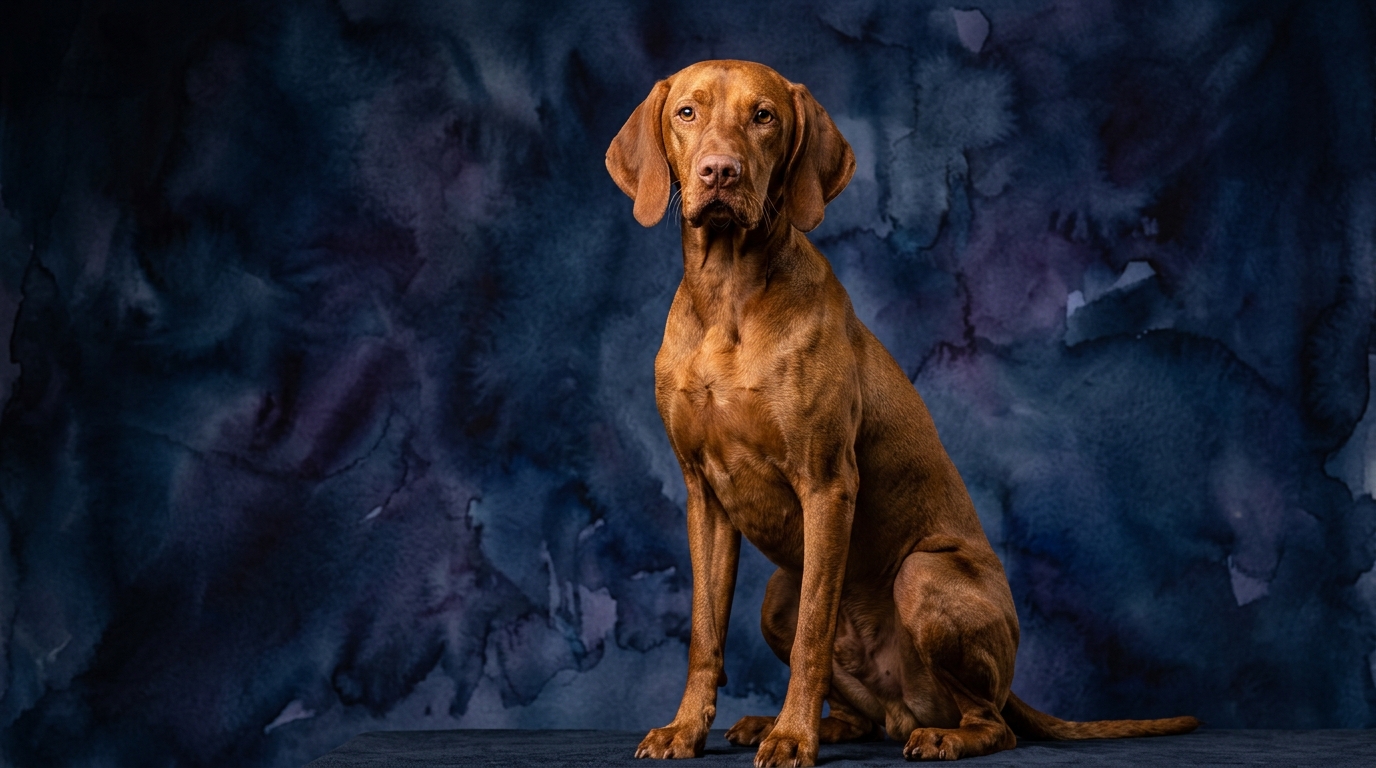
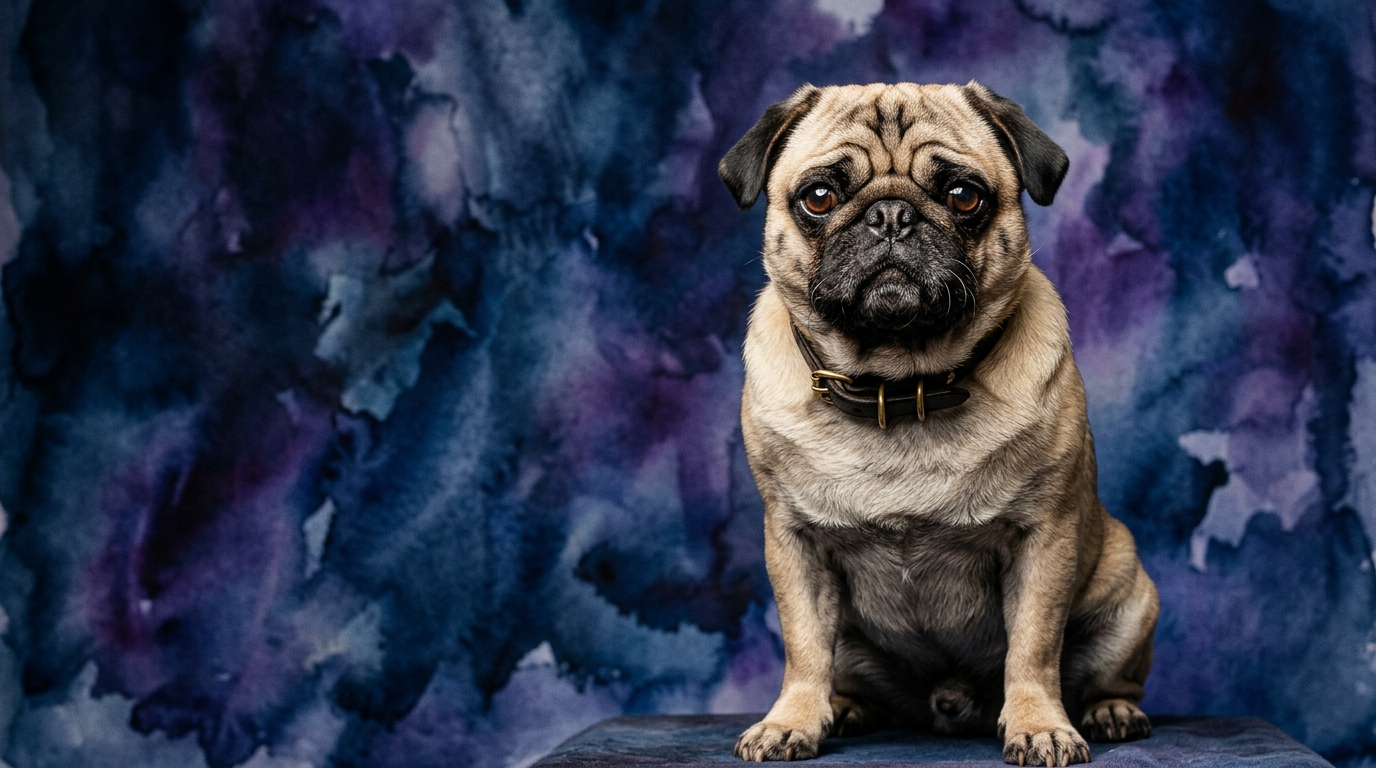
Side-by-Side Cognitive Profiles: Vizsla vs. Pug
At The Cosmic Pet Pet IQ Lab, we evaluate canine intelligence across five critical dimensions to provide a nuanced understanding of each breed's cognitive strengths. The Vizsla, ranking #31 in Coren's intelligence scale, presents a profile reflecting its heritage as a versatile hunting dog, while the Pug, at #57, showcases the cognitive attributes of a dedicated companion animal.
The Vizsla's profile begins with Problem Solving at 4/5, indicating a strong capacity for independent thought and strategic thinking when faced with challenges. Their Training Speed is also 4/5, suggesting a quick grasp of new commands and routines, often eager to comply. Social Intelligence, at a perfect 5/5, highlights their exceptional ability to read human cues and form deep, cooperative bonds. An Instinctive Drive of 5/5 underscores their powerful genetic programming for tasks like hunting, retrieving, and tracking. Finally, Memory at 4/5 demonstrates their robust retention of learned behaviors and environmental information.
In contrast, the Pug's Pet IQ Lab profile reflects a different set of priorities. Their Problem Solving score is 2/5, indicating a preference for simpler solutions and a reliance on their human companions to navigate complex situations. Training Speed registers at 2/5, meaning they may require more repetition and patience to master new commands. Where Pugs truly shine is in Social Intelligence, scoring a full 5/5, a testament to their profound ability to connect emotionally and intuitively with people. Their Instinctive Drive is 2/5, signifying a minimal inclination for traditional dog work, focusing instead on companionship. Memory for the Pug is 3/5, sufficient for core routines and relationships but perhaps less for intricate sequences.
Where the Vizsla Excels Cognitively
The Vizsla's cognitive strengths are deeply rooted in its purpose as a sporting dog, manifesting in superior problem-solving and rapid learning. Their 4/5 score in Problem Solving means a Vizsla isn't just following orders; they actively process their environment to achieve goals. For instance, if a toy rolls under an obstacle, a Vizsla is more likely to assess the situation and strategize how to retrieve it, perhaps nudging it out with their nose or paw, rather than simply waiting for assistance. This translates into an adaptable companion on trails or in new environments, often figuring out safe paths or novel solutions to minor obstacles.
Their 4/5 Training Speed is a significant advantage, allowing them to absorb complex multi-step commands and generalize them to different contexts quickly. A Vizsla can learn a sequence like 'find the ball, bring it here, then drop it in the basket' with fewer repetitions than many other breeds. This quick uptake makes them exceptional candidates for advanced obedience, agility, and field trials, where rapid understanding and execution are paramount. The Vizsla's 5/5 Instinctive Drive further supports this, providing intrinsic motivation for tasks involving scent work, retrieving, and focused attention, making them naturally inclined to engage in activities that channel these drives productively.
Where the Pug Excels Cognitively
While the Vizsla excels in areas of active problem-solving and task-oriented learning, the Pug's cognitive brilliance shines brightly in the realm of social and emotional intelligence. With a perfect 5/5 in Social Intelligence, the Pug possesses an unparalleled capacity for empathy and connection. They are finely attuned to the subtle shifts in human mood and body language, often providing comfort or companionship precisely when it's needed most, without needing specific cues. This isn't about performing a task; it's about an intuitive understanding of the human emotional landscape, making them exceptional emotional support animals and cherished family members.
The Pug's lower Instinctive Drive (2/5) might seem like a cognitive disadvantage in a working context, but for a companion animal, it's a distinct advantage. This means less internal compulsion to hunt, herd, or roam, translating into a dog that is content to be close by, often preferring a cozy lap to an expansive field. Their cognitive focus is less on environmental mastery and more on relational harmony. This allows them to dedicate their mental resources to observing and interacting with their human family, making them incredibly present and responsive companions in a domestic setting, requiring less redirection from external stimuli.
Training Dynamics: Vizsla vs. Pug
When it comes to training, the differences between the Vizsla and the Pug are substantial, largely dictated by their respective cognitive profiles. The Vizsla is generally considered easier to train, primarily due to its 4/5 Training Speed, 4/5 Problem Solving, and 5/5 Instinctive Drive. They are eager to please and possess a natural inclination to work cooperatively with their human partners. A Vizsla often perceives training as an engaging mental exercise and an opportunity to bond, making them highly responsive to positive reinforcement. Their ability to quickly grasp new concepts and sequences means that new commands can be introduced and proofed in various environments with relative efficiency. Their desire for mental engagement means they thrive on consistent, varied training sessions.
The Pug, with its 2/5 Training Speed and 2/5 Problem Solving, presents a different training experience. While they are highly social (5/5), their motivation isn't typically task-oriented. Pugs can be charmingly stubborn and may require more patience and creativity from their trainers. They respond best to short, engaging sessions filled with positive reinforcement, especially food rewards, as their desire to please might be tempered by an independent streak. Consistency is paramount with a Pug; they may take longer to generalize commands to new situations, meaning a command learned in the living room might need to be re-taught in the backyard. Their lower instinctive drive means they are less compelled by activities like retrieving or tracking, requiring trainers to find alternative motivators rooted in companionship and comfort.
Lifestyle Suitability: Active vs. Relaxed Owners
The cognitive and physical needs of the Vizsla and Pug naturally align them with distinct owner lifestyles. A Vizsla's high instinctive drive (5/5) and robust problem-solving abilities (4/5) mean they are best suited for active owners who can provide consistent mental and physical challenges. These dogs thrive on long runs, hikes, swimming, and participation in dog sports such as agility, obedience, or scent work. Their cognitive makeup demands an outlet for their energy and intellect; without sufficient engagement, a Vizsla might invent its own 'problems' to solve, potentially leading to destructive behaviors or excessive vocalization. They require an owner who views their dog as a partner in adventure and is prepared for daily, stimulating interaction.
Conversely, the Pug's cognitive profile, characterized by lower instinctive drive (2/5) and a focus on social intelligence (5/5), makes them an ideal match for more relaxed owners. Their moderate energy levels and preference for companionship over strenuous activity mean they are well-suited for apartment living or homes with smaller yards. A Pug's contentment often comes from being close to their human family, enjoying short walks, and engaging in gentle play. While they still benefit from consistent, positive training to maintain their memory (3/5) and social manners, their cognitive needs are met more through interaction and affection than through complex tasks or extensive physical exertion. They are the quintessential companion for someone seeking a warm, intuitive presence without the demands of a working breed.
The Verdict
Choose a Vizsla if you seek a highly engaged companion for outdoor adventures and mental challenges, valuing a partner eager to learn and work alongside you.
Opt for a Pug if your lifestyle prioritizes calm companionship, emotional connection, and a charming presence that thrives on close human interaction rather than strenuous activity.
🧠 Find Your Pet's IQ Score
Our Pet IQ Lab assessment covers 25+ tests across 5 cognitive dimensions — personalized to your breed.
Take the Full IQ Test →Frequently Asked Questions
Do Vizslas get along with other pets?
Vizslas, with their high social intelligence, generally integrate well with other animals, especially if socialized early. Their strong prey drive, however, means introductions to smaller non-canine pets should be supervised carefully to ensure harmony.
Are Pugs difficult to house train?
Pugs can sometimes present a challenge with house training due to their moderate training speed and occasional stubbornness. Consistent routines, positive reinforcement, and patience are key to success, often requiring more dedication than with breeds eager to perform complex tasks.
How much mental stimulation does a Vizsla need daily?
Vizslas require substantial daily mental stimulation to prevent boredom and destructive behaviors. This can include advanced obedience training, puzzle toys, scent work, or participation in dog sports, complementing their physical exercise needs for a balanced life.