
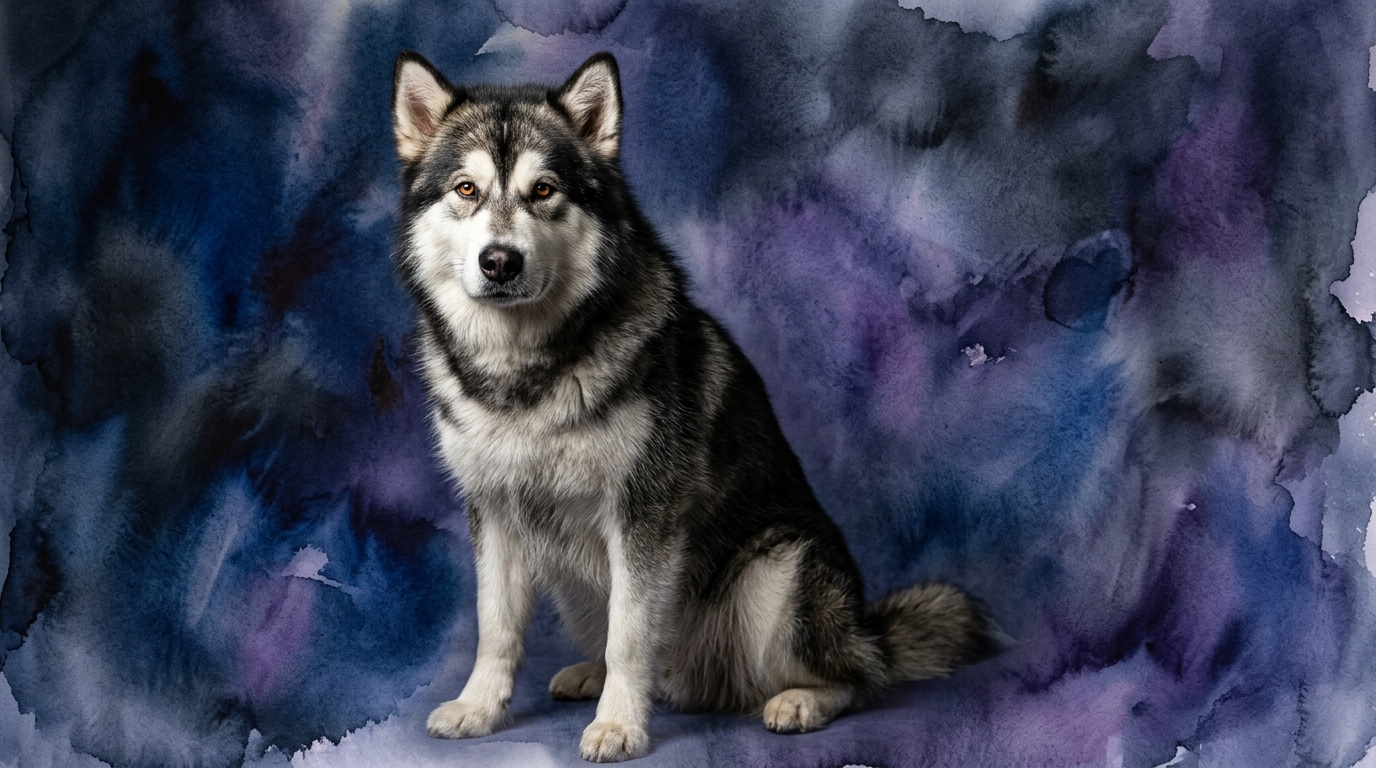
Side-by-Side IQ Profile: Weimaraner vs. Alaskan Malamute
The Cosmic Pet Pet IQ Lab offers a comprehensive look at canine intelligence, assessing five key dimensions. For the Weimaraner (Sporting, Coren rank #21) and the Alaskan Malamute (Working, Coren rank #50), these scores paint a picture of their inherent cognitive aptitudes and how they approach the world.
Weimaraner IQ Profile:
Problem Solving (4/5): The Weimaraner exhibits strong aptitude for navigating complex environments and figuring out solutions to obstacles, typical of a breed developed for hunting and retrieving; their capacity for strategic thought aids them in tracking game and overcoming challenges in the field.
Training Speed (4/5): These dogs are notably quick learners, readily grasping new commands and routines; their eagerness to please and focus on their handler contribute to their rapid acquisition of skills, making them highly responsive to consistent training methods.
Social Intelligence (4/5): Weimaraners possess a keen awareness of human emotions and social cues, often forming deep bonds with their families; they are adept at understanding and responding to subtle changes in their environment and their people, fostering strong cooperative relationships.
Instinctive Drive (5/5): Their powerful prey drive and natural inclination to hunt and retrieve are exceptionally strong; this intrinsic motivation fuels their activity levels and their desire to engage in tasks that tap into their genetic heritage, demanding outlets for this intense energy.
Memory (4/5): Weimaraners demonstrate excellent recall for learned behaviors, commands, and even specific locations or scents; their robust memory aids in reinforcing training and allows them to perform complex sequences of tasks over time.
Alaskan Malamute IQ Profile:
Problem Solving (4/5): Alaskan Malamutes are resourceful and independent thinkers, skilled at overcoming challenges, particularly those related to their traditional roles of hauling and survival in harsh conditions; they can devise clever ways to achieve their goals, sometimes to their owner's chagrin.
Training Speed (2/5): While capable of learning, Malamutes often require more repetition and patience in training; their independent nature means they may weigh commands against their own perceived self-interest, leading to a slower acquisition rate for obedience tasks.
Social Intelligence (3/5): Malamutes are generally amiable but possess a more independent social outlook compared to some breeds; they appreciate companionship but might not always be as finely attuned to subtle human emotional shifts or as driven to cooperate purely for their owner's pleasure, preferring a partnership dynamic.
Instinctive Drive (5/5): Their drive for pulling, exploring, and pack interaction is profoundly ingrained; this potent instinct shapes much of their behavior, requiring significant physical and mental engagement to satisfy their need for purposeful activity and often manifesting as a strong wanderlust.
Memory (4/5): Malamutes have a solid memory, retaining learned skills and experiences, especially those that benefit them or relate to their environment; this strong memory contributes to their ability to navigate complex terrains and remember past routes.
Where the Weimaraner Wins Cognitively
The Weimaraner's cognitive strengths shine particularly in areas demanding quick responsiveness and close partnership. Their Training Speed score of 4/5, significantly higher than the Malamute's 2/5, indicates a breed that absorbs new information and commands with greater alacrity. This makes them exceptionally receptive to advanced obedience, agility, or intricate field work where precise, rapid execution is paramount.
Furthermore, their Social Intelligence at 4/5 suggests a deeper attunement to human emotional states and intentions, fostering a more intuitive and cooperative bond. This nuanced understanding allows them to anticipate their handler's desires, making them highly collaborative partners in activities that require synchronous effort, such as competitive obedience or service roles. Their cognitive profile leans towards a dog that thrives on working with its human, readily adapting to complex instructions and performing with a visible desire to please and connect.
Where the Alaskan Malamute Excels Cognitively
While not outscoring the Weimaraner in every category, the Alaskan Malamute's cognitive profile highlights a distinct type of intellect, particularly in its independent problem-solving and powerful instinctive drive. Both breeds score 4/5 in Problem Solving, but the Malamute's approach is often characterized by resourceful self-sufficiency, a trait honed by centuries of working in harsh, unforgiving environments where independent decision-making was crucial for survival.
They excel at figuring out how to achieve their own objectives, whether it's opening a gate or finding a way around an obstacle, often employing clever, if sometimes mischievous, strategies. Their Instinctive Drive, also a 5/5, is channeled into sustained endurance and a profound desire for purposeful work, such as hauling. This translates into an unwavering mental fortitude for repetitive, physically demanding tasks, allowing them to maintain focus and motivation over long periods in challenging conditions, a testament to their deep-seated working heritage.
Which is Easier to Train and Why
Without question, the Weimaraner generally presents an easier training experience for most owners. Their Training Speed score of 4/5, combined with a 4/5 in Social Intelligence, indicates a dog that is not only quick to learn but also deeply invested in cooperative engagement with its handler. Weimaraners possess a strong desire to please and readily form a close working partnership, meaning they are often eager to comply and understand commands quickly. Their focus tends to remain on their handler, making them highly responsive to cues and less prone to independent decision-making during training sessions.
In contrast, the Alaskan Malamute's 2/5 Training Speed and 3/5 Social Intelligence point to a more challenging training journey. Malamutes are independent thinkers with a strong will; they often require more patience, consistency, and motivation to learn new behaviors. Their inclination to assess commands based on personal benefit, coupled with a powerful instinctive drive for exploration and pulling, means they can be easily distracted and may choose to follow their own agenda if not adequately engaged. Training a Malamute is less about quick compliance and more about building a respectful partnership where the dog understands the value of cooperation on its own terms.
Which Suits Active Owners vs. Relaxed Owners
Both the Weimaraner and the Alaskan Malamute are undeniably suited for active owners, but for different reasons and with varying intensities. The Weimaraner, with its 5/5 Instinctive Drive and high energy levels, thrives on constant engagement, complex tasks, and vigorous exercise that taps into its hunting heritage. They are ideal for owners who enjoy running, hiking, dog sports like agility or retrieving, and who can provide consistent mental stimulation through training and puzzles. A Weimaraner needs a purpose and a job to do, making them a superb match for individuals or families committed to an active, structured lifestyle.
The Alaskan Malamute, also boasting a 5/5 Instinctive Drive, demands equally robust physical activity, particularly those that satisfy their innate desire to pull and explore. Owners who enjoy long hikes, skijoring, bikejoring, or urban mushing will find a dedicated partner in a Malamute. However, their independent nature and powerful build mean they require an owner who is not only active but also confident, consistent, and patient in leadership. Neither breed is suitable for relaxed, sedentary owners. Both require significant daily exercise and mental engagement to prevent boredom and potential destructive behaviors. A 'relaxed' owner would quickly find themselves overwhelmed by the boundless energy and strong will of either dog.
The Verdict
Choose the Weimaraner if you seek a highly trainable, intensely bonded partner eager for consistent engagement in dog sports, hunting, or active family life, thriving on mutual cooperation.
Choose the Alaskan Malamute if you are a confident, patient leader seeking a robust, independent companion for endurance activities like hiking or pulling, who values partnership over strict obedience.
🧠 Find Your Pet's IQ Score
Our Pet IQ Lab assessment covers 25+ tests across 5 cognitive dimensions — personalized to your breed.
Take the Full IQ Test →Frequently Asked Questions
How do their problem-solving abilities differ despite similar scores?
While both score 4/5, the Weimaraner's problem-solving often aligns with handler cooperation and task completion, whereas the Malamute's is frequently more independent, focused on self-serving solutions or navigating complex natural environments.
Is a Weimaraner always easier to live with than an Alaskan Malamute?
Generally, yes, due to their higher training speed and social intelligence leading to quicker integration into household routines; however, both breeds require significant commitment to exercise and mental stimulation to be well-adjusted companions.
Can an Alaskan Malamute excel in obedience despite its lower training speed?
Absolutely, with a dedicated and patient owner, an Alaskan Malamute can achieve high levels of obedience; their success relies on consistent positive reinforcement, understanding their independent nature, and making training engaging and rewarding for them.