
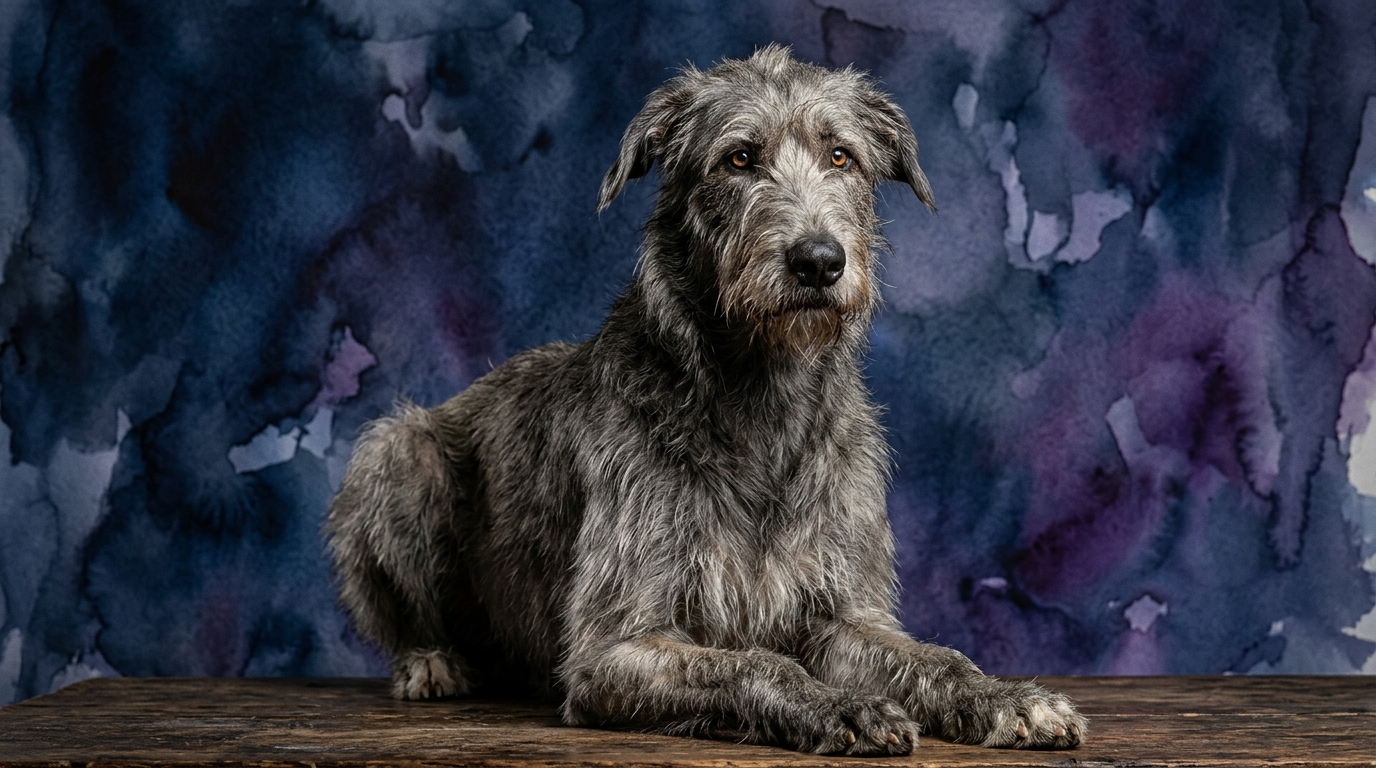
Side-by-Side Cognitive Profiles: Weimaraner vs. Irish Wolfhound
At The Cosmic Pet Pet IQ Lab, we evaluate canine intelligence across five key dimensions, providing a nuanced understanding of each breed's strengths. The Weimaraner, a Sporting dog, consistently demonstrates a keen intellect, while the Irish Wolfhound, a Hound, exhibits a different, more independent set of cognitive attributes.
For the **Weimaraner (Coren Rank #21)**, their profile is: **Problem Solving (4/5)**, indicating a strong capacity for analyzing new situations and devising effective solutions, often showing ingenuity in navigating their environment. **Training Speed (4/5)** means they typically grasp new commands and routines with impressive alacrity, showing a readiness to learn and a desire to work alongside their human companions. Their **Social Intelligence (4/5)** is pronounced, allowing them to read human cues and adapt their behavior in various social contexts, often forming deep bonds. **Instinctive Drive (5/5)** highlights a highly developed prey drive and an innate urge to retrieve and hunt, translating into a powerful motivation for purposeful activity. Finally, their **Memory (4/5)** ensures they retain learned information and past experiences effectively, aiding in consistent performance and adaptation.
The **Irish Wolfhound (Not Coren-ranked)** presents a profile reflecting its specialized heritage: **Problem Solving (3/5)** suggests they are capable of solving practical challenges, but tend to approach problems with less immediate urgency or complex strategizing than some other breeds, often favoring direct solutions. Their **Training Speed (3/5)** indicates a moderate learning pace, requiring consistent, patient, and positive reinforcement to solidify new commands, as they are not as quick to pick up novel tasks. **Social Intelligence (3/5)** manifests as a calm, dignified social presence, often observing rather than actively participating in every interaction, though they are affectionate with their families. **Instinctive Drive (3/5)**, specific to their sighthound heritage, endows them with a drive to pursue moving objects, but this is typically less generalized and less intense than a sporting dog's, manifesting in bursts of chasing activity. Their **Memory (3/5)** allows them to remember established routines and familiar individuals reliably, though recall of complex sequences might require more reinforcement.
Where the Weimaraner Wins Cognitively
The Weimaraner's cognitive edge is most apparent in its rapid acquisition of new skills and its proactive approach to problem-solving. A score of 4/5 in both Training Speed and Problem Solving means they quickly grasp complex sequences, making them adept at advanced obedience, agility, or even search and rescue tasks. For instance, a Weimaraner might swiftly learn a multi-step fetch game involving different objects and locations, or figure out how to manipulate a latch to access a desired area. Their 5/5 Instinctive Drive fuels this, providing an inherent motivation to engage with tasks and challenges, channeling their energy into purposeful activity rather than undirected restlessness. This drive, combined with a 4/5 Memory, ensures they not only learn fast but also retain that learning, building a robust repertoire of behaviors and responses over time.
Where the Irish Wolfhound Wins Cognitively
While the Irish Wolfhound's scores might appear lower across the board, their cognitive strengths lie in a different domain, reflecting their historical role as independent hunters of large game. Their 3/5 in Instinctive Drive, while lower than the Weimaraner's, represents a focused, independent drive for pursuit rather than a desire for constant human-directed tasks. This means they are often less prone to separation anxiety when left alone and can demonstrate self-reliance within their familiar environment. Their 3/5 Social Intelligence manifests as a calm, observant demeanor rather than eager participation; they are often described as thoughtful companions who process social dynamics with a quiet dignity, offering a comforting presence without demanding constant attention. Their memory, while rated 3/5, is perfectly adequate for remembering their family, routines, and the boundaries of their home, contributing to their reputation as gentle and reliable household members.
Training Dynamics: Which is Easier to Train and Why?
Without question, the Weimaraner presents as the easier breed to train for a wide range of tasks, largely due to its superior scores in Training Speed (4/5), Problem Solving (4/5), and Instinctive Drive (5/5). Their inherent eagerness to engage and their quick comprehension mean they pick up commands rapidly, often requiring fewer repetitions to solidify a behavior. A Weimaraner is more likely to actively seek to understand what is being asked of them and find a way to comply, driven by their strong desire for purpose and engagement. In contrast, the Irish Wolfhound, with 3/5 in Training Speed and Problem Solving, requires a more patient, consistent, and reward-based approach. While certainly trainable, they may take longer to process new commands and might lack the same intrinsic motivation for repetitive obedience drills. Their independent sighthound nature means they are less inclined to perform simply "because you said so" and require more compelling reasons, such as high-value treats or engaging games, to maintain focus, especially when distracted by their natural drive for pursuit.
Lifestyle Match: Active Owners vs. Relaxed Owners
The choice between these two breeds heavily depends on an owner's lifestyle and energy levels. The Weimaraner is an ideal match for highly active owners who can provide ample physical exercise and mental stimulation. Their 5/5 Instinctive Drive means they thrive on purposeful activity, be it long runs, hiking, field work, or dog sports. An owner who enjoys daily vigorous outdoor activities and is committed to consistent training and engagement will find a Weimaraner to be an enthusiastic and fulfilling companion, but an under-stimulated Weimaraner can quickly become a challenge. Conversely, the Irish Wolfhound, despite its imposing size, is surprisingly well-suited for more relaxed owners. Once past puppyhood, these dogs are often described as "45-mph couch potatoes." While they need regular, moderate exercise to maintain health and prevent boredom, their lower instinctive drive (3/5) compared to the Weimaraner means they are content with less intense, shorter bursts of activity followed by long periods of rest and companionship. They are excellent for owners who appreciate a calm, dignified presence in the home and are prepared for the logistics of a very large dog, but not necessarily a constant demand for high-octane activity.
The Verdict
Choose the Weimaraner if you are an active, experienced owner seeking a highly engaged and trainable companion for sports, field work, or a dynamic outdoor lifestyle, and can consistently meet their intense needs for mental and physical stimulation.
Opt for the Irish Wolfhound if you desire a gentle, dignified giant, appreciate a calmer presence in the home, and can provide moderate exercise and a large, comfortable space for a loyal, affectionate, but less intensely driven companion.
🧠 Find Your Pet's IQ Score
Our Pet IQ Lab assessment covers 25+ tests across 5 cognitive dimensions — personalized to your breed.
Take the Full IQ Test →Frequently Asked Questions
Do Irish Wolfhounds need a lot of exercise despite their lower drive score?
Yes, while their instinctive drive is not as high as a sporting dog's, Irish Wolfhounds still require regular, moderate exercise to maintain their large frames and overall health. Daily walks and opportunities for a good run in a secure area are essential, but they are not typically candidates for endurance activities like marathon running.
How does a Weimaraner's high instinctive drive impact its behavior at home?
A Weimaraner's 5/5 instinctive drive means they need outlets for their energy and purpose. Without sufficient mental and physical engagement, they can become restless or destructive, potentially channeling their problem-solving skills into undesirable behaviors like exploring countertops or finding ways out of enclosures.
Is a Weimaraner's social intelligence different from an Irish Wolfhound's?
Yes, a Weimaraner's 4/5 social intelligence often translates to a more eager-to-please and deeply bonded interaction style, actively seeking engagement. The Irish Wolfhound's 3/5 social intelligence is characterized by a more reserved, dignified affection, appreciating companionship without the same demanding intensity for constant interaction.