
Side-by-Side IQ Profile: Weimaraner vs. Norwegian Elkhound
At The Cosmic Pet Pet IQ Lab, we dissect canine cognition across five key dimensions. The Weimaraner, ranked #21 by Coren, demonstrates a Problem Solving score of 4/5, enabling them to adeptly navigate complex environments and learn intricate tasks, often figuring out how to manipulate objects for a goal. Their Training Speed of 4/5 means they grasp new commands and routines with impressive efficiency. Social Intelligence at 4/5 fosters a strong desire to work alongside humans, making them highly attuned to their owner's moods and instructions, seeking cooperative engagement. An Instinctive Drive of 5/5 for hunting and retrieving is deeply embedded, manifesting as a powerful motivation for activity and purpose-driven work. Memory at 4/5 ensures they retain learned information and experiences well, building a comprehensive understanding of their environment.
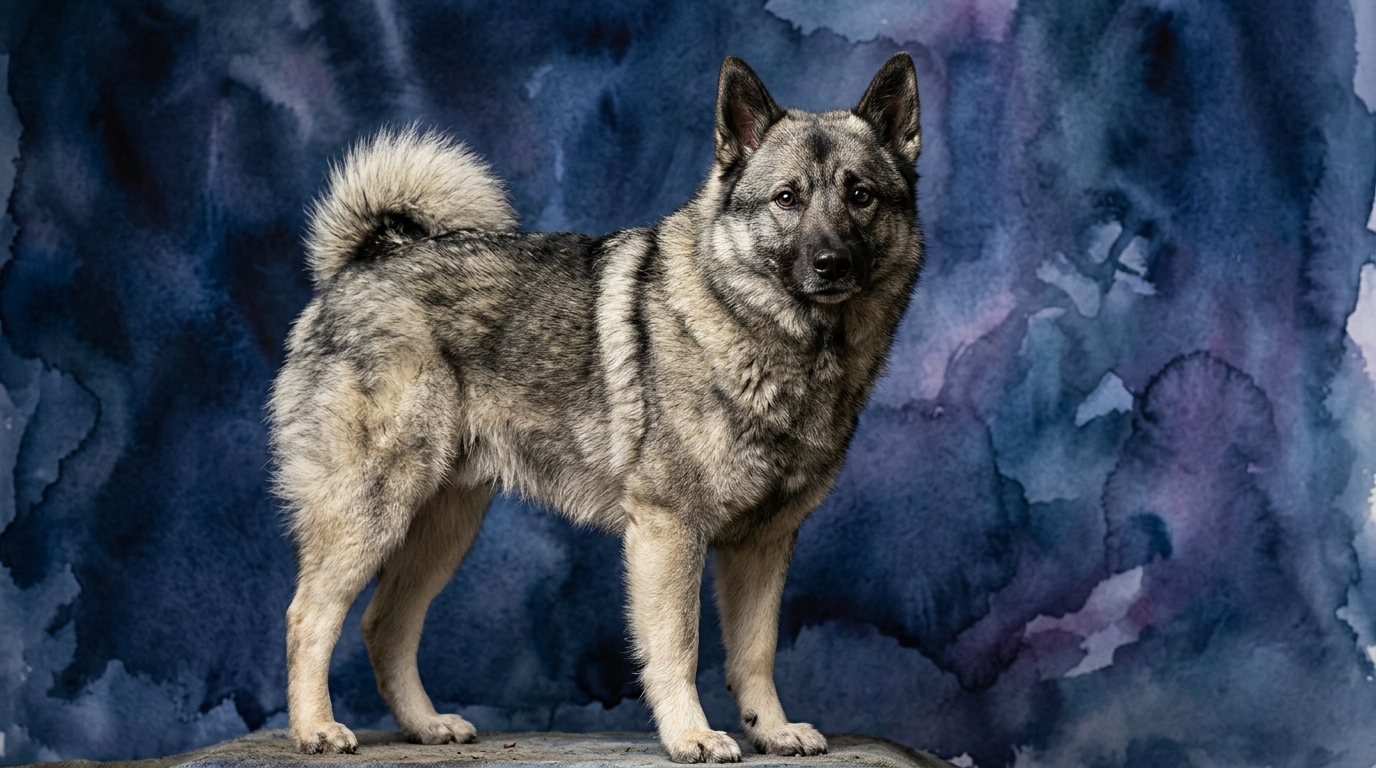
The Norwegian Elkhound, with a Coren rank of #36, also shows a Problem Solving score of 4/5, exhibiting a robust capacity for independent thought, often devising their own solutions to challenges, particularly in navigation or scent work. Their Training Speed of 4/5 indicates a quick uptake of new information, though their application might be more self-directed. Social Intelligence at 3/5 suggests a more independent nature; while they bond deeply, they are not as overtly focused on constant human interaction or subtle social cues. Their Instinctive Drive of 3/5 is rooted in endurance, tracking, and the pursuit of game, leading to a persistent, self-motivated approach to exploration rather than strong cooperative retrieving. Memory at 4/5 provides them with a solid foundation for recalling routes, commands, and past encounters.
Where the Weimaraner Wins Cognitively
The Weimaraner's cognitive strengths distinctly shine in areas requiring cooperative engagement and intense purpose. Their superior Social Intelligence (4/5 vs. Elkhound's 3/5) means they are more readily attuned to human communication, picking up on subtle body language and vocal inflections, which translates into a more fluid and responsive working partnership. This social attunement enables them to anticipate commands and adjust behavior based on perceived human intent, making them exceptionally responsive in dynamic situations like field trials or advanced obedience. Furthermore, the Weimaraner's Instinctive Drive (5/5 vs. Elkhound's 3/5) provides an unparalleled internal motivation for task completion, particularly in activities involving retrieving, tracking, or agility. This robust drive isn't just about energy; it's a cognitive engine fueling their focus and persistence when engaging in structured, collaborative tasks.
Where the Norwegian Elkhound Wins Cognitively
The Norwegian Elkhound's cognitive profile showcases valuable strengths, particularly in areas demanding self-reliance and sustained focus. While both breeds score 4/5 in Problem Solving, the Elkhound's manifests with a pronounced independent streak, allowing them to excel where direct human guidance might be minimal. This breed possesses an innate ability to assess and navigate complex environments, often relying on keen senses and internal logic to resolve challenges like tracking a scent over varied terrain. Their lower Social Intelligence (3/5) paradoxically contributes to this independence; they are less prone to “checking in” for every decision, fostering a self-sufficient mindset crucial for their historical role. This self-reliance, combined with their moderate Instinctive Drive (3/5) geared towards endurance, means they can maintain concentration on tasks for extended periods without needing constant external motivation.
Which is Easier to Train, and Why?
Comparing the ease of training between the Weimaraner and the Norwegian Elkhound reveals nuances beyond their identical 4/5 Training Speed scores. The Weimaraner generally presents as the “easier” dog to train due to its higher Social Intelligence (4/5) and intense Instinctive Drive (5/5). Their strong desire to be involved with humans means they are highly motivated by praise, interaction, and the opportunity to work collaboratively. This social attunement makes them eager to please and quick to pick up on cues, often anticipating expectations. Their profound instinctive drive for retrieving and working provides a powerful, inherent reward system; channeling this drive into structured tasks makes them exceptionally focused and compliant. For instance, a Weimaraner will typically embrace a retrieve command with enthusiasm.
In contrast, while the Norwegian Elkhound also learns quickly (Training Speed 4/5), its lower Social Intelligence (3/5) and more moderate Instinctive Drive (3/5) translate into a more independent and sometimes stubborn approach. Elkhounds understand commands swiftly, but their intrinsic motivation might not always align with an owner's specific training goals. They are less driven by constant human approval and more by their own internal interests, such as following a compelling scent. This independence means an Elkhound might learn a command but choose not to execute it if a more interesting alternative arises, or if the reward isn't sufficiently enticing. Consistency, patience, and finding what truly motivates an Elkhound—often food or scent work—are paramount, as their self-reliant nature can lead to them questioning a command's necessity.
Which Suits Active Owners vs. Relaxed Owners?
Both the Weimaraner and the Norwegian Elkhound thrive with active owners, but their specific needs and engagement styles differ. The Weimaraner, with its exceptional Instinctive Drive (5/5), is a quintessential companion for the intensely active owner. These dogs require not just physical exertion but also mental stimulation that channels their profound desire to work and retrieve. Owners who enjoy running, hiking, biking, hunting, or dog sports like agility will find a Weimaraner an enthusiastic and tireless partner. A relaxed owner will quickly be overwhelmed by a Weimaraner's pent-up energy, manifesting as destructive behaviors or excessive “shadowing” due to their high social intelligence and need for engagement. Their intelligence demands a purpose, making them unsuitable for a sedentary lifestyle.
The Norwegian Elkhound also requires significant exercise, suiting an active owner who appreciates a more independent companion. Their Instinctive Drive (3/5) is geared towards endurance and exploration, making them excellent partners for long hikes, cross-country skiing, or extended scent-tracking. They possess remarkable stamina and can cover vast distances, but might not need the same constant, cooperative interaction during these activities as a Weimaraner. An Elkhound is content to explore a trail ahead, periodically checking in, rather than staying glued to an owner's side. While not suited for truly “relaxed” owners, they adapt to owners whose active pursuits are more about sustained effort and exploration rather than high-intensity, structured sports. They are less prone to separation anxiety due to their lower social intelligence, offering flexibility for owners who might need to leave them, provided exercise needs are met.
The Verdict
Opt for a Weimaraner if you are an active, engaged owner seeking a highly cooperative and responsive partner for dog sports, hunting, or a dynamic lifestyle that can consistently fulfill their profound drive for purpose and social interaction.
Select a Norwegian Elkhound if you are an active, outdoors-oriented individual who values a self-reliant, resilient companion for endurance activities like long hikes or scent work, and appreciates a dog with an independent spirit.
🧠 Find Your Pet's IQ Score
Our Pet IQ Lab assessment covers 25+ tests across 5 cognitive dimensions — personalized to your breed.
Take the Full IQ Test →Frequently Asked Questions
Do Weimaraners get bored easily?
Yes, Weimaraners, with their high problem-solving ability and intense instinctive drive, can become bored quickly without adequate physical exercise and mental engagement. This boredom often leads to undesirable behaviors as they seek their own entertainment.
Are Norwegian Elkhounds good off-leash?
Norwegian Elkhounds possess a strong prey drive and an independent nature, making off-leash reliability challenging, especially in unfenced areas or where interesting scents abound. Consistent, specialized training and secure environments are crucial for off-leash activities.
Which breed is better for a family with children?
Both breeds can be good with children, but their approaches differ. Weimaraners tend to be more socially attuned and eager to participate in family activities, while Elkhounds might be more tolerant and independent, potentially requiring more supervision to ensure respectful interactions due to their less overt social drive.