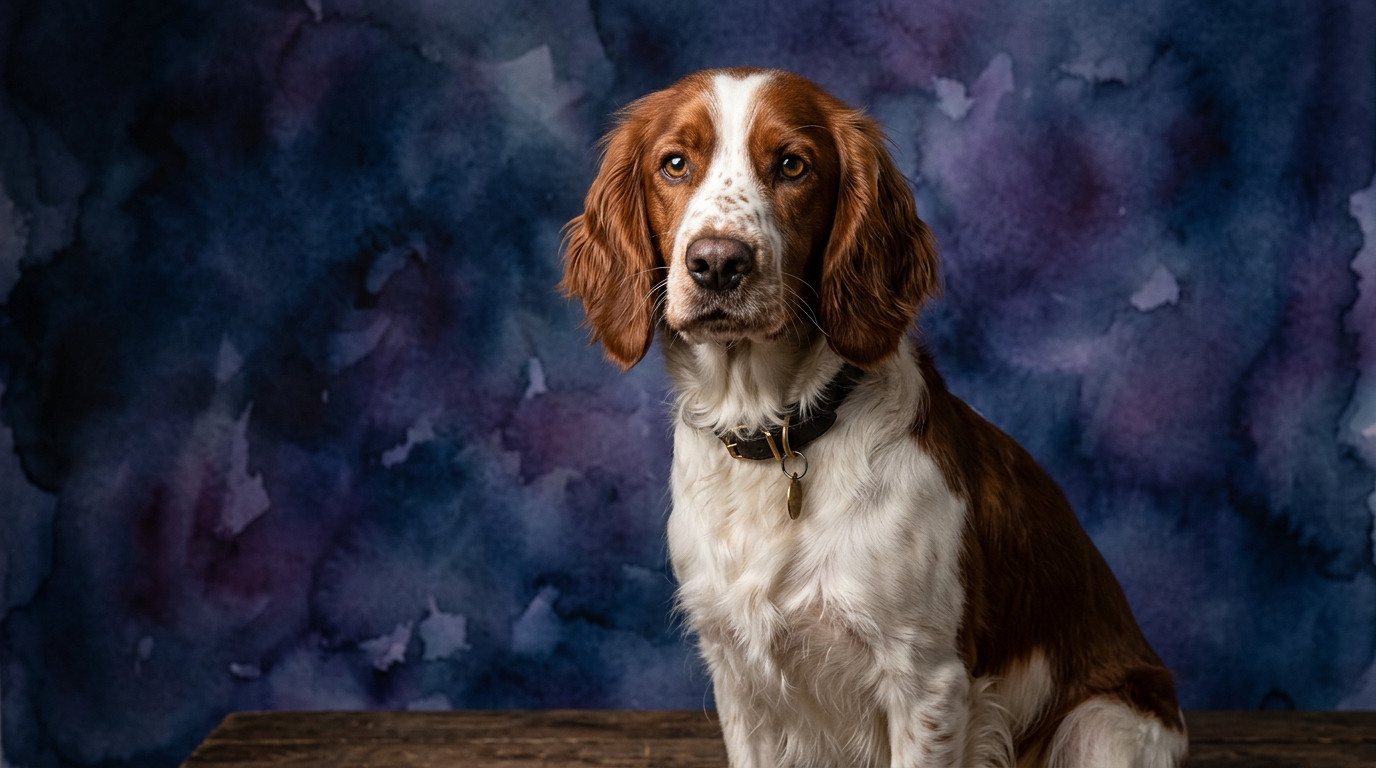
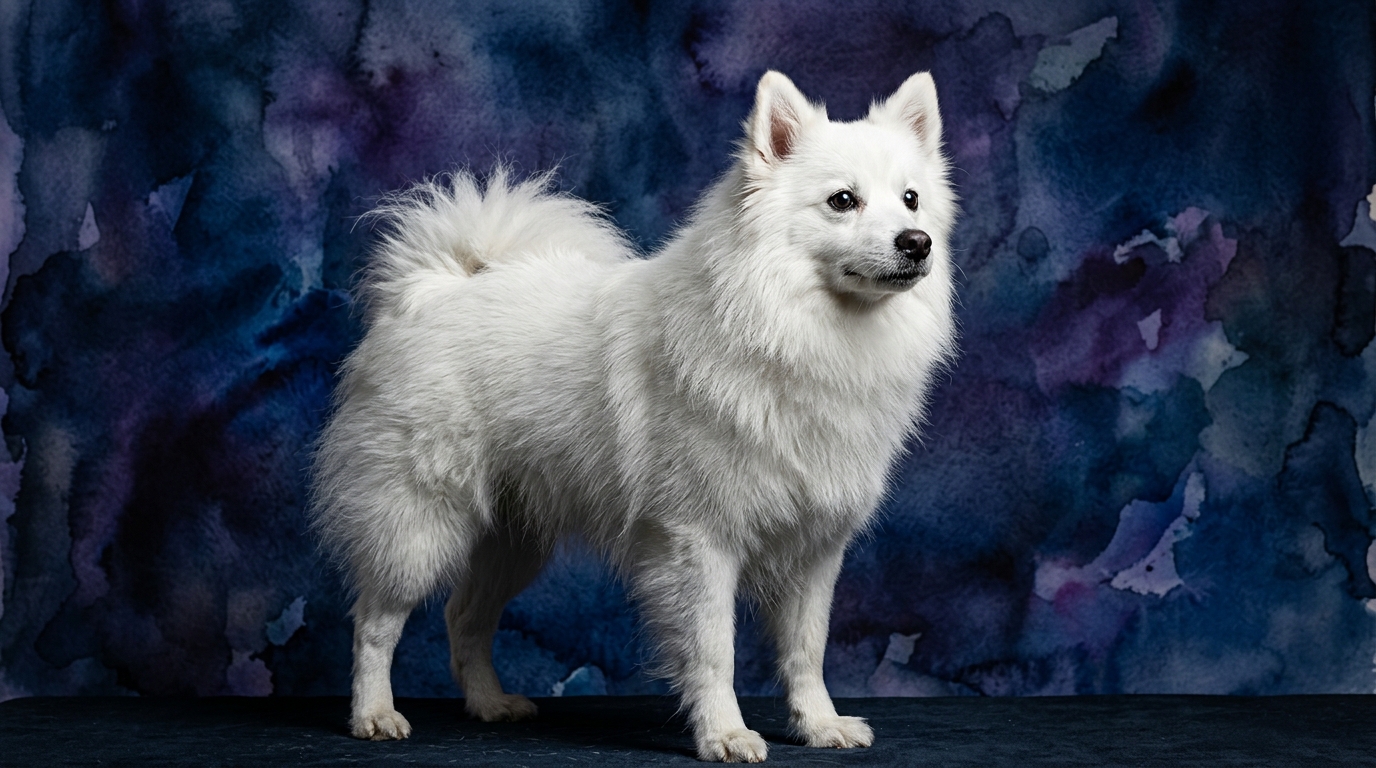
Side-by-Side IQ Profile: Welsh Springer Spaniel vs. American Eskimo Dog
At The Cosmic Pet Pet IQ Lab, we evaluate canine intelligence across five key dimensions, providing a nuanced understanding of each breed's cognitive strengths. The Welsh Springer Spaniel, a Sporting breed ranked #31 by Coren, demonstrates a profile geared towards active partnership and task execution. Its Problem Solving is rated 4/5, indicating a strong capacity for independent thought and figuring out complex tasks, particularly those involving navigating terrain or retrieving. Training Speed also scores 4/5, reflecting a rapid grasp of new commands and concepts, often requiring fewer repetitions. Social Intelligence is 3/5, suggesting a solid ability to interpret human cues and interact appropriately within a family structure. Instinctive Drive, at 3/5, denotes a moderate level of innate behaviors such as scenting and flushing, which are typically manageable and channelable. Finally, Memory is 4/5, signifying a strong retention of learned behaviors, commands, and routines over extended periods, contributing to consistent performance.
The American Eskimo Dog, a Non-Sporting breed not formally Coren-ranked, presents a cognitive profile more aligned with vigilant companionship and family integration. Its Problem Solving is 3/5, indicating a competent ability to handle moderately complex problems and navigate household challenges, though potentially requiring more structured guidance for intricate multi-step tasks. Training Speed is also 3/5, suggesting a reasonable pace for learning new commands, benefiting from consistent positive reinforcement and perhaps more repetition than higher-scoring breeds. Social Intelligence matches the Welsh Springer at 3/5, demonstrating an attunement to human companions and an ability to read emotional states and social cues within their immediate family. Instinctive Drive, also 3/5, manifests as vigilance, a tendency towards vocalization as a warning, and a strong desire for companionship, rather than hunting instincts. Memory is 3/5, reflecting a functional capacity to recall learned commands and routines, remembering established training and rules effectively, though perhaps not with the same ease or longevity for complex sequences as a 4/5 rated breed.
Where the Welsh Springer Spaniel Wins Cognitively
The Welsh Springer Spaniel's cognitive architecture, refined over generations for field work, presents several distinct advantages. Their Problem Solving score of 4/5, compared to the American Eskimo Dog's 3/5, highlights a superior capacity for independent thought and strategic action. A Welsh Springer is more likely to assess a novel situation, such as finding a lost toy or navigating a complex scent trail, and devise an effective solution without constant human direction. This cognitive strength makes them adept at tasks requiring initiative and adaptability, crucial for a flushing and retrieving dog that must make quick decisions in varied environments.
Furthermore, the Welsh Springer's Training Speed and Memory, both rated at 4/5 against the Eskie's 3/5, signify a quicker uptake and more durable retention of information. A Welsh Springer will typically master a new command or a sequence of actions in fewer repetitions, and once learned, these skills are deeply ingrained. This means less refresher training is needed, and they can build upon a broader foundation of known commands more efficiently. Their robust memory serves them well in complex scent discrimination tasks, remembering specific targets or routes over time, which is a direct reflection of their working lineage and a clear cognitive edge in practical application and advanced dog sports.
Where the American Eskimo Dog Wins Cognitively
While the American Eskimo Dog's scores might appear numerically lower in some dimensions, their cognitive strengths are uniquely tailored to their role as vigilant companions and devoted family members. Their Instinctive Drive, rated 3/5, manifests as a pronounced attentiveness to their environment and a strong protective instinct towards their family unit. This isn't the drive to chase game, but rather a drive to observe and alert to perceived changes, making them excellent natural watchdogs who are keenly aware of their surroundings. This specific application of their drive can be a cognitive 'win' for owners seeking a vocal alarm system and a devoted, attentive guardian within the home.
Moreover, the American Eskimo Dog's Social Intelligence, also 3/5, while matching the Welsh Springer, is often expressed through a deep personal bond and a desire for close interaction with their human pack. They excel at reading the subtle cues of their immediate family, often anticipating needs or moods, fostering a strong communicative relationship. Their problem-solving, though rated 3/5, is particularly effective within the context of their home environment, allowing them to figure out household routines, locate their favorite sleeping spots, or even 'problem-solve' ways to gain attention from their owners. Their cognitive skills are finely tuned for domestic partnership, valuing interaction and companionship, which can be a distinct advantage for owners prioritizing a strong, communicative bond over complex working tasks.
Which is Easier to Train and Why
When evaluating ease of training, The Cosmic Pet Pet IQ Lab data clearly favors the Welsh Springer Spaniel. Their 4/5 scores in Training Speed, Problem Solving, and Memory provide a robust foundation for rapid and effective learning. Welsh Springers possess an inherent eagerness to cooperate and a strong desire to engage in tasks alongside their human partners. This cooperative spirit, coupled with their ability to quickly process new information and retain it, means they typically respond well to positive reinforcement and can advance through training levels with impressive speed. Their sporting background has instilled a focus and drive to perform, making them highly receptive to structured lessons and complex command sequences.
The American Eskimo Dog, with 3/5 scores across these same dimensions, is certainly trainable, but might present a different training experience. Eskies can be more independent thinkers, sometimes requiring greater motivation or more patient, consistent repetition to solidify new behaviors. While they learn, their pace might be slower, and they might occasionally challenge commands if they don't immediately perceive a benefit or if their attention is drawn elsewhere. Their vigilance and alert nature, while beneficial for guarding, can sometimes translate into distractions during training sessions if not properly managed. Therefore, while both breeds can achieve a high level of obedience, the Welsh Springer Spaniel's cognitive profile generally makes the training journey smoother and faster.
Which Suits Active Owners vs. Relaxed Owners
The distinct cognitive profiles of these two breeds naturally align them with different owner lifestyles. The Welsh Springer Spaniel, with its higher Problem Solving, Training Speed, and Memory scores, coupled with its moderate Instinctive Drive, is an ideal match for active owners. These are individuals who thrive on engaging their dog in various activities such as advanced obedience, agility, scent work, or even field trials. Their capacity for complex learning and their enduring memory mean they excel when given regular mental and physical challenges. Owners who enjoy long hikes, interactive games, and consistent training will find a Welsh Springer to be a highly rewarding and capable partner, eager to learn and participate.
Conversely, the American Eskimo Dog, while still requiring mental stimulation and regular exercise, generally suits owners with a slightly more relaxed pace, though 'relaxed' does not mean sedentary. Their balanced 3/5 scores across all cognitive dimensions suggest they are perfectly content with consistent routines, moderate daily walks, and interactive play within the home or yard. Their strong social intelligence and companionship drive make them excellent family dogs who thrive on being included in daily activities, even if those activities aren't highly structured working tasks. Owners who appreciate a vocal alert system, a devoted companion, and enjoy teaching basic obedience and tricks will find the American Eskimo Dog a wonderful fit, provided they can commit to consistent, positive engagement.
The Verdict
Choose the Welsh Springer Spaniel if you are an active owner seeking a highly trainable, engaged partner for advanced obedience, dog sports, or field activities, valuing a dog that learns quickly and retains complex commands.
Opt for the American Eskimo Dog if you desire a vigilant, devoted companion who excels at reading family cues and thrives on consistent routine and moderate engagement, appreciating their alert nature and strong social bond.
🧠 Find Your Pet's IQ Score
Our Pet IQ Lab assessment covers 25+ tests across 5 cognitive dimensions — personalized to your breed.
Take the Full IQ Test →Frequently Asked Questions
Do Welsh Springer Spaniels require more mental stimulation than American Eskimo Dogs?
Yes, generally. With higher scores in Problem Solving, Training Speed, and Memory, Welsh Springer Spaniels benefit significantly from more complex mental challenges and structured activities to prevent boredom and channel their working intelligence effectively.
Are American Eskimo Dogs difficult to train due to their lower IQ scores?
Not difficult, but they may require more patience and consistency. Their 3/5 scores mean they are perfectly trainable, but might learn at a slower pace and benefit from shorter, more frequent sessions and strong positive reinforcement compared to breeds with higher training speed.
Which breed is better for a first-time dog owner?
Both breeds can be suitable for a first-time owner, but the Welsh Springer Spaniel's quicker training speed and cooperative nature might make the initial learning curve slightly easier for a novice committed to regular engagement. The American Eskimo Dog is also a good choice for first-timers who appreciate a vocal, devoted companion and are prepared for consistent, patient training.