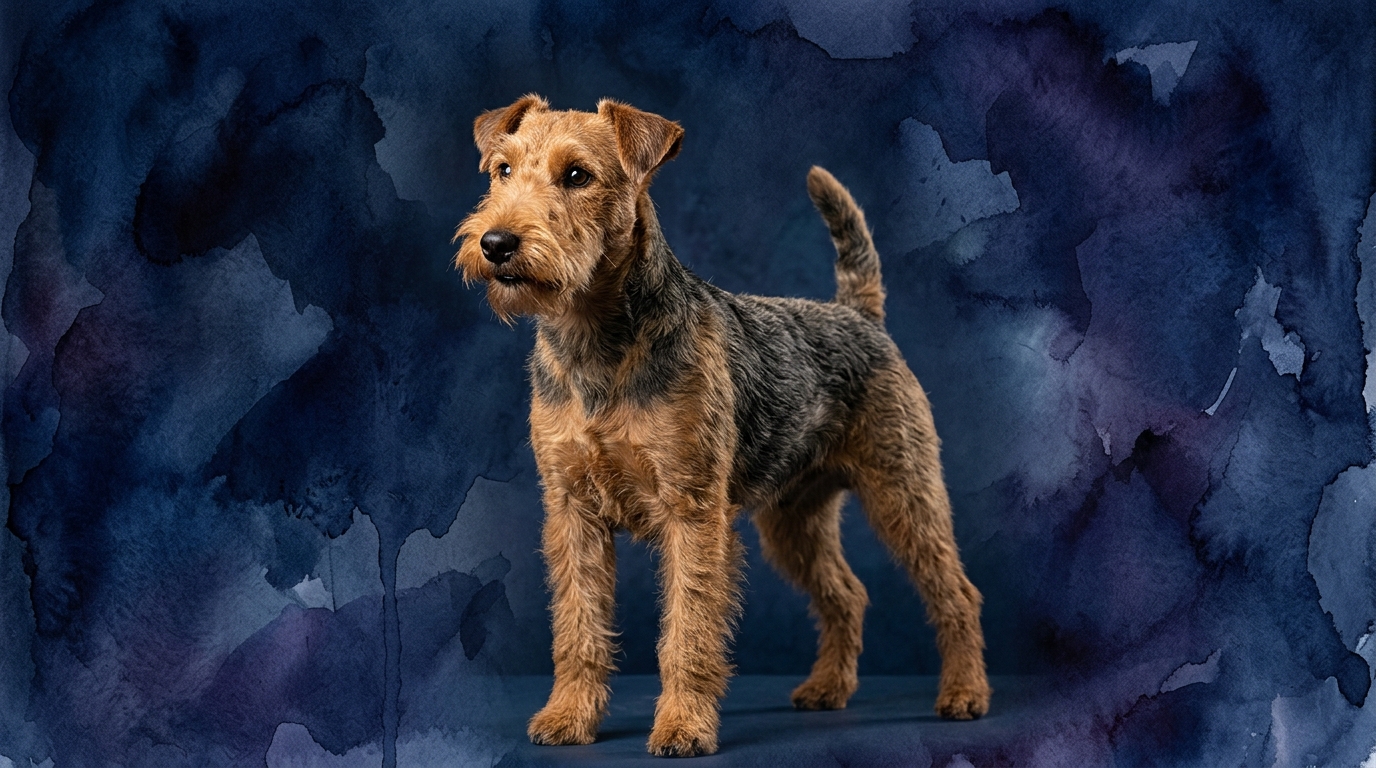

Side-by-Side Cognitive Profiles: Welsh Terrier vs. Basset Hound
On paper, the Welsh Terrier and Basset Hound present a fascinating paradox: both breeds register a consistent 3/5 across our five key intelligence dimensions. However, these identical scores belie the distinct ways each breed applies its cognitive faculties, deeply influenced by their historical roles and inherent temperaments.
The Welsh Terrier, a member of the Terrier group, embodies a quick-witted, resourceful approach to its environment. Its cognitive strengths are often geared towards independent action and immediate problem-solving, reflecting its heritage as a tenacious hunter.
Problem Solving (3/5): A Welsh Terrier's problem-solving manifests in its ability to quickly assess and navigate its surroundings, often figuring out how to access tight spaces or outmaneuver small prey. This isn't about complex logical puzzles, but rather practical, immediate solutions driven by curiosity and instinct.
Training Speed (3/5): While capable of grasping new commands with moderate speed, the Welsh Terrier's independent streak means compliance is often a matter of choice. They learn quickly, but their application of that learning can be selective, demanding engaging and consistent training methods.
Social Intelligence (3/5): They are observant of their human family's moods and cues, forming strong bonds. However, their social interactions can be selective, often preferring their chosen circle over strangers, and they aren't typically driven by an overwhelming desire to please.
Instinctive Drive (3/5): Their strong prey drive, digging instincts, and alert nature constantly fuel their cognitive activity. This drive means they are perpetually scanning, processing, and reacting to environmental stimuli, always ready for an adventure.
Memory (3/5): Welsh Terriers possess a good memory for routines, specific commands (especially when well-reinforced), and locations of particular interest, such as where a favorite toy is hidden or where a squirrel disappeared.
The Basset Hound, a classic scenthound, approaches cognition through a fundamentally different lens. Its intelligence is profoundly shaped by its unparalleled olfactory capabilities, leading to a focus that can seem singular to the uninitiated. Notably, the Basset Hound holds a Coren rank of #71, placing it in the category of average working/obedience intelligence.
Problem Solving (3/5): A Basset Hound's problem-solving is overwhelmingly scent-based. They exhibit a remarkable capacity for meticulously following and interpreting complex scent trails, deducing information from faint odors. This is a highly specialized form of intelligence, less about physical manipulation and more about olfactory deduction.
Training Speed (3/5): While rated 3/5, the Basset Hound's Coren rank of #71 indicates that they typically require more repetitions to learn new obedience commands compared to many breeds. Their deep focus on scent can make them appear stubborn or easily distracted during training, requiring immense patience and understanding of their motivations.
Social Intelligence (3/5): Basset Hounds are generally amiable, tolerant, and adaptable in social settings. They enjoy companionship, but their primary attention can easily shift to an interesting scent, sometimes making them seem less engaged with human interaction in certain contexts.
Instinctive Drive (3/5): Their instinctive drive is almost entirely dominated by their nose. Once a compelling scent trail is engaged, little else in the environment registers. This powerful, single-minded drive can often override other cognitive functions and external cues.
Memory (3/5): Bassets have an excellent memory for scent profiles, established routes, and specific people or places associated with positive experiences. However, their recall can be heavily influenced by the presence of an irresistible scent.
Where the Welsh Terrier Excels Cognitively
Even with matching scores, the Welsh Terrier demonstrates distinct cognitive strengths. Their problem-solving (3/5) is particularly adept at navigating and manipulating their immediate physical environment. They often excel at figuring out how to open a cabinet, retrieve a toy from a tight spot, or strategically approach a puzzle toy with a nimble, quick-thinking approach driven by their inherent tenacity.
Their cognitive resources are also more broadly distributed, allowing them to process a wider array of visual, auditory, and tactile stimuli with relative ease. This adaptability enables them to switch focus between different types of environmental inputs more readily than a scent-focused breed, making them highly responsive to varied situations.
Furthermore, their problem-solving often manifests in engaging, strategic play. Welsh Terriers frequently anticipate moves in games, develop tactics during interactive sessions with their owners, and demonstrate a quick-witted approach to mental challenges that require varied cognitive engagement.
Where the Basset Hound Excels Cognitively
The Basset Hound's 3/5 in problem-solving shines brightest in the realm of olfaction. Their ability to dissect, follow, and interpret complex scent trails is a cognitive marvel, a form of intelligence that few breeds can match. This isn't just about blindly following a smell; it's a sophisticated analytical process of identifying, differentiating, and committing scent information to memory, making them exceptional at tracking and scent work.
Once a Basset Hound is engaged in a scent, their memory and instinctive drive combine to produce unparalleled persistence. This single-minded focus, while sometimes challenging for owners seeking obedience, is an incredible cognitive advantage in tasks requiring deep, sustained attention to one specific sensory input, allowing them to follow a trail for miles without wavering.
While not a direct IQ dimension, their characteristic calm and amiable temperament contributes to a form of emotional resilience. This steady disposition allows them to process social interactions and environmental changes with a relaxed demeanor, potentially aiding their ability to maintain focus on their primary interest (scent) without being easily flustered by external stressors.
Which is Easier to Train and Why
Despite both breeds scoring 3/5 in training speed, the 'ease' of training them differs significantly due to their intrinsic motivations and breed-specific behaviors. Neither breed is considered effortlessly compliant, but their challenges stem from different sources.
The Welsh Terrier learns commands and concepts with moderate speed, often grasping what is expected fairly quickly. However, their independent terrier spirit and strong prey drive mean they often weigh whether to comply against their own immediate interests, such as chasing a squirrel or investigating a new smell. Training a Welsh Terrier requires consistent, engaging, and highly motivating methods to ensure their cooperation and to make lessons more appealing than potential distractions. They understand quickly, but may choose to ignore.
The Basset Hound, on the other hand, typically requires more repetitions to learn new obedience commands, as indicated by their Coren rank of #71. Their primary cognitive focus is their nose, and once a compelling scent is detected, their attention becomes almost entirely dedicated to it, making them appear 'stubborn' or unresponsive. Training a Basset demands immense patience, positive reinforcement, and a deep understanding that their world is largely defined by scent. While they may take longer to initially grasp a command, once it's deeply ingrained, they can be reliable, provided their nose isn't leading them elsewhere. Their difficulty often lies in gaining and maintaining their attention amidst a world full of smells.
Which Suits Active Owners vs. Relaxed Owners
The choice between these breeds often comes down to an owner's lifestyle and their understanding of each dog's specific needs for mental and physical engagement.
The Welsh Terrier is generally better suited for active owners. Their energy, curiosity, and quick reactions demand an owner who can provide consistent mental stimulation and varied physical activity. They thrive on activities like agility, earthdog trials, or long, exploratory walks where they can engage their senses and problem-solving skills. A truly relaxed owner might find the Welsh Terrier's boundless curiosity and independent energy overwhelming, potentially leading to boredom-induced destructive behaviors if their cognitive and physical needs are not adequately met.
The Basset Hound, while often perceived as a 'relaxed' dog due to their calm demeanor indoors, still requires a specific type of owner engagement. They are not built for intense running, making them less suitable for owners seeking a jogging partner. However, their powerful scent drive necessitates owners who understand and cater to their need for long, investigative 'scent walks,' tracking games, or allowing them to follow a trail safely. A truly 'relaxed' owner who fails to provide this crucial mental outlet might find themselves with a bored, baying hound prone to wandering. They are ideal for owners who enjoy leisurely, investigative strolls and appreciate a dog whose primary engagement with the world is through its nose.
The Verdict: When to Choose Each Companion
The Verdict
Choose the Welsh Terrier when you seek a spirited, quick-thinking companion who thrives on interactive challenges and a varied routine, and you are prepared for a dog with an independent streak and boundless curiosity.
Choose the Basset Hound when you appreciate a calm, amiable presence indoors and are fascinated by the incredible world of scent, willing to patiently engage their powerful olfactory drive with dedicated scent work and leisurely, investigative walks.
🧠 Find Your Pet's IQ Score
Our Pet IQ Lab assessment covers 25+ tests across 5 cognitive dimensions — personalized to your breed.
Take the Full IQ Test →Frequently Asked Questions
Do Welsh Terriers and Basset Hounds learn at the same pace?
While both score 3/5 in training speed, their learning styles differ significantly. Welsh Terriers grasp concepts quickly but require consistent motivation to comply, whereas Basset Hounds, ranked #71 by Coren, typically need more repetitions to learn commands due to their powerful scent-driven focus.
Which breed is better for problem-solving in a typical home environment?
The Welsh Terrier's problem-solving (3/5) is often more about figuring out physical obstacles or engaging in strategic play within the home, making them adept at navigating household challenges. The Basset Hound's 3/5 problem-solving is predominantly scent-based, so they excel at 'solving' scent puzzles rather than manipulating objects or understanding household rules.
How does their social intelligence (3/5) manifest differently?
A Welsh Terrier's social intelligence often involves keen observation of family members and selective engagement, demonstrating their independent nature and preference for their chosen circle. A Basset Hound's social intelligence typically appears as a generally amiable and tolerant disposition with most people, though their focus can easily be diverted from human interaction by an interesting scent.