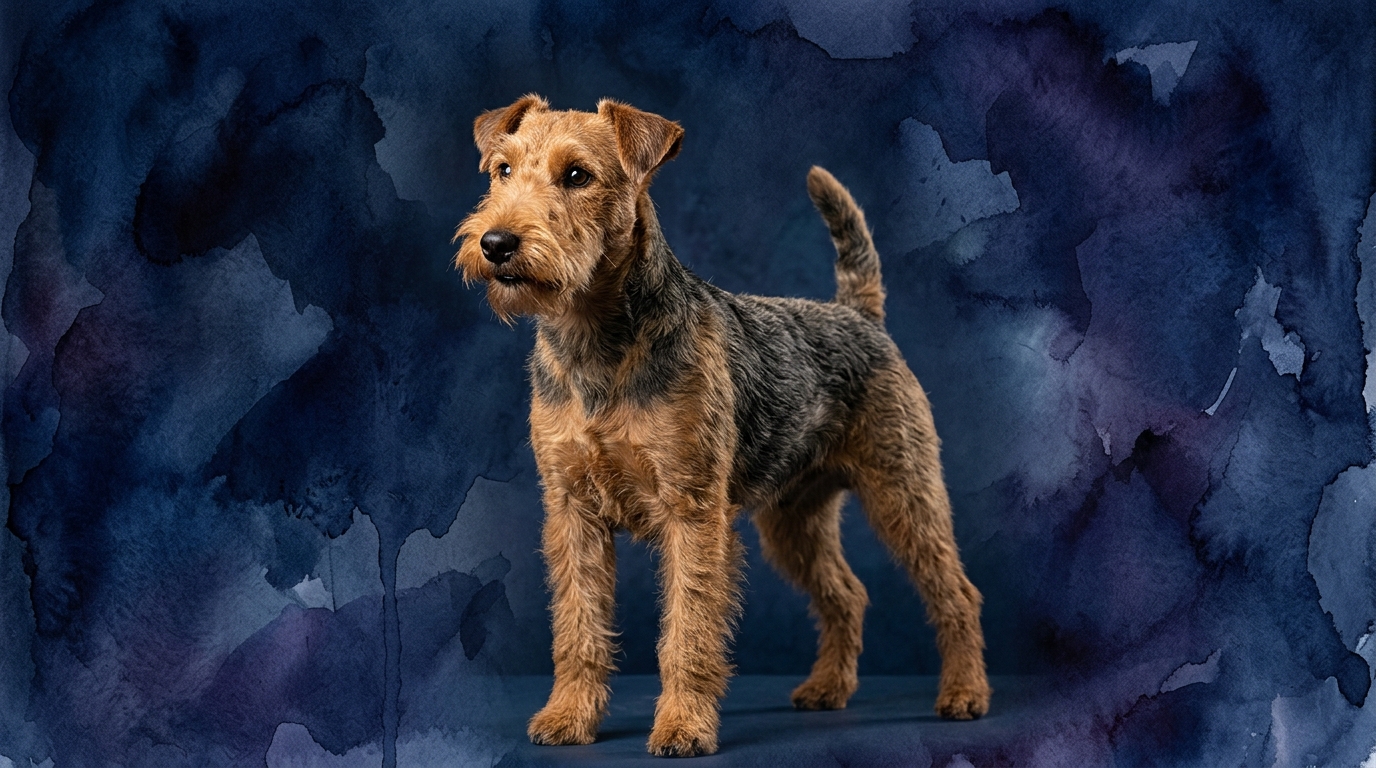

Side-by-Side IQ Profile: Welsh Terrier vs. Dandie Dinmont Terrier
Delving into the cognitive landscape of the Welsh Terrier and the Dandie Dinmont Terrier, The Cosmic Pet Pet IQ Lab reveals a fascinating parallel: both breeds achieve a consistent 3/5 across all five evaluated dimensions. This uniformity in scores, however, belies the unique ways each breed's intelligence manifests through their distinct temperaments, physical attributes, and historical purposes. Understanding these nuances is key to appreciating their individual cognitive strengths.
The five cognitive dimensions assessed by The Cosmic Pet Pet IQ Lab provide a comprehensive framework for comparing canine intelligence. Problem Solving evaluates a dog's capacity to navigate novel situations and overcome obstacles. Training Speed measures how quickly a dog grasps and retains new commands and behaviors. Social Intelligence reflects their ability to understand and respond to human and other animal cues. Instinctive Drive quantifies the strength of their innate, breed-specific behaviors, such as hunting or herding. Finally, Memory assesses their ability to recall past experiences, commands, and routines. While both breeds share the same numerical ratings, the qualitative interpretation of these scores offers a rich tapestry of cognitive differences.
**Problem Solving (3/5):** The Welsh Terrier approaches challenges with robust, often physical persistence. They learn from direct trial-and-error, remembering effective actions to achieve goals like retrieving a toy or flushing prey, displaying determined resourcefulness in varied environments. The Dandie Dinmont Terrier solves problems methodically and tenaciously. Their unique physique influences their approach, often involving patient manipulation or squeezing into tight spaces, reflecting a deep-seated focus on specific outcomes related to their historical role.
**Training Speed (3/5):** The Welsh Terrier learns commands at a moderate pace, but their independent spirit demands consistent, engaging, positive reinforcement. They grasp concepts quickly when motivated, though their assertiveness means training requires variety and clear, firm guidance. The Dandie Dinmont Terrier also learns moderately, but their sensitivity and loyalty make them responsive to gentle, patient methods. They absorb information steadily in a calm, supportive environment, with strong emotional memory influencing their progress.
**Social Intelligence (3/5):** The Welsh Terrier is generally outgoing and adaptable, reading human cues well and adjusting their behavior in diverse social settings. They form strong family bonds, displaying playful engagement and confident navigation of household dynamics. The Dandie Dinmont Terrier exhibits reserved social intelligence, forming exceptionally deep bonds with family while cautious with strangers. Highly attuned to human emotions and routines, their interactions are characterized by loyalty and quiet perceptiveness.
**Instinctive Drive (3/5):** The Welsh Terrier possesses a robust drive for hunting and chasing, reflecting their working heritage. This manifests as keen interest in movement, strong prey drive, and enthusiastic exploration, suited for earthdog or agility activities. The Dandie Dinmont Terrier displays a strong, distinct instinctive drive for scent work and 'going to ground,' rooted in hunting badgers. Their focus is persistent investigation in confined spaces, showing remarkable endurance for their chosen 'hunt.'
**Memory (3/5):** The Welsh Terrier retains commands, routines, and interactions effectively, recalling successful strategies for treats or toys. Their memory aids problem-solving, building a repertoire of effective behaviors and contributing to consistent personality. The Dandie Dinmont Terrier shows solid memory for commands and, crucially, emotional experiences. They recall positive interactions and negative ones, making consistency and positive reinforcement vital for their deep family bonds and cautious nature.
Where the Welsh Terrier Wins Cognitively
The Welsh Terrier's cognitive edge often lies in its adaptable robustness and proactive engagement with its environment. Their 3/5 problem-solving manifests as direct, physically oriented persistence, making them adept at tasks requiring energetic trial-and-error or overcoming physical obstacles in open settings. For example, a Welsh might more readily figure out how to open a simple latch or retrieve a ball through sheer determination. Their balanced social intelligence, paired with confidence, allows them to navigate diverse social situations with ease, reading a broader range of cues and adapting playfully, making them suited for dynamic households or varied dog sports. This breed excels when presented with a variety of challenges that allow them to utilize their physical prowess and independent thinking.
Where the Dandie Dinmont Terrier Wins Cognitively
The Dandie Dinmont Terrier demonstrates a distinct cognitive advantage in tasks requiring methodical focus, sensory precision, and emotional depth. Their 3/5 problem-solving, while equally persistent, often leans towards a patient, strategic approach, particularly in confined or scent-rich environments. They excel at intricate puzzle toys requiring careful manipulation or patiently tracking a scent trail, utilizing their specialized body shape. Their social intelligence allows for extraordinary emotional attunement within their core family unit, often exhibiting a profound understanding of owners' moods and routines, offering comfort with quiet perceptiveness. This makes them exceptional companions for individuals or families who value a deeply connected, sensitive partnership and appreciate subtle cognitive engagement.
Which is Easier to Train, and Why?
Despite both breeds scoring 3/5 for training speed, the *experience* of training them can differ significantly due to temperament. The Welsh Terrier, with its independent and often boisterous spirit, requires a trainer who can maintain consistency and make sessions engaging. They learn quickly when motivated by play or treats, but their assertive nature means they might 'tune out' without variety or clear expectations. Their terrier resolve means they might push boundaries, needing firm but fair guidance to prevent developing selective hearing.
Conversely, the Dandie Dinmont Terrier's training is influenced by its sensitivity and desire to please. They thrive on positive reinforcement, gentle guidance, and a calm environment. Harsh corrections can be counterproductive, potentially causing them to shut down or become anxious. A Dandie often tries hard to understand and comply, driven by the bond with their owner, making them rewarding for patient, nurturing trainers. Therefore, neither is inherently 'easier,' but rather suits different training styles: the Welsh for the firm, fun, and varied trainer, and the Dandie for the patient, gentle, and consistent one.
Which Suits Active Owners vs. Relaxed Owners?
The choice between these terriers often hinges on an owner's lifestyle. The Welsh Terrier, with its robust instinctive drive and energetic problem-solving, generally thrives with active owners. They need regular, vigorous exercise beyond simple walks, benefiting from activities like hiking or agility that challenge both body and mind. Their desire for engagement and exploration means they are typically not content to be couch potatoes, requiring consistent mental stimulation to prevent boredom and potential mischievousness. They are ideal for those who enjoy interactive training and outdoor adventures.
The Dandie Dinmont Terrier, while still possessing keen instincts, generally suits owners with a more relaxed, yet engaged, lifestyle. Their drive is often expressed through focused scent work or exploring smaller spaces rather than broad, high-energy pursuits. They enjoy moderate walks, puzzle toys, and quiet companionship, content with being a devoted partner in a calmer home, provided their scenting and exploration needs are met. They are adaptable to apartment living if given sufficient daily outings and mental engagement.
The Verdict
Choose the Welsh Terrier if you are an active individual or family seeking a confident, robust companion who thrives on varied physical and mental challenges, enjoys dynamic social interaction, and responds well to engaging, consistent training.
Choose the Dandie Dinmont Terrier if you value a deeply devoted, sensitive companion with a methodical approach to engagement, appreciate a quieter home life, and are prepared to offer patient, positive training and opportunities for focused scent-based activities.
🧠 Find Your Pet's IQ Score
Our Pet IQ Lab assessment covers 25+ tests across 5 cognitive dimensions — personalized to your breed.
Take the Full IQ Test →Frequently Asked Questions
Do Welsh Terriers and Dandie Dinmont Terriers have similar energy levels?
While both are terriers, their energy expression differs. Welsh Terriers typically have higher, more sustained energy for broad physical activities, whereas Dandie Dinmont Terriers have a more contained energy, often channeled into focused tasks like scent work, with moderate daily exercise needs.
How do their problem-solving approaches compare if both score 3/5?
Both are persistent, but Welsh Terriers often use a more direct, physically explorative trial-and-error method. Dandie Dinmont Terriers tend towards a more methodical, patient approach, often leveraging their unique physique for confined spaces or precise sensory tasks.
Is one breed more independent than the other?
Welsh Terriers often exhibit a more pronounced independent streak, requiring consistent training to channel their assertiveness. Dandie Dinmont Terriers tend to be more sensitive and deeply bonded to their owners, often showing a greater desire to please within their family unit.