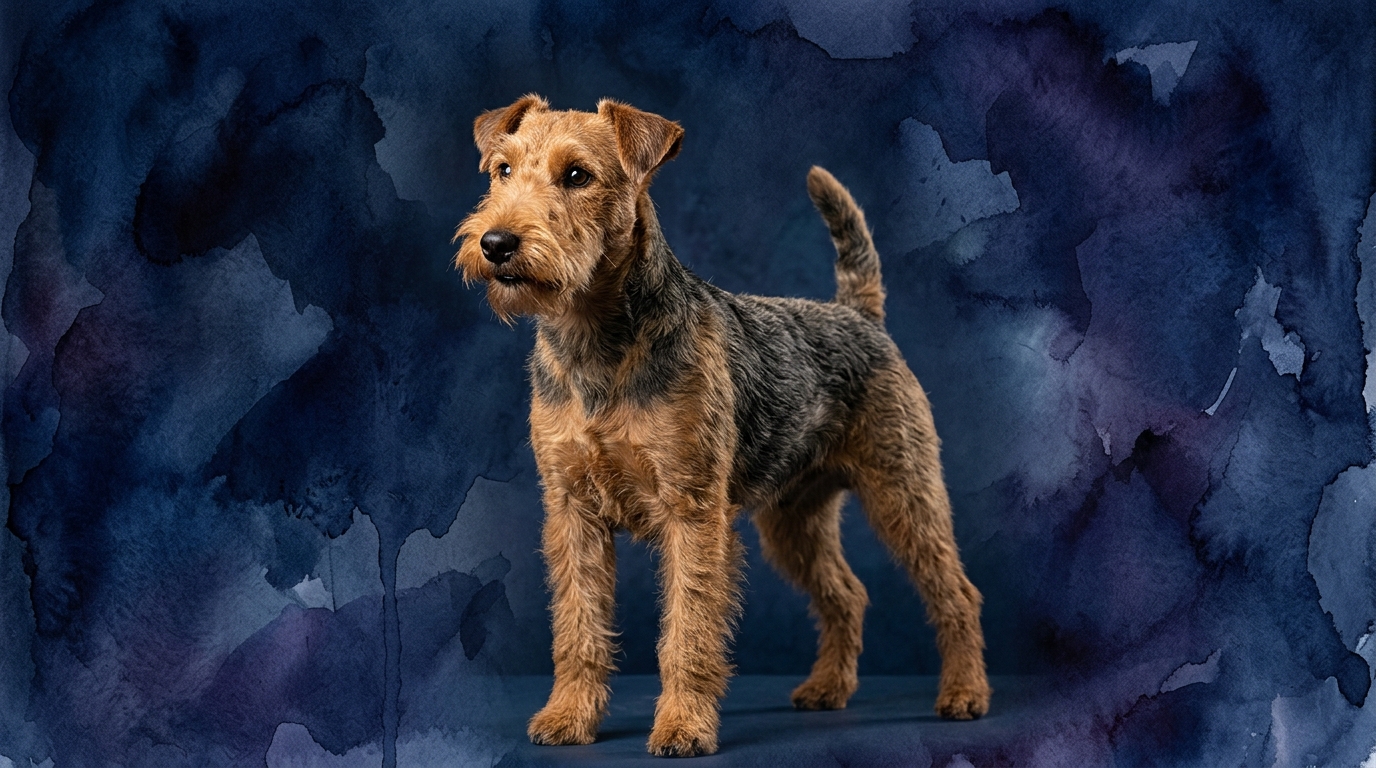

Side-by-Side IQ Profile: Welsh Terrier
The Welsh Terrier's Problem Solving (3/5) reflects a practical, task-oriented approach, adept at navigating environments or retrieving objects using persistence and cunning, often independently. This hands-on ingenuity stems from their earth dog heritage, favoring self-directed strategizing over waiting for human cues.
Learning new commands moderately, their Training Speed (3/5) is often tempered by an independent nature, requiring consistent, engaging methods. They grasp concepts, but their inclination to follow scent or personal interest can delay flawless execution, making positive reinforcement crucial. Welsh Terriers display moderate Social Intelligence (3/5), forming strong bonds but maintaining self-possession, engaging on their own terms. They read moods but might not always prioritize harmony, preferring independent action. Their Instinctive Drive (3/5) highlights a strong, inherent urge for activities tied to their purpose: prey drive, digging, and exploration, significantly influencing their behavior and necessitating outlets. Welsh Terriers also possess a reliable Memory (3/5) for routines and commands, yet their independent temperament means they often selectively recall what serves them or was rewarding, sometimes appearing to ignore less appealing directives.
Side-by-Side IQ Profile: Lhasa Apso
The Lhasa Apso's Problem Solving (3/5) manifests as keen situational awareness and strategic social maneuvering to ensure comfort and security. They are astute at influencing their environment or human to achieve desired outcomes, demonstrating ingenuity centered on their well-being and domain protection.
Lhasas learn moderately, but their Training Speed (3/5) is influenced by their discerning nature, demanding patient, consistent, positive reinforcement. They evaluate requests, motivated more by pleasing their trusted human or clear personal benefit than blind obedience. Lhasa Apsos exhibit discerning Social Intelligence (3/5), highly attuned to their family's emotional states and routines, often offering empathy. With strangers, their intelligence manifests as cautious observation, assessing intentions before acceptance, forming deep but selective bonds. Their Instinctive Drive (3/5) reflects a strong urge for guardianship and companionship, marked by innate alertness and vocalizing anomalies. Their drive also includes a profound need for close proximity to their human family, desiring connection and protection. Lhasa Apsos possess solid Memory (3/5) for routines, preferred people, and experiences. They recall household rules and cues consistently, but their independent streak means they also remember past instances where their stubbornness yielded desired results, which can challenge training.
Where the Welsh Terrier Wins Cognitively
Despite similar cognitive scores, the Welsh Terrier's working earth dog heritage gives its cognitive expression distinct advantages in specific scenarios. Their Problem Solving (3/5) is often directed at environmental manipulation and persistent exploration. A Welsh Terrier will excel at figuring out how to bypass obstacles, retrieve hidden items, or confidently navigate complex terrain. Their innate terrier tenacity means they rarely give up on puzzles requiring sustained effort and independent action, a trait crucial for working alone underground. This persistence, combined with their moderate Memory (3/5) for successful strategies, allows them to refine their approach to physical challenges.
Their Instinctive Drive (3/5) is geared towards active engagement, making them adept at tasks simulating hunting or requiring quick, reactive decisions. This allows them to shine in dog sports demanding independent thinking and on-the-fly problem-solving, like Earthdog trials or agility where handler cues are minimal. Their Social Intelligence (3/5), while not overtly people-pleasing, enables sufficient understanding of handler intentions for cooperation in these rewarding working contexts.
Where the Lhasa Apso Wins Cognitively
Conversely, the Lhasa Apso's 3/5 cognitive scores excel in areas reflecting their heritage as royal companions and vigilant protectors. Their Problem Solving (3/5) manifests through strategic observation and social manipulation. A Lhasa Apso is adept at using precise vocalizations or body language to elicit desired human responses, such as gaining attention or a prime resting spot. Their ingenuity focuses on social navigation and subtle influence, a nuanced problem-solving form serving their role as discerning companions.
Their Social Intelligence (3/5) is particularly acute in understanding their immediate family's emotional states and routines, often offering comfort or caution. This sensitivity, paired with their reliable Memory (3/5) for domestic schedules, makes them excellent at anticipating daily life. Their Instinctive Drive (3/5) for guardianship means they are exceptionally good at identifying and reacting to novel sounds or sights signaling intrusion, demonstrating superior situational awareness within their home compared to the outwardly focused Welsh Terrier. They excel in scenarios demanding quiet observation, discerning judgment, and a deep understanding of their human-centric world.
Which is Easier to Train and Why
Despite both breeds having a Training Speed score of 3/5, the practical experience of training a Welsh Terrier versus a Lhasa Apso can differ significantly due to their underlying behavioral motivations. The Welsh Terrier's moderate training speed is often tempered by its independent and sometimes headstrong terrier temperament. They learn, but they also possess a strong will and a natural inclination to follow their nose or their own agenda. Training a Welsh Terrier requires creative engagement, making the process feel like a game or a collaborative effort rather than strict obedience. If a command isn't immediately rewarding or doesn't align with their current interest, they might choose to 'selectively hear' it, requiring a patient and persistent handler who can out-think their terrier wit. Their moderate Social Intelligence means they respond well to clear, consistent leadership, but they aren't driven by an overwhelming desire to please.
The Lhasa Apso, while also independent, presents a different set of training challenges and advantages. Their Training Speed (3/5) is influenced by their discerning nature and a tendency to evaluate requests. They are not as prone to sudden bursts of prey drive distraction as the Welsh Terrier, but their stubborn streak can manifest as a quiet refusal or a deliberate assessment of whether a command is truly necessary or beneficial. However, their strong Social Intelligence (3/5) within their family unit means they are often highly attuned to their human's emotions and desires, and they can be motivated by praise and affection from those they trust deeply. Training a Lhasa Apso often requires building a strong, respectful bond, and using positive reinforcement that emphasizes their role as a valued family member. They are less likely to bolt after a squirrel but might dig in their heels if they perceive a command as arbitrary or inconvenient, making patience and understanding their primary motivators key.
Which Suits Active Owners vs. Relaxed Owners
Considering their cognitive and behavioral profiles, the Welsh Terrier is generally a better match for active owners who appreciate a dog with zest and an independent spirit. Their moderate Instinctive Drive (3/5) and problem-solving skills thrive when given regular opportunities for physical and mental engagement, such as long walks, challenging hikes, agility courses, or interactive games that simulate hunting or exploration. Owners who enjoy training and can channel their terrier's persistence into constructive activities will find a rewarding companion. A relaxed owner who cannot meet these needs might find a Welsh Terrier prone to inventing its own 'work,' which could manifest as digging, excessive barking, or destructive chewing, driven by their underlying cognitive need for engagement.
In contrast, the Lhasa Apso, with its strong Instinctive Drive (3/5) for companionship and guardianship, and its more socially-oriented problem-solving, is often better suited for relaxed owners who value a discerning, watchful companion. While they benefit from daily walks and playtime, their primary need for mental engagement revolves around their family unit and their role as a home guardian. They are content with indoor activities, observing their surroundings, and close proximity to their humans. Owners who appreciate a dog's subtle cues and are willing to provide consistent, gentle leadership will find a devoted friend. An overly active owner seeking a constant hiking partner might find the Lhasa Apso's energy levels and preference for comfort less aligned with their lifestyle, while a relaxed owner will appreciate their watchful, calm presence.
The Verdict
Choose the Welsh Terrier if you are an active, experienced owner who enjoys engaging a clever, independent dog in structured activities and can appreciate their tenacious, problem-solving spirit.
Opt for the Lhasa Apso if you seek a discerning, watchful companion who thrives in a calm home environment and values deep, selective bonds with their human family.
🧠 Find Your Pet's IQ Score
Our Pet IQ Lab assessment covers 25+ tests across 5 cognitive dimensions — personalized to your breed.
Take the Full IQ Test →Frequently Asked Questions
Are Welsh Terriers good with children?
Welsh Terriers can be good with older, respectful children who understand how to interact with an independent and sometimes spirited dog. Their moderate social intelligence means they appreciate clear boundaries and thrive in homes where they are treated as part of the family, not just a plaything.
How much grooming does a Lhasa Apso require?
Lhasa Apsos require significant grooming to maintain their long, flowing double coat, which is essential to their historical function. Daily brushing is often necessary to prevent mats and tangles, along with regular professional grooming or trimming every 4-6 weeks to keep them comfortable and healthy.
Do Welsh Terriers bark a lot?
Welsh Terriers can be prone to barking, especially if they are not adequately stimulated or if their natural terrier instincts are not channeled. Their moderate instinctive drive means they are alert to their surroundings and may bark at perceived intruders or interesting sights and sounds, requiring consistent training to manage.