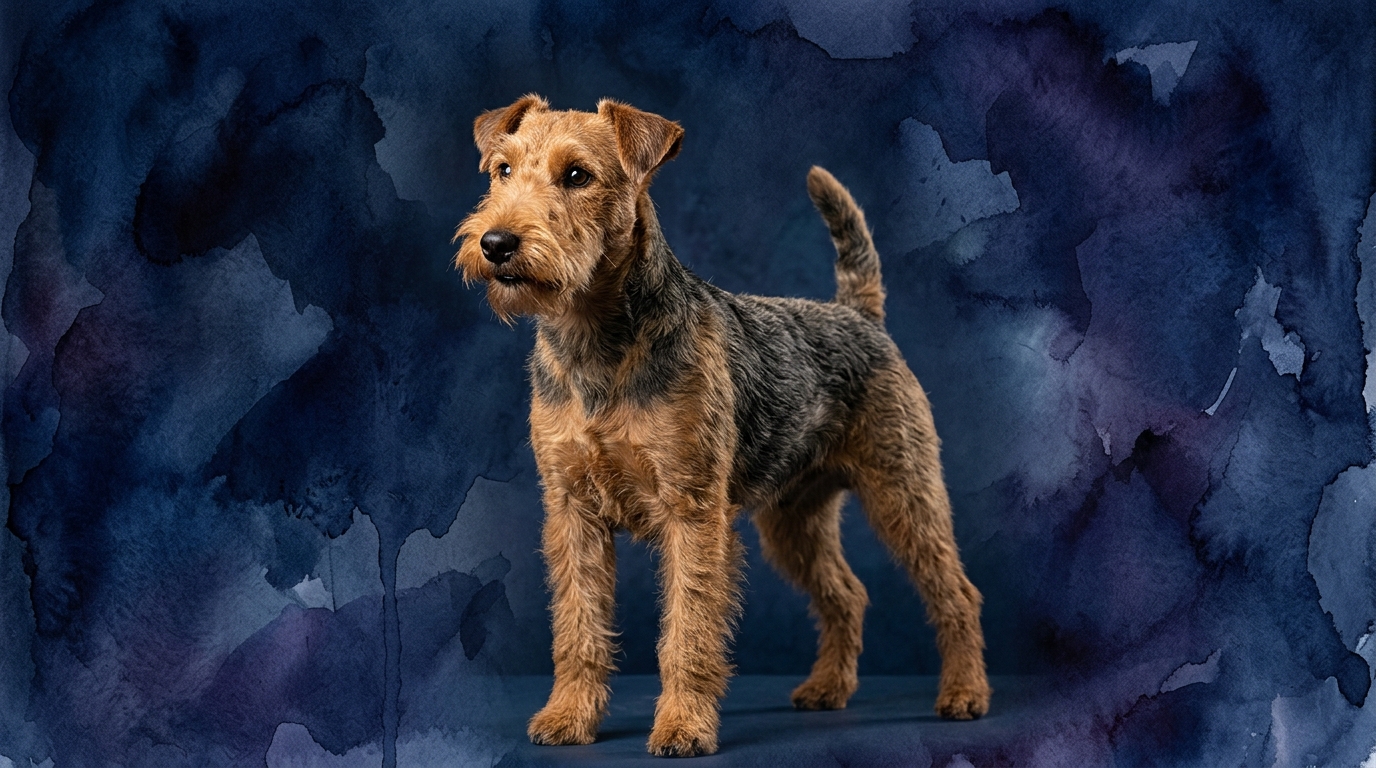

Side-by-Side IQ Profile
**Problem Solving (3/5):** The Welsh Terrier approaches challenges with a deliberate, sometimes methodical persistence. Their problem-solving often involves assessing a situation for a moment before committing to action, reflecting their background as an all-around farm dog needing to outsmart various prey and navigate complex environments. This doesn't mean they are slow, but rather that their tenacity is often paired with a calculated effort to achieve their goal, whether it's finding a hidden toy or figuring out a gate latch. The Rat Terrier displays a quick, opportunistic problem-solving style, often relying on speed and adaptability. Their history as vermin exterminators means they excel at rapidly assessing dynamic situations and reacting decisively, making snap judgments to achieve their objective. This manifests as a cleverness in finding loopholes or exploiting momentary advantages, often with a rapid trial-and-error approach to puzzles.
**Training Speed (3/5):** The Welsh Terrier possesses a moderate training speed, capable of learning new commands and routines effectively, but often with a quintessential terrier independence that requires consistent, engaging methods. They respond well to positive reinforcement and clear boundaries, but their inherent stubborn streak means they might not always comply instantly, preferring to consider the request on their own terms before acting. The Rat Terrier learns new tasks at a good pace, often showing enthusiasm for interaction and a desire to please their handler. However, their high energy and environmental awareness can lead to distractions, meaning while they grasp concepts quickly, maintaining focus in stimulating environments can be a challenge. Training success relies on keeping sessions short, fun, and highly rewarding to capture their attention.
**Social Intelligence (3/5):** The Welsh Terrier exhibits a balanced social intelligence, capable of forming strong bonds with their family while often maintaining a reserved demeanor with strangers. They are adept at reading human emotions and intentions within their trusted circle, but their loyalty can sometimes translate to a cautious or aloof attitude towards outsiders, requiring careful socialization to ensure polite interactions. The Rat Terrier shows a generally open and engaging social intelligence, often eager to interact with people and other animals when properly socialized. They are perceptive to social cues and can be quite expressive in their communications, though their exuberance and high energy can sometimes be misinterpreted by those unfamiliar with the breed. They thrive on inclusion and being part of family activities, keenly observing and participating in household dynamics.
**Instinctive Drive (3/5):** The Welsh Terrier possesses a pronounced instinctive drive, rooted in their working terrier heritage, encompassing strong prey drive, digging instincts, and a desire to explore. This drive is often expressed through focused tracking, a keen interest in small animals, and a need for outlets that satisfy their natural inclinations, such as earthdog trials or scent work. Their tenacity means once they lock onto a scent or a task, they are incredibly persistent. The Rat Terrier displays a potent instinctive drive, particularly geared towards hunting and chasing, reflecting their specialized role in pest control. This manifests as exceptional agility, quick reflexes, and an intense focus on movement and sound, making them highly effective at their intended purpose. Their drive translates into a need for active engagement and mental stimulation that taps into their natural predatory behaviors, such as games of fetch or lure coursing.
**Memory (3/5):** The Welsh Terrier demonstrates a reliable memory for routines, commands, and experiences, remembering positive and negative interactions with equal clarity. They can recall specific locations for toys or treats and often develop complex associative memories related to daily schedules and family habits. Their memory contributes to their consistency in learned behaviors and their ability to navigate familiar environments. The Rat Terrier exhibits a keen memory, particularly for cause-and-effect relationships and the location of interesting stimuli. They quickly learn what actions lead to rewards or consequences and can recall where they last spotted a squirrel or where a particular scent originated. This sharp recall aids their problem-solving and adaptability, allowing them to learn from past experiences and apply that knowledge to new situations rapidly.
Where Welsh Terrier Wins Cognitively
While both breeds share a 3/5 rating across cognitive dimensions, the Welsh Terrier often exhibits a particular cognitive strength in sustained, focused persistence. Their problem-solving, rated 3/5, leans towards a more deliberate, tenacious approach where they will systematically work through an obstacle rather than relying purely on speed or immediate reaction. This means they might demonstrate a particular aptitude in scenarios requiring a prolonged, thoughtful engagement with a task, such as intricate puzzle toys or scent discrimination exercises that demand sustained concentration over bursts of activity. Their robust memory (3/5) also supports this, enabling them to recall complex sequences or strategies for achieving a goal, applying learned methods with consistent accuracy.
Where Rat Terrier Wins Cognitively
The Rat Terrier, conversely, demonstrates a distinctive cognitive edge in rapid assessment and agile adaptation, even with an identical 3/5 rating for problem-solving. Their historical role as swift vermin exterminators honed a cognitive style focused on quick perception and immediate, effective action. They might display a particular aptitude in situations demanding split-second decision-making, rapid learning from environmental cues, and innovative, often unconventional solutions to immediate problems. Their memory (3/5) supports this through a quick recall of dynamic environmental details and an ability to swiftly associate actions with outcomes, allowing them to adapt their strategy on the fly during fast-paced activities like agility courses or tracking moving targets.
Which Is Easier to Train and Why
Assessing ease of training between these two breeds, both rated 3/5 for training speed, requires understanding their unique behavioral tendencies. The Welsh Terrier, while capable, often presents a more independent and sometimes stubborn streak characteristic of many terriers. They learn well with positive reinforcement and clear, consistent boundaries, but their inherent self-reliance means they might challenge commands or choose to follow their own agenda if not adequately motivated or if the training isn't stimulating enough. Their training requires patience, a firm but gentle hand, and a commitment to making sessions engaging and rewarding to overcome their occasional 'what's in it for me?' attitude.
The Rat Terrier, on the other hand, often displays a greater eagerness to please and a high level of energy that can be channeled into training. They grasp concepts quickly but are highly sensitive to their environment; distractions can easily derail their focus. Their training benefits from short, upbeat sessions that prevent boredom and capitalize on their quick reflexes and desire for interaction. While they may be less outwardly stubborn than a Welsh, their propensity for distraction and high drive means trainers must work to maintain their attention and build strong foundational focus skills, making consistent reinforcement crucial for both breeds.
Which Suits Active Owners vs. Relaxed Owners
Neither the Welsh Terrier nor the Rat Terrier are truly suited for genuinely relaxed, sedentary owners, as both breeds possess a robust instinctive drive (3/5) and require significant physical and mental engagement. For active owners, the choice often comes down to the type of activity preferred. The Welsh Terrier thrives on structured outdoor adventures, long walks, hiking, and activities that engage their scenting abilities and tenacity, such as earthdog trials or tracking. They enjoy having a job to do and appreciate consistent routines that provide outlets for their energy. For owners who enjoy exploring varied terrains and engaging in purposeful, albeit sometimes slower-paced, activities, the Welsh Terrier makes a wonderful companion.
The Rat Terrier is often better suited for highly active owners who enjoy fast-paced sports and constant interaction. Their incredible agility, speed, and quick cognitive processing make them excel in dog sports like agility, flyball, or lure coursing. They need frequent, engaging play sessions and mental challenges to prevent boredom and destructive behaviors. While both breeds demand activity, the Rat Terrier typically requires a more intense, dynamic, and often more frequent outlet for their boundless energy and sharp intellect.
The Verdict
Choose the Welsh Terrier if you appreciate a tenacious, thoughtful companion for structured outdoor adventures and a more reserved, yet deeply loyal, family member.
Opt for the Rat Terrier if you seek a quick-witted, agile partner for high-energy dog sports and a highly interactive, expressive companion who thrives on constant engagement.
🧠 Find Your Pet's IQ Score
Our Pet IQ Lab assessment covers 25+ tests across 5 cognitive dimensions — personalized to your breed.
Take the Full IQ Test →Frequently Asked Questions
Are Welsh Terriers good with children?
Welsh Terriers can be good with respectful children, especially if raised together and properly socialized, but their independent nature means interactions should always be supervised to ensure positive experiences.
Do Rat Terriers bark a lot?
Rat Terriers can be vocal, using barks to alert their owners to new sights or sounds, or when they are excited or bored; consistent training can help manage excessive barking.
How much exercise do these terriers need daily?
Both breeds require a minimum of 45-60 minutes of vigorous exercise daily, which should include a mix of physical activity like walks or runs, and mental stimulation through training or puzzle games.