
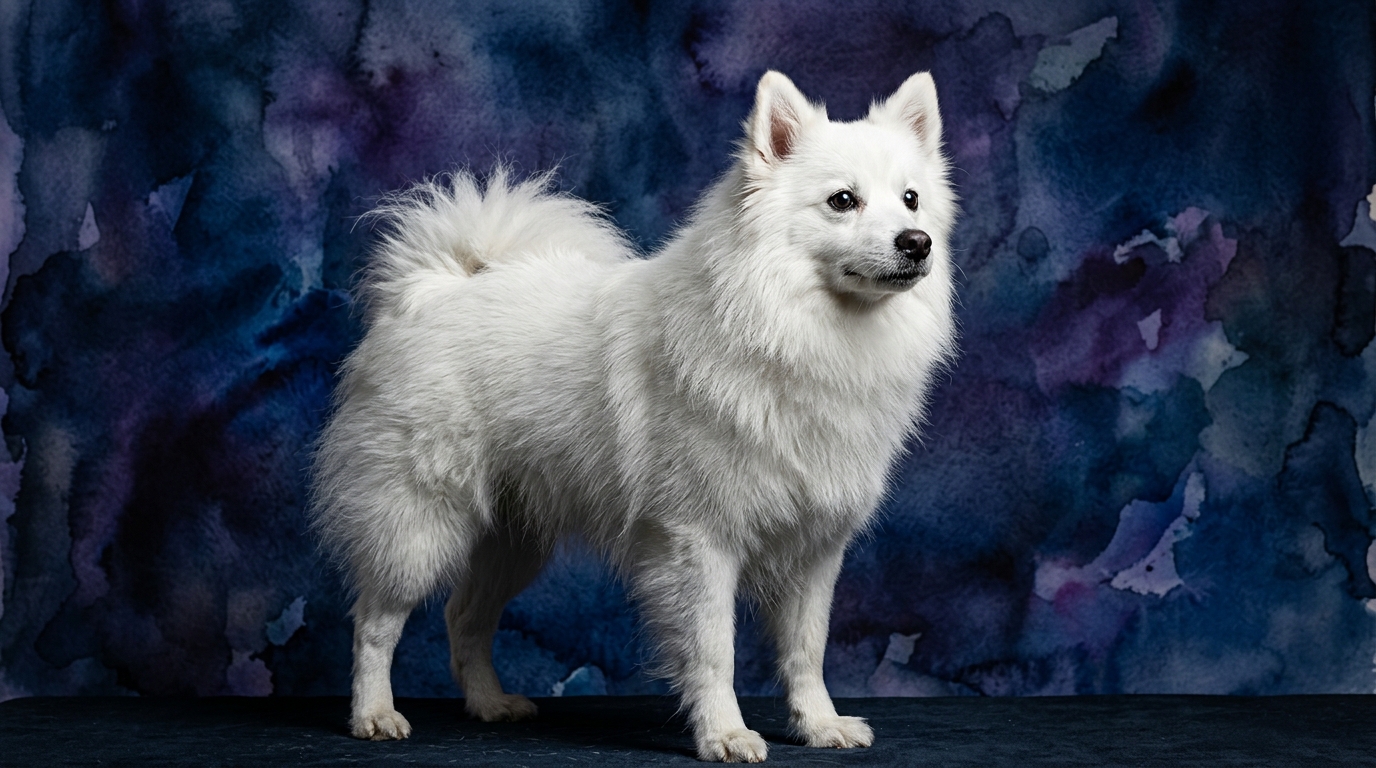
Side-by-Side IQ Profile: Westie vs. Eskie
The Cosmic Pet Pet IQ Lab assesses canine intelligence across five key dimensions, offering a nuanced view beyond simple obedience. For the West Highland White Terrier, a breed with a notable Coren rank of #47, its cognitive scores paint a picture of a capable yet spirited mind. Its Problem Solving ability is rated 3/5, indicating a dog that can figure out moderate challenges but benefits from clear guidance. Training Speed also sits at 3/5, suggesting a steady learning pace that thrives on consistency. Social Intelligence is 3/5, meaning the Westie can read human cues well but often retains an independent streak. Its Instinctive Drive, at 3/5, reflects its terrier heritage with inclinations towards digging and pursuit. A standout feature for the Westie is its Memory, scoring 4/5, which points to a strong capacity for retaining learned behaviors and routines.
The American Eskimo Dog, while not currently listed on the Coren ranking, presents a similarly capable, yet distinct, cognitive profile. Its Problem Solving skill is rated 3/5, demonstrating an ability to grasp new concepts and tasks, often with enthusiastic engagement. Training Speed is also 3/5, indicating that Eskies learn at a respectable rate, particularly when training is made stimulating and positive. Their Social Intelligence is 3/5, showing a strong capacity for bonding with their family and understanding human interactions, though they can be reserved with strangers. An Instinctive Drive of 3/5 reflects their alert, watchful nature and a propensity for vocalization. The American Eskimo Dog’s Memory is rated 3/5, meaning they retain information reasonably well, but consistent reinforcement helps solidify learning.
Where the West Highland White Terrier Wins Cognitively
The West Highland White Terrier showcases a distinct cognitive advantage in the realm of Memory, scoring an impressive 4/5 compared to the American Eskimo Dog's 3/5. This higher score suggests that a Westie is more likely to recall commands, routines, and specific training sequences with greater ease and for longer durations. For owners interested in advanced obedience, complex trick training, or even agility where precise sequencing is crucial, the Westie's superior memory can be a tangible asset, potentially allowing for faster mastery of intricate patterns and reduced need for constant refreshers.
Beyond its memory, the Westie's 3/5 Instinctive Drive, rooted in its terrier heritage, translates into a specific type of cognitive engagement. While both breeds score 3/5 in Problem Solving, the Westie often applies its problem-solving acumen to tasks that satisfy its innate drive for scent work, digging, and 'hunting' games. This means a Westie might excel at puzzle toys designed to simulate digging for rewards, or demonstrate persistence in tracking games, utilizing its cognitive abilities in a way that aligns with its breed-specific instincts more readily than the general problem-solving of an Eskie.
Where the American Eskimo Dog Wins Cognitively
While many of its scores align with the Westie's, the American Eskimo Dog's 3/5 Social Intelligence can manifest in a uniquely advantageous way, particularly given its history as a companion and performer. Eskies are renowned for forming deep, devoted bonds with their families, and this strong social connection often fuels their desire to please and interact. Their social intelligence, even at a 3/5 rating, allows them to be highly attuned to their owner's moods and intentions, potentially making them more responsive to nuanced emotional cues during training or daily interactions, fostering a profound partnership.
Furthermore, the American Eskimo Dog's Problem Solving ability (3/5), combined with its playful and often eager-to-please nature within its family circle, can lead to a specific cognitive strength in adapting to varied social contexts or learning complex performance routines. Their historical role as circus performers underscores an aptitude for applying their problem-solving skills to novel situations and intricate sequences when motivated by positive interaction and attention. This adaptability and willingness to engage in interactive problem-solving, even if not numerically superior, can be a significant cognitive win for owners seeking a highly interactive and versatile companion.
Which is Easier to Train and Why
Both the West Highland White Terrier and the American Eskimo Dog score 3/5 for Training Speed, indicating that neither is an inherently 'easy' dog to train in the sense of instant obedience, but both are capable learners. The Westie, with its terrier independence and occasional stubbornness, requires consistent, positive reinforcement and a firm yet gentle hand. Its higher memory (4/5) means that once a command is truly learned, it tends to stick; however, the initial process might involve navigating its strong-willed nature and high prey drive, which can be distracting.
The American Eskimo Dog, stemming from Spitz heritage, also possesses a degree of independence and can be vocal, which some owners might find challenging. However, their strong desire to bond and engage with their family can be a powerful motivator in training. Eskies thrive on mental stimulation and can become bored if training is repetitive or lacks enthusiasm. While their memory is 3/5, consistent, engaging, and varied training sessions are key to maintaining their focus and ensuring learned behaviors are retained. Ultimately, both breeds require patient, creative, and consistent trainers who understand their respective breed characteristics, rather than expecting effortless compliance.
Which Suits Active Owners vs. Relaxed Owners
When considering the activity levels and engagement needs, both the West Highland White Terrier and the American Eskimo Dog lean towards owners who can provide a moderate to active lifestyle, though their specific needs differ. The Westie, with its 3/5 Instinctive Drive, is not a sedentary breed. It requires daily walks, opportunities for vigorous play, and mental stimulation through puzzle toys or supervised digging. Owners who enjoy engaging in structured play, perhaps even earthdog trials or scent work, will find a Westie a rewarding companion. They are spirited and enjoy being part of family activities but are generally content with a good daily routine of exercise and interaction.
The American Eskimo Dog, also with a 3/5 Instinctive Drive, is an energetic and playful breed that thrives on consistent physical and mental activity. They excel in activities like fetch, agility, and can be excellent hiking partners. Their need for social interaction and mental stimulation is significant; they do not fare well when left alone for extended periods without engagement. An Eskie is best suited for active owners who can integrate their dog into a bustling family life, providing ample opportunities for exercise, training, and companionship. While both benefit from active engagement, the Eskie's need for constant social interaction and varied activities might tip the scale slightly towards a more consistently active and present owner.
The Verdict
Choose the West Highland White Terrier for a compact, spirited companion with a notable memory for routines, ideal for owners who appreciate a terrier's independent streak and enjoy engaging in focused, task-oriented play or scent work.
Opt for the American Eskimo Dog if you seek an energetic, social, and watchful companion who thrives on consistent human interaction and varied activities, perfect for owners providing a playful and engaging partner for an active lifestyle.
🧠 Find Your Pet's IQ Score
Our Pet IQ Lab assessment covers 25+ tests across 5 cognitive dimensions — personalized to your breed.
Take the Full IQ Test →Frequently Asked Questions
Is the West Highland White Terrier hard to train?
With a Training Speed of 3/5, Westies are not 'hard' but require consistency and positive reinforcement due to their independent terrier nature. Their strong memory (4/5) means once they learn, they tend to retain it well.
Do American Eskimo Dogs need a lot of exercise?
Yes, with an Instinctive Drive of 3/5, American Eskimo Dogs are energetic and require consistent daily exercise, mental stimulation, and social interaction to prevent boredom and maintain their well-being.
Which breed is better with children, Westie or Eskie?
Both breeds can be good with children when properly socialized and trained, scoring 3/5 in Social Intelligence. The Eskie's strong family bond might make it particularly devoted, while the Westie's spirited nature needs respectful interaction.