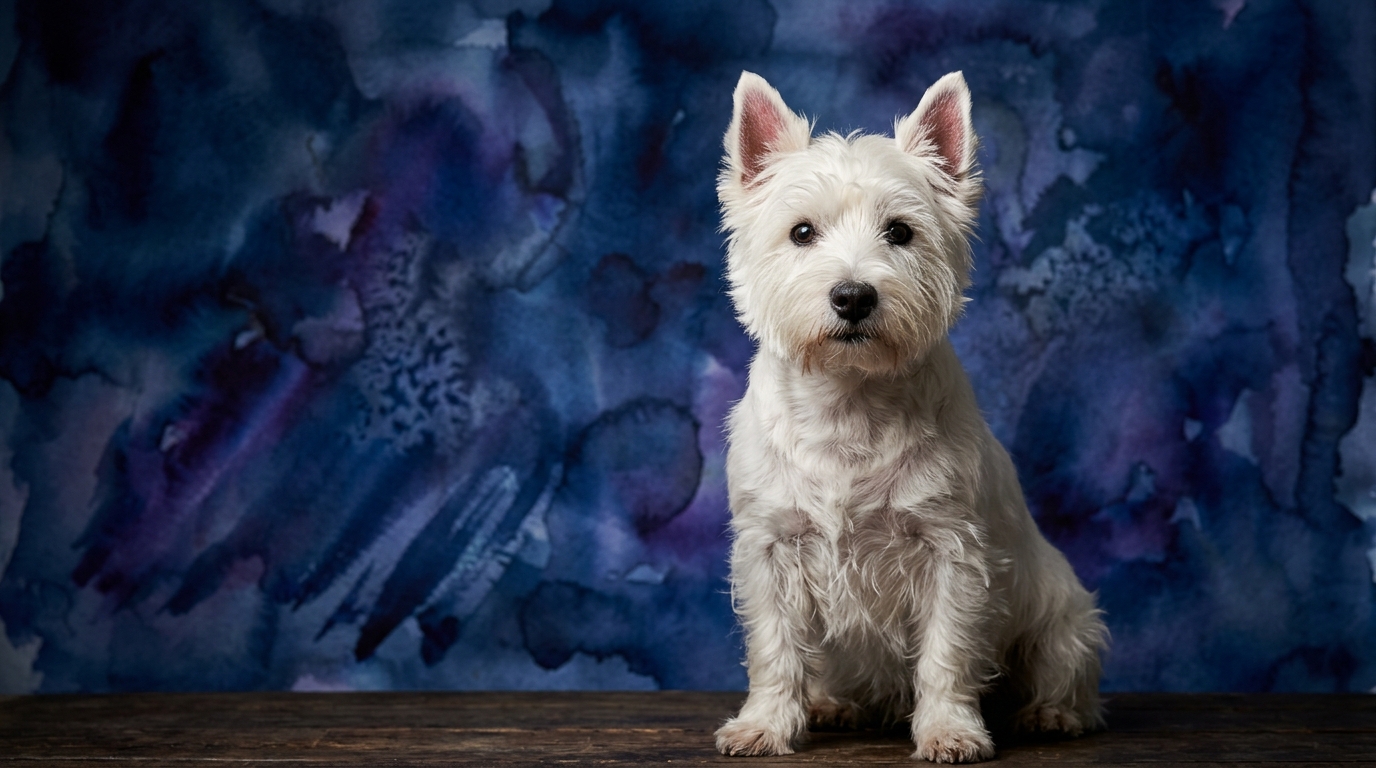
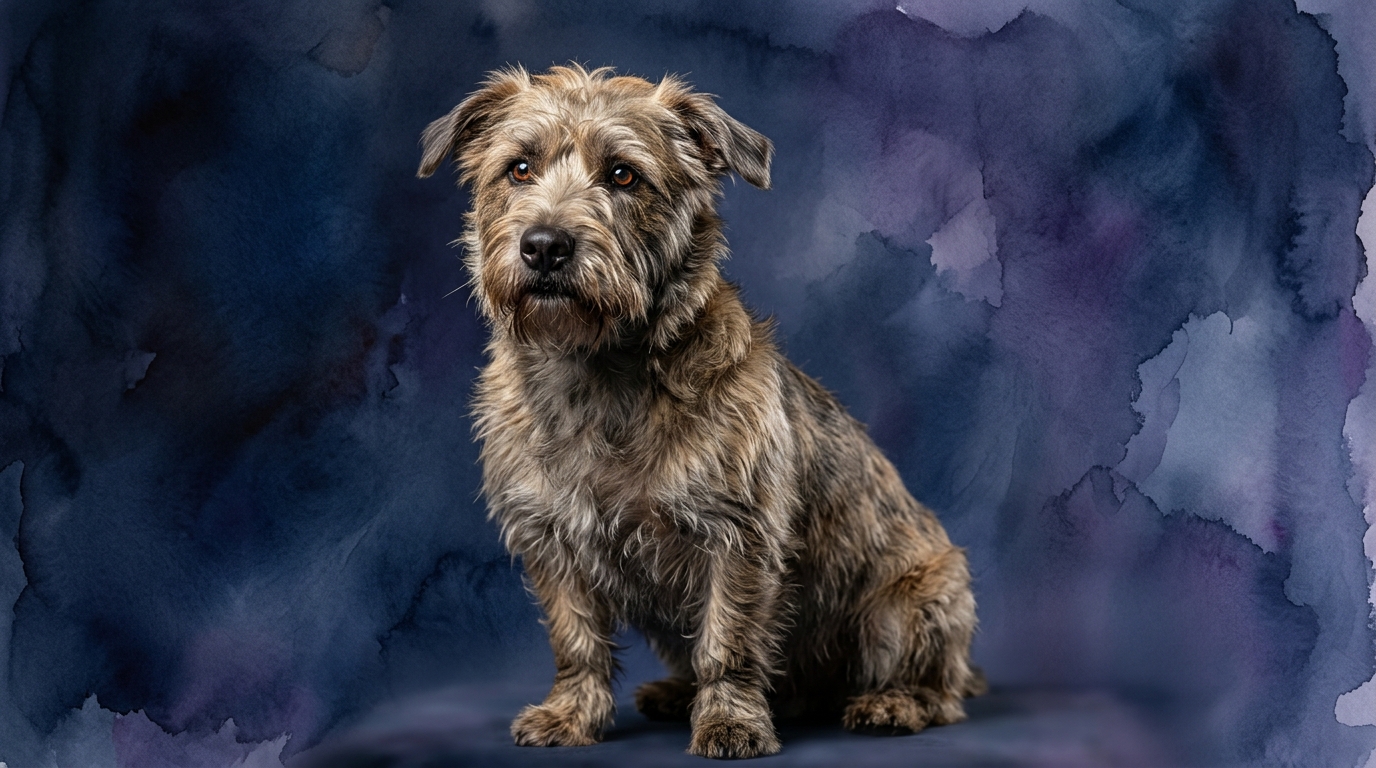
Side-by-Side IQ Profile: Westie vs. Glen
The Cosmic Pet Pet IQ Lab evaluates canine cognition across five key dimensions, offering a specific lens into each breed's mental aptitudes. While both the West Highland White Terrier and the Glen of Imaal Terrier share the tenacious spirit of their terrier lineage, their individual profiles present distinct cognitive landscapes.
The West Highland White Terrier, holding a Coren rank of #47, demonstrates an above-average capacity for understanding and executing commands. Their Problem Solving score of 3/5 indicates a competent ability to navigate puzzles and challenges, applying various strategies to achieve goals. Training Speed is also rated at 3/5, suggesting they grasp new concepts at a consistent pace, provided methods are clear and engaging. Social Intelligence, at 3/5, reflects their moderate understanding of human cues and pack dynamics, allowing them to integrate well into family life. An Instinctive Drive of 3/5 highlights their typical terrier instincts for chasing and digging, which are present but manageable. Crucially, their Memory is rated at 4/5, indicating a robust ability to retain learned behaviors and recall past experiences, both positive and negative, with notable precision.
The Glen of Imaal Terrier, while not appearing on Coren's ranking, possesses its own unique cognitive strengths. Their Problem Solving score of 3/5 suggests an equally resourceful mind, often characterized by a determined, independent approach to overcoming obstacles. Training Speed matches the Westie at 3/5, but this pace is often influenced by their self-reliant nature, requiring a nuanced approach from trainers. Social Intelligence is also 3/5, reflecting an observant yet often more reserved demeanor; Glens tend to form deep bonds but might not overtly display the same eagerness to please as some other breeds. Their Instinctive Drive, also 3/5, is particularly notable for its tenacity and 'gameness,' historically essential for their badger-hunting role. However, their Memory is rated at 3/5, indicating a functional recall capacity that, while effective, may not match the Westie's more precise retention.
Where the West Highland White Terrier Excels Cognitively
The West Highland White Terrier's primary cognitive advantage, as evidenced by The Cosmic Pet Pet IQ Lab data, lies squarely in their superior Memory, rated at 4/5 compared to the Glen's 3/5. This enhanced recall ability means Westies are more adept at internalizing and remembering specific commands, routines, and the consequences of their actions over time. For an owner, this translates into quicker habit formation during training sessions; a Westie is more likely to remember that 'sit' means 'bottom on the floor' after fewer repetitions and across different environments.
This elevated memory also contributes to their Coren ranking of #47, placing them in a category of dogs that learn new commands with relative ease and respond reliably to known instructions. They can generalize learned behaviors more effectively, applying a command learned in the living room to a park setting with less confusion. Furthermore, their strong memory means they often recall past positive reinforcement experiences, which can be leveraged to maintain engagement and motivation in ongoing training. Conversely, this also means they might remember negative experiences or fear responses more vividly, necessitating careful and positive training methods to avoid lasting adverse associations.
Where the Glen of Imaal Terrier Finds Its Cognitive Edge
While the Glen of Imaal Terrier's numerical scores in Problem Solving, Training Speed, and Social Intelligence match the Westie at 3/5, their cognitive edge emerges in the application of these traits, particularly their robust independence and unwavering tenacity. Bred for demanding badger work, Glens possess a deep-seated self-reliance that informs their problem-solving approach. They are adept at figuring things out on their own, often preferring to tackle challenges through persistent, independent thought rather than immediately seeking human direction.
This unique cognitive application means a Glen can exhibit remarkable resilience in the face of obstacles, trying different strategies until they succeed, a characteristic often described as 'gameness.' Their 3/5 Instinctive Drive, while numerically similar, manifests as a profound, focused determination in pursuit of a goal, whether it's investigating a scent or navigating a tricky environment. This isn't just physical endurance; it's a mental fortitude that allows them to remain steadfast and creative in adverse situations, a cognitive strength that might not always be reflected in traditional obedience rankings but is invaluable for complex, self-directed tasks. Their slightly lower memory score, compared to the Westie, could also be reframed as an advantage in certain scenarios, allowing them to be less burdened by past failures and more open to fresh attempts at problem-solving.
Training Dynamics: Which Breed is Easier and Why?
When it comes to ease of training, the West Highland White Terrier generally presents a more straightforward path for the average owner. Their Memory score of 4/5 is a significant asset, meaning they more readily recall commands and the desired behaviors associated with them. This enhanced retention allows for more efficient learning sessions and a higher likelihood of consistent performance. Coupled with their Coren ranking, which indicates a good aptitude for understanding human instructions, Westies are often more responsive to conventional positive reinforcement techniques, quickly associating rewards with correct actions.
The Glen of Imaal Terrier, despite having similar Problem Solving and Training Speed scores (both 3/5), typically requires a more nuanced and patient training approach. Their strong independent streak and historical role as self-sufficient working dogs mean they are less inclined to blindly follow commands and will often assess a situation and decide if they agree with the instruction. While capable of learning, their training speed can be hampered by their inherent 'what's in it for me?' attitude and a tendency to prioritize their own agenda. Trainers must be creative, consistent, and understand that a Glen often needs to be convinced, not just told, making the process more a collaboration than a dictation. Their tenacity, while a strength in the field, can translate to stubbornness in the training ring, requiring owners with unwavering patience and a good sense of humor.
Matching Canine Cognition to Lifestyle: Active vs. Relaxed Owners
Understanding the cognitive profiles of the West Highland White Terrier and the Glen of Imaal Terrier helps align them with suitable owner lifestyles, particularly concerning activity levels and mental engagement. The Westie, with its 4/5 Memory and Coren rank of #47, thrives with owners who can provide consistent mental stimulation and structured training. They enjoy learning new tricks, participating in dog sports like agility, or engaging with puzzle toys that challenge their problem-solving skills. While not requiring extreme athleticism, Westies benefit from regular walks and opportunities to explore, making them suitable for moderately active owners who enjoy incorporating their dog into daily routines and are keen on ongoing cognitive enrichment. They adapt well to various living situations, from apartments to homes with yards, provided their needs for engagement are met.
The Glen of Imaal Terrier, with its profound independence and working heritage, suits owners who appreciate a dog with a robust, self-reliant character. While their physical activity needs are moderate, their cognitive engagement needs are specific: they require opportunities to exercise their innate problem-solving and tenacious drive. This might involve structured 'work' like earthdog trials, extensive scent work, or simply providing a secure yard where they can 'patrol' and investigate. Owners who are 'relaxed' in the sense of desiring a quiet home environment might find a Glen suitable, as they are not typically hyperactive indoors. However, 'relaxed' does not equate to minimal engagement; Glen owners must be prepared for consistent, patient training and to provide ample mental stimulation that respects their independent spirit and allows them to apply their cognitive strengths in meaningful ways. They are best suited for owners who understand and are willing to accommodate their unique terrier nature, perhaps even enjoying a dog that thinks for itself.
The Verdict
Choose the West Highland White Terrier if you desire a responsive companion who learns and retains commands effectively, appreciating an adaptable dog keen on consistent interaction and structured training.
Opt for the Glen of Imaal Terrier if you value a resilient, independent spirit that approaches challenges with tenacious self-reliance, and are prepared for a training journey that respects their distinct, self-sufficient nature.
🧠 Find Your Pet's IQ Score
Our Pet IQ Lab assessment covers 25+ tests across 5 cognitive dimensions — personalized to your breed.
Take the Full IQ Test →Frequently Asked Questions
Are Glen of Imaal Terriers stubborn during training?
Glen of Imaal Terriers can appear stubborn due to their strong independent thinking and self-reliant nature, which stems from their working heritage. Training requires immense patience and consistency, focusing on convincing them rather than forcing compliance, as they prefer to think through tasks rather than just obey.
Do Westies require a lot of exercise to stay mentally engaged?
West Highland White Terriers need moderate exercise, but significant mental engagement is crucial for their well-being. Regular walks should be supplemented with puzzle toys, training sessions, and interactive games that challenge their 4/5 memory and 3/5 problem-solving skills, preventing boredom and potential behavioral issues.
Which breed is generally better suited for families with young children?
Both breeds can be good with children when properly socialized from a young age, but their approaches differ. Westies are often more playful and outgoing, though they can be sensitive to rough handling; Glens tend to be more reserved and tolerant, preferring to observe rather than actively participate in boisterous play, requiring children to respect their space.