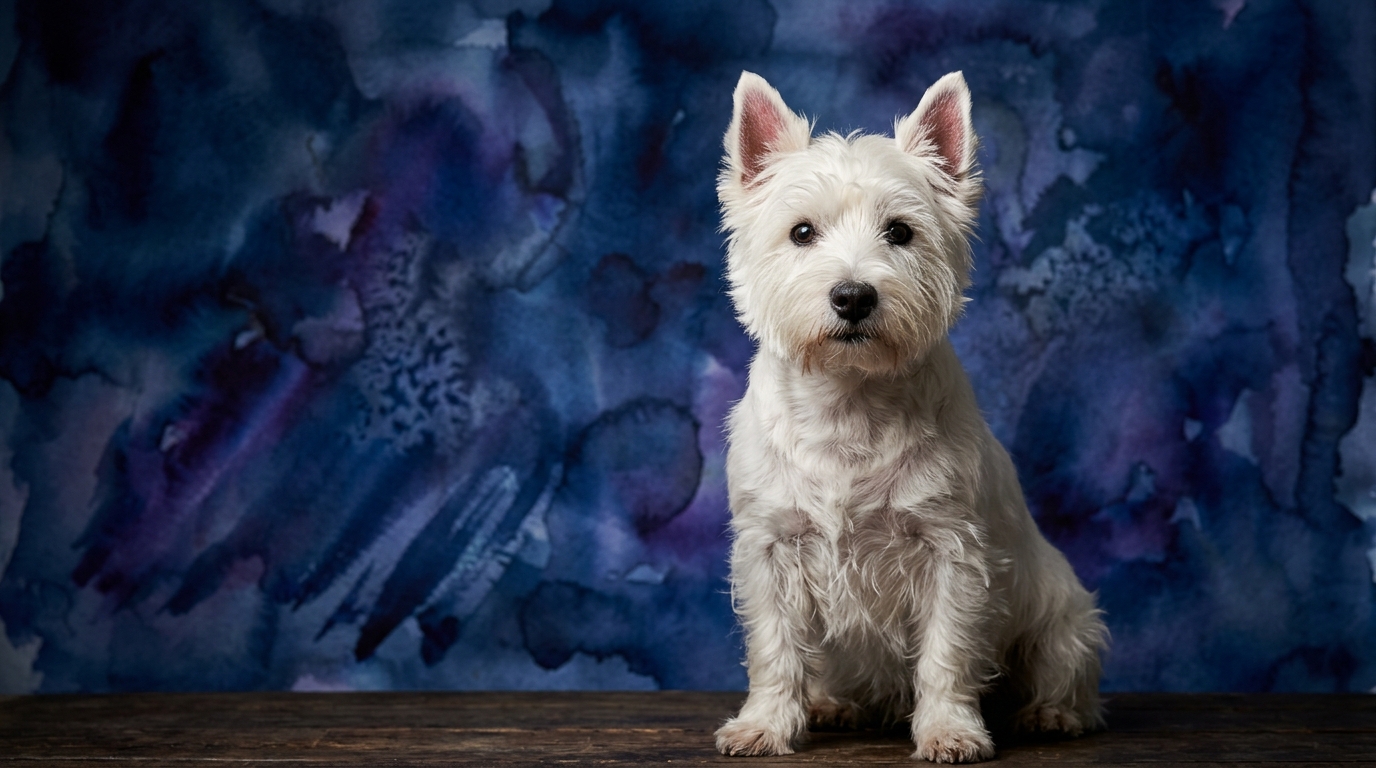
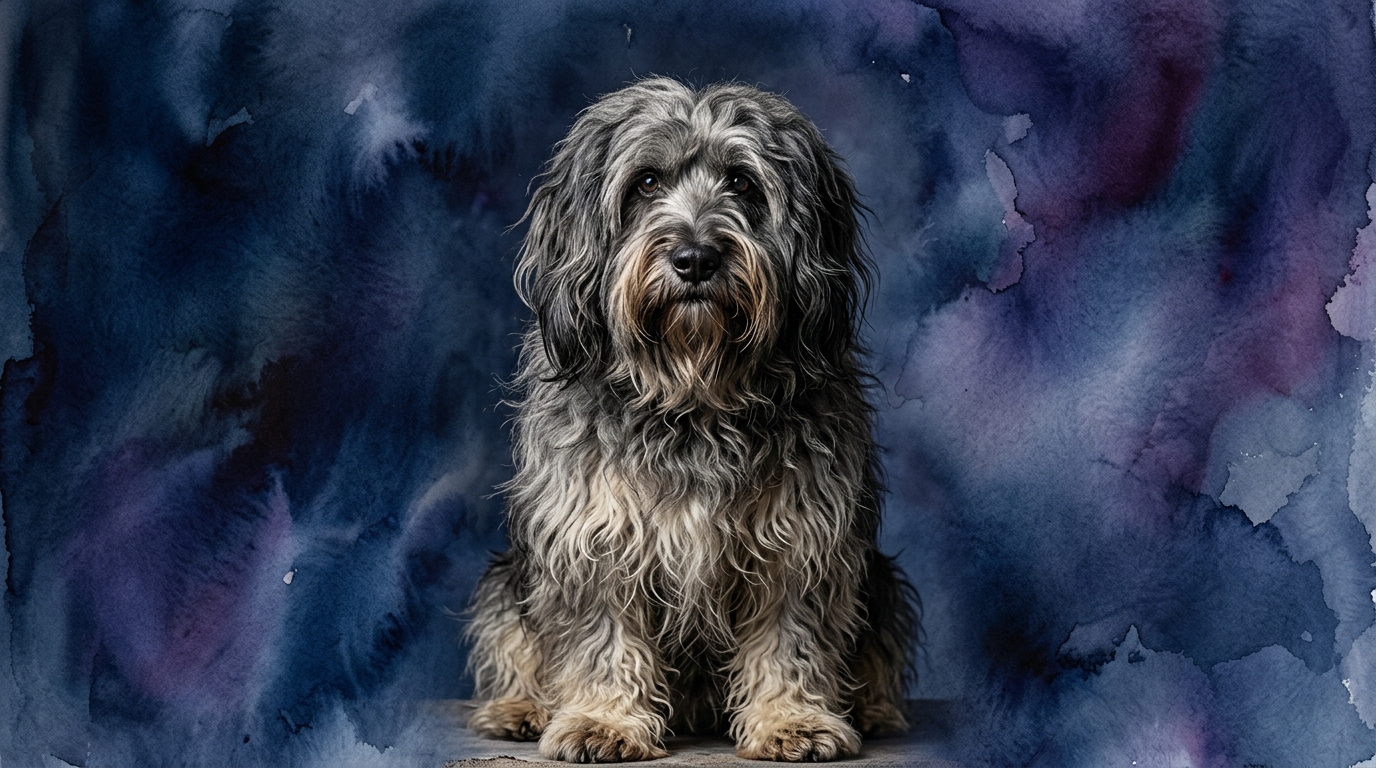
Side-by-Side IQ Profile: Westie vs. PON
The West Highland White Terrier, a spirited terrier tenacious in hunting small game, brings a specific cognitive makeup. Its Problem Solving score of 3/5 suggests navigating moderately complex situations, often with a self-directed approach, perhaps figuring out how to access a forbidden treat. Training Speed, at 3/5, indicates reasonable learning but is tempered by independence, meaning repetition and motivation are key. Social Intelligence at 3/5 points to awareness of human and canine cues, though terrier nature can prioritize self-interest. The Instinctive Drive of 3/5 is strongly oriented towards prey drive, digging, and exploration, rooted in their vermin-hunting heritage. Crucially, their Memory scores a robust 4/5, suggesting strong recall of past experiences, learned commands, and routines, making them consistent once a behavior is truly ingrained.
The Polish Lowland Sheepdog, a robust herding dog, displays a cognitive profile fundamentally geared towards different tasks. Its Problem Solving at 3/5 is typically applied to managing livestock or navigating environmental challenges, often requiring independent judgment. Training Speed, also 3/5, implies a moderate learning curve, influenced by herding instincts and a desire for purpose; they learn best with clear objectives. Social Intelligence, rated 3/5, reflects their ability to read and respond to flock dynamics and human handlers, often with a protective disposition. Their Instinctive Drive, also 3/5, is powerfully expressed through herding behaviors, showcasing a deep-seated desire to manage and protect. Unlike the Westie, the PON's Memory scores 3/5, indicating solid, but perhaps less enduring, retention of specific events compared to the Westie's higher score, though sufficient for complex herding tasks.
Where the West Highland White Terrier Wins Cognitively
The West Highland White Terrier's primary cognitive advantage, per The Cosmic Pet Pet IQ Lab, lies in its superior Memory, scoring 4/5 versus the PON's 3/5. This enhanced recall means a Westie is likely to retain learned behaviors and past experiences with greater fidelity. For an owner, this translates into a dog that, once a command or routine is thoroughly established, is generally more reliable, requiring fewer refreshers. This stronger memory also contributes to their Coren ranking of #47, indicating potential for consistent obedience performance.
Furthermore, the Westie's Problem Solving at 3/5, combined with terrier tenacity and strong memory, often manifests as clever persistence in achieving goals, whether accessing a cupboard or finding a hidden toy. While the PON also scores 3/5 in Problem Solving, the Westie’s application often leans towards independent, self-serving solutions. This demonstrates a distinct cognitive edge in navigating their immediate environment for personal gain, allowing them to adapt quickly to new tricks once motivation is engaged.
Where the Polish Lowland Sheepdog Wins Cognitively
While the Polish Lowland Sheepdog's raw IQ scores appear numerically similar, its cognitive strengths emerge in the *application* of these abilities within its specialized herding context. The PON's Instinctive Drive, rated 3/5, represents a complex cognitive blueprint for managing livestock, involving nuanced spatial reasoning, understanding flock dynamics, and anticipating movement – tasks more sophisticated than a terrier's simpler prey drive. This isn't just a physical drive, but a mentally demanding "job."
The PON's Social Intelligence (3/5) and Problem Solving (3/5) are uniquely geared towards independent judgment within a group setting. A herding dog often needs to make decisions without direct human command, assessing threats or managing sheep autonomously. This self-reliance, while potentially translating to an independent streak, is a significant cognitive asset in a working capacity, demonstrating a capacity for strategic thinking and autonomous action that distinguishes its cognitive function from the Westie's more individualistic problem-solving.
Which is Easier to Train and Why
Both the West Highland White Terrier and the Polish Lowland Sheepdog share a Training Speed score of 3/5. However, *ease* of training differs due to their distinct instinctive drives and memory. The Westie's 4/5 Memory offers a significant advantage in retention; once a command is mastered, it tends to stick. The challenge often lies in initial acquisition, as their strong terrier Instinctive Drive (3/5) can make them stubborn and easily distracted, prioritizing a sniff or chase. Effective Westie training requires patience, consistency, and making it feel like a game to tap into their playful nature, rather than a rigid task.
The Polish Lowland Sheepdog, with its 3/5 Memory, may require more consistent reinforcement over time. However, their herding Instinctive Drive (3/5) often comes with an inherent desire to work collaboratively and have a "job," which can be harnessed. PONs thrive on purpose-driven tasks and respond well to handlers providing clear leadership and engaging challenges. Their problem-solving (3/5) is often applied to practical scenarios. The key difference is that a Westie might use its cognitive abilities to outsmart you for personal gain, while a PON is more likely to use intelligence to understand and execute a meaningful task. They might exhibit less "selective hearing" than terriers if training is engaging and relevant.
Which Suits Active Owners vs. Relaxed Owners
For owners leading a more relaxed lifestyle, the West Highland White Terrier can be an adaptable companion, provided cognitive and physical needs are met. Despite terrier energy, their smaller size means they can thrive with consistent daily walks, engaging play, and mental stimulation through puzzle toys and short training bursts. Their 3/5 problem-solving and 4/5 memory make them excellent candidates for learning tricks and indoor games, fulfilling significant cognitive exercise. However, their strong Instinctive Drive (3/5) for chasing and digging means a "relaxed" owner must still manage these innate behaviors to prevent boredom-induced mischief.
The Polish Lowland Sheepdog is decidedly better suited for active owners or those providing a structured "job." With a strong herding Instinctive Drive (3/5) and a cognitive profile oriented towards purposeful activity, a PON will suffer without sufficient physical and mental engagement. Their 3/5 problem-solving and social intelligence are tuned for dynamic situations, requiring opportunities to use their brains in complex ways, such as advanced obedience or agility. A relaxed owner unable to commit to substantial daily exercise (at least an hour of vigorous activity) and consistent mental challenges would likely find a PON restless, potentially destructive, and prone to behaviors stemming from boredom and understimulation. They thrive on having a role that leverages their natural working intelligence.
The Verdict
Choose the West Highland White Terrier if you value a dog with exceptional memory for consistent training and a tenacious, independent problem-solver, provided you can channel their terrier instincts playfully.
Opt for the Polish Lowland Sheepdog if you seek a collaborative, purposeful companion who thrives on complex tasks and independent decision-making within a structured, active lifestyle.
🧠 Find Your Pet's IQ Score
Our Pet IQ Lab assessment covers 25+ tests across 5 cognitive dimensions — personalized to your breed.
Take the Full IQ Test →Frequently Asked Questions
Are West Highland White Terriers easy to house train?
Westies, with their 4/5 memory, can learn house training quickly and consistently once the routine is established. The key is strict consistency from the owner and positive reinforcement to embed the behavior firmly in their strong recall.
Do Polish Lowland Sheepdogs need a lot of mental stimulation?
Absolutely. With their herding Instinctive Drive (3/5) and problem-solving (3/5) geared towards complex tasks, PONs require significant mental engagement to prevent boredom. Puzzle toys, training for new skills, and engaging 'jobs' are crucial for their cognitive well-being.
Which breed is better for first-time dog owners?
The Westie, while independent, might be more manageable for a committed first-time owner due to its smaller size and strong memory for learned behaviors. The PON's need for extensive exercise, a 'job,' and its independent herding judgment can be more demanding, potentially overwhelming for novices without prior experience with working breeds.