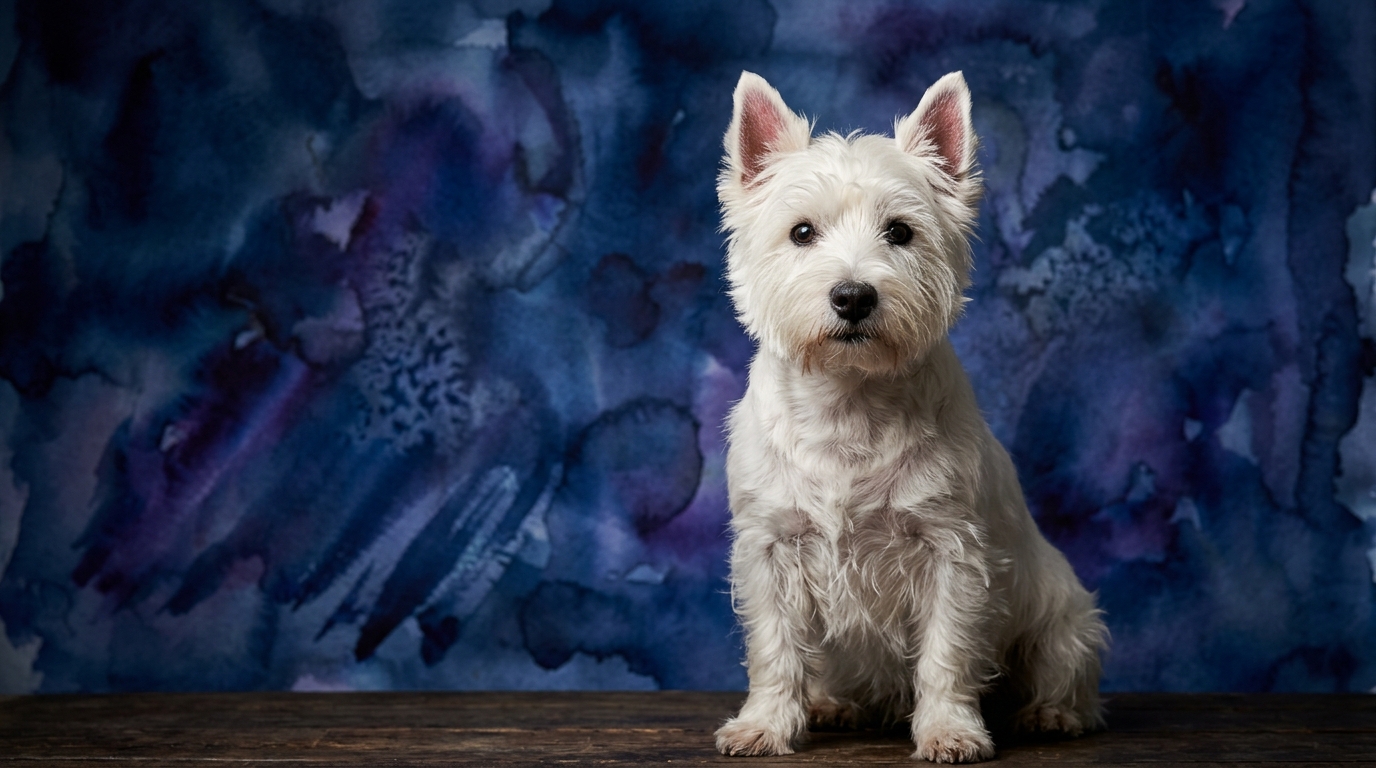

Side-by-Side Cognitive Profiles: Westie vs. Scottie
The Cosmic Pet Pet IQ Lab employs a five-dimensional framework to assess canine cognition, providing a nuanced understanding of each breed's mental landscape. For the West Highland White Terrier, ranked #47 on the Coren scale, its profile reveals a well-rounded aptitude: Problem Solving 3/5, Training Speed 3/5, Social Intelligence 3/5, Instinctive Drive 3/5, and a notable Memory at 4/5. This indicates a dog with solid capabilities across the board, with a particular strength in retaining learned information over time.
The Scottish Terrier, holding a Coren rank of #65, presents a largely consistent cognitive blueprint with its Westie cousin, though with some key distinctions. Its scores include Problem Solving 3/5, Training Speed 3/5, Social Intelligence 3/5, Instinctive Drive 3/5, and Memory at 3/5. While sharing the same foundational scores in most areas, the Scottie's slightly lower Coren rank and a memory score one point below the Westie suggest a different cognitive emphasis and perhaps a more deliberate approach to learning and interaction.
Where the West Highland White Terrier Excels Cognitively
The West Highland White Terrier's primary cognitive advantage lies in its superior Memory score of 4/5, surpassing the Scottish Terrier's 3/5. This enhanced capacity for recall means a Westie is generally quicker to solidify learned commands and routines, requiring fewer repetitions over the long term to maintain proficiency. This isn't just about remembering where the treats are; it extends to recalling complex sequences of behaviors or adapting to new environments by remembering past successful strategies.
Furthermore, the Westie's higher Coren rank of #47, compared to the Scottie's #65, suggests a more generalized cognitive flexibility. While both breeds are capable problem-solvers (3/5), the Westie often demonstrates a slightly quicker grasp of novel concepts and a greater readiness to experiment with different solutions when faced with new challenges. This adaptability can translate into a dog that picks up new tricks or adjusts to changes in routine with a bit more fluidity, making it potentially more versatile in diverse learning scenarios.
Where the Scottish Terrier Demonstrates Unique Cognitive Strengths
While the Scottish Terrier's raw scores might appear similar or slightly lower than the Westie's, its cognitive strengths manifest in a different, equally valuable manner. The Scottie's consistent scores of 3/5 across Problem Solving, Training Speed, Social Intelligence, Instinctive Drive, and Memory speak to a steadfast and focused mental approach. Rather than broad adaptability, the Scottie often excels through deliberate application of its faculties, demonstrating a profound tenacity once it commits to a task.
Its 3/5 score in Problem Solving, combined with its instinctive drive, suggests a dog that is highly effective at tasks requiring sustained effort and a clear objective, such as scent work or persistent exploration. While it might not be the quickest to pivot to a new solution, its determination means it will methodically work through a known challenge until it achieves its goal. This focused persistence, a hallmark of the breed, can be a significant cognitive asset in situations demanding unwavering resolve rather than rapid innovation.
Training Dynamics: Which Terrier is Easier to Guide?
When it comes to training, both the West Highland White Terrier and the Scottish Terrier share a Training Speed score of 3/5, suggesting they absorb new commands at a moderate pace. However, the Westie's superior Memory (4/5 versus the Scottie's 3/5) gives it a distinct edge in retention. This means that while initial learning might progress similarly, a Westie is likely to remember commands and routines for longer periods, requiring fewer refreshers and exhibiting more consistent adherence over time. Owners may find the Westie's learned behaviors become more ingrained and reliable with sustained practice.
Both breeds possess an Instinctive Drive of 3/5, which translates to a moderate level of independent thought and a natural inclination towards their terrier instincts, such as digging or chasing. This drive, coupled with their inherent independence, means neither breed is a 'yes dog' that will blindly follow commands. Training requires patience, consistency, and positive reinforcement to channel their drive productively. The Scottie, with its slightly lower memory, might require more frequent and consistent practice to embed commands deeply, potentially challenging an owner who isn't prepared for ongoing reinforcement. Its determination, while a strength in some contexts, can also manifest as stubbornness if it perceives a training session as unrewarding or unnecessary.
Matching Canine Cognition to Lifestyle: Active vs. Relaxed Owners
For owners seeking an active companion, both terriers, with their shared Instinctive Drive of 3/5, require regular mental and physical engagement. They are not content to be couch potatoes all day. However, the Westie's slightly higher cognitive flexibility and memory (Coren #47, Memory 4/5) might make it a more suitable partner for varied activities like agility, complex trick training, or exploring diverse environments. Its readiness to adapt and recall a broader range of experiences aligns well with an owner who enjoys introducing new challenges and adventures regularly.
Conversely, the Scottish Terrier, with its deliberate approach and unwavering focus, can be an excellent fit for owners who appreciate consistency and enjoy activities that allow for persistent, targeted effort. While still requiring exercise, a Scottie might thrive in routines that involve structured walks, dedicated scent games, or mastering specific, repetitive tasks. It can be a wonderful companion for owners who value a dog with a strong, predictable character and are prepared to engage with its determined personality, even if it means a slower, more methodical approach to new experiences. Its independent streak, while present in both, can be particularly pronounced in the Scottie, meaning an owner who appreciates a dog with its own strong opinions might find a perfect match.
The Verdict: When to Choose Each Spirited Terrier
Choosing between a West Highland White Terrier and a Scottish Terrier ultimately depends on the specific nuances of an owner's lifestyle and preferred cognitive engagement. Both are robust, characterful companions, but their subtle differences in mental processing can significantly impact daily life.
The Verdict
Choose the West Highland White Terrier if you value a dog with a slightly quicker learning curve, superior memory for commands, and a bit more adaptability to varied training and lifestyle changes. Its cognitive profile supports a more versatile companion for diverse activities and challenges.
Opt for the Scottish Terrier if you appreciate a dog with unwavering determination, a focused approach to tasks, and a consistent, steadfast personality, even if it means a more methodical training journey. Its deep-seated tenacity makes it a loyal and resolute companion for owners who value a strong, independent character.
🧠 Find Your Pet's IQ Score
Our Pet IQ Lab assessment covers 25+ tests across 5 cognitive dimensions — personalized to your breed.
Take the Full IQ Test →Frequently Asked Questions
Is a West Highland White Terrier easier to train than a Scottish Terrier?
The West Highland White Terrier generally presents a slightly smoother training experience due to its superior memory (4/5 vs. 3/5), meaning it retains commands more effectively over time. While both breeds learn at a similar initial pace, the Westie's recall makes learned behaviors more reliable with less frequent refreshing.
Which breed is better at problem-solving, Westie or Scottie?
Both the West Highland White Terrier and the Scottish Terrier score 3/5 in problem-solving. This indicates both are capable of figuring out challenges, though the Westie's higher Coren rank suggests a slightly quicker adaptability to novel situations, while the Scottie's strength lies in persistent, focused effort.
Do Westies or Scotties have a stronger instinctive drive?
Both breeds share an Instinctive Drive score of 3/5, reflecting their terrier heritage and a moderate inclination towards behaviors like digging, chasing, and independent exploration. This means both require consistent mental and physical stimulation to channel these natural urges constructively.