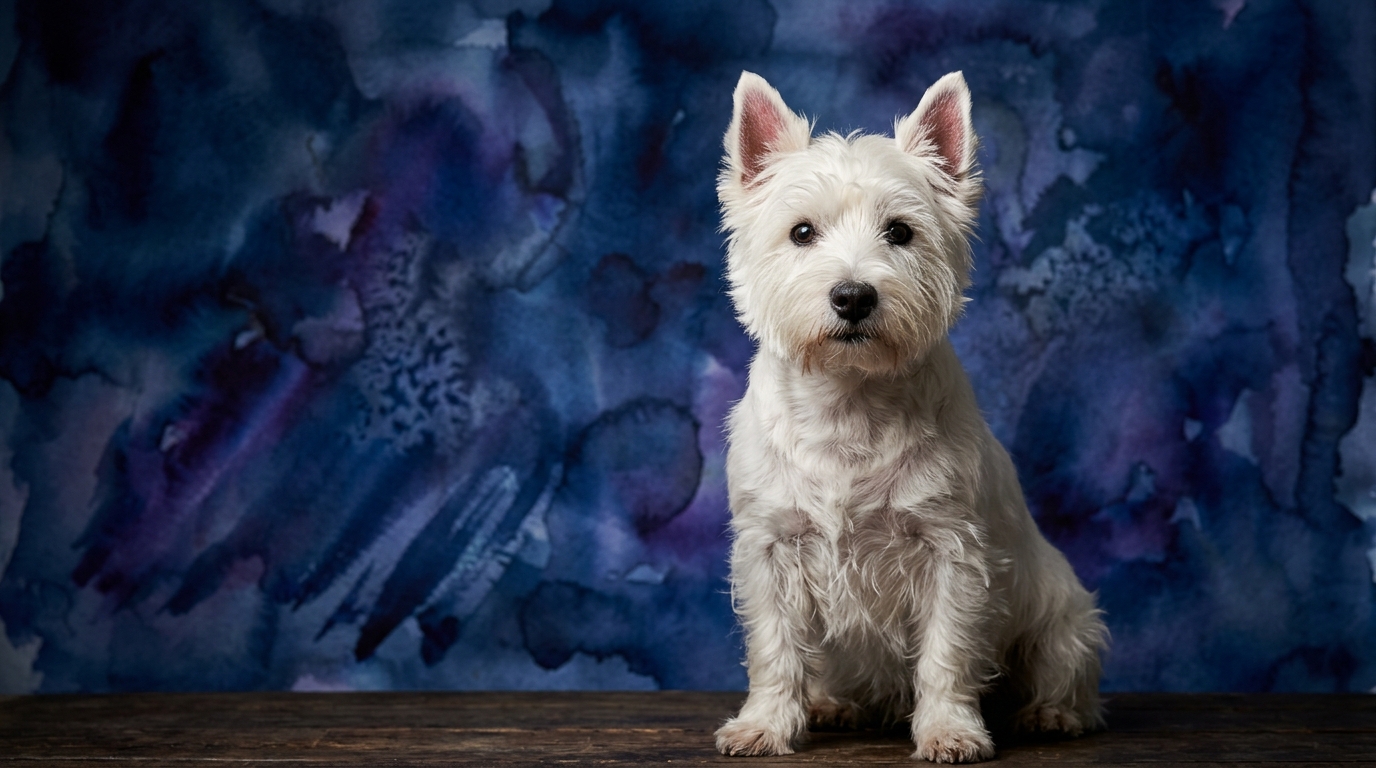

Unpacking Westie and Tibetan Terrier Cognitive Profiles
The Cosmic Pet Pet IQ Lab provides a unique lens through which to understand canine minds, evaluating five core cognitive dimensions. Comparing the West Highland White Terrier (Coren rank #47) and the Tibetan Terrier (Coren rank #63) offers an intriguing look at two distinct breeds, one from the Terrier group and the other from Non-Sporting. While their overall Coren rankings place the Westie higher in working and obedience intelligence, a detailed breakdown of their individual cognitive scores reveals a surprising parity across most dimensions, with one notable exception.
The West Highland White Terrier's profile includes Problem Solving (3/5), Training Speed (3/5), Social Intelligence (3/5), Instinctive Drive (3/5), and a standout Memory (4/5). Their problem-solving typically manifests as a tenacious approach to overcoming immediate physical obstacles, often fueled by their inherent terrier persistence. Training speed is moderate, requiring consistent methods, while social intelligence allows them to generally integrate well into family dynamics, though they retain an independent streak. Their instinctive drive is characteristic of terriers, often directed towards chasing small objects or digging.
In contrast, the Tibetan Terrier scores Problem Solving (3/5), Training Speed (3/5), Social Intelligence (3/5), Instinctive Drive (3/5), and Memory (3/5). Their problem-solving often involves a more observational and cautious approach, assessing situations before acting. Training speed is also moderate, sometimes requiring more repetition due to their independent nature. Social intelligence is often expressed through deep emotional bonds and sensitivity to human moods. Their instinctive drive, while not a prey drive like the Westie's, leans towards a watchful, guardian-like awareness of their surroundings and family members, sometimes leading to alert barking.
Where the West Highland White Terrier Shines Cognitively
The Westie's primary cognitive advantage lies squarely in its superior Memory, scoring an impressive 4/5 compared to the Tibetan Terrier's 3/5. This means a Westie is more likely to retain learned commands, household rules, and even past experiences over longer periods. For an owner, this translates into greater efficiency in maintaining established behaviors; once a Westie learns something, it tends to stick, making follow-up training sessions more about refinement than re-teaching. This strong memory also applies to routines and boundaries, which can be a significant benefit in managing their daily lives.
Furthermore, while both breeds score 3/5 in Problem Solving, the Westie's terrier heritage imbues its problem-solving with a distinct persistence. They are often relentless in pursuing a goal, whether it's extracting a toy from a tight spot or investigating an interesting scent. This tenacity, combined with their sharp memory, allows them to refine their strategies over time, learning from previous attempts to achieve their objectives. This focused determination can make them surprisingly resourceful in specific, self-motivated scenarios.
Tibetan Terrier's Unique Cognitive Strengths
The Tibetan Terrier's cognitive strengths, while not always reflected in numerically higher scores, manifest in nuanced ways, particularly in their social intelligence and thoughtful approach to their environment. Their 3/5 social intelligence score is often expressed as a profound perceptiveness of human emotions and household dynamics. These dogs are frequently described as empathetic, forming deep bonds and often anticipating their owners' moods or needs, a trait stemming from their historical role as companions and sacred dogs.
Their Problem Solving, also rated at 3/5, is characterized by a more deliberative and observant method. Unlike the Westie's head-on tenacity, a Tibetan Terrier might take a moment to survey a new situation or puzzle, evaluating options before committing to an action. This cautious yet curious approach makes them less prone to impulsive decisions and allows them to adapt to new environments or challenges with a measured thoughtfulness. This observational intelligence makes them adept at learning by watching their human companions.
Training Dynamics: Westie vs. Tibetan Terrier
When it comes to training, both breeds score 3/5 for Training Speed, indicating they learn at a moderate pace. However, their differing cognitive profiles significantly influence the training experience. The Westie's superior Memory (4/5) is a powerful asset, as they quickly solidify both good and bad habits. This means consistent, positive reinforcement is crucial from day one to ensure desirable behaviors are ingrained. Any lapses in training or inconsistent rules can be remembered just as clearly, making it harder to correct later. Their Instinctive Drive (3/5) requires owners to channel their natural curiosity and prey drive into constructive activities, like fetch or scent work, to maintain engagement.
The Tibetan Terrier, with its 3/5 Memory, may benefit from more frequent refreshers to maintain complex behaviors over time. Their Social Intelligence (3/5) means they respond exceptionally well to positive, relationship-based training methods and can be sensitive to harsh corrections, which might make them withdraw. Their independent streak and guardian-like Instinctive Drive (3/5) necessitate clear, confident leadership and early, consistent socialization to prevent aloofness with strangers or excessive alert barking. Patience, positive reinforcement, and making training feel like a collaborative game are key to overcoming their occasional stubbornness and leveraging their desire for companionship.
Matching Breeds to Lifestyles: Active vs. Relaxed Owners
For owners seeking an active companion, both the Westie and the Tibetan Terrier offer engagement, but with different energetic expressions. A West Highland White Terrier, with its robust terrier energy and instinctive drive, thrives on structured activities that tap into its natural curiosity and hunting instincts. This includes vigorous daily walks, interactive puzzle toys that challenge its problem-solving and memory, and even dog sports like earthdog trials or agility. Westies are durable and enjoy outdoor adventures, making them suitable for owners who enjoy consistent, energetic outings.
The Tibetan Terrier, while also active and agile, often prefers activities that involve its human family. They excel in dog sports like agility, obedience, or rally, but their "people-oriented" nature means they prioritize companionship during exercise. They are well-suited for owners who enjoy long walks, engaging play sessions in the yard, and indoor mental stimulation that fosters interaction. For more relaxed owners, a TT might adapt better to a quieter pace, provided their social and mental needs are met through consistent family interaction and thoughtful engagement rather than solely intense physical exertion. The Westie's drive can sometimes demand more persistent physical outlets to prevent boredom.
The Verdict
Opt for a West Highland White Terrier if you value a companion with impressive memory for commands and routines, and are prepared to channel a persistent terrier drive into constructive activities.
Choose a Tibetan Terrier if you seek a highly social, perceptive companion who thrives on deep family bonds and appreciates a blend of physical activity and thoughtful interaction.
🧠 Find Your Pet's IQ Score
Our Pet IQ Lab assessment covers 25+ tests across 5 cognitive dimensions — personalized to your breed.
Take the Full IQ Test →Frequently Asked Questions
Is a West Highland White Terrier harder to train than a Tibetan Terrier?
Neither breed is inherently 'harder' as both have a 3/5 training speed. Westies benefit from their superior memory but require consistent training to prevent bad habits from sticking, while Tibetan Terriers need patient, positive reinforcement due to their independent streak and social sensitivity.
Which breed is better with children, based on social intelligence?
Both breeds score 3/5 in social intelligence, indicating good potential. Tibetan Terriers are often noted for their empathetic nature and strong family bonds, making them generally good companions, while Westies can be affectionate but may have a more independent streak. Early socialization is crucial for both to ensure positive interactions.
Do Westies and Tibetan Terriers require similar amounts of mental stimulation?
Yes, both breeds benefit from regular mental stimulation. Westies thrive on problem-solving toys that engage their memory and instinctive drive, while Tibetan Terriers enjoy puzzles and training that challenge their observational skills and deepen their bond with their owners.