Side-by-Side IQ Profile: West Highland White Terrier vs Toy Poodle
At The Cosmic Pet Pet IQ Lab, we evaluate canine intelligence across five critical dimensions to provide a nuanced understanding of each breed's cognitive strengths.
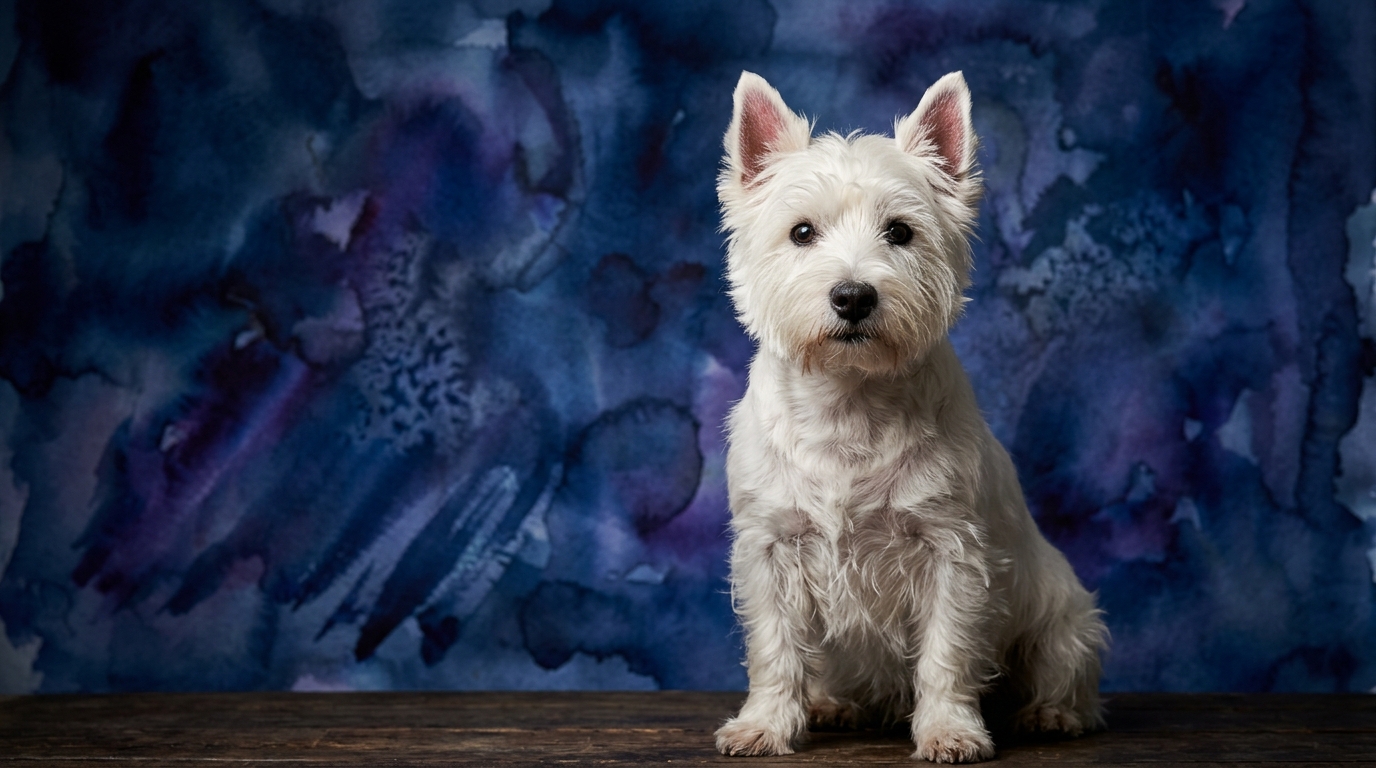
**West Highland White Terrier (Coren rank #47):** Westies demonstrate a practical approach to problem-solving, often relying on persistence and trial-and-error to achieve a tangible goal. They are adept at navigating familiar environments, figuring out how to get to a favorite spot, or overcoming minor physical obstacles with determination. However, they are less inclined toward abstract puzzles or multi-step challenges that don't directly align with their immediate desires, preferring straightforward solutions rooted in their sensory experiences. Training new commands and routines occurs at a moderate pace for the West Highland White Terrier. Their independent nature means they require consistent, patient repetition and highly motivating positive reinforcement to solidify new behaviors. While capable of learning a wide range of commands, their compliance can sometimes be a matter of choice rather than instant absorption, necessitating a firm but fair training approach. Westies form strong, loyal bonds with their primary caregivers and exhibit a good understanding of human emotional states within their trusted circle. They can be discerning about strangers, often taking time to warm up, which reflects their protective instincts. Their social understanding is more focused on the dynamics within their immediate family unit, making them sensitive to their owners' moods and intentions. True to their terrier heritage, Westies possess a robust instinctive drive, particularly for hunting and digging. This manifests as a keen interest in chasing small animals, investigating scents, and a strong desire to patrol their territory. This inherent motivation, while requiring careful management, can be channeled into engaging activities like earthdog trials or scent work, satisfying their innate curiosity and drive. West Highland White Terriers boast a notable memory, enabling them to retain learned behaviors, routines, and social interactions for extended periods. They remember specific places, people, and established household rules with impressive accuracy. This strong recall aids in maintaining consistent training and recognizing familiar faces and locations, contributing to their confident navigation of their world.
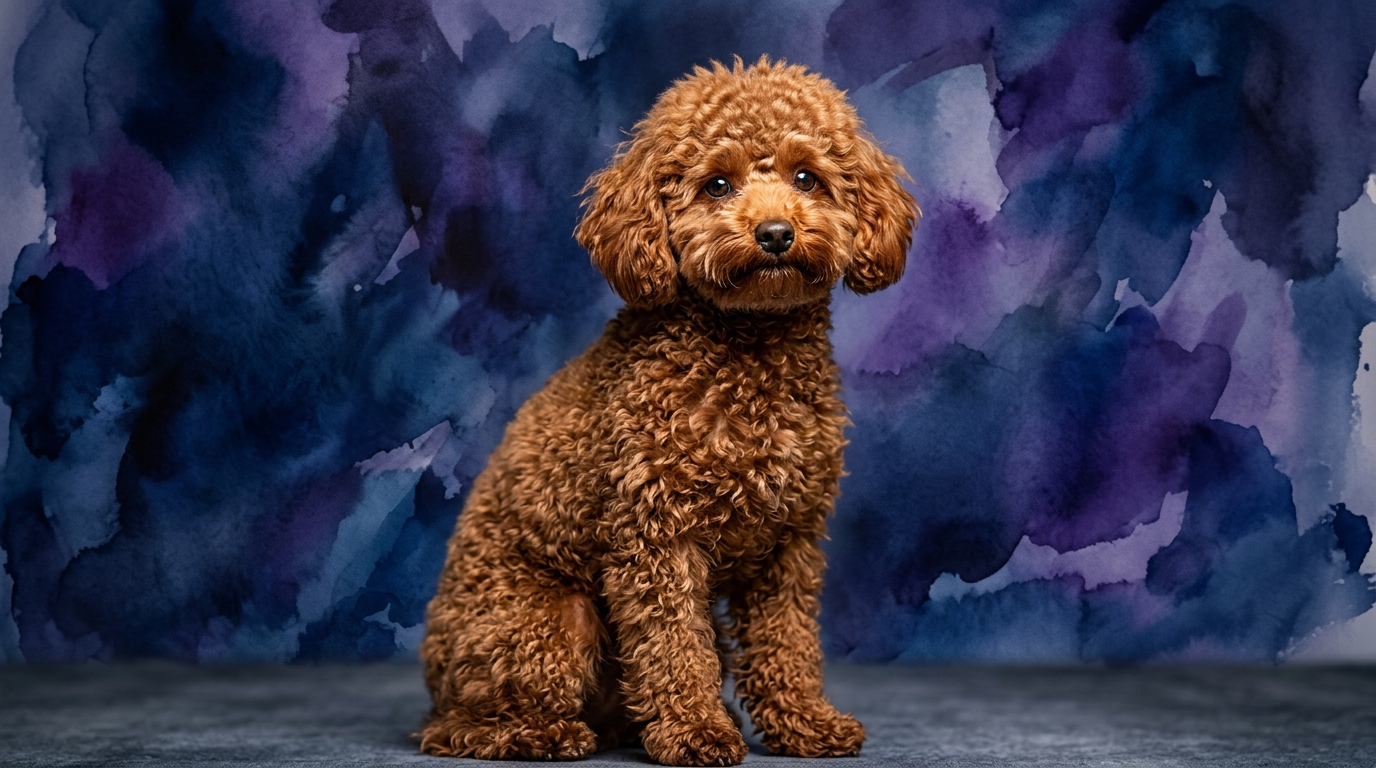
**Toy Poodle (Coren rank #2):** Toy Poodles exhibit exceptional problem-solving abilities, quickly grasping complex situations and devising innovative solutions. They can analyze cause-and-effect relationships with remarkable speed, often figuring out intricate puzzle toys or navigating novel environments with strategic thought. Their cognitive flexibility allows them to learn from observation and apply past knowledge to entirely new challenges, showcasing a profound capacity for abstract reasoning. The Toy Poodle's training speed is virtually unparalleled, making them one of the most responsive breeds to instruction. They pick up new commands and routines with astonishing rapidity, often understanding new concepts after only a few repetitions. Their eagerness to please, coupled with their sharp focus, makes them incredibly receptive students, capable of mastering a vast repertoire of tricks and advanced obedience tasks. Toy Poodles are highly attuned to human emotions and intentions, forming deep, empathetic connections with their families. They can anticipate needs, respond sensitively to mood shifts, and often seem to understand what their owners are thinking. While they may not be as universally outgoing as some breeds, their social intelligence within their chosen human circle is profound, contributing to their reputation as intuitive companions. While their primary role is no longer hunting, Toy Poodles retain some of their ancestral retrieving instincts, manifesting as a keen interest in games involving toys and a natural inclination to carry objects. This drive is often channeled into playful interaction rather than intense prey pursuit. They enjoy engaging with their environment through exploration and gentle investigation, making them active but not overly intense companions. Possessing an outstanding memory, Toy Poodles can recall a vast repertoire of commands, tricks, and social experiences over very long durations. This cognitive strength is fundamental to their advanced trainability, allowing them to follow intricate sequences of commands and perform complex routines flawlessly. Their ability to retain and apply information makes them exceptional candidates for competitive obedience, agility, and even service roles.
Where the West Highland White Terrier Cognitively Excels
While the Toy Poodle often shines in abstract cognitive feats, the West Highland White Terrier possesses a distinct, grounded intelligence that serves them exceptionally well in their specific world. Their `Memory (4/5)` is particularly strong in remembering spatial layouts, established routines, and the locations of interesting scents or buried treasures. A Westie will precisely recall the path to the best sunbeam spot or the exact bush where a squirrel was last seen, demonstrating a highly functional and practical recall tied to their immediate environment and interests. This isn't about memorizing complex sequences, but rather about a robust memory for the physical world and its opportunities.
Furthermore, the Westie’s `Instinctive Drive (3/5)` fuels a relentless determination that, when directed, can outperform more academically inclined breeds in specific scenarios. When faced with a tangible challenge, such as digging out a perceived pest or working through a puzzle toy that requires physical manipulation and persistence, their unwavering focus and grit come to the forefront. They might not quickly *analyze* the problem like a Poodle, but they will *persistently work* at it until a solution is found, often through sheer force of will and repeated effort. This tenacity, combined with their excellent memory for what *has* worked before in similar situations, makes them formidable problem-solvers in contexts where physical effort and unwavering focus are key.
Where the Toy Poodle Cognitively Excels
The Toy Poodle’s cognitive prowess is widely acknowledged, particularly in areas demanding adaptability, rapid learning, and complex thought. Their `Problem Solving (5/5)` is truly exceptional; they don't just solve problems through trial and error, but often by seemingly understanding the underlying mechanics. A Toy Poodle might quickly discern how a latch works by observing its owner, or figure out a multi-stage puzzle toy with minimal guidance, showcasing an advanced capacity for logical deduction and insight. This ability extends to novel situations, allowing them to adapt quickly to new environments or unexpected changes in routine.
Their `Training Speed (5/5)` is a direct reflection of this cognitive agility, making them incredibly quick studies. They absorb new commands, tricks, and behavioral expectations with astonishing efficiency, often requiring only a few repetitions to solidify a concept. This rapid acquisition of knowledge is further supported by their `Memory (5/5)`, which allows them to retain a vast repertoire of information over long periods and apply it flexibly across different contexts. A Toy Poodle can remember dozens of commands, understand nuanced verbal cues, and perform intricate sequences with precision, making them standouts in competitive dog sports and complex companionship roles.
Training Dynamics: Which Breed is Easier to Train?
The Toy Poodle unequivocally holds the advantage in ease of training, a direct consequence of their superior `Training Speed (5/5)`, `Problem Solving (5/5)`, and `Memory (5/5)`. They possess an innate eagerness to engage with and please their human companions, absorbing new commands and behaviors with remarkable efficiency. A Toy Poodle can often master basic obedience in a fraction of the time it takes for many other breeds, and they excel at advanced tasks like agility, competitive obedience, or even service work, where complex sequences and quick thinking are paramount. Their ability to generalize learned behaviors and recall them precisely makes training a smooth, rewarding process, yielding consistent results with relatively less effort.
In stark contrast, while the West Highland White Terrier possesses a respectable `Training Speed (3/5)` and `Memory (4/5)`, their inherent terrier independence and strong `Instinctive Drive (3/5)` present unique training considerations. A Westie might perfectly understand a command but choose to prioritize a captivating scent or a rustle in the bushes over immediate compliance. Their focus on environmental exploration and their determined, self-directed nature mean that training requires significantly more patience, consistency, and creative motivation to overcome their occasional stubbornness. This isn't a lack of understanding, but often a choice driven by their strong internal motivations, meaning a Westie owner must be prepared to be more engaging and persistent to achieve desired behaviors.
Matching Canine Cognition to Owner Lifestyles
The choice between these breeds often boils down to the owner's lifestyle and their capacity for providing specific types of stimulation. The Toy Poodle is an exceptional fit for active owners who relish mental engagement and consistent interaction. Their high `Problem Solving (5/5)` and `Training Speed (5/5)` mean they thrive on learning new tricks, participating in dog sports like agility or rally, and engaging in puzzle toys that challenge their keen intellect. Owners who enjoy teaching complex behaviors and providing ample opportunities for mental enrichment will find the Toy Poodle a highly rewarding and responsive partner. A relaxed owner, or one who prefers less structured mental activity, might find the Toy Poodle's persistent need for cognitive stimulation overwhelming, potentially leading to boredom-induced behaviors like excessive barking or destructive chewing if not adequately met.
Conversely, the West Highland White Terrier, with its robust `Instinctive Drive (3/5)` and more moderate `Problem Solving (3/5)`, is better suited for owners who appreciate a dog with a strong, independent spirit and are prepared for regular physical activity focused on their terrier instincts. They require daily walks, secure outdoor spaces for digging and exploring, and opportunities to satisfy their prey drive through appropriate games. While they enjoy interaction, their mental needs are often met through engaging with their physical environment rather than continuous complex instruction. Owners who enjoy brisk walks, are comfortable with a dog that occasionally follows its nose, and can provide consistent, firm but fair guidance will find a Westie a delightful companion. A very relaxed owner who expects a purely sedentary dog might struggle with the Westie's energetic, sometimes vocal nature and their inherent drive to investigate their surroundings.
The Verdict
Choose a West Highland White Terrier if you appreciate a spirited, independent companion with a strong sense of purpose, are prepared for consistent physical activity that taps into their terrier instincts, and value a dog with practical intelligence for navigating its world.
Opt for a Toy Poodle if you seek a highly trainable, cognitively agile partner eager to learn complex tasks, thrive on mental challenges and intricate interactions, and desire a dog that can excel in advanced obedience or dog sports.
🧠 Find Your Pet's IQ Score
Our Pet IQ Lab assessment covers 25+ tests across 5 cognitive dimensions — personalized to your breed.
Take the Full IQ Test →Frequently Asked Questions
Do Westies and Toy Poodles get along with children?
Westies can be good with older, respectful children who understand how to interact with a spirited terrier, though their independent nature means supervision is always wise. Toy Poodles, with their sensitivity and desire to please, often adapt well to gentle children, forming close bonds.
What are the grooming needs for each breed?
West Highland White Terriers require regular brushing and professional grooming every few months to maintain their distinctive double coat and prevent matting, often involving hand-stripping or clipping. Toy Poodles need daily brushing and professional grooming every 4-6 weeks to prevent matting and maintain their curly, non-shedding coat.
Which breed is more vocal?
West Highland White Terriers tend to be more vocal, often using barks to alert their owners to perceived threats or express excitement, reflecting their terrier watchfulness. Toy Poodles can be vocal, especially if bored or left alone for long periods, but are generally less prone to incessant barking than Westies.