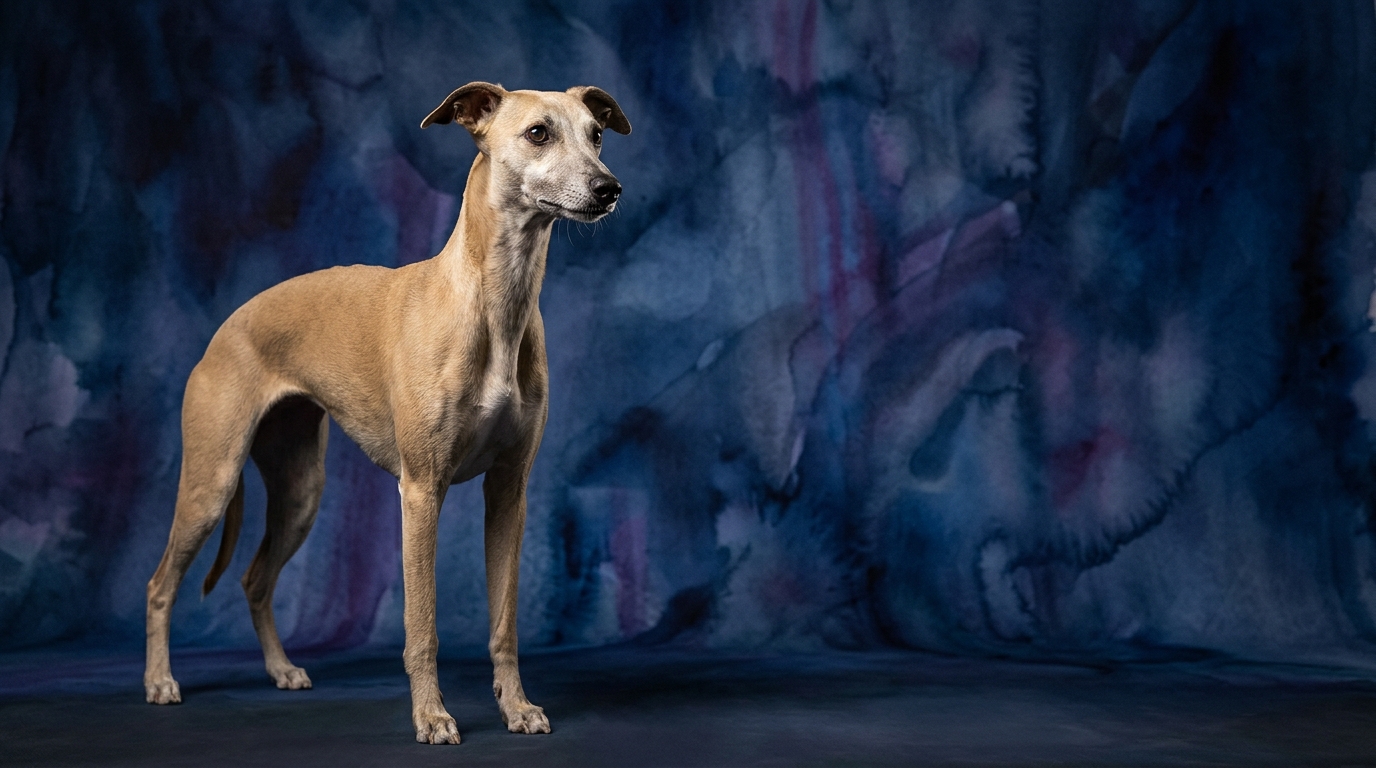

Side-by-Side Cognitive Profiles: Whippet vs. Bull Terrier
The Whippet, a graceful member of the Hound group, presents a unique cognitive blueprint. Their Problem Solving score of 3/5 indicates a practical intelligence, adept at navigating their environment for specific goals, often related to pursuit rather than complex puzzle-solving. Training Speed, at 2/5, suggests they require patient and consistent methods, often needing more repetitions to solidify new commands. However, their Social Intelligence shines at 4/5, reflecting a keen sensitivity to human moods and subtle cues, making them highly attuned companions. The Whippet’s Instinctive Drive is exceptionally strong at 5/5, primarily manifesting as an intense prey drive and a profound desire to chase, which is core to their sighthound heritage. Memory, rated 3/5, indicates they retain learned behaviors and experiences adequately, but might not recall every minor detail with perfect precision.
In contrast, the Bull Terrier, a distinctive Terrier breed, offers a different set of cognitive attributes. Their Problem Solving capability, also at 3/5, suggests a similar practical intelligence, often applied with a terrier's characteristic tenacity to overcome obstacles. Their Training Speed of 3/5 indicates they can grasp new concepts at a moderate pace, often responding well to positive reinforcement and engaging sessions. Social Intelligence for the Bull Terrier stands at 3/5, meaning they form strong bonds and understand human interactions, but perhaps with less nuanced sensitivity than a Whippet. The Bull Terrier's Instinctive Drive is rated 3/5, reflecting a moderate but persistent drive, often expressed as a robust desire for play, digging, and engaging with their environment, rather than a specialized chase instinct. Their Memory, like the Whippet, scores 3/5, signifying a solid ability to remember commands, routines, and experiences, contributing to their adaptability.
Where the Whippet Excels Cognitively
The Whippet’s cognitive strengths are most apparent in their superior Social Intelligence (4/5) and unparalleled Instinctive Drive (5/5). Their heightened social awareness means Whippets often possess an almost empathetic understanding of their human companions, picking up on subtle shifts in tone, body language, and mood. This allows them to integrate seamlessly into family life, often becoming remarkably intuitive and comforting presences. They might anticipate needs or react to emotional states with a sensitivity that sets them apart.
Furthermore, their exceptional Instinctive Drive, primarily a powerful prey drive, is a cognitive advantage in its specialized focus. While it can pose training challenges, this 5/5 drive translates into incredible focus and determination when engaged in activities that tap into their sighthound nature, such as lure coursing or fast-paced games. This isn't just about speed; it's about an intense, single-minded cognitive engagement with a moving target, showcasing a specialized form of problem-solving related to pursuit and capture strategies.
Where the Bull Terrier Shines Cognitively
The Bull Terrier demonstrates a distinct cognitive edge in their Training Speed (3/5), surpassing the Whippet's 2/5. This indicates a slightly quicker aptitude for grasping and executing new commands, particularly when training is engaging and consistent. While their terrier independence might sometimes make them seem stubborn, their cognitive capacity to process and internalize instructions is marginally more efficient than the Whippet’s, suggesting they might require fewer repetitions to achieve proficiency in basic obedience.
Additionally, while their Problem Solving score is equal to the Whippet's at 3/5, the Bull Terrier often applies this with a characteristic terrier tenacity. This translates into a persistent, robust approach to mental challenges, often refusing to give up on a puzzle or a desired outcome until successful. Their moderate Instinctive Drive (3/5) is also a cognitive asset, as it allows for a more generalized engagement with various tasks and games, rather than being singularly focused on one type of pursuit, fostering a versatile problem-solving approach.
Trainability: Whippet vs. Bull Terrier
When it comes to trainability, the nuances of their cognitive profiles become evident. The Whippet's Training Speed of 2/5 means they generally require more patience, positive reinforcement, and consistency. While they are eager to please their beloved humans, their strong Instinctive Drive (5/5) means that once something catches their eye, their focus can shift entirely to the chase, making recall in high-distraction environments particularly challenging. Training a Whippet often involves making the desired behavior more rewarding than the innate drive, and understanding their sensitivity to social cues can be leveraged to build strong cooperative relationships.
The Bull Terrier, with a Training Speed of 3/5, can often pick up commands more quickly. However, their independent and sometimes strong-willed terrier nature means that while they understand what is asked, they might choose not to comply if they don't see the immediate benefit or if they're bored. Training a Bull Terrier requires creativity, variety, and a firm but fair approach to keep them engaged. Their moderate Instinctive Drive (3/5) is less specialized than the Whippet's, manifesting more as a general zest for life and play, which can be channeled effectively into various training games and activities, making them surprisingly versatile learners when motivated correctly.
Matching Breeds to Lifestyles: Active vs. Relaxed Owners
For owners with an active lifestyle, both breeds offer unique benefits, but cater to different types of activity. The Whippet, with its explosive 5/5 Instinctive Drive, thrives with owners who can provide regular opportunities for intense, short bursts of speed in a secure area, such as lure coursing or free running in a fenced park. After these sprints, however, Whippets are famously calm and relaxed indoors, earning them the moniker '45 mph couch potatoes.' They suit owners who appreciate a dog that can transition from high-octane activity to quiet companionship seamlessly, but who are also diligent about managing their strong prey drive during walks.
The Bull Terrier, with its robust energy and tenacious spirit, is an excellent match for consistently active owners who enjoy engaging their dog in varied physical and mental activities. Their moderate Instinctive Drive and Problem Solving capacity mean they benefit from structured play, puzzle toys, agility, or long, exploratory walks that offer mental stimulation. They are not content with just a quick sprint; they require sustained engagement to prevent boredom and channel their energy constructively. Owners who enjoy consistent interaction, can provide ample structured exercise, and appreciate a dog with a playful, robust personality will find the Bull Terrier a rewarding companion.
The Verdict: When to Choose Each Breed
The choice between a Whippet and a Bull Terrier hinges on a careful assessment of their distinct cognitive profiles and how they align with your lifestyle and expectations.
If you value a dog with exceptional social sensitivity, an intuitive connection, and are prepared to manage a powerful, specialized chase drive while appreciating their calm indoor demeanor, the Whippet is likely your ideal companion. Their elegance and gentle nature, combined with bursts of incredible athletic prowess, make them unique.
Conversely, if you seek a dog with a quicker grasp of commands, a tenacious problem-solving approach, and the energy for consistent, varied engagement, all wrapped in a robust, independent personality, the Bull Terrier may be a perfect fit. They thrive with owners who can match their enthusiasm and provide structured mental and physical outlets.
The Verdict
Choose a Whippet if you prioritize a sensitive, socially attuned companion who enjoys explosive sprints followed by quiet relaxation, and you're prepared to manage their intense chase drive.
Opt for a Bull Terrier if you desire a robust, tenacious dog that learns commands efficiently and thrives on consistent mental and physical engagement, even with their independent streak.
🧠 Find Your Pet's IQ Score
Our Pet IQ Lab assessment covers 25+ tests across 5 cognitive dimensions — personalized to your breed.
Take the Full IQ Test →Frequently Asked Questions
Are Whippets difficult to train due to their lower training speed?
Whippets are not inherently difficult, but their Training Speed of 2/5 means they require more patience and consistent, positive reinforcement. Their strong prey drive also needs careful management, especially with recall in distracting environments.
Do Bull Terriers get along well with other pets or children?
Bull Terriers, with a Social Intelligence of 3/5, can form strong bonds and generally get along well with others when properly socialized from a young age. Their robust play style requires supervision, especially with small children or other pets, to ensure interactions are positive.
How much exercise does a Whippet truly need given their high instinctive drive?
Despite a 5/5 Instinctive Drive, Whippets are sprinters, not endurance runners. They need regular opportunities for intense, short bursts of running in a secure area, typically 20-30 minutes, followed by plenty of indoor rest. Their drive is about chasing, not constant activity.