Side-by-Side IQ Profile: Whippet vs. Cesky Terrier
At The Cosmic Pet Pet IQ Lab, we dissect canine cognition into five key dimensions: Problem Solving, Training Speed, Social Intelligence, Instinctive Drive, and Memory. Understanding these facets provides a clearer picture of a breed's mental landscape, guiding prospective owners toward a compatible companion. Let's examine how the Whippet and Cesky Terrier measure up in each area, revealing their unique cognitive strengths and inclinations.
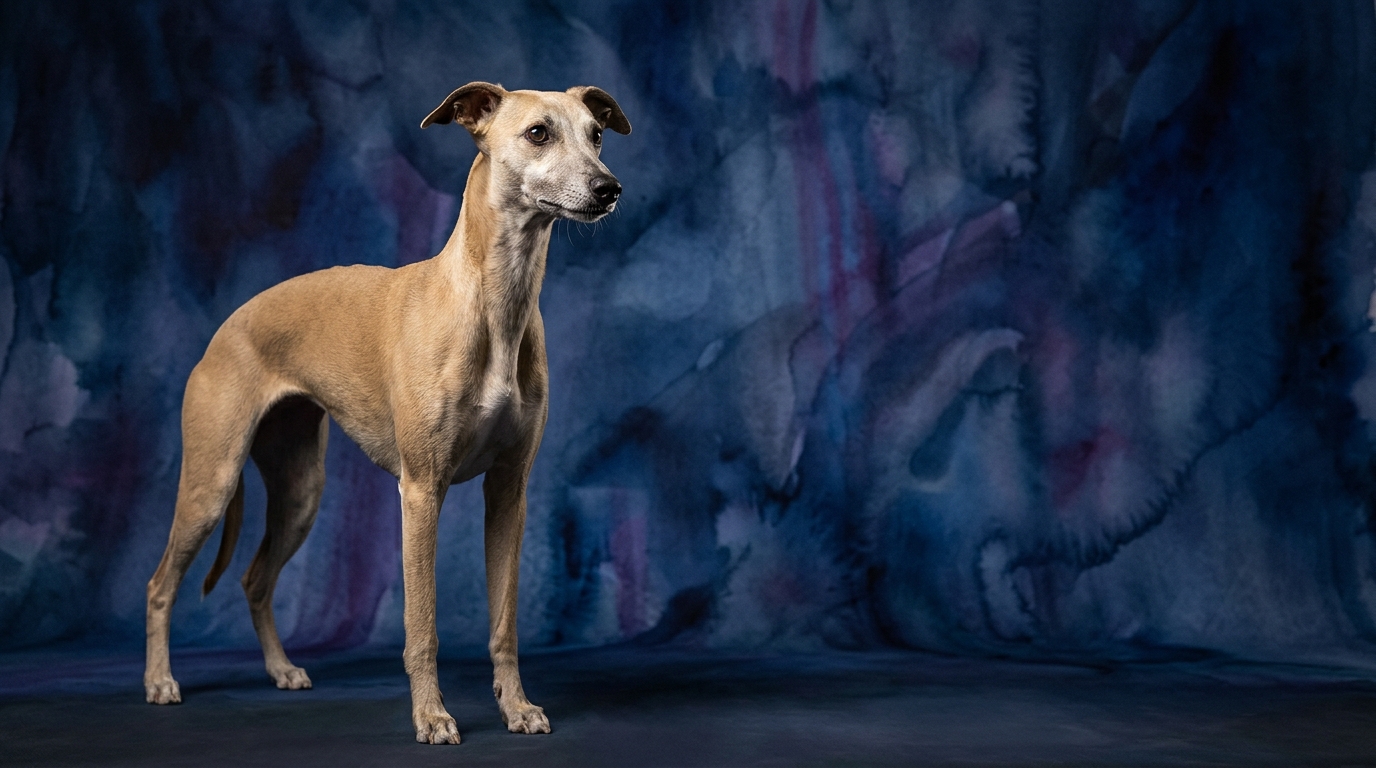
The Whippet, a sighthound ranked #51 by Coren, presents a profile marked by a balance of moderate cognitive abilities with a pronounced social and instinctive nature. Their Problem Solving is rated 3/5, indicating an ability to navigate moderately complex challenges without consistently devising highly intricate solutions independently. Training Speed for the Whippet is 2/5, suggesting they may require more repetition and patience to master new commands, a trait common among many independent hound breeds. Where the Whippet truly distinguishes itself is in Social Intelligence, scoring an impressive 4/5. This reflects a sophisticated capacity to read human emotions, understand social cues within a household, and form deep, nuanced bonds. Their Instinctive Drive is a powerful 5/5, a testament to their heritage as pursuit hunters, manifesting as a strong urge to chase fast-moving objects. Lastly, their Memory stands at 3/5, indicating a solid capacity to retain learned information and past experiences.
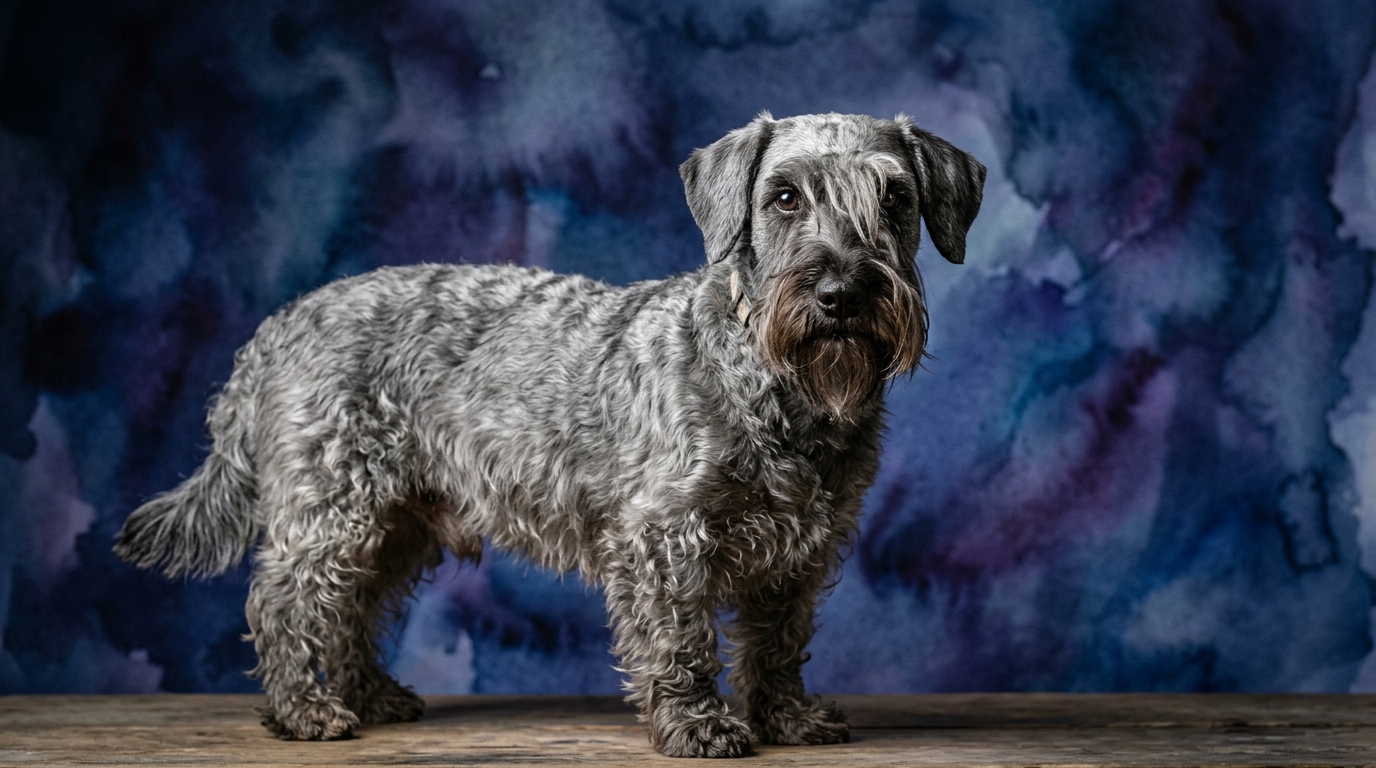
The Cesky Terrier, a tenacious terrier breed not ranked by Coren, offers a cognitive profile that emphasizes a balanced and resilient disposition. Their Problem Solving ability matches the Whippet at 3/5, meaning they are capable of tackling everyday dilemmas and can figure out solutions to moderate obstacles, though they might not be master strategists. The Cesky's Training Speed is 3/5, placing them slightly ahead of the Whippet, implying a quicker uptake of new instructions and a generally more responsive attitude during training sessions. In terms of Social Intelligence, the Cesky Terrier scores 3/5, suggesting a competent understanding of their social environment and human interactions, forming loyal attachments, though perhaps not with the same intuitive depth as a Whippet. Their Instinctive Drive is 3/5, reflecting a typical terrier's drive to hunt and explore, present but more contained than a sighthound's intense chase reflex. Their Memory, like the Whippet, is 3/5, providing a dependable recall of routines, commands, and past interactions.
Where the Whippet Excels Cognitively
The Whippet's most pronounced cognitive strength lies in its Social Intelligence (4/5). This breed possesses a remarkable ability to perceive and respond to human moods and subtle cues, often anticipating a companion's needs or reactions. This isn't about performing tricks but about a deep, empathetic connection, making them exceptionally attuned companions who thrive on close interaction and seem to understand the emotional landscape of their home. Their sensitivity allows them to integrate seamlessly into family dynamics, often becoming a comforting presence that offers silent companionship and intuitive affection.
Furthermore, the Whippet's unparalleled Instinctive Drive (5/5) is a cognitive marvel in its own right. While primarily a physical attribute, the mental focus required for such intense, visually-driven pursuit is immense. This isn't merely a physical sprint; it's a cognitive program for detection, acceleration, and interception. Whippets exhibit incredible concentration when a target enters their field of vision, demonstrating a highly specialized form of problem-solving geared towards chase and capture. This drive, while requiring responsible management in an urban environment, showcases a finely tuned, ancient cognitive pathway that sets them apart.
Where the Cesky Terrier Holds Its Own Cognitively
The Cesky Terrier's cognitive profile, while not featuring a single standout 5/5 score, demonstrates a well-rounded and resilient mental makeup that serves it admirably. One area where the Cesky shows a slight edge is in Training Speed (3/5 compared to Whippet's 2/5). This suggests that the Cesky may process and internalize new commands with a bit more alacrity, potentially requiring fewer repetitions to achieve proficiency. This quicker grasp can make initial training phases feel more immediately rewarding, as they tend to be a bit more eager to engage with structured learning tasks.
Moreover, the Cesky's balanced Instinctive Drive (3/5) and Problem Solving (3/5) work in concert to create a cognitively independent and resourceful companion. Their terrier heritage imbues them with a persistent curiosity and a pragmatic approach to overcoming obstacles. While not as intensely focused on chase as a sighthound, a Cesky will methodically investigate, dig, or strategize to achieve a goal, such as finding a hidden toy or accessing a restricted area. This combination of moderate drive and problem-solving makes them adept at navigating their environment with a self-sufficient mindset, capable of entertaining themselves and finding solutions to minor challenges without constant human intervention.
Which Is Easier to Train and Why?
When evaluating ease of training, the Cesky Terrier (Training Speed 3/5) generally presents a slightly more straightforward path for basic obedience than the Whippet (Training Speed 2/5). The Cesky's moderate training speed means they tend to pick up new cues with fewer repetitions. Their terrier tenacity, while sometimes leading to independent thinking, also means they often engage with training as a task to be accomplished. They can be quite food-motivated and respond well to consistent, positive reinforcement, making them capable students for a dedicated owner.
The Whippet, with its lower Training Speed, might require more patience and creative approaches during training. Their independent hound nature means they are not inherently driven to please in the same way some other breeds might be. While they possess excellent memory (3/5), their motivation often hinges on high-value rewards and making training feel like a game rather than a chore. Their powerful Instinctive Drive (5/5) can also be a significant distraction; a squirrel or a plastic bag blowing in the wind can instantly override any command, making off-leash reliability a considerable, long-term training commitment. Therefore, while both breeds are trainable, the Cesky often offers a slightly less demanding and potentially quicker initial learning curve for the average owner, primarily due to their slightly higher training speed and less overwhelming instinctive distractions.
Which Suits Active Owners vs. Relaxed Owners?
For active owners who seek a partner for bursts of intense activity, the Whippet can be an excellent match, despite their reputation for being couch potatoes. Their Instinctive Drive (5/5) translates into an immense capacity for speed and short, vigorous runs. An owner who enjoys daily sprints in a secure, fenced area or participates in lure coursing will find a Whippet to be a joyful and willing participant. However, beyond these bursts, Whippets are generally calm and quiet indoors, appreciating a relaxed environment. This makes them suitable for active owners who also value a serene home life, where the Whippet's high Social Intelligence (4/5) allows them to settle comfortably into the family rhythm, often content to nap nearby.
The Cesky Terrier, with its balanced Instinctive Drive (3/5) and Problem Solving (3/5), suits an owner who is active in a different sense: an owner who enjoys consistent engagement, exploration, and mental stimulation. Ceskys thrive on daily walks, scent games, and opportunities to investigate their surroundings. They are less about explosive speed and more about sustained curiosity and moderate activity. An owner who enjoys training sessions, puzzle toys, and outdoor adventures that involve sniffing and exploring will find the Cesky's energy and cognitive engagement a rewarding match. Their adaptability means they can also enjoy quieter moments, but they generally appreciate a household that provides regular opportunities for mental and physical stimulation to prevent boredom, which could otherwise manifest as unwanted digging or barking.
The Verdict
Choose the Whippet if you seek a highly socially intelligent, empathetic companion who thrives on intense, short bursts of activity and then settles into serene companionship.
Opt for the Cesky Terrier if you prefer a resilient, moderately active, and engaging companion who appreciates consistent mental stimulation and a slightly quicker grasp of training cues.
🧠 Find Your Pet's IQ Score
Our Pet IQ Lab assessment covers 25+ tests across 5 cognitive dimensions — personalized to your breed.
Take the Full IQ Test →Frequently Asked Questions
Are Whippets difficult to train due to their low training speed?
Whippets are not inherently difficult, but their Training Speed of 2/5 means they may require more patience and repetition. Their independent nature and strong prey drive necessitate positive reinforcement and making training enjoyable to keep them engaged and responsive.
What kind of activities does a Cesky Terrier enjoy given its IQ profile?
With a balanced Problem Solving (3/5) and Instinctive Drive (3/5), Cesky Terriers enjoy activities that engage both their body and mind. They thrive on scent work, moderate walks with plenty of sniffing opportunities, puzzle toys, and consistent training that challenges their intellect.
How do Whippets and Cesky Terriers typically interact with children or other pets?
Whippets, with their high Social Intelligence (4/5), are often gentle and intuitive with children and can coexist peacefully with other pets, especially if socialized early. Cesky Terriers, scoring 3/5 in social intelligence, are generally good family companions but might exhibit more typical terrier tenacity with other animals, requiring careful introductions and supervision.