
Side-by-Side Cognitive Profiles
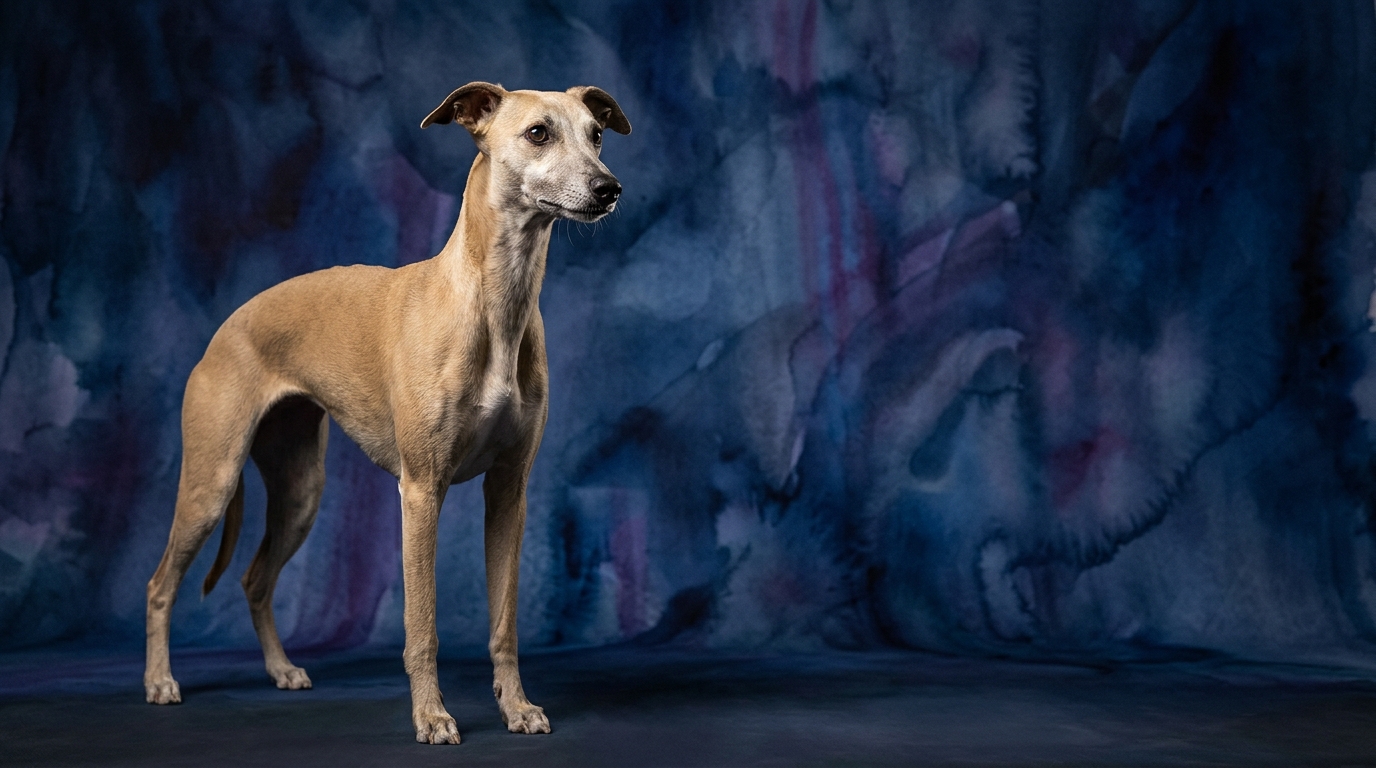
At The Cosmic Pet Pet IQ Lab, we analyze canine intelligence across five key dimensions. For the Whippet, a sighthound with a Coren ranking of #51, their cognitive blueprint reveals a compelling blend of focused drive and social awareness. Their Problem Solving is rated 3/5, indicating a moderate capacity to navigate novel situations, often favoring direct, efficient routes to achieve goals like reaching a lure or a comfortable resting spot. Training Speed for the Whippet stands at 2/5; while capable, their independent hound nature means consistent command execution often requires patience and high-value motivation, as impulse control can be a work in progress. Their Social Intelligence is a notable 4/5, demonstrating a strong aptitude for reading human cues and forming deep, empathetic bonds within their inner circle, though they might be reserved with strangers. Instictive Drive is a powerful 5/5, a testament to their sighthound heritage, manifesting as an intense chase instinct that dominates their cognitive landscape. Memory is rated 3/5, suggesting a moderate ability to recall routines, people, and learned commands, with complex or infrequent instructions sometimes needing refreshers.
The Chinese Crested, a Toy breed not specifically ranked by Coren, presents a different cognitive tableau, leaning into adaptability and companion-centric behaviors. Their Problem Solving also scores 3/5, showcasing a moderate capacity for devising clever tactics to achieve domestic objectives, such as gaining attention or accessing favored cozy locations. Training Speed for the Crested is 3/5, indicating a generally steady pace in acquiring new commands, often motivated by positive reinforcement and a desire to engage with their caregivers. Their Social Intelligence is 3/5, reflecting a moderate ability to interpret social cues, forming close family bonds while sometimes displaying sensitivity or shyness in unfamiliar social contexts. Instinctive Drive is a moderate 3/5; while retaining typical canine desires for play and comfort, their drives are generally well-adapted to a domestic setting without the intense focus of a sighthound. Memory is rated 3/5, demonstrating a moderate recall for routines, familiar people, and learned behaviors, contributing to their smooth integration into a home environment.
Where the Whippet Cognitively Excels
The Whippet's cognitive strengths distinctly outshine the Chinese Crested in two key areas: social intelligence and instinctive drive. With a social intelligence score of 4/5 compared to the Crested's 3/5, Whippets demonstrate a more profound aptitude for understanding and responding to human emotional states and subtle social cues. They often exhibit a nuanced empathy, sensing shifts in their owner's mood and adjusting their behavior accordingly, offering comforting presence or playful distraction. This heightened social awareness contributes to their sensitive, attuned companion nature, making them particularly responsive to the subtle dynamics of a household.
Furthermore, the Whippet's instinctive drive, rated at a formidable 5/5 against the Crested's 3/5, represents a powerful and finely tuned cognitive specialization. This isn't solely about physical speed; it's a deeply ingrained mental framework for pursuit, observation, and rapid reaction. Their minds are wired to detect the slightest movement, process visual information swiftly, and initiate a coordinated, explosive response. This drive, rooted in their sighthound heritage, means their cognitive focus in situations involving movement or potential 'prey' is unparalleled, showcasing a specialized form of environmental processing and decision-making that is a hallmark of their breed. While it requires appropriate outlets, this intense focus is a testament to a highly developed cognitive pathway.
Where the Chinese Crested Cognitively Excels
The Chinese Crested carves out its own cognitive niche, particularly in areas related to domestic adaptability and consistent learning. While their problem-solving ability is on par with the Whippet at 3/5, the Crested often applies this skill in more nuanced, home-centric ways, devising clever strategies to gain attention, secure a cozy spot, or manipulate toys. Their resourcefulness within a familiar environment can be quite charming and effective, demonstrating a practical application of their cognitive capacity.
However, the most notable cognitive advantage for the Chinese Crested lies in its training speed, scoring 3/5 against the Whippet's 2/5. This indicates a generally more receptive and consistent approach to acquiring new commands and behaviors. Cresteds often exhibit a greater eagerness to engage in training sessions, motivated by praise and treats, and tend to generalize learned behaviors more readily across different contexts. Their desire for human interaction and less intense independent streak often translate into a more focused learner in a structured training environment. This makes them often quicker to pick up basic obedience, house rules, and even more complex tricks, showcasing a cognitive disposition that leans towards cooperative learning and behavioral modification. Their moderate instinctive drive also means fewer internal distractions competing with training focus compared to the Whippet's intense chase drive.
Training Dynamics: Which is Easier?
Considering their specific cognitive profiles, the Chinese Crested generally presents as an easier dog to train for the average owner, primarily due to its faster training speed (3/5) and more moderate instinctive drive (3/5). Cresteds often possess a stronger intrinsic motivation to please their human companions, coupled with a good attention span in low-distraction settings. Their lesser prey drive means their focus is less likely to be hijacked by a squirrel darting across the park, allowing for more consistent engagement during training sessions. They respond well to positive reinforcement, often thriving on praise, treats, and interactive play, making the learning process smoother and more rewarding for both dog and owner. Their problem-solving, while moderate, is often applied to figuring out how to achieve desired outcomes in a domestic context, including understanding what actions lead to rewards during training.
The Whippet, with a training speed of 2/5 and an instinctive drive of 5/5, presents a different training dynamic. Their sighthound heritage means their powerful chase drive is a constant, often overriding, cognitive force. While capable of learning, their independent nature and intense focus on movement can make consistent obedience challenging, especially in stimulating environments. Training a Whippet often requires significant patience, creative motivation, and a deep understanding of their prey drive. They learn best when training is engaging, fast-paced, and taps into their natural instincts, such as lure coursing or recall games that mimic a chase. While they can achieve high levels of training, it typically demands a more experienced or dedicated trainer who can navigate their unique cognitive priorities and independent spirit, rather than a breed that inherently seeks to please through structured commands.
Lifestyle Match: Active vs. Relaxed Owners
The choice between a Whippet and a Chinese Crested largely hinges on an owner's lifestyle and their definition of 'activity.' A Whippet, despite its reputation as a couch potato indoors, is fundamentally suited for active owners who understand and cater to its profound instinctive drive (5/5). While they don't require hours of constant running, they need regular opportunities to express their incredible speed and chase instinct in safe, enclosed environments. Owners who enjoy lure coursing, long brisk walks, or simply have a large, secure yard where their Whippet can 'zoom' will find their needs met. Their moderate problem-solving (3/5) and social intelligence (4/5) mean they appreciate engaging activities that challenge them and bond them with their human, but their physical outlets are paramount. They can be reserved with strangers, making them less inclined for boisterous public outings, preferring quieter, focused activities with their family.
The Chinese Crested, with its moderate instinctive drive (3/5), problem-solving (3/5), and social intelligence (3/5), is generally better suited for relaxed owners or those seeking a more adaptable companion for varied activities. They enjoy walks, play sessions, and even agility, but their physical demands are far less intense than a Whippet's. Their preference for companionship and their moderate energy levels make them excellent candidates for apartment living or homes where daily strenuous exercise isn't the primary focus. They thrive on human interaction and can be quite content with indoor games, short strolls, and cuddling on the sofa. Their moderate training speed (3/5) also means they can easily be taught tricks or participate in low-impact dog sports, offering mental stimulation without requiring extreme physical exertion. They are often content to be lap dogs, making them ideal for individuals or families who value a close, less demanding canine presence.
The Verdict
Choose the Whippet if you appreciate a sensitive, deeply bonded companion with an intense, specialized prey drive that you can safely channel through activities like lure coursing, and you are prepared for their independent learning style.
Opt for the Chinese Crested if you seek an adaptable, companion-focused dog that is generally quicker to train, thrives on close human interaction, and whose exercise needs align more with leisurely strolls and indoor play.
🧠 Find Your Pet's IQ Score
Our Pet IQ Lab assessment covers 25+ tests across 5 cognitive dimensions — personalized to your breed.
Take the Full IQ Test →Frequently Asked Questions
Do Whippets have separation anxiety?
Whippets, with their high social intelligence (4/5) and deep bonds with their families, can be prone to separation anxiety if not properly acclimated to alone time. Their sensitive nature means they thrive on companionship, and prolonged isolation can be distressing, so gradual training and enrichment are key.
Are Chinese Crested dogs good for first-time owners?
Yes, Chinese Cresteds can be an excellent choice for first-time owners due to their moderate training speed (3/5) and adaptable nature. Their desire for companionship and manageable exercise requirements make them relatively straightforward to integrate into a new home, provided their grooming and socialization needs are met.
How do their problem-solving abilities differ in daily life?
Both breeds have a 3/5 problem-solving rating, but their application differs. A Whippet might problem-solve how to best position itself for a chase or find the warmest sunbeam, while a Chinese Crested might figure out how to nudge a blanket off the sofa or cleverly gain attention from their owner.