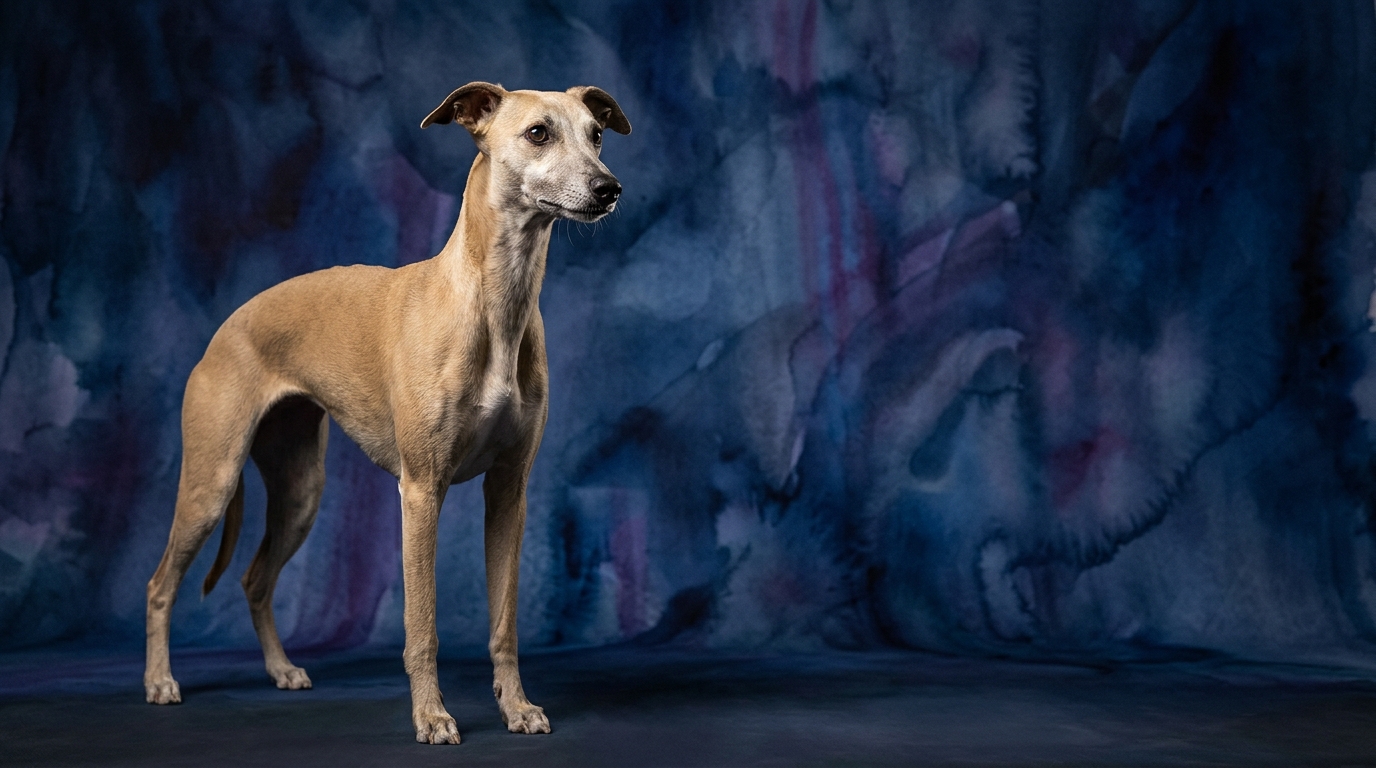
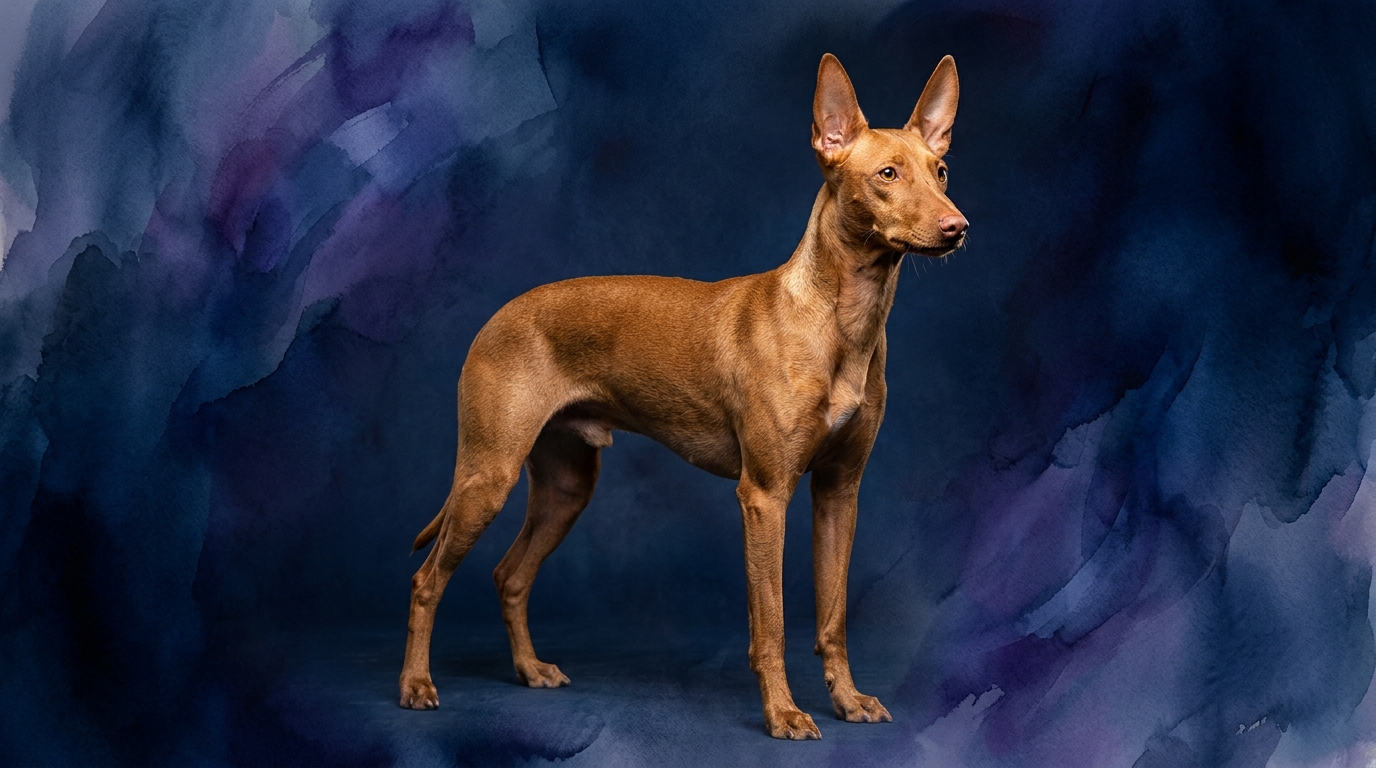
Side-by-Side IQ Profile: Whippet vs. Cirneco dell'Etna
The Cosmic Pet Pet IQ Lab employs a five-dimensional framework to assess canine intelligence, moving beyond simplistic labels to understand the specific cognitive strengths and challenges of each breed. For the Whippet, a breed ranked #51 by Coren, its profile paints a picture of a sensitive and driven companion. Its problem-solving ability is rated 3/5, indicating a capacity to navigate familiar challenges but not necessarily to invent novel solutions without clear motivation. Training speed registers at 2/5, suggesting that consistent, engaging methods are essential for this breed to absorb new commands effectively. Where the Whippet truly shines is in social intelligence, scoring an impressive 4/5, reflecting its deep attunement to human emotions and household dynamics. However, its instinctive drive is paramount at 5/5, manifesting as an intense, unyielding chase response. Memory for a Whippet stands at 3/5, meaning it retains learned behaviors and experiences reasonably well.
The Cirneco dell'Etna, though not Coren-ranked, presents a balanced yet distinct cognitive blueprint. Its problem-solving ability mirrors the Whippet at 3/5; these ancient Sicilian hounds are practical and adaptable, learning from their environment to achieve desired outcomes like accessing comfort or food. Training speed for the Cirneco is slightly higher at 3/5, indicating a more consistent willingness to engage and learn commands with fewer repetitions than its Whippet counterpart. Social intelligence is rated 3/5, signifying a strong bond with its family and an understanding of social cues, though perhaps with less overt emotional expressiveness than a Whippet. The Cirneco's instinctive drive is 3/5, present and active, but notably less overwhelming than the Whippet's, allowing for potentially greater redirection. Its memory score is also 3/5, demonstrating reliable retention of routines and past lessons.
Where the Whippet Wins Cognitively
The Whippet's cognitive strengths are particularly evident in two key areas: social intelligence and instinctive drive. With a social intelligence score of 4/5, the Whippet possesses a remarkable capacity to read and respond to human emotional states. This isn't merely affection; it's a nuanced understanding of their owner's mood, often leading them to offer comfort or seek connection precisely when it seems most needed. This makes them exceptionally empathetic companions who integrate deeply into the emotional fabric of a family, often appearing to anticipate needs before they are verbalized. Their ability to pick up on subtle cues, from body language to tone of voice, underscores a sophisticated social perception.
Furthermore, the Whippet's instinctive drive, rated at a powerful 5/5, represents a distinct cognitive advantage within its sighthound lineage. While this intense drive can pose challenges for off-leash reliability, it also signifies an extraordinary level of focus and a hardwired predatory sequence. The speed and precision with which a Whippet can lock onto and pursue a moving target – be it a squirrel or a lure – demonstrates rapid sensory processing and an immediate commitment of all cognitive resources to that singular goal. This isn't just physical velocity; it's a mental switch that flips with incredible efficiency, making them unparalleled in tasks requiring instantaneous reaction to movement.
Where the Cirneco dell'Etna Wins Cognitively
The Cirneco dell'Etna exhibits its own unique cognitive strengths, particularly in its training speed and the balance of its instinctive drive. With a training speed score of 3/5, the Cirneco often demonstrates a more consistent willingness to engage in structured learning compared to the Whippet. This moderate pace means they tend to absorb new commands with fewer repetitions, especially when training sessions are kept dynamic and are consistently rewarding. This isn't about being inherently more 'attentive' in a general sense, but rather a more sustained openness to instruction and a greater likelihood of retaining focus during the learning process, which proves beneficial for owners seeking a responsive learner.
Moreover, the Cirneco's instinctive drive, while present at 3/5, is more balanced than the Whippet's overwhelming 5/5. This moderated drive translates into a significant cognitive advantage. While they retain their sighthound inclination to chase, their attention is not solely consumed by prey. This balance allows for greater versatility in their engagement with the world; they can shift focus more readily and are potentially more amenable to redirection from a chase with consistent training. Their problem-solving skills, also rated 3/5, might be applied to a broader array of daily tasks and environmental navigation, rather than being predominantly channeled into the high-intensity pursuit of movement. This allows for a more varied cognitive application in different contexts, making them adaptable companions for various activities.
Which is Easier to Train and Why
When considering ease of training, the Cirneco dell'Etna generally presents a smoother experience for most owners. This distinction largely stems from the interplay of their respective training speed and instinctive drive scores. The Cirneco's training speed of 3/5 indicates that they typically learn new commands with fewer repetitions and maintain focus for longer durations during training sessions compared to the Whippet's 2/5. Their willingness to engage and absorb instructions is more consistent, making the process less prone to frustration.
The Whippet's intense instinctive drive, scoring a maximum 5/5, is a primary factor in its training challenges, particularly regarding recall. Once a Whippet's prey drive is triggered by movement, their cognitive resources are almost entirely dedicated to the chase, making it exceedingly difficult to interrupt or redirect them, even with extensive prior training. This overwhelming drive frequently overrides learned commands in stimulating environments. In contrast, the Cirneco, with a 3/5 instinctive drive, while still exhibiting a chase instinct, is often more amenable to interruption or redirection. Their drive, while strong, is not as all-consuming, allowing for more effective use of positive reinforcement and consistent training to build reliable responses, even amidst some distractions. This difference in drive management directly impacts the perceived 'ease' of training.
Which Suits Active Owners vs. Relaxed Owners
For active owners seeking a companion for varied and engaging activities, the Cirneco dell'Etna often proves to be a more suitable match. Their more balanced instinctive drive (3/5) and slightly higher training speed (3/5) make them more amenable to participating in dog sports like agility, scent work, or consistent long-distance hiking where responsiveness and sustained engagement are crucial. While they certainly enjoy bursts of speed, their cognitive profile allows for more structured participation in activities that require focus beyond pure chase. Owners who enjoy teaching new skills and exploring diverse environments will find the Cirneco's cognitive make-up well-suited to their lifestyle, as they can adapt to and thrive in a broader range of stimulating scenarios.
Conversely, relaxed owners who appreciate a calm, affectionate presence indoors after brief, intense exercise will find the Whippet to be an ideal companion. The Whippet's exceptional social intelligence (4/5) means they thrive on close companionship and are often content to lounge alongside their owners for extended periods once their physical needs are met. Their incredible bursts of speed satisfy their exercise requirements efficiently, after which they are known for their quiet demeanor inside the home. Owners must, however, be acutely aware of and prepared to manage their intense 5/5 instinctive drive in any unsecured outdoor space. For those who value a deeply connected, emotionally perceptive dog that transitions seamlessly from exhilarating sprints to serene snuggles, the Whippet fits the bill perfectly within a predictable, comfortable home environment.
The Verdict
Choose the Whippet if you prioritize an incredibly empathetic and emotionally attuned companion who thrives on close connection and is content with short, intense bursts of exercise followed by long periods of rest, provided you can manage their powerful chase instinct.
Opt for the Cirneco dell'Etna if you seek a robust and slightly more trainable sighthound for varied activities, and appreciate an alert companion with a balanced drive that allows for a broader range of engagement beyond just speed.
🧠 Find Your Pet's IQ Score
Our Pet IQ Lab assessment covers 25+ tests across 5 cognitive dimensions — personalized to your breed.
Take the Full IQ Test →Frequently Asked Questions
Are Whippets difficult to train?
Whippets have a training speed of 2/5 and a very high instinctive drive, meaning they require consistent, patient, and engaging methods. Their powerful chase instinct can make recall particularly challenging in stimulating environments, but they respond well to positive reinforcement in low-distraction settings.
Do Cirneco dell'Etna need a lot of exercise?
Cirneco dell'Etna possess a moderate instinctive drive (3/5) and benefit from regular exercise, including opportunities to run in secure areas. While not hyperactive, they thrive on varied activities that engage both their bodies and minds, making them suitable for active owners.
Which breed is better with children?
Both breeds can be good with children. The Whippet's 4/5 social intelligence often makes them exceptionally gentle and tolerant, particularly with respectful children, as they are highly attuned to family dynamics. The Cirneco, with 3/5 social intelligence, is affectionate with family but might be more reserved initially and less overtly expressive of their understanding of children's moods.