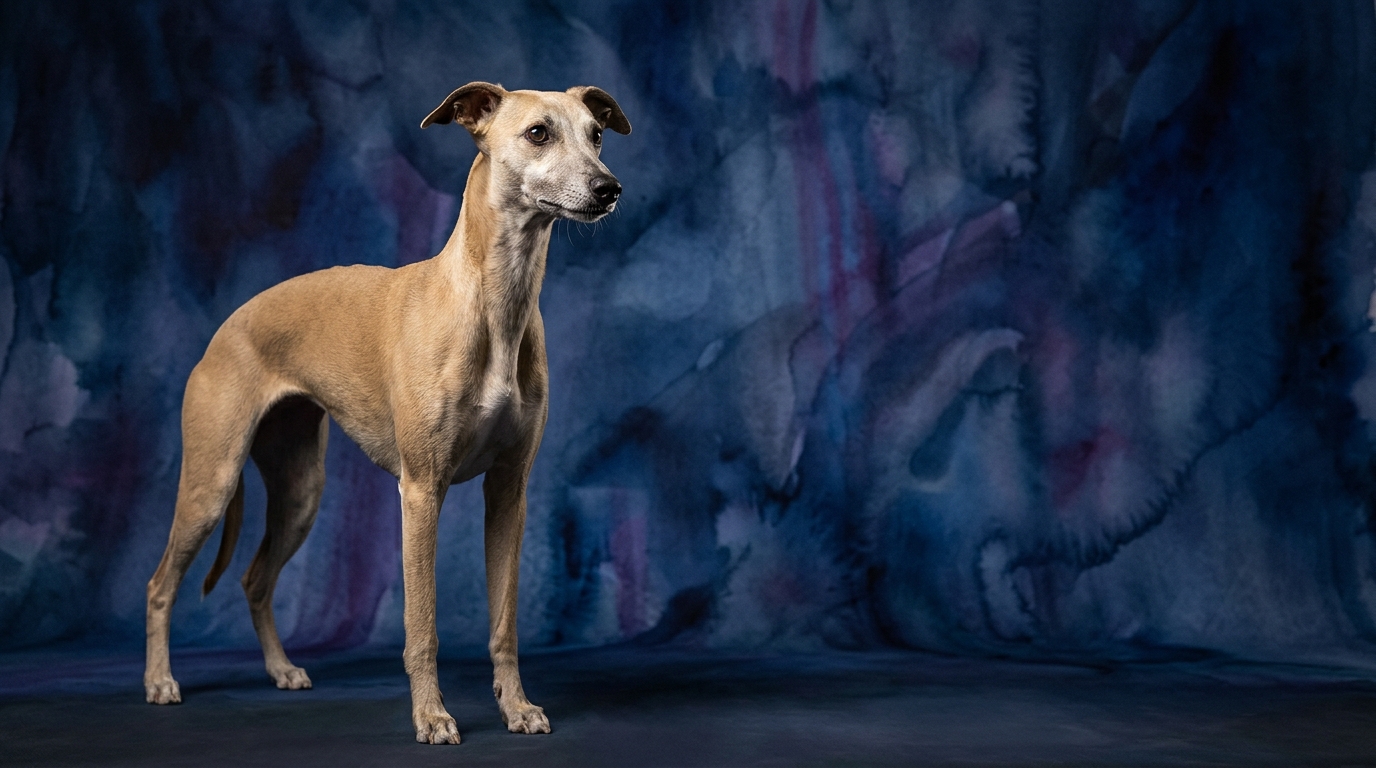

Side-by-Side Cognitive Profiles
Let's delve into the specific cognitive dimensions for both the Whippet and the Leonberger, as assessed by our Pet IQ Lab:
Whippet (Hound, Coren rank #51): Problem Solving (3/5): Adept at navigating their environment, particularly when pursuing a lure or finding paths in open spaces, but not typically driven by complex abstract puzzles. Training Speed (2/5): Can learn commands, but their independent hound nature often requires more repetitions or greater motivation for consistent compliance. Social Intelligence (4/5): Highly attuned to human emotions and social cues within their family unit, making them sensitive and empathetic companions. Instinctive Drive (5/5): Possess a profound prey drive and an inherent impulse to chase, a hallmark of their sighthound heritage, shaping much of their responsive behavior. Memory (3/5): Capable of retaining learned behaviors and routines, especially those associated with positive reinforcement and daily schedules. Their Coren rank of #51 places them in the 'Average Working/Obedience Intelligence' category, suggesting they grasp new commands in 25-40 repetitions and obey first commands 50% of the time or more.
Leonberger (Working, Not Coren-ranked): Problem Solving (3/5): Demonstrates practical intelligence in their environment, particularly in tasks related to protection or companionship, rather than abstract problem-solving scenarios. Training Speed (3/5): Generally responsive to training, learning new commands at a moderate pace, often motivated by praise and connection with their handler. Social Intelligence (3/5): Capable of forming strong bonds and reading family dynamics, though perhaps with less nuanced sensitivity than a Whippet, generally steady and agreeable. Instinctive Drive (3/5): Exhibits a moderate drive for guarding and companionship, without the intense prey drive of sighthounds, focusing more on protective and nurturing instincts. Memory (3/5): Possesses a solid memory for routines, commands, and the people they bond with, contributing to their reliability as a family guardian and companion. While not appearing on Stanley Coren's list, their IQ scores suggest a capable and trainable intellect, aligning with many working breeds excelling in specific roles.
Where the Whippet Cognitively Excels
The Whippet's cognitive strengths distinctly shine in areas demanding acute awareness of their surroundings and social sensitivity. Their Social Intelligence score of 4/5 highlights an exceptional ability to pick up on human moods and subtle cues, making them remarkably empathetic companions. This isn't just about affection; it's about a finely tuned perception of their owner's emotional state, often anticipating needs or reacting to distress with comforting presence. Furthermore, their Instinctive Drive, rated at a perfect 5/5, is a testament to their unparalleled focus when sighthound instincts are engaged. While this primarily manifests as an intense desire to chase, it also reflects a deep-seated cognitive mechanism for rapid processing of visual stimuli and immediate physical response. This quick, instinctive decision-making in pursuit scenarios is a distinct cognitive advantage, requiring swift assessment of trajectory, speed, and environmental obstacles. A Whippet’s brain is wired for instant, efficient action based on visual input, making them masters of their ancestral purpose, demonstrating a focused, specific form of cognitive excellence.
Where the Leonberger Cognitively Stands Out
The Leonberger, while not exhibiting the same specialized instinctive drive as the Whippet, demonstrates a broader, more balanced cognitive profile that excels in different contexts. Their Training Speed, rated at 3/5, is a notable advantage over the Whippet's 2/5, indicating greater aptitude for absorbing and consistently performing learned behaviors with fewer repetitions. This trainable nature stems from their working heritage, where cooperation and reliability were paramount. Furthermore, while their Problem Solving is rated equally at 3/5, the *nature* of their problem-solving often leans towards practical, real-world scenarios involving family or environment. They can assess situations and make sound decisions related to protective instincts, such as discerning between a friendly visitor and a perceived threat. Their balanced Instinctive Drive (3/5) allows for a more modulated response to stimuli, meaning they are less likely to be solely driven by a single intense instinct and can weigh various factors before acting. This cognitive flexibility and generalized aptitude for learning make them highly adaptable family members, capable of understanding and adhering to household rules with greater ease and consistency.
Training Aptitude: Whippet vs. Leonberger
When evaluating ease of training, the Leonberger clearly holds an advantage over the Whippet, primarily due to their differing scores in Training Speed and Instinctive Drive. The Leonberger's Training Speed of 3/5 signifies a dog generally more eager to please and receptive to consistent instruction, often learning new commands with moderate repetition and greater obedience on the first command. Their balanced Instinctive Drive (3/5) also contributes to trainability; while possessing natural protective instincts, these are typically manageable and shapeable through training. In contrast, the Whippet's Training Speed of 2/5 suggests they may require more patience and creative motivation. Their independent hound mindset means they might understand a command but choose not to execute it if something more interesting captures their attention. The Whippet's profound Instinctive Drive (5/5), particularly their prey drive, is a significant factor. This instinct can make off-leash reliability challenging, as a fleeting squirrel can override even well-learned commands. Training a Whippet often involves managing this inherent drive, whereas training a Leonberger focuses more on channeling their cooperative spirit. For an owner seeking a dog that readily absorbs and performs a wide repertoire of commands, the Leonberger presents an easier path. Whippets demand a trainer who appreciates their independent spirit and is prepared for the persistent lure of their sighthound instincts.
Matching Canine Cognition to Owner Lifestyles
Considering their cognitive profiles and inherent drives, the Whippet and Leonberger appeal to different owner lifestyles. The Whippet, with its explosive Instinctive Drive (5/5) and need for bursts of speed, is ideally suited for active owners who relish providing opportunities for their dog to run freely in secure areas. While they enjoy lounging indoors, their mental and physical well-being relies on regular outlets for their powerful chase instinct. An owner who understands and caters to this drive, through lure coursing or dedicated sprint sessions, will find a deeply satisfied companion. Their high Social Intelligence (4/5) means they thrive on close human interaction and can be sensitive to their owner's presence, making them excellent companions for shared quiet moments after exercise. Conversely, the Leonberger, with its more moderate Instinctive Drive (3/5) and balanced cognitive attributes, fits owners who appreciate a steady, reliable presence. While they require regular exercise, their activities are often more about long, steady walks or engaging in family-oriented tasks rather than intense, high-speed pursuits. Their balanced Problem Solving and Training Speed make them adaptable to various household routines and less prone to being overwhelmed by a single instinct. They suit owners who enjoy a calm, watchful companion, perhaps involved in therapy work or simply a majestic presence. An owner valuing a dog that is generally agreeable and less prone to intense singular instincts will find the Leonberger a harmonious match for a more relaxed, yet engaged, lifestyle.
The Verdict
If you seek a sensitive, visually driven companion who thrives on intense bursts of activity and close social bonds, and you are prepared to manage a strong prey drive, the Whippet is your match.
If you desire a steady, trainable, and protective presence that excels in cooperative learning and offers a balanced temperament for family life, the Leonberger will be an ideal fit.
🧠 Find Your Pet's IQ Score
Our Pet IQ Lab assessment covers 25+ tests across 5 cognitive dimensions — personalized to your breed.
Take the Full IQ Test →Frequently Asked Questions
Is a Whippet difficult to train due to its independent nature?
Whippets can present training challenges due to their independent hound spirit and powerful prey drive, scoring 2/5 for Training Speed. They often require consistent, positive reinforcement and understanding that their instincts may sometimes override learned commands, especially off-leash.
Do Leonbergers need a lot of mental stimulation despite their moderate intelligence scores?
While Leonbergers have balanced IQ scores, they benefit greatly from mental stimulation, especially as a working breed. Engaging them in obedience training, puzzle toys, or tasks that involve their protective instincts helps keep their minds sharp and prevents boredom.
How does a Whippet's high social intelligence manifest in daily life?
A Whippet's 4/5 social intelligence means they are highly attuned to their family's emotions and routines. They often anticipate needs, offer comfort during distress, and can be quite sensitive to household dynamics, making them deeply connected and intuitive companions.