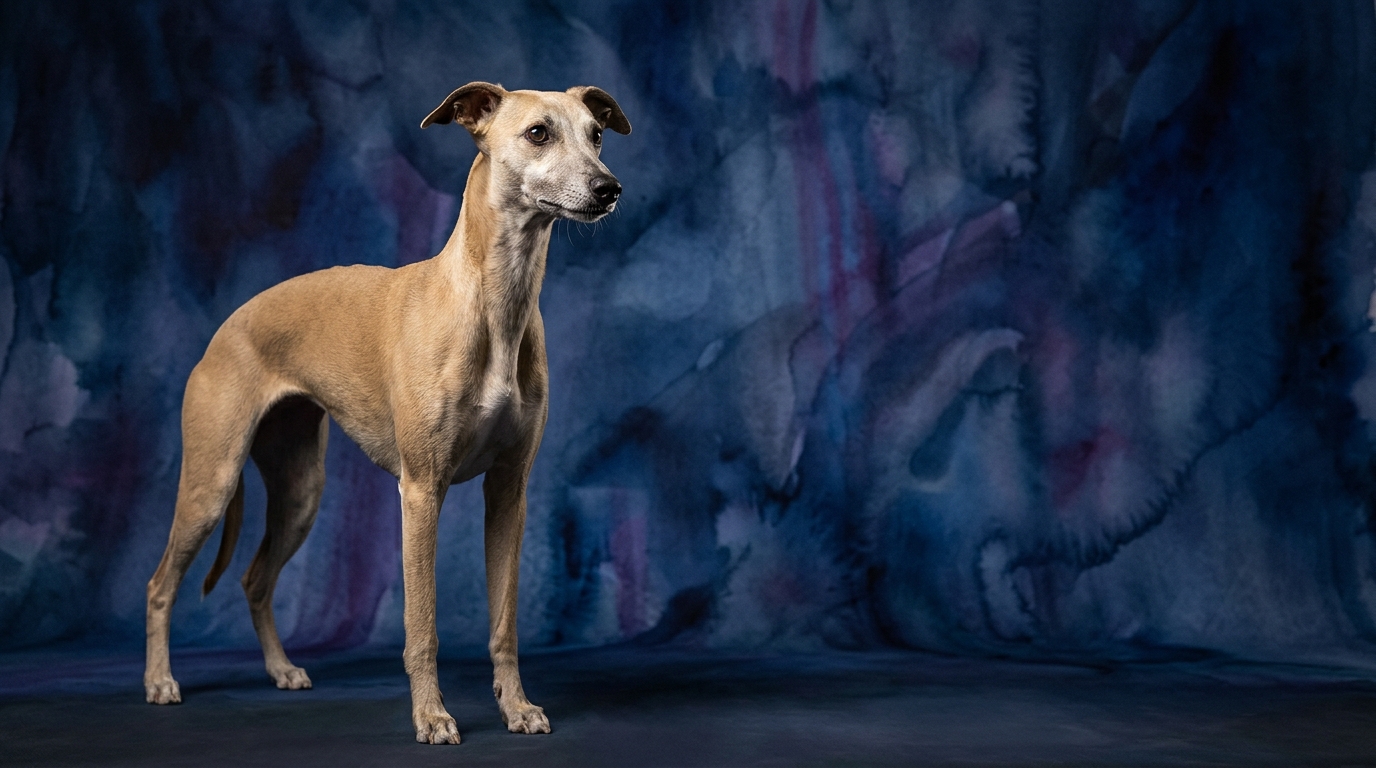

Side-by-Side IQ Profile: Whippet vs. Manchester Terrier
The Cosmic Pet Pet IQ Lab provides a nuanced framework for understanding canine cognition beyond simple obedience, evaluating breeds across five crucial dimensions. For the Whippet, ranked #51 by Coren, and the Manchester Terrier, we observe intriguing parallels and notable divergences.
The Whippet's cognitive blueprint outlines a breed with practical intelligence. Their Problem Solving score of 3/5 suggests they can navigate moderately complex environmental puzzles, such as figuring out how to retrieve a toy from under furniture or learning the layout of a new space efficiently. While they won't typically devise novel solutions to intricate challenges, they learn effectively from observed cause and effect. Their Training Speed, rated at 2/5, indicates that Whippets may require more repetitions and a highly consistent, positive reinforcement approach to solidify new commands. This isn't a lack of capacity, but rather a reflection of their independent sighthound nature, often leading them to weigh compliance against other, more enticing impulses. Where Whippets truly shine is in Social Intelligence, scoring an impressive 4/5. They are deeply attuned to human emotions and subtle social cues, often anticipating their owner's needs and responding with comforting presence. This makes them remarkably empathetic companions, fostering profound bonds. Their Instinctive Drive is exceptionally high at 5/5, primarily manifesting as an intense prey drive—an innate, powerful urge to chase and capture moving objects. This deeply ingrained instinct dictates much of their spontaneous behavior and requires careful management. Finally, their Memory at 3/5 is moderate, allowing them to retain learned routines, commands, and associations over time, contributing to their adaptability within a structured home.
The Manchester Terrier, while not within Coren's original ranking, offers a distinct cognitive profile according to our lab's assessment. Like the Whippet, their Problem Solving is rated 3/5, suggesting a functional intelligence for navigating their environment and achieving goals. This might involve figuring out how to open a slightly ajar door or persistently working to get to a perceived pest, showcasing a determined, goal-oriented approach. Their Training Speed of 3/5 indicates a more moderate pace of learning compared to the Whippet. Manchester Terriers generally pick up new commands and routines more efficiently, often enjoying the mental engagement of training sessions when properly motivated. Their Social Intelligence is rated 3/5, signifying that they form strong, loyal bonds with their primary caregivers and understand household dynamics, though they might be more reserved with strangers or less overtly expressive of empathy than a Whippet. Their Instinctive Drive is 3/5, reflecting a balanced but present urge for chasing, digging, and exploring, characteristic of their terrier heritage. This drive is manageable and can be channeled into appropriate activities. Their Memory also stands at 3/5, enabling them to recall commands, routines, and past experiences that inform their current behavior, supporting consistent performance in trained tasks.
Where the Whippet Wins Cognitively
The Whippet's superior Social Intelligence, scoring 4/5 compared to the Manchester Terrier's 3/5, is a significant cognitive advantage for companionship. Whippets are often described as canine empathics, possessing an uncanny ability to read and respond to human emotions and body language. This allows them to forge incredibly deep, intuitive bonds, often seeming to anticipate their owner's moods or needs. Their gentle nature and sensitivity to social cues make them exceptional emotional support animals, offering comfort and understanding without requiring complex verbal commands.
Furthermore, the Whippet's Instinctive Drive, rated 5/5, represents a highly specialized cognitive strength. While this powerful prey drive can be challenging to manage, it signifies an unparalleled focus and efficiency in detecting, assessing, and pursuing moving targets. This isn't merely physical speed; it's a cognitive specialization for rapid visual processing and decision-making under high-stimulus conditions. For owners who engage in activities like lure coursing, this intense, singular instinctive intelligence is precisely what allows the Whippet to excel, demonstrating a peak performance in their ancestral role.
Where the Manchester Terrier Wins Cognitively
The Manchester Terrier demonstrates a clear cognitive edge in Training Speed, scoring 3/5 compared to the Whippet's 2/5. This moderate pace means they generally grasp new commands and routines more quickly, often displaying a genuine eagerness to engage in structured learning. Their terrier desire to interact and their practical problem-solving skills mean that initial training sessions can be more efficient and require fewer repetitions, fostering a sense of accomplishment for both dog and handler.
While both breeds share a Problem Solving score of 3/5, the Manchester Terrier's terrier heritage often translates this into a tenacious, goal-oriented approach to overcoming physical obstacles. They might apply their wit to strategically manipulate objects or persistently dig to achieve a desired outcome, showcasing a determined will that complements their problem-solving abilities. This practical application of their cognitive skills, combined with their more balanced Instinctive Drive (3/5), provides a versatile cognitive profile that is often easier to integrate into diverse household activities without the constant management required by a sighthound's extreme chase impulse. Their drive is present but generally more adaptable and redirectable.
Which is Easier to Train and Why?
When it comes to ease of training for foundational obedience, the Manchester Terrier generally presents a more straightforward experience. Their Training Speed of 3/5 means they tend to pick up new commands with reasonable efficiency, often enjoying the process of learning and performing tasks for their handler. Their moderate instinctive drive and willingness to engage make them responsive to structured lessons, particularly when positive reinforcement is consistently applied. While their terrier tenacity can sometimes translate into a stubborn streak, a clear, consistent approach usually yields good results.
Whippets, with their Training Speed of 2/5, demand more patience and consistency from their trainers. Their independent sighthound nature means they often need to be convinced that complying with a command is more rewarding than following their own impulses, especially if a visual stimulus triggers their powerful 5/5 instinctive drive. While highly socially intelligent, their focus can be fleeting during training if a more interesting external event occurs. This isn't a deficit in their intelligence, but rather a difference in their motivational priorities and attention span during formal training, necessitating creative and highly reinforcing methods to keep them engaged and cooperative.
Which Suits Active Owners vs. Relaxed Owners?
For owners seeking an active, mentally stimulating companion, the Manchester Terrier is often a more fitting choice. Their balanced instinctive drive (3/5), moderate training speed (3/5), and practical problem-solving skills (3/5) make them excellent candidates for a wide range of activities such as agility, obedience, or even scent work. They thrive on having a purpose and enjoy mental challenges that engage their terrier wit and tenacious spirit. Owners who enjoy consistent engagement, structured training, and provide regular, varied physical and mental exercise will find a Manchester Terrier a rewarding partner.
Conversely, Whippets are often ideal for more relaxed owners who appreciate deep companionship interspersed with specific bursts of intense activity. Despite their incredible speed, Whippets are famously known as '45-mph couch potatoes.' While their 5/5 instinctive drive necessitates safe opportunities to run at full speed, once that primal urge is satisfied, their high social intelligence (4/5) leads them to be incredibly content lounging quietly with their family. They don't typically demand constant mental puzzles or intricate training sessions, making them perfect for owners who desire a quiet, affectionate presence for most of the day, but can provide dedicated, high-energy exercise in secure environments like a fenced yard or lure coursing field.
The Verdict
Choose a Whippet if you seek a deeply empathetic, quiet companion who thrives on intense bursts of speed followed by extensive lounging, and whose social intelligence makes them incredibly attuned to family life.
Opt for a Manchester Terrier if you enjoy a more interactive training experience, value a dog with a versatile and manageable drive for various activities, and seek a tenacious, engaging companion eager for mental and physical challenges.
🧠 Find Your Pet's IQ Score
Our Pet IQ Lab assessment covers 25+ tests across 5 cognitive dimensions — personalized to your breed.
Take the Full IQ Test →Frequently Asked Questions
Are Whippets good apartment dogs despite their speed?
Yes, Whippets can be excellent apartment dwellers. While they need opportunities for fast, safe running, their high social intelligence means they are usually calm and content indoors, often preferring to lounge near their owners once their exercise needs are met.
Do Manchester Terriers get along with other pets?
Manchester Terriers can coexist with other pets, especially if raised together. However, their moderate instinctive drive, particularly their prey drive, means careful introductions and supervision are crucial, especially with smaller animals like cats or rodents.
How do their problem-solving skills manifest differently?
While both score 3/5, a Whippet's problem-solving might lean towards navigating open spaces or anticipating movement, whereas a Manchester Terrier often applies its problem-solving to more physical manipulation, like figuring out how to get to a perceived pest or digging under an obstacle.