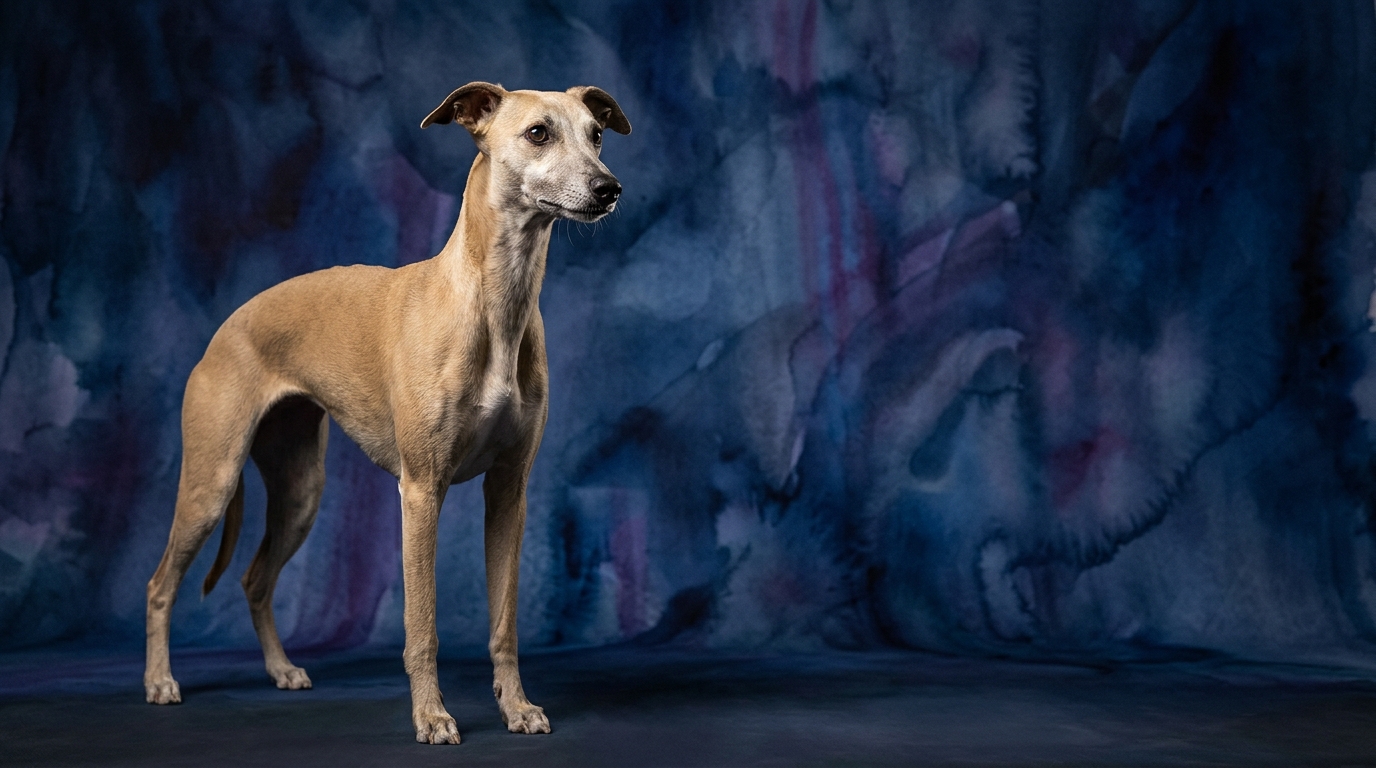
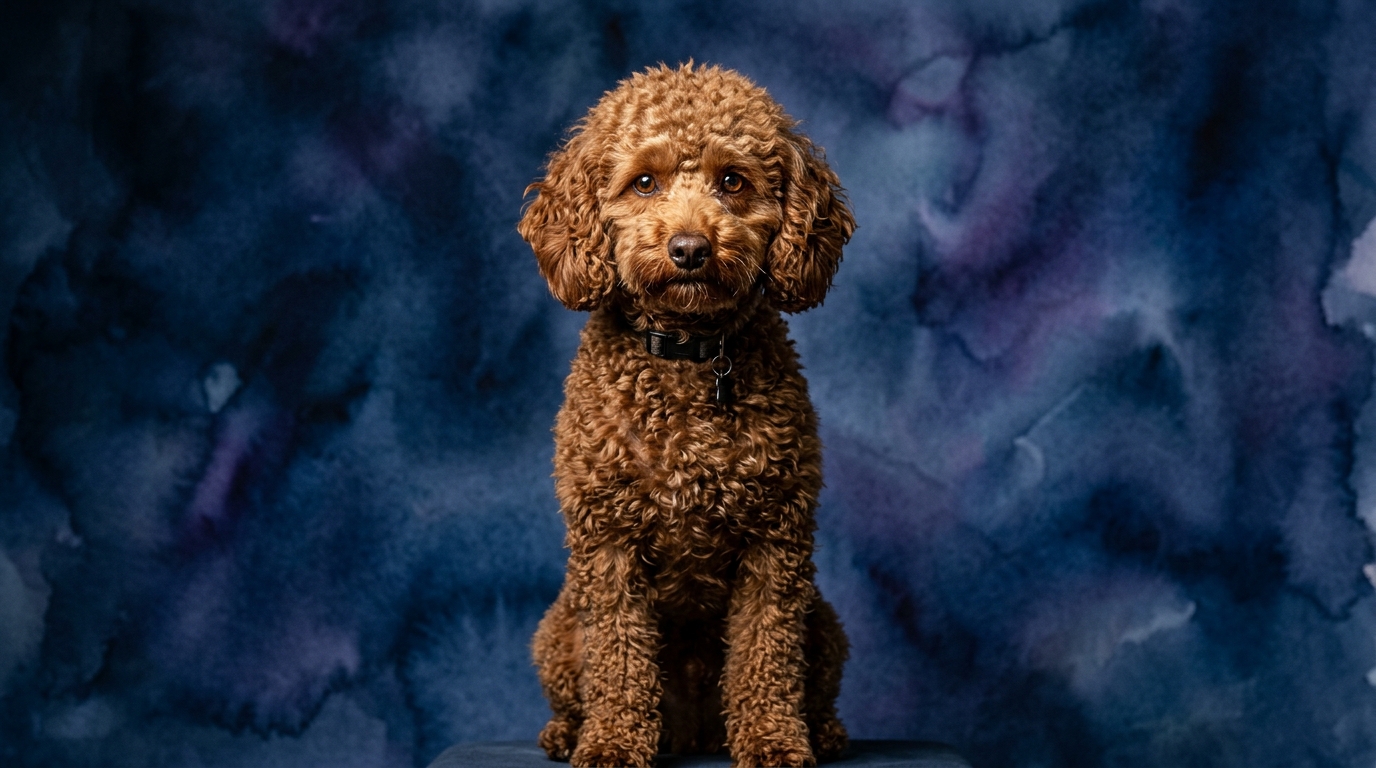
Side-by-Side IQ Profile: Whippet vs. Miniature Poodle
**Whippet (Hound, Coren Rank #51)**: Whippets display a practical, rather than analytical, approach to challenges. Their cognitive efforts often center on navigating their environment efficiently for comfort or instinctively reacting to movement. They are capable of learning routines and adapting to minor changes but are not typically driven by complex, multi-step puzzles, earning a Problem Solving score of 3/5. Their independent nature contributes to a Training Speed of 2/5; while they grasp concepts, their motivation to comply with repetitive commands can be moderate, requiring patience and creative motivation. Whippets possess a refined Social Intelligence of 4/5, often described as empathetic, highly attuned to human moods and subtle cues, offering quiet companionship. As sighthounds, their Instinctive Drive is paramount at 5/5, manifesting as an exceptionally strong prey drive and an inherent need to chase, with cognition finely tuned for spotting movement and executing high-speed pursuits. Their Memory is functional at 3/5, reliable for routines and familiar people, but typically doesn't extend to retaining complex sequences of unrelated tasks over long periods.
**Miniature Poodle (Non-Sporting, Coren Rank #2)**: Miniature Poodles exhibit exceptional Problem Solving capabilities at 5/5. They are highly analytical, quickly grasping cause-and-effect, and adept at devising novel solutions to obstacles, allowing them to process information rapidly and apply learned concepts to new scenarios. Their eagerness to engage and high cognitive capacity result in a remarkably fast Training Speed of 5/5, picking up new commands and behaviors with minimal repetition. While affectionate and companionable, their Social Intelligence of 3/5 is more focused on direct interaction and pleasing their owners rather than the subtle, empathetic attunement seen in some breeds, enjoying being the center of attention. Miniature Poodles possess a moderate Instinctive Drive of 3/5, often expressed as a desire to retrieve or engage in play; it is generally manageable and highly redirectable towards training or structured activities. They boast an outstanding Memory of 5/5, capable of retaining vast repertoires of commands, tricks, and complex sequences of tasks over extended periods, significantly contributing to their high trainability.
Where the Whippet Wins Cognitively
The Whippet's cognitive strengths truly shine in areas where intuition and refined social perception are paramount. Their Social Intelligence score of 4/5 isn’t just about being friendly; it speaks to a profound capacity for empathy and a subtle understanding of human emotion. They often act as quiet barometers of household moods, offering comfort or space as needed, without overt demands. This makes them exceptional companions for individuals who appreciate a dog's intuitive presence and gentle affection.
Furthermore, their Instinctive Drive, rated at a perfect 5/5, represents a highly specialized form of intelligence. This isn't brute force; it's a finely tuned cognitive system dedicated to observation, rapid decision-making, and unparalleled physical execution in pursuit. A Whippet's brain is wired for efficiency in detecting the slightest movement, calculating trajectories, and deploying bursts of speed with precision. This makes them masters of their natural sighthound craft, demonstrating a focused, specialized cognitive prowess unmatched by many breeds. Their 'problem-solving' in this context is immediate, instinctive, and incredibly effective.
Where the Miniature Poodle Wins Cognitively
The Miniature Poodle's cognitive superiority is evident across multiple dimensions, particularly in abstract learning and complex task mastery. With a Problem Solving score of 5/5, they approach novel situations with an analytical mind, quickly understanding patterns and devising strategic solutions. This allows them to excel in puzzle toys, navigate complex environments, or even figure out how to open tricky latches.
Their Training Speed (5/5) and Memory (5/5) are interconnected strengths, making them incredibly receptive students. A Miniature Poodle can learn new commands and multi-step routines with remarkable speed, retaining that information long-term. This combination means they not only grasp concepts quickly but can also build upon their knowledge base extensively, allowing for advanced obedience, intricate trick training, and success in demanding dog sports like agility or rally. Their cognition is geared towards processing, retaining, and applying information in a highly structured and adaptable manner.
Which Is Easier to Train and Why
When evaluating ease of training, the Miniature Poodle clearly holds an advantage, largely due to its exceptional Training Speed (5/5), Problem Solving (5/5), and Memory (5/5). They possess an intrinsic desire to engage with and please their human companions, coupled with a remarkable capacity for understanding and retaining complex instructions. This means a Miniature Poodle often learns new commands in just a few repetitions, thrives on positive reinforcement, and actively participates in training sessions, making the process highly rewarding and efficient for owners. Their lower Instinctive Drive (3/5) also means fewer distractions from external stimuli, allowing them to focus more intently on the task at hand.
The Whippet, while capable of learning, presents a different training profile due to its lower Training Speed (2/5), moderate Memory (3/5), and powerful Instinctive Drive (5/5). Their independent sighthound nature means they are less inherently driven to comply with human directives if their own comfort or the allure of a chase takes precedence. Training a Whippet requires significant patience, creative motivation (often food or chase-based rewards), and a deep understanding of their independent spirit. Their strong prey drive means off-leash reliability can be a lifelong endeavor, requiring careful management and consistent reinforcement to counter their natural inclination to pursue moving objects.
Which Suits Active vs. Relaxed Owners
Choosing between a Whippet and a Miniature Poodle based on lifestyle depends on the *type* of activity and relaxation an owner seeks. Whippets, despite their reputation for speed, are often described as '45 mph couch potatoes.' They require intense bursts of physical activity—ideally a secure, open space for sprinting—for about 30-60 minutes a day. Once their energy is expended, they are exceptionally calm, quiet, and content to lounge indoors for extended periods, making them suitable for owners who enjoy short, vigorous outdoor excursions followed by long stretches of relaxed, low-key companionship at home. Their independent nature also means they are not constantly demanding attention, suiting owners who appreciate a dog's quiet presence.
Miniature Poodles, by contrast, often suit owners who are active in a different sense: those seeking a mentally engaged companion for structured activities. While they also enjoy physical exercise, their powerful cognitive abilities mean they thrive on regular mental stimulation through training, puzzle toys, and dog sports like agility, obedience, or rally. They are adaptable to various living situations but become bored and potentially destructive without consistent mental engagement. Therefore, they are ideal for owners who enjoy an interactive partnership, are committed to ongoing training, and prefer a dog that is always ready for the next learning challenge, even if it means a less 'relaxed' daily routine in terms of mental input.
The Verdict
Opt for a Whippet if you value a quiet, empathetic companion that offers deep, intuitive connection, thrives on short bursts of high-speed activity, and then settles into a remarkably calm, independent presence indoors.
Select a Miniature Poodle if you desire a highly trainable, intellectually engaging partner for complex learning, dog sports, and an interactive lifestyle that prioritizes mental stimulation and responsive obedience.
🧠 Find Your Pet's IQ Score
Our Pet IQ Lab assessment covers 25+ tests across 5 cognitive dimensions — personalized to your breed.
Take the Full IQ Test →Frequently Asked Questions
Are Whippets difficult to train due to their independent nature?
Whippets are not 'difficult' but require a different approach. Their independent spirit and strong prey drive mean training demands patience, high-value rewards, and a deep understanding of their sighthound instincts, focusing on motivation rather than strict compliance.
Do Miniature Poodles need constant grooming because of their coat?
Yes, Miniature Poodles require regular grooming, typically every 4-6 weeks, to prevent matting and maintain coat health. While their non-shedding coat is a plus for allergy sufferers, it necessitates consistent brushing and professional trims.
Which breed is better with children?
Both can be wonderful with children, but their approaches differ. Whippets are often gentle and patient, though their quiet nature means they may retreat from boisterous play. Miniature Poodles are generally more outgoing and playful, enjoying interactive games, but require proper socialization to ensure positive interactions.