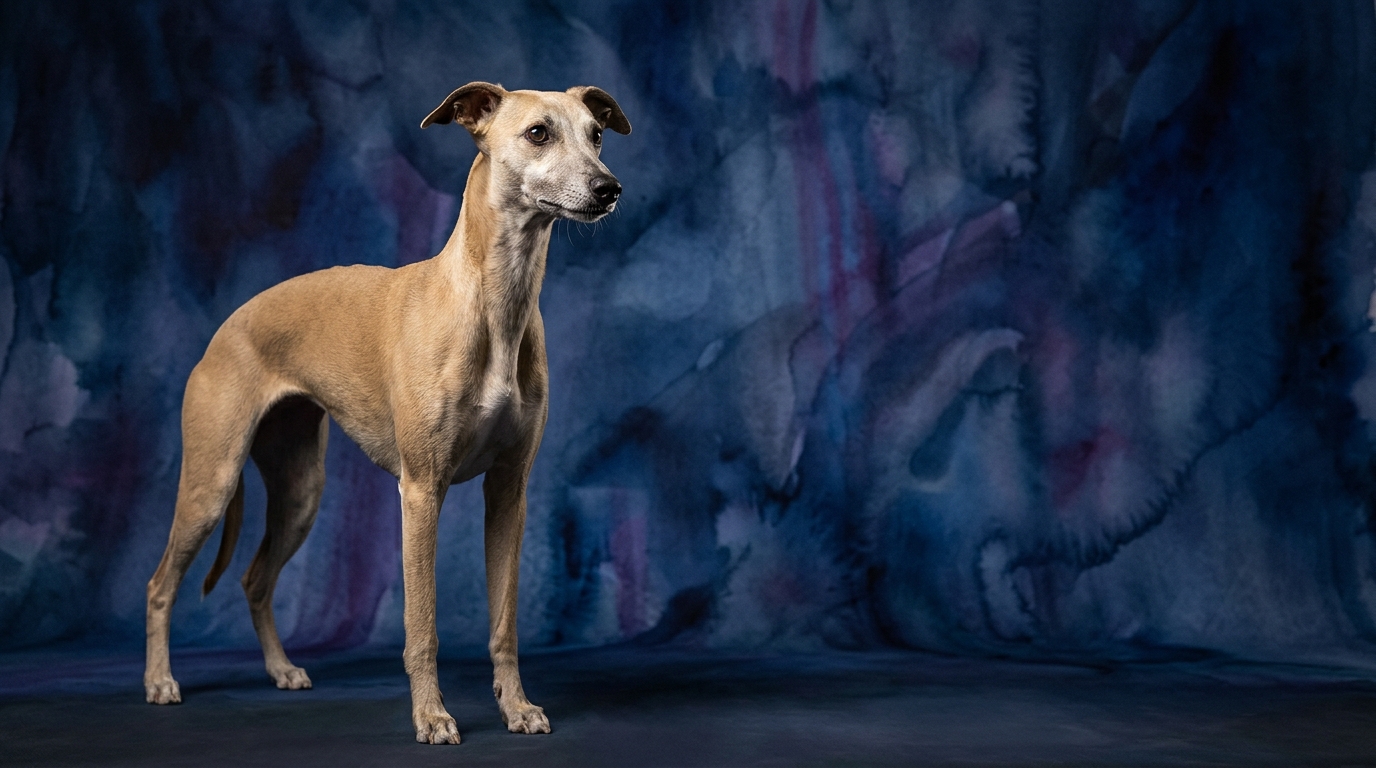

Side-by-Side Cognitive Profiles: Whippet vs. Old English Sheepdog
The Cosmic Pet Pet IQ Lab employs five dimensions to illuminate canine cognition, revealing distinct profiles for the Whippet and Old English Sheepdog. The Whippet, a sighthound ranked #51 by Coren, demonstrates a Problem Solving score of 3/5, indicating a moderate capacity for novel situations, often leaning on instinct. Its Training Speed is 2/5, reflecting a need for more repetition due to its independent nature. However, its Social Intelligence excels at 4/5, showcasing a keen ability to interpret human emotions and cues, making it a perceptive companion. The Whippet's Instinctive Drive is a powerful 5/5, dominated by an intense urge to chase, central to its breed identity. Memory for a Whippet stands at 3/5, suggesting moderate recall of experiences and learned behaviors.
Conversely, the Old English Sheepdog (OES), a herding breed with a Coren rank of #44, shares a Problem Solving score of 3/5, applied to spatial or resource management tasks. Its Training Speed is 3/5, indicating a moderate pace for learning commands and a willingness for cooperative engagement. Social Intelligence for the OES is 3/5, portraying an amiable dog capable of reading signals, though perhaps less acutely than a Whippet. The OES's Instinctive Drive is 3/5, manifesting as a moderate herding impulse focused on gathering. A significant strength is its Memory, scoring 4/5, which denotes a strong capacity to retain complex routines and learned sequences, invaluable for its historical working role.
Where the Whippet's Cognition Excels
The Whippet's cognitive advantages are deeply rooted in its sighthound design, optimizing it for pursuit and intuitive companionship. Its superior Social Intelligence (4/5 vs OES's 3/5) makes it remarkably attuned to human emotional states and subtle body language, often anticipating owner moods without explicit cues. This translates into a perceptive observer of domestic dynamics. Furthermore, the Whippet's unparalleled Instinctive Drive (5/5) represents a specialized cognitive strength: an incredible visual processing speed and an innate understanding of movement dynamics. A Whippet’s brain is wired to instantly detect, analyze, and react to motion with lightning speed, a unique form of intelligence few other breeds possess to this degree, crucial for its original hunting purpose.
Where the Old English Sheepdog's Cognition Shines
The Old English Sheepdog’s cognitive profile is perfectly suited for herding's demands, emphasizing retention and cooperative problem-solving. A prime strength is its Memory, scoring an impressive 4/5 compared to the Whippet’s 3/5. This enhanced recall allows the OES to retain intricate command sequences, remember property layouts, and maintain consistent routines, invaluable for managing livestock across varied terrains. Complementing this is its higher Training Speed of 3/5 (versus the Whippet’s 2/5), indicating a greater aptitude for learning new tasks readily and a stronger inclination towards cooperative engagement. The OES's slightly higher Coren rank (#44) further supports a general working intelligence that is more amenable to structured training than the Whippet’s independent nature.
Trainability: Whippet vs. Old English Sheepdog
In terms of trainability, the Old English Sheepdog generally offers a smoother experience for most owners, largely due to its superior Training Speed (3/5) and Memory (4/5). OES are more inclined towards cooperative learning, consistently picking up and retaining new commands. Their herding instinct can often be channeled into structured activities like obedience or agility, as they thrive on having a purpose and respond well to positive reinforcement, eager to please.
Conversely, the Whippet presents a more significant training challenge, primarily due to its lower Training Speed (2/5) and exceptionally high Instinctive Drive (5/5). Their sighthound independence means they require more repetition, and their innate desire to chase can easily override even a well-practiced recall cue if a fast-moving object appears. This intense prey drive is a fundamental behavioral difference; a Whippet's brain is designed to prioritize reaction to movement, making off-leash reliability in unsecured areas a constant concern. Effective Whippet training requires profound patience, understanding their motivations, and leveraging high-value rewards to compete with their natural urges, often focusing on management over absolute obedience.
Lifestyle Match: Active vs. Relaxed Owners
The distinct cognitive profiles of these breeds significantly influence their suitability for different owner lifestyles. Whippets, despite being calm indoors, demand owners who understand their unique exercise requirements. Their intense Instinctive Drive (5/5) necessitates regular opportunities for explosive sprints in a secure, enclosed space to safely unleash their speed. While incredibly quiet indoors, their cognitive satisfaction stems from these short, intense bursts of physical and mental release. Owners who value a quiet, perceptive companion for most of the day but can commit to providing specific outlets for sighthound energy will find a Whippet ideal. Their high Social Intelligence (4/5) also means they thrive on close emotional connection.
The Old English Sheepdog, with its moderate Instinctive Drive (3/5) and strong Memory (4/5), suits owners preferring consistent, moderate activity and mental stimulation. They are built for endurance and purpose-driven work, rather than explosive speed. Daily long walks, structured play, or participation in dog sports like herding or agility effectively satisfy their cognitive and physical needs. Their higher Training Speed (3/5) and memory make them receptive to learning new tasks, providing fulfilling engagement. An OES thrives on routine and having a "job," making them perfect for owners who integrate their dog into daily activities and provide consistent mental challenges to prevent boredom.
The Verdict
For those seeking a deeply perceptive, gentle indoor companion that requires intense, short bursts of running in a secure area, and owners prepared for the unique training approach necessitated by a profound chase instinct, the Whippet is an exceptional choice.
Conversely, if you desire a diligent, cooperative, and consistently trainable dog with excellent memory, thriving on structured activities and moderate daily engagement integrated into family routines, the Old English Sheepdog will likely be your ideal match.
🧠 Find Your Pet's IQ Score
Our Pet IQ Lab assessment covers 25+ tests across 5 cognitive dimensions — personalized to your breed.
Take the Full IQ Test →Frequently Asked Questions
Are Whippets good with children?
Whippets, with their high Social Intelligence (4/5) and gentle nature, can be excellent with respectful children. However, their sensitive disposition means they generally prefer quieter interactions, and sudden loud noises or boisterous play can startle them.
Do Old English Sheepdogs require a lot of grooming?
Yes, Old English Sheepdogs possess a dense, profuse double coat that demands significant and regular grooming. Daily brushing is frequently necessary to prevent matting and effectively manage shedding, ensuring their coat remains healthy and comfortable.
Which breed is more independent in decision-making?
Whippets tend to exhibit more independence, a characteristic of their sighthound heritage, often making their own decisions when presented with compelling visual stimuli, like a running animal. Old English Sheepdogs are generally more inclined towards cooperative engagement and seeking human direction.