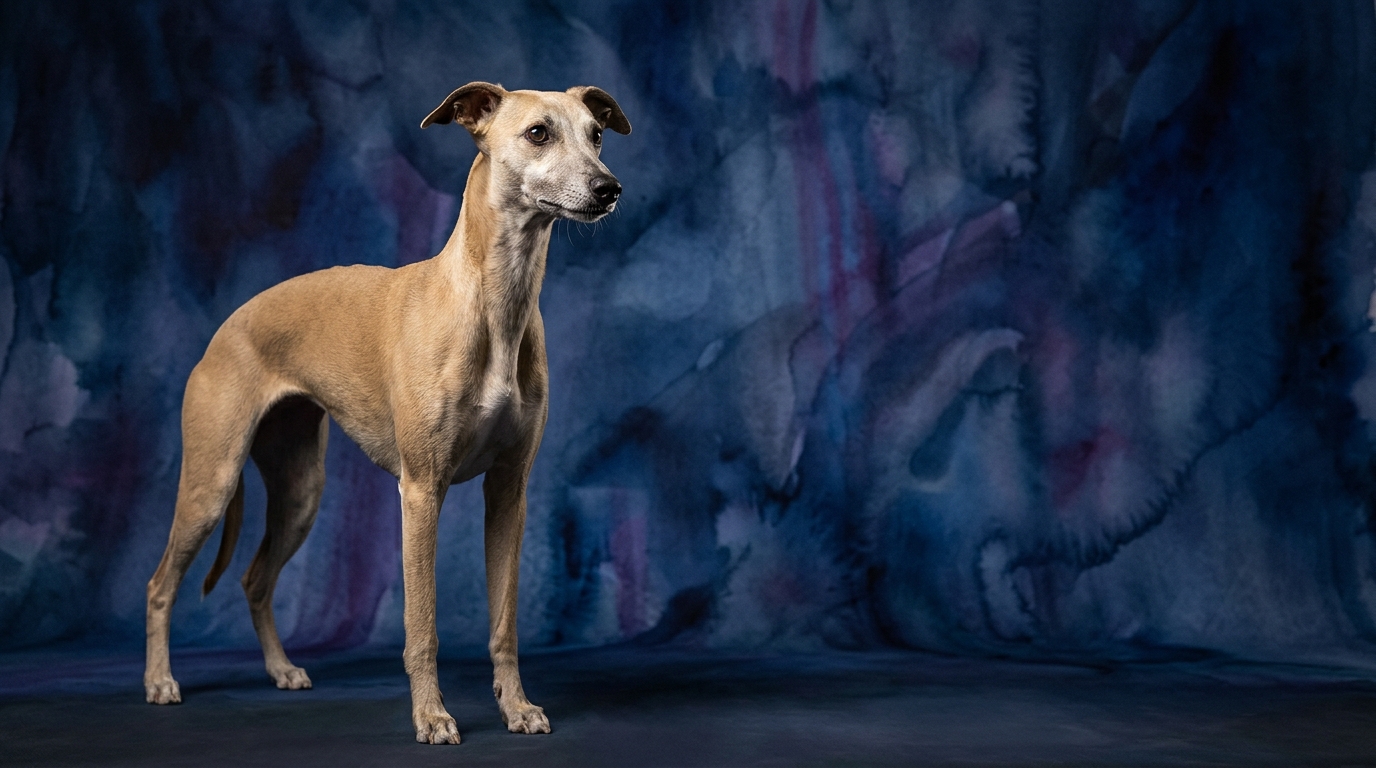
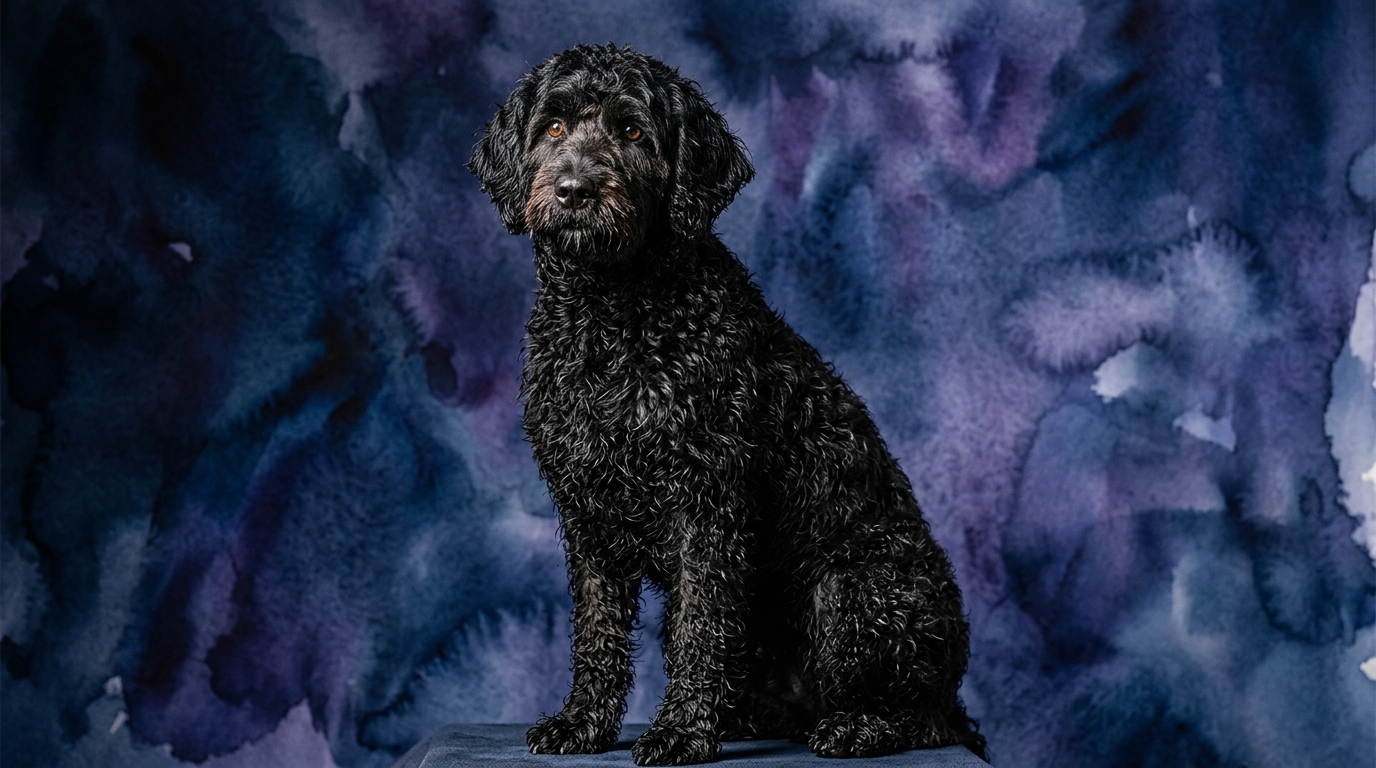
Side-by-Side Cognitive Profiles: Whippet vs. Portuguese Water Dog
The Whippet, a sighthound ranked #51 by Stanley Coren, presents a specialized cognitive makeup. Its Problem Solving score of 3/5 indicates a capacity for navigating practical challenges, often related to their environment or comfort, though not necessarily complex puzzles. Training Speed at 2/5 suggests a need for patience and motivational creativity, as their independent nature can make rote obedience less appealing. Social Intelligence, a standout at 4/5, reflects a keen ability to read human emotions and body language, fostering deep, sensitive bonds. Instinctive Drive is exceptionally high at 5/5, driven by their sighthound heritage, manifesting as an intense focus on chase and movement. Memory, rated 3/5, allows them to retain routines and associations, but perhaps not intricate sequences over long periods.
The Portuguese Water Dog, a member of the Working group and not Coren-ranked, yet clearly a capable working breed, exhibits a more balanced cognitive profile. Its Problem Solving score of 3/5 suggests an aptitude for practical solutions, especially in varied environments or when tasks require adaptability. Training Speed at 3/5 indicates a good willingness to learn and respond to instruction, thriving on engagement and purpose. Social Intelligence, at 3/5, points to a balanced capacity for interaction, forming strong connections while maintaining a degree of self-reliance. Instinctive Drive, also 3/5, is moderate, providing motivation for tasks without overwhelming a desire for independent pursuit. Memory, rated 3/5, supports their ability to recall commands and task sequences essential for their working roles.
Where the Whippet's Cognition Excels
The Whippet's cognitive strengths shine particularly in two areas: social intelligence and instinctive drive. Their 4/5 Social Intelligence score means they possess an exceptional capacity for understanding and responding to subtle human cues. This isn't just about reading emotions; it's about anticipating intentions, recognizing routines, and forming a profound, almost telepathic bond with their chosen people. This heightened social awareness allows them to navigate complex household dynamics with grace and sensitivity, making them remarkably attuned companions.
Furthermore, their 5/5 Instinctive Drive is a triumph of specialized cognition. While often perceived as simply 'prey drive,' it represents an advanced sensory processing system honed for visual detection, rapid assessment of movement, and explosive, coordinated pursuit. This cognitive specialization allows them to excel in activities requiring intense focus on a moving target, demonstrating incredible efficiency in their natural sighthound behaviors. It's a testament to their evolutionary programming for speed and precision, a unique form of intelligence in action.
Where the Portuguese Water Dog's Cognition Shines
The Portuguese Water Dog demonstrates distinct cognitive advantages, particularly in its Training Speed (3/5) and its well-rounded, adaptable profile. Their 3/5 Training Speed score, higher than the Whippet's, reflects a strong eagerness to engage in structured learning and a responsive nature to instruction. This breed thrives on having a purpose and consistently demonstrates a desire to cooperate, making them particularly adept at grasping new commands and complex tasks efficiently. Their focus and biddability are key cognitive assets for owners interested in canine sports or service work.
Beyond specific scores, the PWD's consistent 3/5 across Problem Solving, Social Intelligence, Instinctive Drive, and Memory suggests a highly balanced and versatile cognitive framework. This adaptability allows them to excel in a wider array of environments and activities, from intricate obedience routines to retrieving objects from water, showcasing robust practical intelligence. They are cognitively built for versatility, capable of applying their moderate drives and problem-solving skills to diverse challenges, a hallmark of a truly functional working companion.
Trainability: Which Breed Offers an Easier Path?
When evaluating ease of training, the Portuguese Water Dog generally presents a more straightforward path for most owners due to its 3/5 Training Speed and inherent working dog mentality. PWDs typically possess a strong 'will to please' and thrive on mental engagement, often viewing training as a collaborative activity. Their moderate instinctive drive means they are less likely to be completely derailed by environmental distractions when focused on a task, making them more receptive to consistent command-based learning. They learn quickly and retain information well, often enjoying the process of mastering new skills.
The Whippet, with a Training Speed of 2/5, presents a different training dynamic. While not incapable of learning, their independent spirit and exceptionally high instinctive drive mean they often require more creative motivation and patience. A Whippet might understand a command perfectly but choose not to execute it if something more interesting (like a distant squirrel) captures their attention. Their training often involves channeling their chase drive into appropriate outlets and understanding their sensitive nature, which responds poorly to harsh methods. Success with a Whippet often hinges on building a strong bond and making training feel like a game rather than a chore, respecting their selective biddability.
Matching Breeds to Owner Lifestyles: Active vs. Relaxed
The choice between a Whippet and a Portuguese Water Dog largely depends on an owner's lifestyle and their definition of 'activity.' Whippets are ideal for what one might call 'burst active' owners. They require intense, short periods of vigorous exercise—think a full-speed sprint in a securely fenced area or a quick lure coursing session—followed by extended periods of quiet relaxation. Their high energy is concentrated, not sustained, making them perfect companions for owners who enjoy short, exhilarating outings but appreciate a calm, often couch-potato presence indoors. Their sensitive nature also means they thrive in predictable, serene home environments.
Conversely, the Portuguese Water Dog is better suited for consistently 'engaged active' owners. With their balanced instinctive drive and desire for purpose, PWDs need regular, varied mental and physical stimulation that goes beyond simple walks. They excel in activities like swimming, retrieving, agility, or obedience, requiring owners who are committed to daily training sessions, outdoor adventures, and providing a 'job' for their dog. A relaxed owner who cannot dedicate significant time to interactive play and structured activities will likely find a PWD's needs challenging, as their intelligence and energy demand productive outlets.
The Verdict
Choose a Whippet if you seek a sensitive, independent companion who thrives on intense bursts of activity followed by serene indoor relaxation and values a profound, quiet bond.
Opt for a Portuguese Water Dog if you desire an engaged, versatile partner for consistent, varied activities, especially those involving water or complex task-oriented play, and appreciate a biddable spirit.
🧠 Find Your Pet's IQ Score
Our Pet IQ Lab assessment covers 25+ tests across 5 cognitive dimensions — personalized to your breed.
Take the Full IQ Test →Frequently Asked Questions
Is a Whippet a good family dog?
Yes, Whippets can be excellent family dogs due to their high social intelligence and gentle nature, often forming deep bonds with all family members. They are typically calm indoors and enjoy quiet companionship, making them suitable for respectful children.
Do Portuguese Water Dogs need a lot of grooming?
Portuguese Water Dogs have a single coat that does not shed but requires regular grooming to prevent matting, typically brushing several times a week and professional clipping every 6-8 weeks. Their coat is hypoallergenic, making them suitable for some allergy sufferers.
Can Whippets live in apartments?
Whippets are well-suited for apartment living provided they receive their necessary daily bursts of exercise in a secure outdoor space. Their calm, quiet demeanor indoors and relatively small size make them adaptable to smaller living spaces, often preferring to nap on soft surfaces.