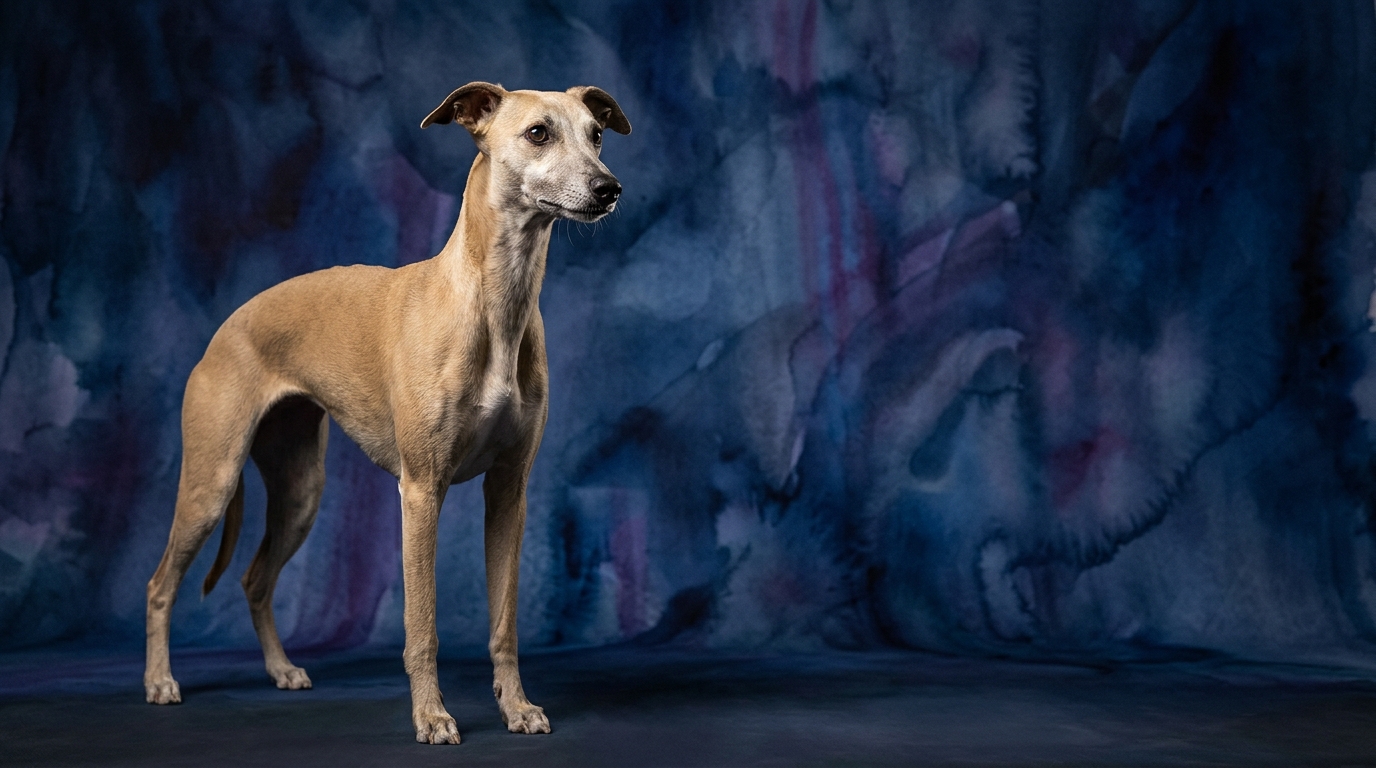

Side-by-Side Cognitive Profiles: Whippet vs. Rhodesian Ridgeback
Delving into The Cosmic Pet Pet IQ Lab's data provides a nuanced understanding of these two distinct hound breeds. While both fall within the 'average working/obedience intelligence' category according to Coren's rankings (Whippet at #51, Rhodesian Ridgeback at #52), their specific cognitive dimensions paint a richer picture.
The Whippet's IQ profile reveals: Problem Solving 3/5, indicating an ability to navigate moderately complex challenges, often motivated by comfort or immediate needs. Training Speed 2/5, suggesting they may require more patience and repetition during instruction. Social Intelligence 4/5, a clear strength in reading human cues and adapting to social dynamics. Instinctive Drive 5/5, highlighting an intense, almost singular focus on chasing. Memory 3/5, signifying a reliable recall for routines and experiences.
In contrast, the Rhodesian Ridgeback's IQ profile shows: Problem Solving 3/5, demonstrating practical intelligence, often with a more independent and assertive bent. Training Speed 3/5, indicating a slightly quicker grasp of new commands than the Whippet. Social Intelligence 3/5, meaning they understand social cues but can be more reserved or discerning. Instinctive Drive 3/5, a multifaceted drive encompassing tracking, guarding, and moderate prey instinct. Memory 3/5, consistent recall for training and familiar environments.
Where the Whippet Truly Shines Cognitively
Whippets truly shine in their social intelligence, scoring a notable 4/5 compared to the Rhodesian Ridgeback's 3/5. This translates into an exceptional ability to read human emotional states and subtle cues. A Whippet often knows instinctively when their owner needs quiet companionship or a comforting presence, adapting their behavior with remarkable empathy. They integrate seamlessly into a family's social fabric, demonstrating a refined understanding of household dynamics and often seeking to maintain harmony. This keen awareness of their environment and social context allows them to be incredibly adaptable and sensitive companions, making them masters of subtle communication within a household.
Furthermore, their problem-solving, though rated 3/5, is often elegantly applied to maximizing comfort. This might involve strategically positioning themselves for the best sunbeam, finding the softest blanket, or figuring out how to claim the prime spot on the sofa. This isn't about complex intellectual puzzles, but a sophisticated application of cognitive resources towards their personal well-being and contentment, reflecting a practical intelligence deeply intertwined with their comfort-seeking nature.
The Cognitive Strengths of the Rhodesian Ridgeback
The Rhodesian Ridgeback holds a distinct advantage in training speed, scoring 3/5 against the Whippet's 2/5. This indicates a greater willingness and capacity to grasp new commands and concepts more quickly, making them generally more receptive to formal training. Their confidence and slightly more compliant nature, when guided by a consistent leader, allow for a more straightforward progression through various training stages. This quicker uptake means owners can often see results more rapidly, building a solid foundation of obedience with focused effort.
While both breeds share a 3/5 in problem-solving, the Ridgeback often exhibits a more robust and persistent application of this skill. They might systematically work to open a gate, unlatch a cupboard, or access a forbidden treat, demonstrating a strong, independent drive to achieve their goals. This isn't just about figuring things out, but about cognitive tenacity and a determined application of their intellect. This assertive problem-solving, coupled with their quicker training uptake, highlights their capacity for deliberate, goal-oriented learning and a resilient mental approach to challenges.
Trainability: Whippet vs. Rhodesian Ridgeback
The Rhodesian Ridgeback generally presents a more direct training path, primarily due to its 3/5 training speed, which surpasses the Whippet's 2/5. Ridgebacks thrive on structure and consistency, and their inherent confidence often translates into a greater eagerness to engage with and respond to commands. They are typically more robust in their learning, requiring less repetition to solidify new behaviors, provided the training is fair, firm, and uses positive reinforcement. Their independent problem-solving skills, when properly channeled, can even be an asset in advanced training, as they can intelligently apply learned concepts to new situations.
In contrast, Whippets, while possessing high social intelligence, can be more challenging to train in terms of raw obedience. Their strong independent streak, coupled with a profound desire for comfort and an intense 5/5 prey drive, means they might choose to prioritize a soft couch or a captivating scent over a command. Training a Whippet requires immense patience, creative engagement, and an understanding of their sensitive nature, focusing on building a relationship where compliance is a choice rather than an imposition. Short, fun, positive reinforcement-based sessions are crucial to keep their attention and motivation.
Lifestyle Match: Active vs. Relaxed Owners
For owners leading an active lifestyle, both breeds offer unique companionship, albeit with different demands. The Whippet, with its intense 5/5 instinctive drive, is a powerhouse for short, explosive bursts of speed. They excel in activities like lure coursing, where their natural chasing instinct can be safely and joyfully expressed. After their exhilarating sprints, they are remarkably adept at transforming into calm, affectionate house pets, content to lounge for hours. The Rhodesian Ridgeback, while having a moderate 3/5 instinctive drive, possesses incredible stamina and requires more sustained physical exertion. They are excellent partners for long hikes, jogging, or participating in dog sports that demand endurance and mental engagement, appealing to owners who desire a robust, active companion for prolonged adventures.
Conversely, for individuals seeking a more relaxed lifestyle, the Whippet often makes a more suitable indoor companion. Once their brief but intense exercise needs are met, they are content to lounge, becoming the quintessential '45 mph couch potato.' Their high social intelligence allows them to settle peacefully into a quiet home rhythm, offering empathetic companionship without constant demands. The Rhodesian Ridgeback, however, is less suited for a truly sedentary lifestyle. Their intelligence and moderate drive necessitate consistent mental and physical stimulation to prevent boredom and potential destructive behaviors, making them a poor fit for owners whose daily routine lacks significant activity and engagement.
The Verdict
If you appreciate a deeply empathetic companion who is sensitive to your moods, excels in short bursts of high-speed activity, and transitions seamlessly into a quiet, affectionate home life, the Whippet is an excellent choice.
Opt for a Rhodesian Ridgeback if you seek a confident, protective, and slightly more independent partner who thrives on consistent physical and mental challenges and who will engage more readily in structured training.
🧠 Find Your Pet's IQ Score
Our Pet IQ Lab assessment covers 25+ tests across 5 cognitive dimensions — personalized to your breed.
Take the Full IQ Test →Frequently Asked Questions
Are Whippets truly 'lazy' indoors?
Whippets are often described as '45 mph couch potatoes.' While they possess an explosive instinctive drive for short sprints outdoors, indoors they are typically calm, quiet, and content to lounge, especially when their exercise needs are met. This makes them excellent companions for cozy evenings.
Is a Rhodesian Ridgeback good for first-time dog owners?
Rhodesian Ridgebacks are confident and independent, requiring consistent training and socialization from an experienced owner. Their assertive nature and moderate instinctive drive mean they thrive with clear boundaries and dedicated guidance, making them a more challenging choice for first-time owners.
How do their prey drives differ in daily life?
The Whippet's 5/5 instinctive drive is primarily a visual chase instinct, meaning small, fast-moving objects are almost irresistible, requiring secure leashing or fenced areas. The Rhodesian Ridgeback's 3/5 drive is broader, encompassing tracking and guarding, and while they can chase, it's often less impulsive and more manageable than the Whippet's intense focus on movement.