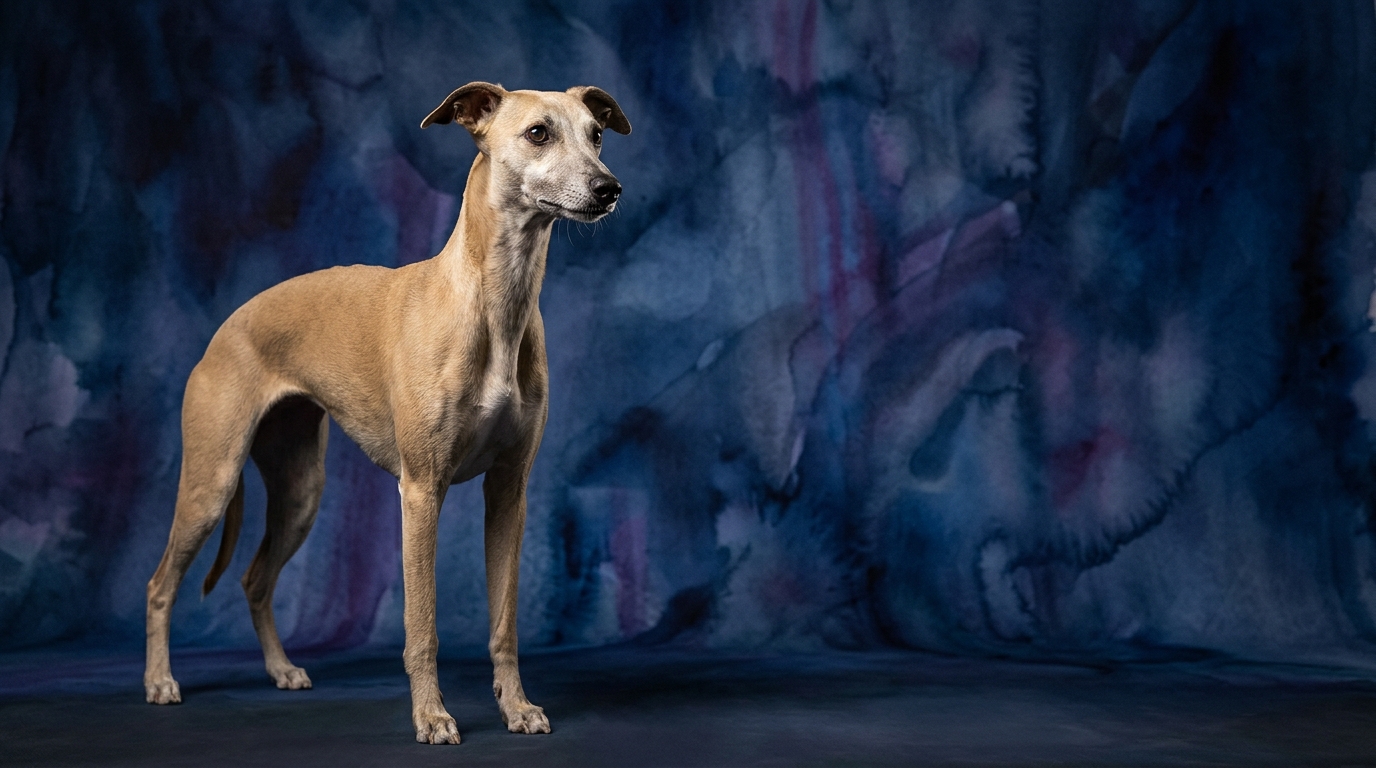
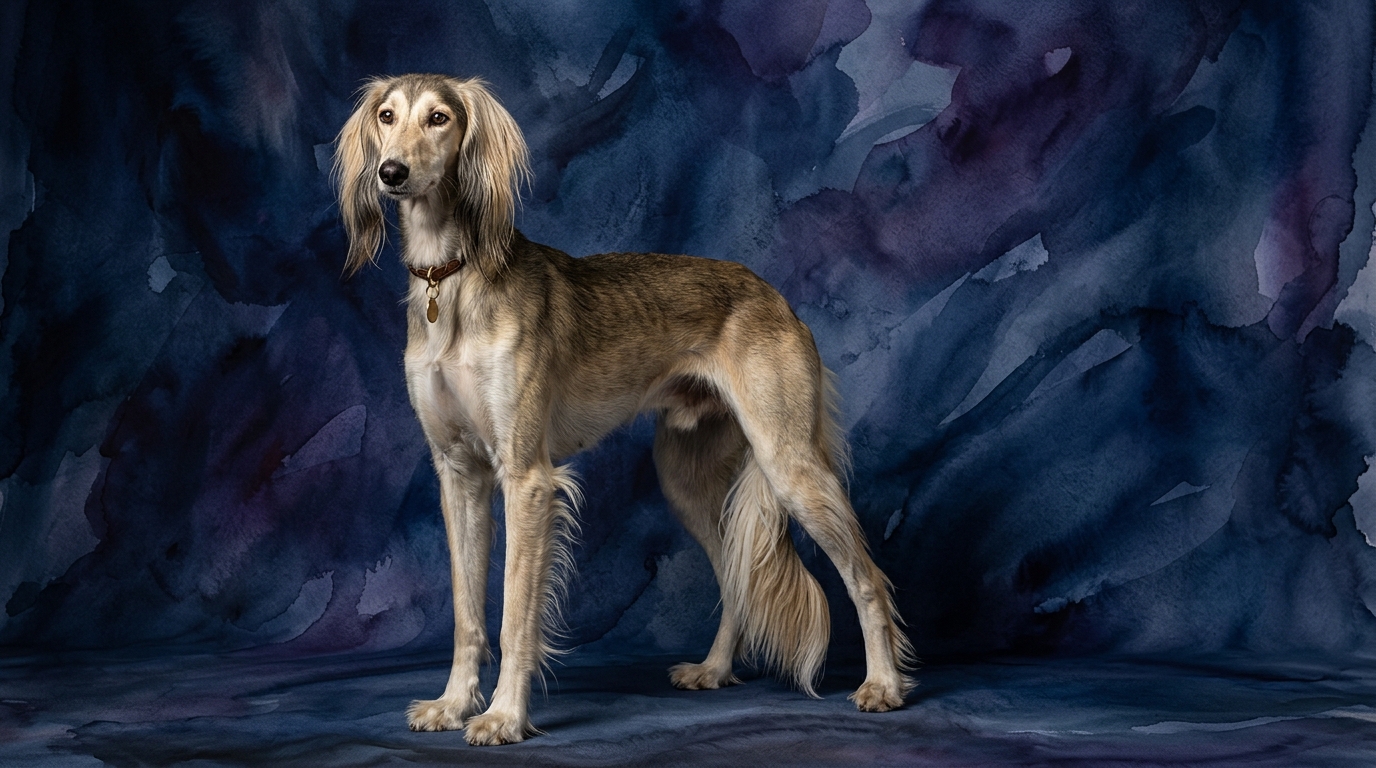
Side-by-Side Cognitive Profiles: Whippet vs. Saluki
The Pet IQ Lab utilizes five key dimensions to evaluate canine intelligence, offering a granular view of how breeds process information and interact with their world. For the Whippet, we observe a Problem Solving score of 3/5, indicating a moderate capacity for navigating novel situations or figuring out puzzles. Their Training Speed is 2/5, suggesting they may take longer to grasp new commands, while their Social Intelligence shines at 4/5, reflecting a strong ability to interpret human cues. An Instinctive Drive of 5/5 highlights their powerful innate urges, particularly for chasing, and their Memory stands at a solid 3/5, meaning they retain learned information at an average rate.
In contrast, the Saluki, though not Coren-ranked, presents a slightly different cognitive fingerprint. Their Problem Solving ability matches the Whippet at 3/5, demonstrating a similar moderate aptitude for independent thought when faced with challenges. A Training Speed of 3/5 suggests they are somewhat quicker to learn new tasks than their Whippet cousins. Their Social Intelligence is rated at 3/5, indicating a balanced but perhaps more reserved engagement with humans. The Saluki's Instinctive Drive is 3/5, a moderate expression of their sighthound instincts, and their Memory, like the Whippet's, is also 3/5, reflecting a dependable retention of experiences and training.
Where the Whippet Excels Cognitively
The Whippet's cognitive strengths distinctly lie in its profound Social Intelligence, scoring 4/5. This indicates a breed particularly attuned to human emotions and social cues, often leading to a deeply empathetic and responsive companionship. They are adept at reading body language and vocal inflections, making them highly perceptive participants in household dynamics. This elevated social awareness means a Whippet might more readily seek out interaction, offering comfort or initiating play based on their interpretation of their owner's mood, distinguishing them from many sighthounds who can be more aloof.
Furthermore, the Whippet's Instinctive Drive, rated at an impressive 5/5, while sometimes presenting a management challenge, also represents a peak of their inherent sighthound capabilities. This strong drive means they possess an unparalleled focus and explosive speed when their prey drive is activated, a testament to generations of selective breeding for short-burst pursuit. This cognitive intensity, channeled appropriately, allows them to excel in activities that tap into their natural inclinations, such as lure coursing, where their single-minded pursuit of the 'prey' is a magnificent display of their cognitive and physical synergy.
Where the Saluki Shows Cognitive Advantage
The Saluki demonstrates a notable cognitive advantage in its Training Speed, scoring 3/5 compared to the Whippet's 2/5. While neither breed is known for instant obedience, the Saluki's slightly higher aptitude means they generally pick up new commands and routines with a touch more efficiency. This isn't to say they are eager-to-please automatons, but rather that their independent nature might be slightly more permeable to structured learning, requiring fewer repetitions to solidify a behavior. This subtle difference can make a tangible impact during initial training phases, potentially reducing frustration for both the dog and the handler when consistency is applied.
Another area where the Saluki presents a cognitive win is in its more moderate Instinctive Drive (3/5). While still possessing a strong sighthound's urge to chase, it is less intense than the Whippet's 5/5. This moderated drive often translates to a slightly more adaptable temperament in various environments. While both require secure containment and off-leash vigilance, a Saluki might be marginally less reactive to fleeting stimuli in some situations, potentially allowing for a broader range of managed outdoor activities without the Whippet's almost overwhelming single-mindedness in pursuit. This balanced drive can make their overall cognitive management a bit more straightforward in a typical home setting.
Training Ease: Whippet vs. Saluki
When evaluating which of these sighthounds is easier to train, the Saluki holds a slight edge due to its higher Training Speed (3/5 versus Whippet's 2/5) and more moderate Instinctive Drive (3/5 versus Whippet's 5/5). Whippets, with their lower training speed, often require more patience and creative motivation to learn and consistently perform commands. Their strong independent streak, coupled with an intense prey drive, means that while they understand cues, their motivation to execute them may be secondary to their desire to chase a squirrel or explore an interesting scent. This isn't a lack of comprehension but rather a prioritization of their innate drives over human directives.
Salukis, while still possessing the characteristic sighthound independence, tend to be slightly more receptive to training cues. Their 3/5 training speed suggests they process and internalize commands a bit faster. Furthermore, their less extreme instinctive drive means that while they will still bolt after perceived prey, the frequency or intensity of this impulse might be marginally lower, making it slightly easier to capture their attention and redirect it during training sessions. Both breeds benefit immensely from positive reinforcement, short, engaging sessions, and an understanding that their primary motivation is not always human approval, but rather their inherent sighthound nature.
Lifestyle Suitability: Active vs. Relaxed Owners
The cognitive profiles of the Whippet and Saluki suggest different ideal matches for owner lifestyles. The Whippet, with its high Social Intelligence (4/5) and profound Instinctive Drive (5/5), suits owners who appreciate a deeply connected companion but are also prepared to manage an intense prey drive. While Whippets are renowned for their 'couch potato' tendencies indoors, their explosive energy and chase instinct demand regular, vigorous outlets for running in secure areas. Owners who enjoy structured activities like lure coursing or fast-paced walks where safety is paramount will find the Whippet's cognitive and physical needs align perfectly. Their social nature also means they thrive on consistent interaction and can become quite attached.
The Saluki, with its balanced Social Intelligence (3/5) and moderate Instinctive Drive (3/5), offers a slightly different proposition. They are often described as more reserved, perhaps less overtly demonstrative than a Whippet, fitting well with owners who appreciate a dignified and independent companion that is not constantly seeking attention. While they still require significant exercise, their moderate drive might make them marginally more adaptable to varied routines, provided their need for regular, open-field runs is met. They are an excellent choice for owners who lead active lives and can provide consistent, engaging exercise, but who also respect a dog's need for personal space and quiet contemplation, preferring a companion that is present without being overwhelmingly demanding.
The Verdict: When to Choose Each Sighthound
Choosing between a Whippet and a Saluki depends heavily on an owner's specific preferences regarding cognitive engagement and lifestyle. If you seek a highly socially intelligent companion who forms deep bonds and offers expressive affection, and you are prepared to manage an extremely high prey drive with dedicated, secure exercise, the Whippet will likely be your ideal match.
Conversely, if you prefer a more independent, dignified, and slightly quicker-to-train sighthound whose instinctive drives are present but more moderate, the Saluki might be the better fit. They suit owners who appreciate a quieter, reserved companionship, provided they can still offer consistent opportunities for their unique blend of speed and grace in safe environments.
The Verdict
Choose a Whippet if you desire a deeply social companion with intense bursts of energy and a profound connection, provided you can manage their extreme prey drive.
Opt for a Saluki if you prefer a more independent, dignified sighthound that is slightly quicker to train, offering a reserved companionship with a moderate, manageable instinctive drive.
🧠 Find Your Pet's IQ Score
Our Pet IQ Lab assessment covers 25+ tests across 5 cognitive dimensions — personalized to your breed.
Take the Full IQ Test →Frequently Asked Questions
Are Whippets or Salukis better for first-time dog owners?
Neither breed is typically recommended for novice owners due to their sighthound independence and specific exercise needs. However, if a first-timer is committed to understanding sighthound traits, a Saluki's slightly higher training speed and more moderate instinctive drive might present a marginally less challenging introduction to dog ownership than a Whippet's intense prey drive and slower training pace.
Do Whippets and Salukis get along with other pets?
Both breeds possess a strong prey drive, making careful introductions and supervision essential, especially with smaller pets like cats or rabbits. Whippets, with higher social intelligence, might adapt slightly better to existing pets if raised with them, while Salukis, though also adaptable, require the same cautious approach due to their inherent chasing instincts.
Which breed requires more exercise?
Both Whippets and Salukis require regular, vigorous exercise, primarily in the form of fast, open-field running in securely fenced areas. While Whippets have a higher instinctive drive, making their need for these bursts of speed more pronounced, Salukis also need consistent opportunities to stretch their legs and satisfy their sighthound nature, even if their drive is rated as more moderate.