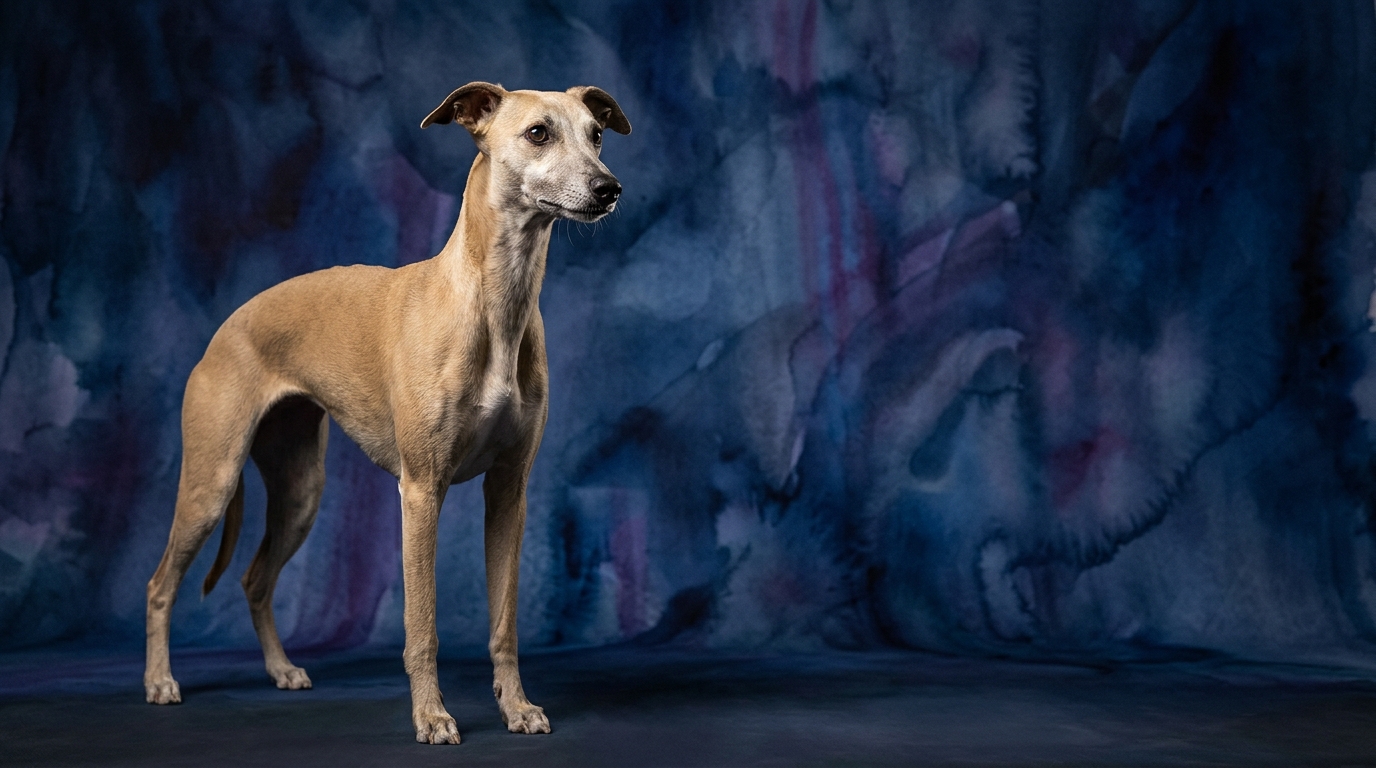

Side-by-Side IQ Profile: Whippet vs. Wire Fox Terrier
At The Cosmic Pet Pet IQ Lab, we evaluate canine intelligence across five key dimensions, providing a granular view beyond generic assumptions. The Whippet, a sighthound, is Coren-ranked at #51, while the Wire Fox Terrier, a terrier, does not appear on the Coren list, indicating a different, equally compelling cognitive architecture.
For Problem Solving, both breeds register a score of 3/5. This indicates an average capacity for figuring out novel situations or navigating complex environments. Neither breed is predisposed to independently devise intricate solutions rapidly, suggesting they might rely on learned behaviors or owner guidance more often than spontaneous ingenuity when faced with new challenges. Their approach to puzzles or obstacles is typically direct rather than highly analytical.
Training Speed reveals a notable difference: the Whippet scores 2/5, while the Wire Fox Terrier achieves 3/5. A 2/5 for the Whippet suggests they require more repetition and patience to grasp new commands and behaviors firmly. Their independent hound nature means they process instructions at a more measured pace. In contrast, the Wire Fox Terrier's 3/5 score indicates an average training speed; they are generally quicker to understand and respond to new cues, making initial obedience work potentially less extended.
Social Intelligence is where the Whippet truly shines with a 4/5, compared to the Wire Fox Terrier's 3/5. The Whippet's higher score reflects a superior ability to read human cues, understand social contexts, and form deep, empathetic bonds. They are often highly attuned to their owner's moods and intentions, making them exceptionally responsive companions. The Wire Fox Terrier, with a 3/5, possesses an average social intelligence, capable of bonding and understanding basic social structures, but perhaps with a more independent interpretation of human signals.
Instinctive Drive presents another stark contrast: the Whippet scores an impressive 5/5, while the Wire Fox Terrier registers 3/5. The Whippet's perfect score underscores their profoundly ingrained sighthound instincts, driven by an overwhelming urge to chase anything that moves quickly. This highly specialized intelligence is a testament to their heritage as pursuit hunters. The Wire Fox Terrier's 3/5 indicates a moderate instinctive drive, characteristic of terriers, encompassing a drive to dig, explore, and hunt small prey, but generally less singularly focused or intense than the Whippet's chase fixation. This more balanced drive means their instincts are present but often more manageable in daily life.
Finally, Memory is consistent across both breeds, with each scoring 3/5. This suggests an average ability to retain learned commands, routines, and experiences over time. Neither breed stands out for exceptional recall or an uncanny ability to remember complex sequences after long periods. Owners can expect them to remember familiar cues and places reliably, but may need to reinforce less common lessons periodically.
Where the Whippet Wins Cognitively
The Whippet's cognitive strengths distinctly lie in their exceptional social intelligence and their unparalleled instinctive drive for pursuit. With a 4/5 in social intelligence, Whippets possess a remarkable capacity to connect with their human companions on a profound level. They are adept at interpreting subtle body language and vocal tones, often seeming to anticipate their owner's needs or emotional state. This makes them highly empathetic and responsive pets, capable of forming incredibly strong, nuanced bonds. Their sensitivity allows them to thrive in harmonious home environments, often seeking proximity and comfort from their family members, showing a sophisticated understanding of relational dynamics.
Furthermore, the Whippet's 5/5 instinctive drive, while presenting training challenges, is a specialized cognitive win. This isn't just a physical urge; it represents a finely tuned system of visual processing, rapid decision-making, and coordinated movement that makes them supreme athletes in pursuit. Their brains are wired for speed, detection of movement, and the strategic execution of a chase. This extreme focus means they excel in activities like lure coursing, where their natural talents are harnessed. It is a testament to a highly specialized form of intelligence, honed over centuries for a very specific purpose, allowing them to process visual stimuli and react with incredible precision and speed that few other breeds can match.
Where the Wire Fox Terrier Wins Cognitively
The Wire Fox Terrier demonstrates cognitive advantages particularly in their training speed and a more balanced, versatile application of their problem-solving abilities within their moderate instinctive drive. With a training speed of 3/5, they possess a quicker uptake of new commands compared to the Whippet's 2/5. This means a Wire Fox Terrier is generally more efficient in the initial stages of obedience training, grasping concepts and associating actions with cues with fewer repetitions. Their eagerness to engage and their terrier tenacity often translate into a focused approach during training sessions, making them responsive to clear and consistent instruction.
While their problem-solving score is 3/5, similar to the Whippet, the Wire Fox Terrier's terrier nature often translates this into a persistent, hands-on approach to obstacles. This breed is less likely to give up on a perceived 'problem'—be it a squeaky toy stuck under furniture or a tempting scent beneath the lawn. Their moderate instinctive drive (3/5) is less overwhelming than the Whippet's, allowing for a broader application of their cognitive faculties beyond singular pursuit. This adaptability means they can channel their energy into various tasks, from scent work to agility, demonstrating a versatile intelligence that thrives on engagement and varied mental stimulation. Their cognitive strengths lie in their robust persistence and ability to apply their average problem-solving skills to a wider array of real-world scenarios, making them adept at navigating and manipulating their environment to achieve their goals.
Which is Easier to Train and Why
Assessing ease of training requires a look beyond just intelligence scores, integrating behavioral tendencies. The Wire Fox Terrier, with a training speed of 3/5, generally proves easier to train in terms of command acquisition compared to the Whippet's 2/5. Wire Fox Terriers typically grasp new commands more readily and require fewer repetitions to solidify a behavior. Their inherent tenacity and spirited nature, while sometimes manifesting as stubbornness, can also be channeled into focused learning with consistent, engaging methods. They appreciate mental challenges and often respond well to positive reinforcement that makes training feel like a game, although their independent streak means they may test boundaries or choose to comply only when it suits them.
The Whippet, despite their higher social intelligence (4/5), presents a unique training profile. While they are sensitive and eager to please their beloved owners, their slower training speed (2/5) means they require significant patience and consistency. They may take longer to understand what is being asked of them, necessitating more gentle repetition. The Whippet’s profound instinctive drive (5/5) is the most significant training hurdle, particularly for off-leash reliability. Their natural inclination to pursue anything that moves quickly means that even a perfectly learned 'recall' command can be instantly overridden by the sight of a squirrel or distant movement. Their deep bond with their owner, facilitated by their social intelligence, can be leveraged in training, but their independent sighthound nature and hardwired chase impulse mean that training is an ongoing, nuanced process focused on management and understanding their inherent motivations rather than simply command and response.
Which Suits Active Owners vs. Relaxed Owners
The Whippet, with their unique blend of explosive athleticism and calm demeanor, suits a specific type of owner. They are ideal for owners who enjoy short, intense bursts of activity, such as daily sprints in a secure, fenced area, or participation in lure coursing. While they are capable of incredible speed and require an outlet for their 5/5 instinctive drive, they are not dogs for continuous, sustained high-energy exertion. Once their exercise needs are met, often in less than an hour, Whippets transform into remarkably relaxed and affectionate house companions, content to nap on a soft sofa. This makes them surprisingly suitable for owners who appreciate a quiet, undemanding presence indoors but are committed to providing structured, high-intensity exercise outdoors. They are less suited for owners who prefer long, meandering hikes or continuous, low-impact activity, as their energy profile is distinct.
The Wire Fox Terrier, conversely, thrives with active and engaged owners who appreciate a dog with sustained energy and a keen mind. Their 3/5 instinctive drive, combined with a spirited personality, means they need regular, varied physical and mental stimulation. They benefit from daily walks, playtime that incorporates problem-solving, and activities like agility or earthdog trials that tap into their terrier heritage. These dogs possess a tenacious spirit and can become bored or destructive if their energy and intelligence aren't channeled constructively. They are not content to simply lounge all day, even after a walk. Therefore, the Wire Fox Terrier is best suited for owners who enjoy being consistently active with their dog, engaging them in exploration, training, and play that challenges both their body and their mind. They are less ideal for truly 'relaxed' owners who seek a purely sedentary companion, as their need for consistent interaction and activity is pronounced.
The Verdict
Choose the Whippet if you seek a sensitive, socially astute companion who offers calm indoor companionship after short bursts of exhilarating speed, and you are prepared to manage their powerful chase instinct with patience and understanding.
Opt for the Wire Fox Terrier if you desire a spirited, tenacious partner for varied activities, value a quicker training uptake, and are ready to consistently engage a dog with a confident, independent streak and a need for regular mental and physical challenges.
🧠 Find Your Pet's IQ Score
Our Pet IQ Lab assessment covers 25+ tests across 5 cognitive dimensions — personalized to your breed.
Take the Full IQ Test →Frequently Asked Questions
Are Whippets truly lazy indoors?
Whippets are often described as '45 mph couch potatoes' because they transition rapidly from intense bursts of activity to profound relaxation. Once their exercise needs are met, typically with short, fast runs, they are remarkably calm and content indoors, often seeking out comfortable spots for napping.
Do Wire Fox Terriers make good family pets?
Wire Fox Terriers can be excellent family pets for active families who understand their spirited nature and need for consistent engagement. They are playful and loyal but require proper socialization and training from a young age to channel their energy and independent streak positively.
Which breed is more prone to barking?
Wire Fox Terriers are generally more prone to barking than Whippets, often using their voice to alert to perceived threats, express excitement, or demand attention. Whippets are typically quieter, barking less frequently and often only when startled or highly stimulated by prey.