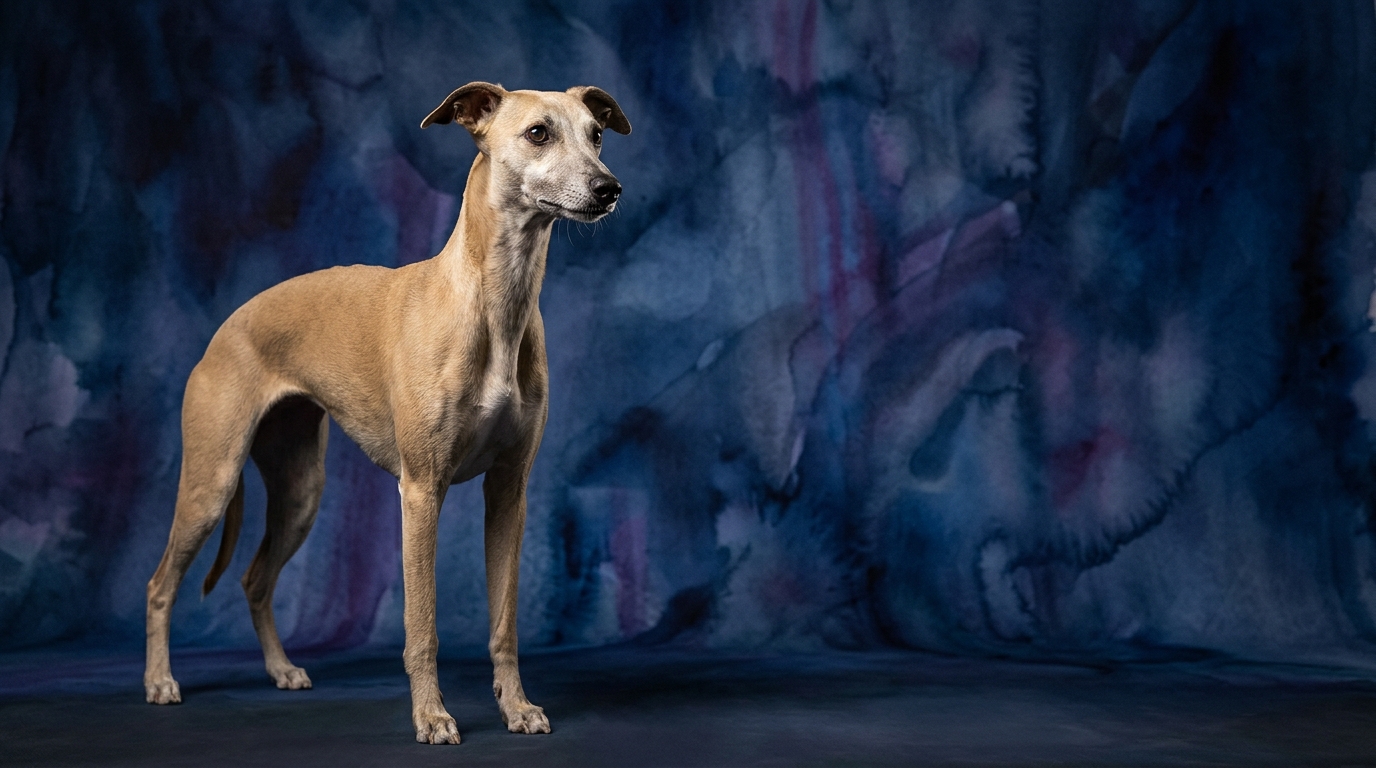
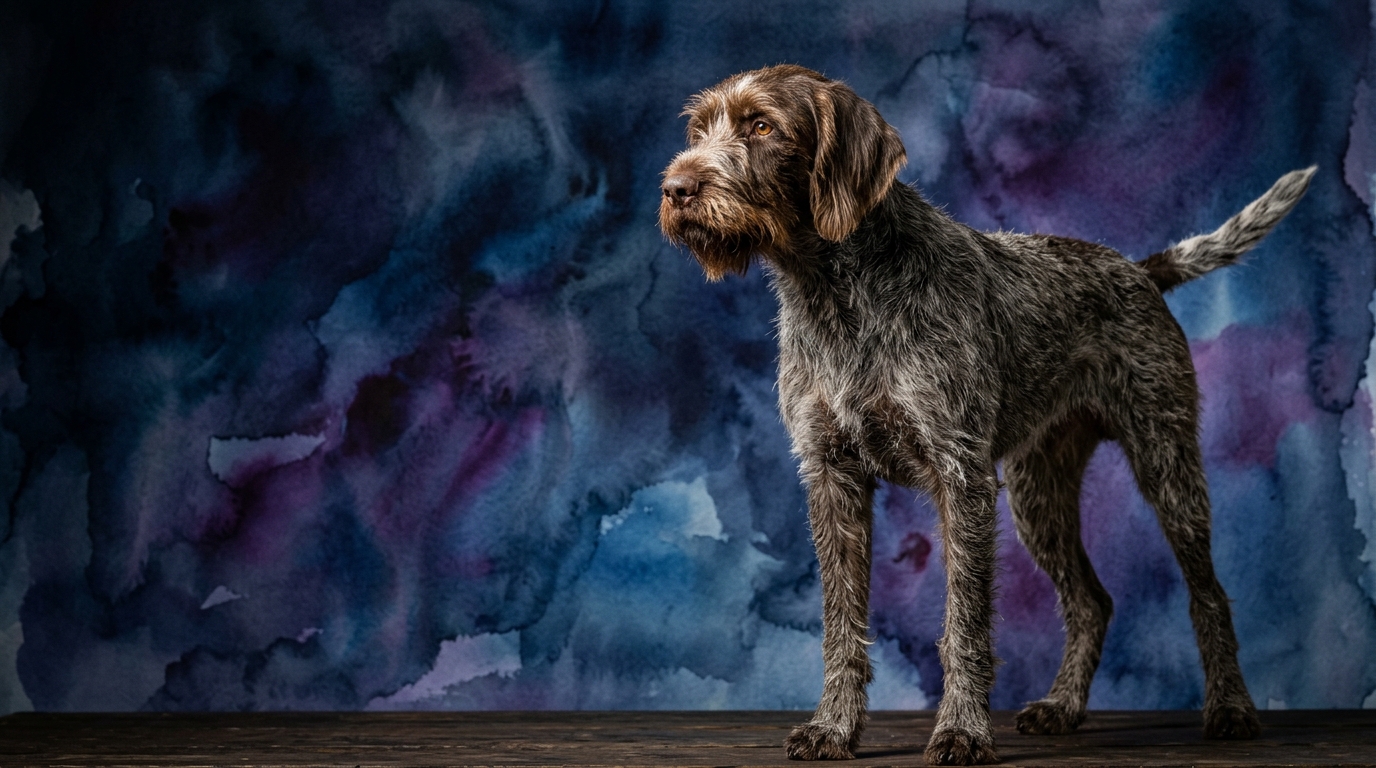
Side-by-Side Cognitive Profile: Whippet vs. Wirehaired Pointing Griffon
The Cosmic Pet Pet IQ Lab's framework allows us to break down canine intelligence into five distinct dimensions, offering a nuanced view beyond simplistic labels. For the Whippet, a breed Coren-ranked at #51, we see a unique blend of independent thought and deep social connection, while the Wirehaired Pointing Griffon (WPG), though not Coren-ranked, presents a profile geared towards cooperative outdoor tasks.
When it comes to **Problem Solving**, both breeds register a 3/5. For the Whippet, this often manifests as finding efficient routes during a chase or independently navigating their environment, relying on visual cues and their innate understanding of physics in motion. The WPG's problem-solving, conversely, tends to involve deciphering complex scent trails, strategizing how to flush game, or overcoming environmental obstacles in a methodical, task-oriented manner, often in collaboration with a handler.
**Training Speed** is where a notable divergence occurs, with the Whippet scoring 2/5 and the WPG at 3/5. The Whippet’s lower score reflects their independent nature; while capable of learning, their motivation often stems from self-interest or a strong bond, rather than an inherent eagerness to please or perform repetitive tasks. The WPG's slightly higher score indicates a more receptive attitude to instruction, driven by their desire to work alongside their human partner and fulfill a specific role.
In **Social Intelligence**, the Whippet truly shines with a 4/5, contrasting with the WPG's 3/5. Whippets are remarkably attuned to human emotions and subtle cues, forming profound, sensitive bonds with their family members, often seeking close physical proximity and offering quiet companionship. The WPG's social intelligence, while present, is more functionally oriented; they are sociable and enjoy interaction, but their primary social drive often revolves around cooperative activities and understanding their role within a working partnership.
**Instinctive Drive** presents the most dramatic difference: Whippets score a perfect 5/5, while WPGs are at 3/5. The Whippet's entire being is steeped in their sighthound heritage, meaning an overwhelming, hardwired drive to chase anything that moves, a powerful and often irresistible impulse. The WPG possesses a strong instinctive drive as well, but it is channeled into specific hunting behaviors like pointing, retrieving, and quartering, driven by scent and a desire to work, rather than a singular pursuit of visual prey. Finally, **Memory** stands at 3/5 for both breeds. This suggests both can retain learned behaviors, routines, and experiences adequately, but neither possesses an eidetic recall of every past event or complex sequence, relying more on repetition for long-term retention of commands or habits.
Where the Whippet Wins Cognitively
The Whippet's cognitive strengths lie primarily in their profound social intelligence and their unparalleled instinctive drive for pursuit. Their 4/5 social intelligence means they excel at reading human emotions and subtle body language, often anticipating their owner's moods and offering comfort or quiet presence without explicit cues. This makes them incredibly empathetic companions, forming deep, intuitive bonds that transcend simple obedience.
Furthermore, their 5/5 instinctive drive, while challenging in terms of management, represents a cognitive triumph in its own right. It signifies an extraordinary focus and efficiency in their primary purpose: the chase. This isn't just physical speed; it involves rapid visual processing, immediate decision-making in pursuit, and an innate understanding of physics to intercept moving targets, showcasing a specialized form of problem-solving geared towards high-speed action that few breeds can match.
Where the Wirehaired Pointing Griffon Wins Cognitively
The Wirehaired Pointing Griffon’s cognitive advantages are rooted in their cooperative spirit and their versatile, adaptable problem-solving skills in the field. Their 3/5 training speed, higher than the Whippet’s, indicates a greater willingness to engage with human instruction and a stronger desire to work as part of a team. This translates to a dog that is generally more responsive to commands and eager to learn new tasks that involve collaboration.
While their problem-solving score is equal, the WPG's application of it is distinctly different. They excel at complex, multi-stage tasks that require sustained focus and environmental awareness, such as methodically quartering a field, scenting game, pointing, and then retrieving on command. This involves a sophisticated blend of sensory input processing, memory for scent trails, and strategic navigation, all performed with a purposeful drive to complete a job alongside their handler, demonstrating a flexible and resilient intellect geared towards practical application.
Which is Easier to Train and Why?
Based on their respective IQ profiles, the Wirehaired Pointing Griffon is generally easier to train than the Whippet. The WPG’s 3/5 training speed, coupled with their 3/5 instinctive drive, means they are typically more amenable to instruction. Their working background has ingrained a desire to collaborate with humans, making them more receptive to commands and eager to perform tasks that involve their handler. They possess a strong drive to work and please, which translates into a higher motivation for formal training sessions.
The Whippet, with a 2/5 training speed and a powerful 5/5 instinctive drive, presents more distinct training challenges. Their independent sighthound nature means they often prioritize their own motivations, such as the irresistible urge to chase, over human commands. While they are sensitive and form strong bonds, their desire to please does not always override their innate drives, making consistent recall in distracting environments a particular hurdle. Training a Whippet requires immense patience, positive reinforcement, and a deep understanding of their independent spirit, focusing on building a strong relationship rather than expecting immediate, compliant obedience.
Which Suits Active Owners vs. Relaxed Owners?
For owners seeking a highly active, engaged partner for outdoor adventures, the Wirehaired Pointing Griffon often proves to be the more fitting choice. Their 3/5 instinctive drive is perfectly channeled into activities like hiking, hunting, or dog sports that require sustained effort and problem-solving in varied environments. WPGs thrive on having a 'job' and require consistent mental and physical stimulation to prevent boredom, making them ideal for individuals who enjoy an active, hands-on lifestyle and are prepared to involve their dog in their pursuits.
Conversely, the Whippet, while possessing a 5/5 instinctive drive for short, intense bursts of speed, is surprisingly well-suited for more relaxed owners who appreciate quiet companionship indoors. After their exhilarating dashes, Whippets are content to curl up on the sofa, exhibiting a calm and undemanding demeanor within the home environment. Their high social intelligence means they deeply value close proximity and connection with their family, making them excellent companions for those who enjoy a more laid-back pace but can still provide opportunities for safe, off-leash running in a secure area to satisfy their powerful chase instinct.
The Verdict
Choose the Whippet if you prioritize a deeply empathetic, quiet companion who enjoys explosive bursts of exercise followed by extensive lounging, and you appreciate an independent spirit.
Opt for the Wirehaired Pointing Griffon if you seek a diligent, cooperative partner for consistent outdoor activities and are prepared for a more engaged, training-oriented lifestyle.
🧠 Find Your Pet's IQ Score
Our Pet IQ Lab assessment covers 25+ tests across 5 cognitive dimensions — personalized to your breed.
Take the Full IQ Test →Frequently Asked Questions
Do Whippets need a lot of exercise?
Whippets require intense, short bursts of exercise, such as a good sprint in a securely fenced area, rather than endurance activities. After their run, they are typically very calm and enjoy relaxing indoors, making them suitable for owners who can provide these specific exercise opportunities.
Are Wirehaired Pointing Griffons good family dogs?
Wirehaired Pointing Griffons are generally sociable and make good family dogs, especially for active families who can involve them in outdoor activities. They thrive on companionship and structured engagement, often forming strong bonds with all family members, though consistent training is key.
Which breed is better for apartment living?
Between the two, the Whippet is generally better suited for apartment living due to their calm indoor demeanor and preference for lounging after their exercise. The Wirehaired Pointing Griffon, with their higher energy and need for consistent engagement, typically fares better in homes with more space and a yard, or with owners committed to extensive outdoor activities.