Side-by-Side Pet IQ Profile
The Cosmic Pet Pet IQ Lab assesses canine intelligence across five critical dimensions: Problem Solving, gauging a dog's capacity to navigate novel challenges; Training Speed, reflecting how quickly new commands are learned and retained; Social Intelligence, indicating their ability to interpret human cues and interact within a social structure; Instinctive Drive, the strength of their innate, breed-specific behaviors; and Memory, their aptitude for recalling information and experiences. These metrics provide a nuanced understanding beyond simple obedience.
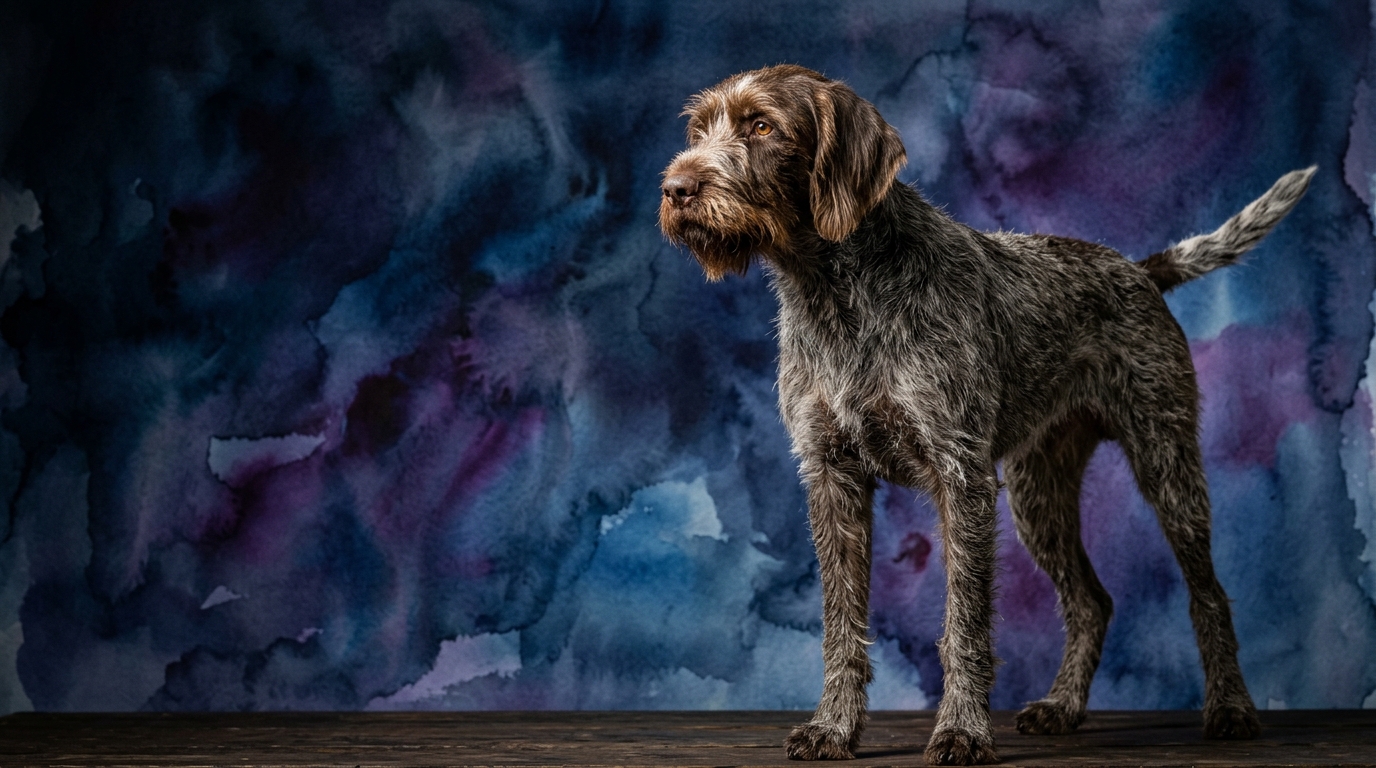
The Wirehaired Pointing Griffon, a dog from the Sporting group, presents a remarkably balanced cognitive profile, scoring 3 out of 5 across all five dimensions. Its Problem Solving at 3/5 suggests an adaptable mind capable of figuring out game scenarios without excessive complexity. A Training Speed of 3/5 indicates a steady learner, responsive to consistent guidance in the field. Social Intelligence, also 3/5, underscores its cooperative nature, making it attentive to handler directives. Its Instinctive Drive of 3/5 reflects a well-modulated desire for pointing and retrieving, present but not overwhelming. Finally, a Memory score of 3/5 ensures it retains learned behaviors and familiar hunting grounds reliably, contributing to its reputation as a versatile gun dog.
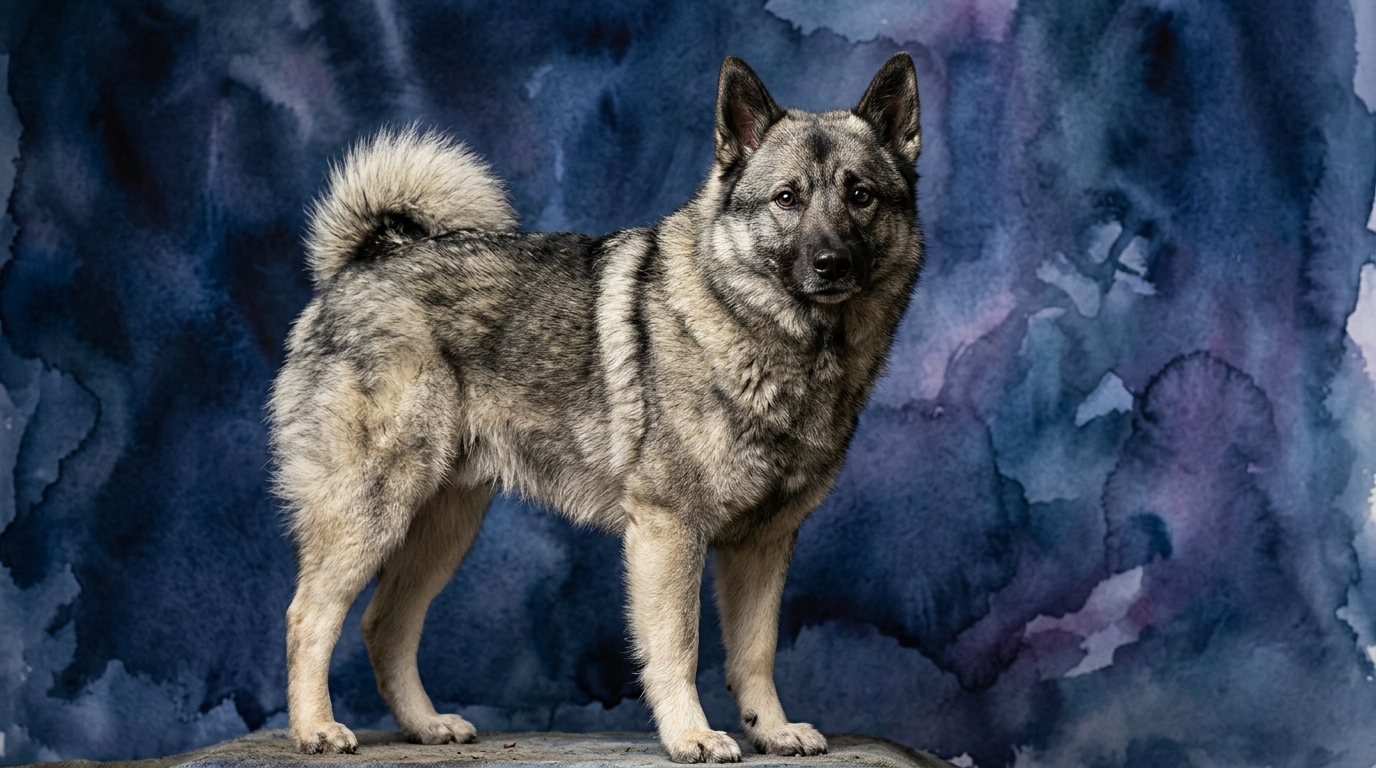
In contrast, the Norwegian Elkhound, a member of the Hound group, showcases a cognitive profile optimized for its ancient role as a robust hunting companion. It boasts higher scores in key areas: Problem Solving at 4/5, Training Speed at 4/5, and Memory at 4/5. These elevated scores signify a dog adept at independent thought, quick to grasp new concepts, and possessing excellent long-term recall—essential for tracking game across varied terrain. Its Social Intelligence and Instinctive Drive both register at 3/5, indicating a cooperative spirit with a strong, yet manageable, urge for scent work and baying. Notably, the Norwegian Elkhound is also recognized by Stanley Coren's ranking as #36, highlighting its superior working and obedience intelligence among many breeds, a testament to its capacity for complex learning and execution.
Where the Wirehaired Pointing Griffon Wins Cognitively
While the Norwegian Elkhound exhibits higher scores in specific cognitive areas, the Wirehaired Pointing Griffon's true cognitive advantage lies in its profound balance and versatility. With every dimension scoring a solid 3 out of 5, the Griffon embodies a harmonious blend of mental aptitudes. This consistent scoring means it is less prone to the singular intensity or potential behavioral challenges that can sometimes accompany extremely high scores in one or two areas; a 3/5 Problem Solving, for instance, allows it to adapt to novel situations without constantly seeking to outsmart its handler or environment.
This balanced intellect translates into a dog that integrates its skills seamlessly. Its 3/5 Social Intelligence, combined with its moderate Instinctive Drive, fosters a cooperative partnership in the field; it's attentive to its handler without being overly dependent, and driven without being intractable. This makes the Griffon an exceptionally adaptable companion for varied outdoor pursuits, from waterfowl retrieval to upland bird hunting, where a consistent, well-rounded application of cognitive skills is often more valuable than extreme specialization. It's a breed that offers reliable performance across a broad spectrum of tasks, making it a highly agreeable and predictable partner.
Where the Norwegian Elkhound Wins Cognitively
The Norwegian Elkhound’s cognitive strengths are undeniably rooted in its historical role as a big-game hunter, where independence, persistence, and keen intellect were paramount. Its Problem Solving score of 4/5 is a clear advantage, indicating a dog that can independently navigate complex environments and devise strategies to overcome obstacles encountered while tracking. This aptitude for self-directed problem-solving means an Elkhound is adept at figuring out how to bypass fallen logs, cross streams, or interpret subtle changes in scent trails without constant human direction—a critical trait for a dog expected to work ahead of its handler.
Coupled with its 4/5 Training Speed and 4/5 Memory, the Elkhound possesses a remarkable capacity for learning and retaining intricate command sequences and spatial information. This superior memory allows it to recall extensive scent patterns and geographical layouts, crucial for successful long-distance tracking and safe return. Its quick training speed, while requiring consistent motivation, means it can master a wide repertoire of commands, enabling an owner to channel its independent drives effectively. The Elkhound's cognitive profile points to a dog that thrives on mental challenges, capable of sophisticated learning and long-term retention, making it a formidable partner for demanding tasks.
Which Is Easier to Train and Why
When evaluating ease of training, the Norwegian Elkhound holds a distinct edge in terms of initial learning velocity due to its higher Training Speed (4/5 versus the Griffon's 3/5) and superior Problem Solving (4/5 versus 3/5). This means an Elkhound is generally quicker to grasp new commands and complex sequences, and more adept at understanding the 'why' behind a task. However, 'easier' doesn't always mean 'less demanding.' The Elkhound's independent nature, a hallmark of many hounds, means that while it learns quickly, it often requires a highly motivating and consistent training approach to maintain engagement and compliance, as its strong will can sometimes be misinterpreted as stubbornness.
The Wirehaired Pointing Griffon, with its 3/5 Training Speed, might take a little longer to pick up new tasks, but its balanced Social Intelligence (3/5) and cooperative Sporting group heritage often translate into a more consistent eagerness to please its handler. This means that while the initial learning curve might be gentler, the Griffon is typically a more forgiving and consistently compliant student in day-to-day training scenarios, especially when positive reinforcement is used. Its moderate Instinctive Drive also makes it less likely to become overly distracted by environmental stimuli compared to the Elkhound’s potent scenting drive. Therefore, for an owner seeking a dog that is generally more biddable and consistently cooperative throughout its training journey, the Griffon might present a less challenging experience.
Which Suits Active Owners vs. Relaxed Owners
Neither the Wirehaired Pointing Griffon nor the Norwegian Elkhound are suitable choices for genuinely relaxed or sedentary owners; both breeds demand significant engagement. However, their specific cognitive profiles and historical roles tailor them to different types of active lifestyles. The Norwegian Elkhound, with its 4/5 Problem Solving and Memory, paired with its strong Instinctive Drive (3/5 for tracking), thrives with owners who can provide consistent, high-intensity mental stimulation alongside vigorous physical exercise. This breed needs challenging activities like scent work, advanced obedience, or consistent hiking in varied terrain to prevent boredom and channel its considerable cognitive energies productively. An owner who enjoys structured, goal-oriented outdoor adventures would find the Elkhound a superb, enduring partner.
The Wirehaired Pointing Griffon, while equally active, is better suited for owners who appreciate versatility and a balanced approach to activity. Its consistent 3/5 scores across all dimensions mean it excels in a range of activities without becoming overly fixated on one. Owners who engage in varied field work, dog sports like agility or dock diving, or simply enjoy long, explorative walks and hikes will find the Griffon's adaptable nature rewarding. While it requires ample physical exertion, its balanced cognitive needs mean it might be slightly more forgiving if a day of intense mental 'work' is occasionally missed, provided its physical exercise requirements are consistently met. It's a fantastic match for an active owner seeking a cooperative, all-around outdoor companion rather than a specialist.
The Verdict
Opt for the Wirehaired Pointing Griffon if you seek a versatile, adaptable companion for diverse outdoor activities, valuing a balanced temperament and a consistently cooperative partner for a range of field and home pursuits. This breed thrives with owners who appreciate its steady cognitive application across various tasks.
Select the Norwegian Elkhound if you are an experienced owner drawn to an independent, highly capable working dog, prepared to invest in rigorous mental stimulation, advanced training, and demanding outdoor adventures, particularly those involving scent work or tracking. It excels with owners who can channel its potent problem-solving and memory into productive endeavors.
🧠 Find Your Pet's IQ Score
Our Pet IQ Lab assessment covers 25+ tests across 5 cognitive dimensions — personalized to your breed.
Take the Full IQ Test →Frequently Asked Questions
Is the Wirehaired Pointing Griffon prone to destructive behavior if not mentally stimulated?
The Griffon's balanced instinctive drive and problem-solving at 3/5 mean it requires consistent physical exercise and moderate mental engagement to prevent boredom. While not as intensely demanding as some higher-scoring breeds, insufficient stimulation can still lead to undesirable behaviors like excessive chewing or digging, as it seeks outlets for its energy and curiosity.
Do Norwegian Elkhounds make good family pets, considering their independence?
Norwegian Elkhounds can be devoted family members, particularly with active households that understand and respect their independent nature. Their 3/5 social intelligence means they are cooperative and form strong bonds, but their higher problem-solving and memory require consistent training and mental engagement to prevent them from forging their own rules. Early socialization and clear boundaries are key to integrating them successfully into family life.
Which breed is better for first-time dog owners?
Given their cognitive profiles, neither breed is ideal for completely novice dog owners due to their significant exercise and training needs. However, the Wirehaired Pointing Griffon, with its more balanced and consistently cooperative temperament (all 3/5 scores), might be slightly more forgiving for a committed first-time owner willing to invest in consistent, positive reinforcement training, compared to the more independent and mentally demanding Norwegian Elkhound.