Side-by-Side IQ Profile: Griffon vs. Deerhound
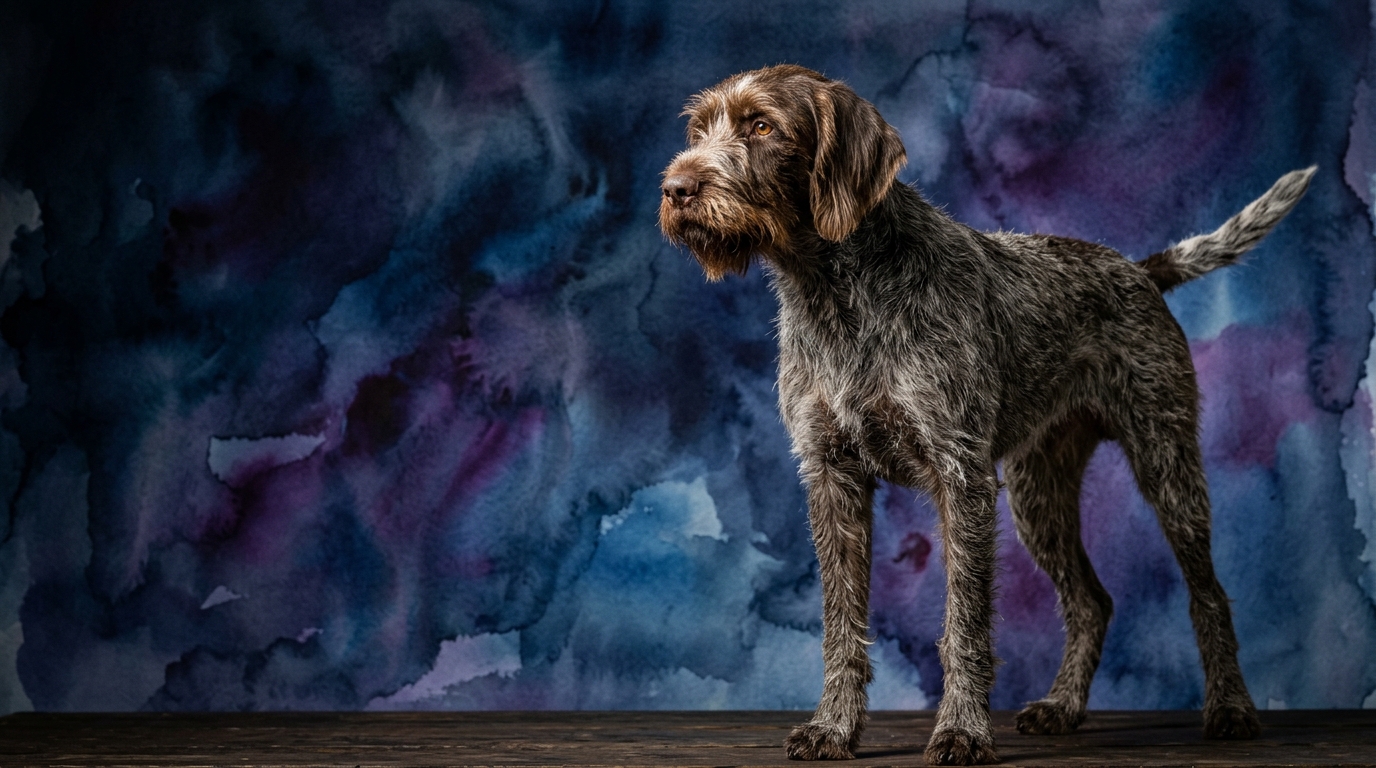
**Wirehaired Pointing Griffon (Sporting Group)**: This breed consistently scores a 3/5 across all five cognitive dimensions, reflecting a capable and balanced intellect. Their **Problem Solving (3/5)** manifests in practical, real-world tasks like methodically locating game, navigating varied terrain during a hunt, and figuring out how to retrieve objects from challenging environments, often seeking cues from their handler. Their **Training Speed (3/5)** indicates they learn new commands and routines at a consistent, moderate pace, with their desire to work alongside humans translating into a willingness to engage. **Social Intelligence (3/5)** allows them to read human emotions and intentions well, integrating smoothly into family dynamics and responding appropriately. Their **Instinctive Drive (3/5)** is purposefully geared towards pointing, flushing, and retrieving, especially in water, requiring outlets for these innate abilities. Finally, their **Memory (3/5)** is dependable, enabling recall of commands, familiar hunting grounds, and reinforcing training.
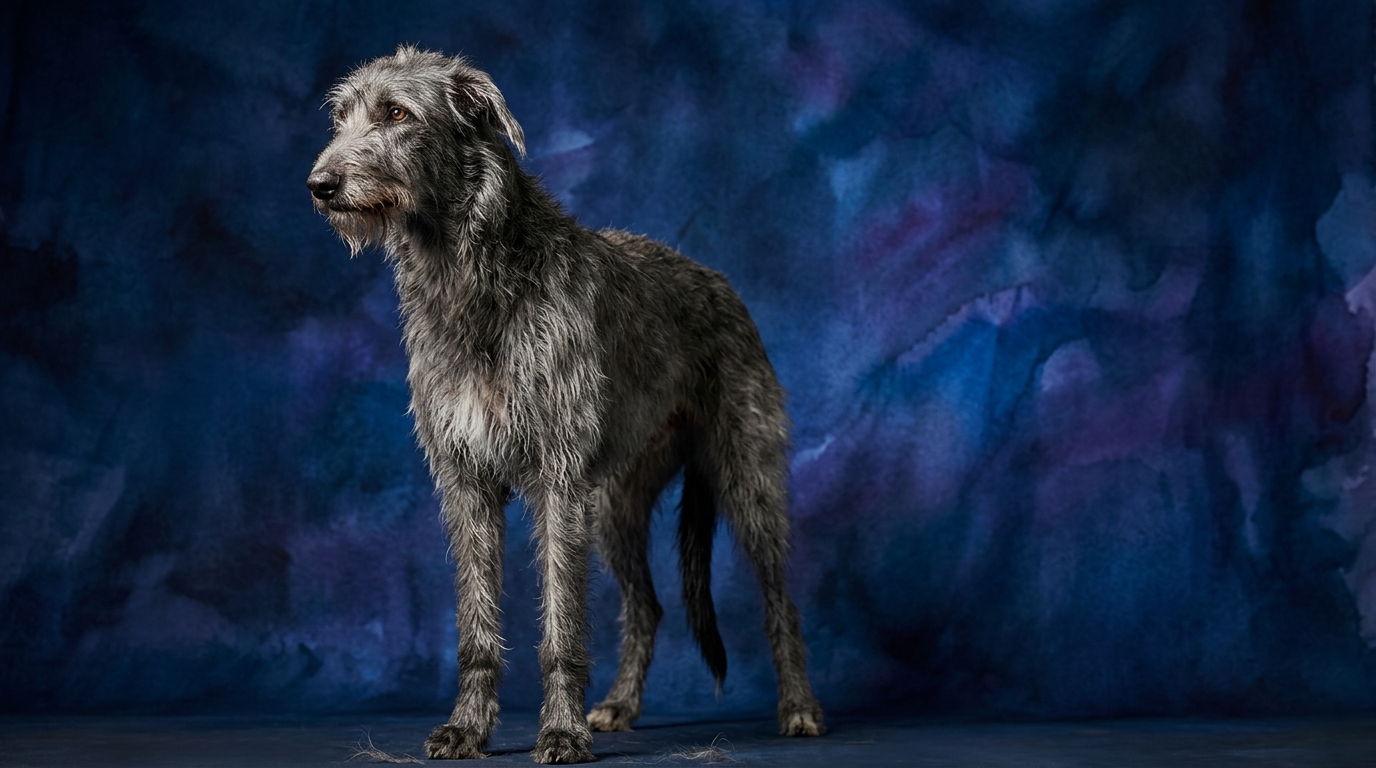
**Scottish Deerhound (Hound Group)**: Like the Griffon, the Scottish Deerhound also scores a 3/5 across all cognitive dimensions, highlighting a distinct yet equally capable intellect. Their **Problem Solving (3/5)** often translates to keen observational skills and strategic thinking during pursuit, excelling at identifying the quickest route to a distant object and making independent decisions during a chase. For **Training Speed (3/5)**, Deerhounds learn at a steady, moderate rate, but their independent hound nature means their willingness to perform commands can depend more on motivation or current interest. Their **Social Intelligence (3/5)** allows them to form strong bonds with family, often being sensitive to human moods, though expressing this more subtly. The Deerhound's **Instinctive Drive (3/5)** is powerfully channeled towards sight hunting, a pronounced urge to chase anything that moves quickly and at a distance. Their **Memory (3/5)** is reliable for recalling familiar people, places, and routines, with impressive spatial memory for vast areas during a chase.
Where the Wirehaired Pointing Griffon Wins Cognitively
Despite identical raw scores, the Wirehaired Pointing Griffon's cognitive strengths shine particularly in scenarios demanding active partnership and adaptable problem-solving within a structured framework. Their 3/5 problem-solving manifests as a proactive engagement with tasks that require human collaboration, such as navigating complex obstacle courses for a retrieved item or deciphering a handler's subtle signals during a hunt. While a Deerhound might independently assess a situation, the Griffon excels at *working with* a human to achieve a shared goal, often demonstrating a more focused attention on the handler's directives. This collaborative intelligence makes them particularly adept at learning and performing multi-step commands that are central to gundog work, where precision and responsiveness are paramount. Their social intelligence, while rated similarly, often translates into a more overt desire to please and a quicker understanding of social cues that facilitate cooperative tasks, making them highly attuned to their handler's needs in dynamic environments.
Where the Scottish Deerhound Wins Cognitively
The Scottish Deerhound's cognitive prowess, though numerically equivalent, leans towards independent judgment and sustained focus in pursuit. Their 3/5 problem-solving ability is distinctively applied to tasks requiring autonomous decision-making over vast distances, such as identifying a moving target far away and calculating the most efficient, safest route to intercept it without direct human intervention. This reflects a deep-seated intelligence for self-directed action, crucial for a sight hound whose success historically depended on independent pursuit across open landscapes. While the Griffon might excel at a handler-directed retrieve, the Deerhound's memory (3/5) and instinctive drive (3/5) combine to allow for exceptional recall of terrain features and the trajectory of prey, enabling them to execute lengthy, strategic chases. Their social intelligence, while present, often manifests as a quiet, observant understanding, allowing them to process information about their environment and make their own choices, rather than constantly seeking human input for every action.
Which is Easier to Train and Why
When considering ease of training, the Wirehaired Pointing Griffon generally presents a more straightforward experience for many owners, despite both breeds sharing a 3/5 training speed. The Griffon's sporting dog heritage imbues them with a strong innate desire to work *with* their handler. This means their 3/5 training speed is often amplified by their eagerness to please and their natural inclination towards cooperative tasks. They tend to be more handler-focused, readily accepting direction and finding satisfaction in successful collaboration. Their problem-solving skills are often applied to understanding and executing complex commands, making them highly receptive to traditional obedience and field training.
In contrast, the Scottish Deerhound, while equally capable of learning (3/5 training speed), possesses a deeply ingrained independent hound temperament. Their problem-solving is geared towards self-reliant hunting, meaning they are perfectly capable of understanding commands but may choose to prioritize their own instincts, particularly their strong prey drive, over immediate obedience. Training a Deerhound requires immense patience, consistency, and highly motivating rewards to overcome their natural independence and convince them that following commands is more rewarding than chasing a squirrel. Therefore, while both learn, the Griffon's inherent cooperative nature often makes the training journey feel "easier" for the average owner.
Which Suits Active Owners vs. Relaxed Owners
Both the Wirehaired Pointing Griffon and the Scottish Deerhound require owners who understand their distinct needs, but their activity profiles diverge significantly. The Wirehaired Pointing Griffon is undeniably suited for active owners. Their sporting background means they thrive on consistent physical and mental engagement. They need daily vigorous exercise, such as long hikes, runs, swimming, or dedicated field work like retrieving and scent games. An owner who enjoys outdoor activities and can incorporate their Griffon into these adventures, or even pursue dog sports like agility or hunt tests, will find a truly fulfilled companion. Their cognitive abilities are best stimulated through varied tasks and consistent interaction.
In contrast, the Scottish Deerhound, while needing bursts of intense exercise, can also appeal to owners who appreciate a more relaxed indoor presence. They require ample space to gallop at full speed in a securely fenced area for at least 30-60 minutes daily, satisfying their powerful sight hound instincts. However, once their exercise needs are met, they are typically calm, quiet, and content to lounge indoors, often described as "couch potatoes." Therefore, an owner who can provide dedicated, high-intensity running opportunities but also enjoys a serene, large companion indoors might find the Deerhound a better fit than someone seeking a constant, high-energy outdoor partner.
The Verdict
Choose the Wirehaired Pointing Griffon if you seek an active, cooperative companion eager to engage in consistent outdoor adventures and structured training, valuing a dog whose intelligence is geared towards working alongside you.
Opt for the Scottish Deerhound if you can provide secure spaces for intense, independent bursts of running and appreciate a dignified, calm indoor presence, understanding that their intelligence manifests in self-reliant decision-making and a more independent spirit.
🧠 Find Your Pet's IQ Score
Our Pet IQ Lab assessment covers 25+ tests across 5 cognitive dimensions — personalized to your breed.
Take the Full IQ Test →Frequently Asked Questions
Do Wirehaired Pointing Griffons need to hunt to be happy?
While their instinctive drive is geared towards hunting, Griffons do not necessarily need to hunt to be fulfilled. They thrive on activities that simulate their natural abilities, such as retrieving, scent work, and exploring varied terrain, which provide mental and physical stimulation.
Are Scottish Deerhounds good with children and other pets?
Scottish Deerhounds are generally gentle and tolerant with children, especially if raised with them, though their large size means supervision is always wise. Their strong prey drive, however, means they may not be suitable for homes with small, fast-moving pets unless introduced carefully and socialized extensively from a young age.
How much grooming do these breeds require?
The Wirehaired Pointing Griffon requires regular brushing a few times a week to prevent matting and occasional hand-stripping to maintain coat texture. The Scottish Deerhound has a relatively low-maintenance coat, needing weekly brushing to remove loose hair and occasional attention to feathering.