
Side-by-Side IQ Profile
**Yorkshire Terrier:** This spirited Terrier, ranked #27 by Coren, demonstrates a nimble mind. Their Problem Solving is rated 3/5, indicating an ability to navigate moderate challenges and learn multi-step tasks with some guidance. Training Speed shines at 4/5, suggesting a quick grasp of new commands and a responsiveness to structured learning environments. Social Intelligence, also 4/5, points to a breed that keenly observes and adapts to human emotions and social cues, often forming deep bonds. An Instinctive Drive of 4/5 reflects their strong terrier prey drive and an alert, vocal guardian instinct for their size. Finally, their Memory at 4/5 means they retain learned behaviors and routines effectively, requiring less frequent refreshers than some breeds.
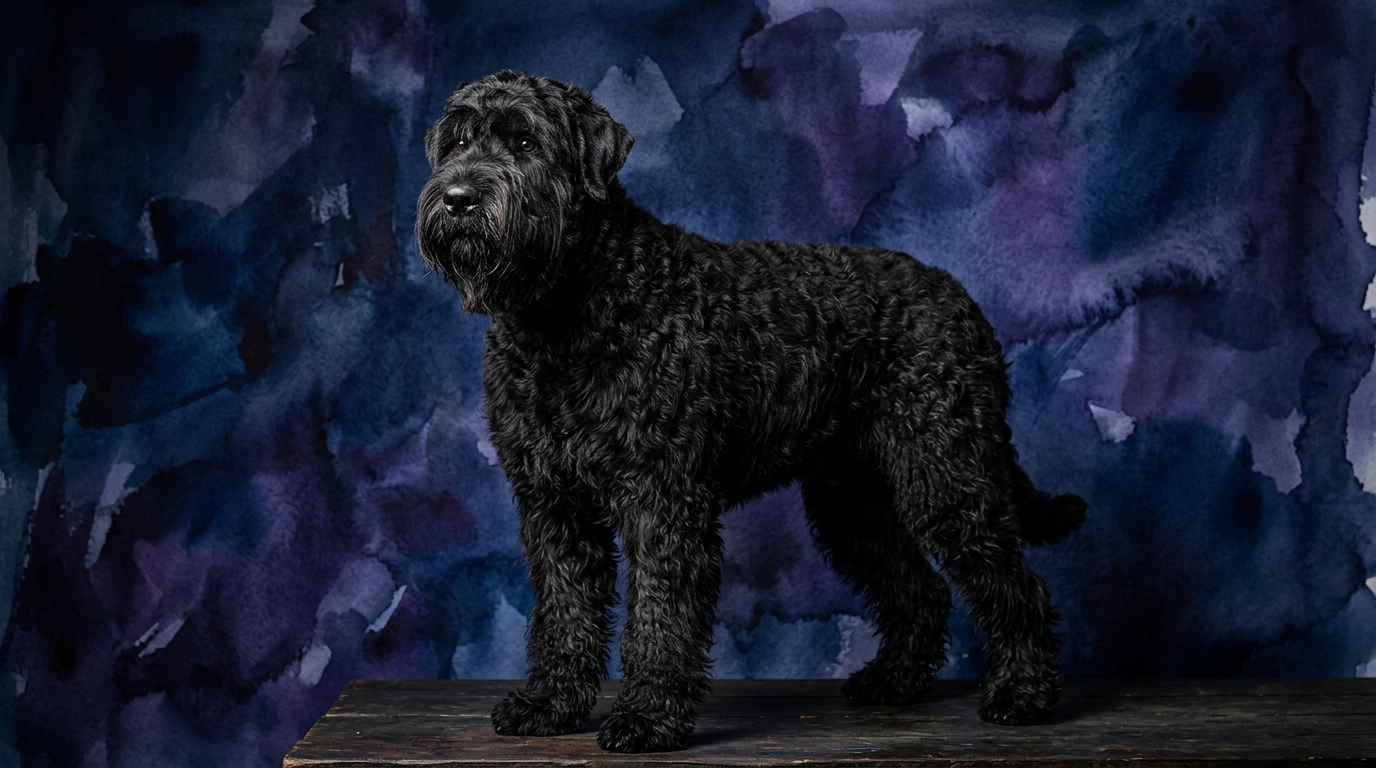
**Black Russian Terrier:** The stoic Black Russian Terrier, a powerful Working breed not specifically Coren-ranked, possesses a different cognitive cadence. Their Problem Solving capability stands at 3/5, meaning they can figure out puzzles and complex situations, but may require more time or motivation to arrive at a solution. Training Speed is 3/5, indicating a steady learning pace that thrives on consistency and patient, clear instruction rather than rapid acquisition. Social Intelligence, also 3/5, suggests they are observant of their family's dynamics and emotions, though often reserved or aloof with strangers, forming bonds selectively. An Instinctive Drive of 3/5 primarily manifests as a robust protective and guarding instinct, rather than a high prey drive, focusing on vigilance and defense. Their Memory, rated 3/5, allows them to recall commands and experiences, benefiting from regular practice to solidify retention.
Where the Yorkshire Terrier Wins Cognitively
The Yorkshire Terrier's cognitive strengths become apparent when examining their comparative scores. With a Training Speed of 4/5 versus the BRT's 3/5, Yorkies typically absorb new commands and behaviors with greater alacrity, making initial training phases potentially smoother and more rewarding for novice owners. Their Social Intelligence, also a 4/5, allows them to read human cues with remarkable precision, fostering a responsive and deeply interactive companionship dynamic that excels in adapting to varied household routines and emotional atmospheres. The Yorkie's 4/5 Instinctive Drive, while different from a working dog's, manifests as a tenacious spirit and a keen observational alertness, making them surprisingly effective little watchdogs whose vocalizations are quick and precise. Furthermore, their Memory at 4/5 ensures that once a lesson is learned or a routine established, it is retained with impressive longevity, reducing the need for constant reinforcement and contributing to a dog that feels very “tuned in” to its environment and family expectations. This combination of quick learning, social attunement, sharp instincts, and enduring memory paints a picture of a small dog with significant mental agility for its size and purpose.
Where the Black Russian Terrier Wins Cognitively
While the Black Russian Terrier does not outscore the Yorkshire Terrier in any individual cognitive dimension within our framework, their unique application of their 3/5 scores in Problem Solving, Social Intelligence, Instinctive Drive, and Memory presents a distinct and formidable cognitive profile. Their Problem Solving, though rated 3/5, is often characterized by a deliberate, thoughtful approach, particularly when assessing potential threats or navigating complex protective scenarios where quick, impulsive action might be detrimental. This isn't about speed, but about a robust analytical capacity for their specific working role. The BRT's Social Intelligence (3/5) translates into a profound, albeit selective, understanding of their family unit; they are adept at discerning nuances within their chosen “pack,” offering a steadfast, unwavering loyalty and protection rooted in a deep, quiet observation. Their Instinctive Drive of 3/5 is perfectly channeled into their primary purpose: guarding and protection, requiring a controlled, powerful cognitive process to differentiate friend from foe and to act decisively when necessary. This is a cognitive strength focused on resilience and a clear understanding of their territorial duties, rather than a broad, exploratory drive. Finally, their Memory (3/5), while requiring consistent reinforcement, is reliable for retaining crucial information related to their protective duties and established family protocols, ensuring they remember who belongs and who doesn't, contributing to their reputation as formidable guardians.
Which is Easier to Train and Why
When considering ease of training, the Yorkshire Terrier generally presents a more straightforward path for many owners. Their Training Speed of 4/5 signifies a breed that quickly grasps new commands and enjoys the mental stimulation of learning, often eager to please and respond well to positive reinforcement techniques. This quick uptake is further supported by their 4/5 Social Intelligence, which allows them to closely attune to their trainer's cues, body language, and vocal inflections, making communication efficient. Their 4/5 Memory also ensures that lessons stick, meaning less repetition is required over time. In contrast, the Black Russian Terrier, with a Training Speed of 3/5, requires a more patient, consistent, and experienced approach. BRTs are capable learners, but their working dog heritage means they possess a degree of independent thought and a strong will; they are not always as inherently eager to please as a Yorkie. Training a BRT demands clear, firm, and fair leadership, consistent practice to reinforce their 3/5 Memory, and strong motivation, often involving purposeful tasks. While the Yorkie might be learning a new trick in minutes, the BRT might be diligently working to master a complex obedience routine over weeks, demanding more commitment and understanding of their unique drive.
Which Suits Active Owners vs Relaxed Owners
Both breeds, despite their size differences, benefit from engagement, but their needs diverge significantly when considering owner lifestyles. The Yorkshire Terrier, though small, is not a sedentary lap dog; their 4/5 Instinctive Drive and 4/5 Social Intelligence mean they thrive on regular mental stimulation, daily walks, and interactive play that satisfies their terrier curiosity and desire for companionship. They are well-suited for active owners who enjoy engaging their dog in games, short training sessions, and adventures, but can also adapt to apartment living provided their cognitive and physical needs are met. A truly “relaxed” owner might find a Yorkie's alert nature and need for interaction more demanding than expected, but they are generally adaptable to a companion lifestyle. The Black Russian Terrier, on the other hand, is unequivocally a breed for active, experienced owners. Their working background and robust physical presence demand significant daily physical exercise and consistent mental engagement. Their 3/5 Instinctive Drive, geared towards protection, requires purposeful activity and structured training to channel their energy and intelligence productively. They need ample space to move and thrive on having a “job,” whether it's advanced obedience, protection work, or long, vigorous hikes. A relaxed owner who cannot provide consistent leadership, extensive exercise, and ongoing mental challenges would likely find a BRT overwhelming, potentially leading to behavioral issues stemming from boredom or lack of direction.
The Verdict
If you are seeking a highly responsive, socially attuned companion who picks up new concepts quickly and thrives on close interaction within a smaller living space, and can provide regular mental engagement and playful activity, the Yorkshire Terrier is an excellent choice.
If you are an active, experienced owner prepared for consistent leadership, extensive physical exercise, and ongoing purposeful training for a steadfast, protective companion, and have ample space for their robust presence, the Black Russian Terrier will be a deeply rewarding partner.
🧠 Find Your Pet's IQ Score
Our Pet IQ Lab assessment covers 25+ tests across 5 cognitive dimensions — personalized to your breed.
Take the Full IQ Test →Frequently Asked Questions
Do Yorkshire Terriers bark a lot due to their intelligence?
Yorkshire Terriers have a 4/5 Instinctive Drive, which includes an alert, vocal nature for their size, and their 4/5 Social Intelligence means they often react to environmental changes or perceived threats. While not inherently excessive barkers, their keen awareness and terrier traits can lead to more vocalizations if not managed with early training.
Are Black Russian Terriers good family dogs despite their protective nature?
Yes, Black Russian Terriers can be excellent family dogs, demonstrating a 3/5 Social Intelligence that fosters deep loyalty and protectiveness towards their immediate family. However, their strong guarding instincts require early socialization and consistent training to ensure they appropriately differentiate between family, trusted friends, and strangers, making them suitable for experienced owners.
Which breed is better for apartment living based on their cognitive profile?
The Yorkshire Terrier, with its smaller size and adaptable 4/5 Social Intelligence, is generally better suited for apartment living, provided their 4/5 Instinctive Drive is satisfied through regular walks and indoor play. The Black Russian Terrier, despite its 3/5 Problem Solving and Memory, requires significant physical space and purposeful activity due to its working background, making apartment living challenging without extraordinary commitment to exercise and mental stimulation.