
Side-by-Side IQ Profile: Yorkie vs. Foxhound
The Cosmic Pet Pet IQ Lab employs a five-dimensional framework to assess canine intelligence, moving beyond simple obedience to encompass a fuller spectrum of cognitive abilities. This framework helps us understand how different breeds process information, learn, and interact with their environment and companions.
The Yorkshire Terrier, a feisty toy breed, registers a Coren rank of #27, indicating a strong capacity for working and obedience intelligence. In our IQ dimensions, the Yorkie scores 3/5 for problem Solving, suggesting they can navigate moderate challenges to achieve desired outcomes, like figuring out how to retrieve a toy from under furniture. Their training Speed is rated an impressive 4/5, meaning they typically grasp new commands and routines with relative swiftness and fewer repetitions. Social Intelligence also stands at 4/5, reflecting their keen awareness of human cues and a strong desire to engage and form bonds. An instinctive Drive of 4/5 underscores their terrier heritage, manifesting as a persistent curiosity and a drive to explore or 'hunt' small objects. Finally, their memory is strong at 4/5, allowing them to recall learned behaviors and routines reliably over time.
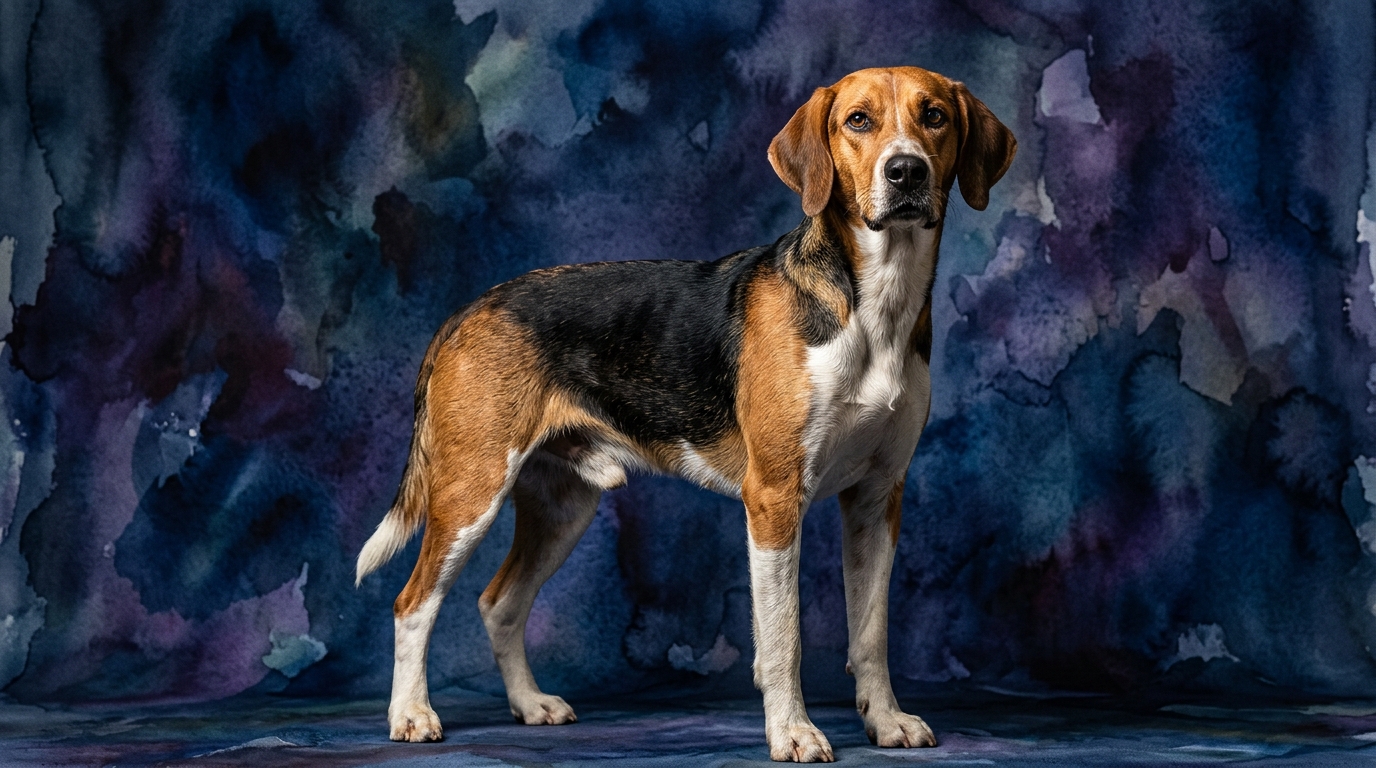
The English Foxhound, a powerful pack hound bred for the hunt, is not listed on Coren's ranking, which often focuses more on individual obedience. Their cognitive strengths lie in different areas, tailored to their specialized role. For problem Solving, the English Foxhound scores 3/5, indicating they can solve practical, often scent-related, challenges, such as navigating complex terrain to follow a trail. Their training Speed is rated 3/5, suggesting they learn at an average pace, requiring consistent and patient instruction, particularly when tasks diverge from their natural hunting instincts. Social Intelligence also scores 3/5; while they are highly social within a pack, their primary focus isn't always human interaction in the same way a companion breed's might be. Their instinctive Drive is a robust 3/5, almost entirely geared towards scent tracking and endurance, making them tireless workers when on a trail. Memory, at 3/5, means they can retain training and scent patterns, but perhaps not with the same immediate recall as breeds bred for close human partnership.
Where the Yorkshire Terrier Wins Cognitively
The Yorkshire Terrier demonstrates distinct cognitive advantages in areas emphasizing adaptability to a human-centric home environment. Their 4/5 rating in training Speed means they typically absorb new commands and house rules more quickly than the Foxhound. This faster learning curve translates to quicker house-training, leash manners, and the ability to pick up various tricks or obedience commands with fewer repetitions. Their higher social Intelligence (4/5) also gives them an edge in understanding subtle human emotions and intentions, making them highly responsive companions attuned to their owner's mood. This strong social awareness fosters a deeper, more reciprocal bond, making them naturally inclined to seek interaction and approval from their human family.
Furthermore, the Yorkie's 4/5 memory score ensures that once a behavior is learned, it is retained effectively, leading to more consistent performance over time. This cognitive strength, combined with their instinctive Drive (also 4/5) which often manifests as playful curiosity rather than relentless pursuit of game, makes them incredibly engaging and responsive pets. They excel in environments where quick learning, close companionship, and varied mental stimulation are valued, often surprising owners with their capacity for complex learning despite their small stature.
Where the English Foxhound Wins Cognitively
While the English Foxhound's scores appear lower in some categories, their cognitive strengths are profoundly specialized for their original purpose: sustained, independent scent work. Their 3/5 rating in problem Solving, for instance, is not about abstract puzzles, but about navigating complex, real-world tracking scenarios. They excel at figuring out how to overcome obstacles in pursuit of a scent, demonstrating a relentless and single-minded focus that few other breeds can match. This isn't about human-directed problem-solving but an intrinsic ability to follow a trail despite diversions or difficult terrain.
The English Foxhound's 3/5 instinctive Drive is a testament to their unparalleled endurance and dedication to scent. This drive is so powerful that it allows them to work tirelessly for hours, maintaining focus on a scent trail even when fatigued. Their social Intelligence, while 3/5, is geared towards pack dynamics, making them excellent collaborators with other dogs in a hunting context. This means they are capable of complex communication and cooperation with their canine peers, a different but equally sophisticated form of social cognition. Their memory (3/5) is particularly strong for scent patterns and terrain, enabling them to remember specific trails or areas relevant to their hunting duties. These unique cognitive strengths make the English Foxhound an unmatched specialist in scent-driven tasks, demonstrating a different kind of operational intelligence.
Which is Easier to Train and Why
Based on the IQ data, the Yorkshire Terrier is generally easier to train for typical domestic obedience and companionship tasks. Their 4/5 training Speed means they typically acquire new commands with fewer repetitions and a faster understanding of what's being asked. This is coupled with a 4/5 social Intelligence, which drives them to actively seek human interaction and approval, making them more intrinsically motivated to comply with commands. For example, a Yorkie will often learn 'sit' and 'stay' quickly because they are eager to please and understand the social cues associated with training.
The English Foxhound, with a 3/5 training Speed and 3/5 social Intelligence, presents a different training challenge. Their strong instinctive Drive (3/5) is intensely focused on scent, often making them less interested in human-directed commands if a compelling scent is present. While they are capable of learning, their attention is frequently pulled by environmental stimuli, requiring more consistent, patient, and reward-based training to overcome their natural inclinations. For instance, teaching a Foxhound recall in an open field can be significantly harder because their scent drive overrides their desire to return to their owner, demanding a higher level of training dedication and specialized techniques to manage their powerful natural instincts.
Which Suits Active Owners vs. Relaxed Owners
The English Foxhound is unequivocally suited for active owners who relish outdoor adventures and can provide ample physical and mental stimulation related to their breed's purpose. Their incredible stamina and powerful scent drive demand extensive daily exercise, ideally including long runs, hikes, or activities where they can engage their nose, such as scent work or tracking. A relaxed owner who cannot commit to several hours of vigorous activity daily will likely find a Foxhound to be a challenging companion, potentially leading to boredom and destructive behaviors. They thrive in environments where they can expend their energy and fulfill their innate need to explore and follow scents.
The Yorkshire Terrier, while spirited, is generally better suited for owners who might prefer a more relaxed lifestyle, though they still require daily engagement. Their exercise needs are met with shorter walks, indoor play, and interactive games, making them adaptable to apartment living or smaller homes. Owners who enjoy teaching tricks, engaging in puzzle toys, or simply having a constant, interactive companion will find the Yorkie's social intelligence and quick learning a perfect match. While they possess a terrier drive, it's often satisfied through mental stimulation and playful interaction rather than relentless physical exertion over vast distances.
The Verdict
Choose a Yorkshire Terrier if you seek a highly interactive, quick-learning companion adaptable to varied living situations, valuing social engagement and a relatively easier training experience for domestic life.
Choose an English Foxhound if you are a dedicated, active owner passionate about outdoor pursuits, capable of providing extensive exercise and specialized engagement for a dog driven by scent and endurance.
🧠 Find Your Pet's IQ Score
Our Pet IQ Lab assessment covers 25+ tests across 5 cognitive dimensions — personalized to your breed.
Take the Full IQ Test →Frequently Asked Questions
Is the English Foxhound a good choice for first-time dog owners?
The English Foxhound typically requires an experienced owner due to their strong prey drive, high energy levels, and independent nature. Their training demands patience and consistency, making them less ideal for those new to dog ownership who might be overwhelmed by their specific needs.
How much mental stimulation does a Yorkshire Terrier need daily?
Yorkshire Terriers thrive on daily mental stimulation, which can be provided through short training sessions, puzzle toys, and interactive play. Their high social intelligence means they also benefit greatly from consistent interaction and engagement with their human family.
Can an English Foxhound live in an apartment?
An English Foxhound is generally not suited for apartment living due to their immense energy and need for space to run and explore. They require a large, securely fenced yard and owners committed to providing extensive daily exercise and mental challenges to prevent boredom and destructive behaviors.